
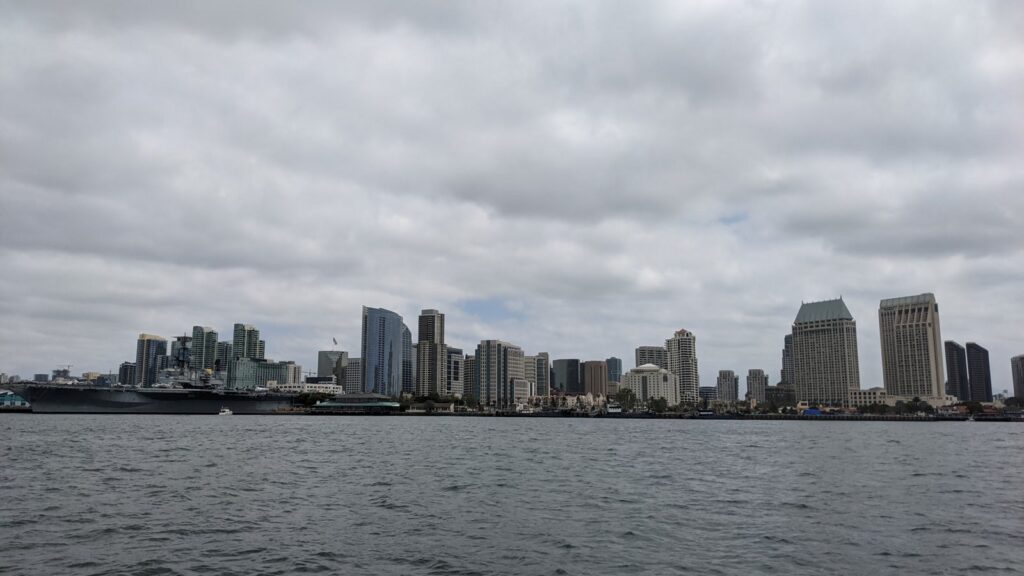
San Diego is the easiest California city to plan badly in three days: the sights are spread across the county, and most first-timers spend the trip driving between things twenty minutes apart. This san diego itinerary does the opposite: one region a day, one big thing each morning, one sunset each evening. Day one is the park, day two the bay, day three the coast. You need a car for one day, not three, and every price and hour below was checked in November 2026.
The three-region rule: park, bay and coast
San Diego rewards a simple discipline: pick one part of the city per day and stay there. Balboa Park and the Zoo fill one day. Old Town, the waterfront and Coronado fill the second. La Jolla and the beaches fill the third. The freeway between them is where itineraries go to die, so this plan never crosses the county twice in a day.
The one decision is the Zoo-or-museums choice: both need a full day, and you cannot do both properly in one. This plan puts the Zoo first, because it is the thing most first-timers come for; if animals are not your day, take the museums instead and change nothing else.
Day 1: the Zoo and Balboa Park — choose, don’t stack
Start at the San Diego Zoo when it opens at 9 a.m. A 1-Day Pass is $78 for adults aged 12 and over and $68 for children aged 3 to 11, and children under 3 are free. On select Value Days, bought online in advance, the same pass is $73 for adults and $63 for children. Every 1-Day Pass includes the Guided Bus Tour and the Skyfari aerial tram, subject to availability. Parking in the Zoo lot is no longer free: since January 5, 2026 it costs $16 per car per day. The Zoo covers about 100 acres, and the closing time moves with the season, so check the hours for your date.
Take the Guided Bus Tour first: the 35-minute loop shows you the layout, then you walk back to the parts you want to see properly. The giant pandas, Yun Chuan and Xin Bao, live at Denny Sanford Panda Ridge and have been on view since August 2024 — the only giant pandas on the West Coast. Seeing them is included with regular admission, with no separate ticket, and on busy days the Zoo hands out free timed tickets so you are not standing in the standby line.
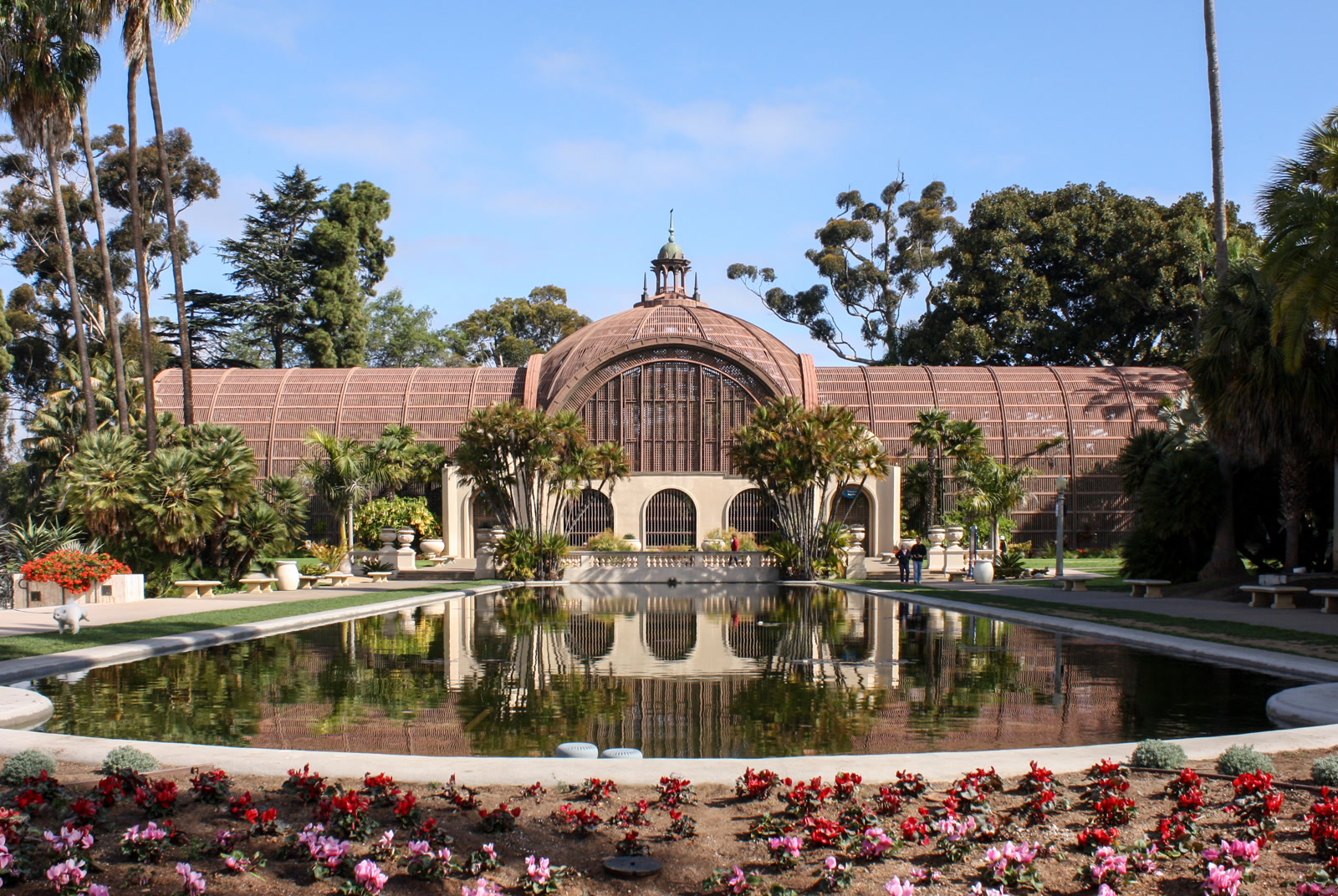
If you take the museum swap instead, the park still fills the day. Balboa Park covers 1,200 acres and holds 17 museums and cultural institutions, including the Museum of Art, the Air and Space Museum, the Natural History Museum and the Fleet Science Center. The Timken Museum of Art is always free, and the Botanical Building and the Lily Pond cost nothing to walk through. The San Diego Museum of Art is closed on Wednesdays.
End the day in Little Italy, a short walk from the park side of downtown, where the cafes along India Street make the easy dinner after a long day on foot. Save the Gaslamp Quarter for the second evening.
Day 2: Old Town, the waterfront and Coronado
Day two starts in Old Town, where San Diego began. Old Town San Diego State Historic Park is free to enter, and its museums and living-history buildings are free too. The visitor center and the museums are open daily from 10 a.m. to 5 p.m., and they close on Thanksgiving and Christmas. Start at the Robinson-Rose Visitor Center, at 4002 Wallace Street, then walk the plaza: Casa de Estudillo, built between 1827 and 1829, is the park’s centerpiece. Parking is free for up to four hours, and a trolley station sits at the park’s edge. The Whaley House, just outside the park, is the one paid stop here, open daily from 10 a.m. to 4:30 p.m.
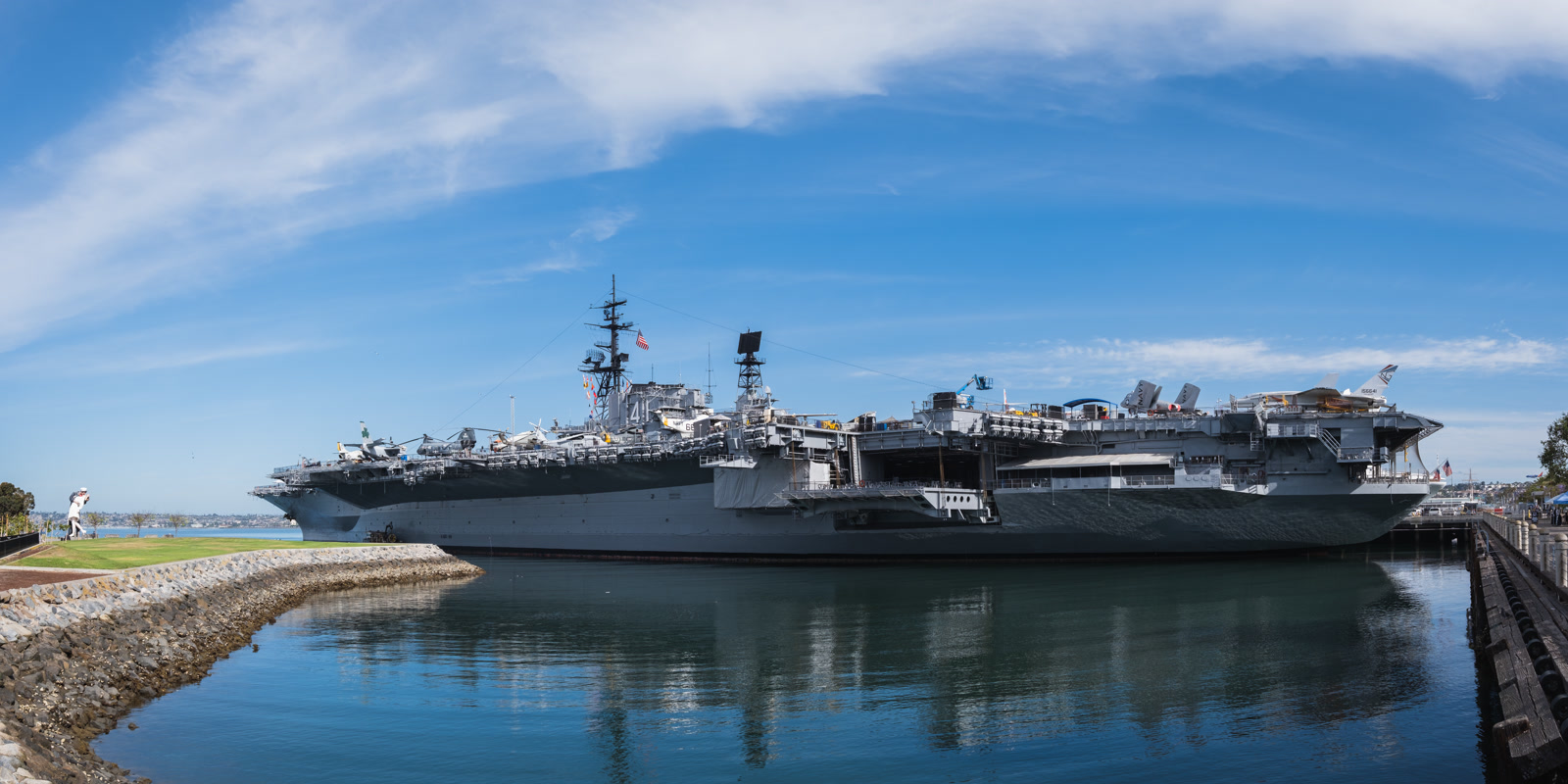
From Old Town, ride the trolley down to the Embarcadero for the USS Midway Museum, at 910 N. Harbor Drive. Tickets bought online are $39 for adults aged 13 and over and $29 for youth aged 4 to 12; at the door they are $41 and $31. Veterans pay $26 with proof of service, and children aged 3 and under and active-duty military get in free. The ship is open every day from 10 a.m. to 5 p.m., with last admission at 4 p.m., and it closes only on Thanksgiving and Christmas Day. The museum suggests four to five hours. Buy online: it saves $2 a ticket and skips the entry line.
The afternoon is the ferry. The Flagship ferry crosses San Diego Bay from downtown to Coronado in about 15 minutes, and it costs $9 one way for riders aged 4 and up; children under 4 ride free. Boats leave from Broadway Pier about every hour and from the Convention Center about every 30 minutes, and tickets are valid on any departure on the route you bought. Check the fare before you go: Flagship’s own route pages still show an older, lower price in places.
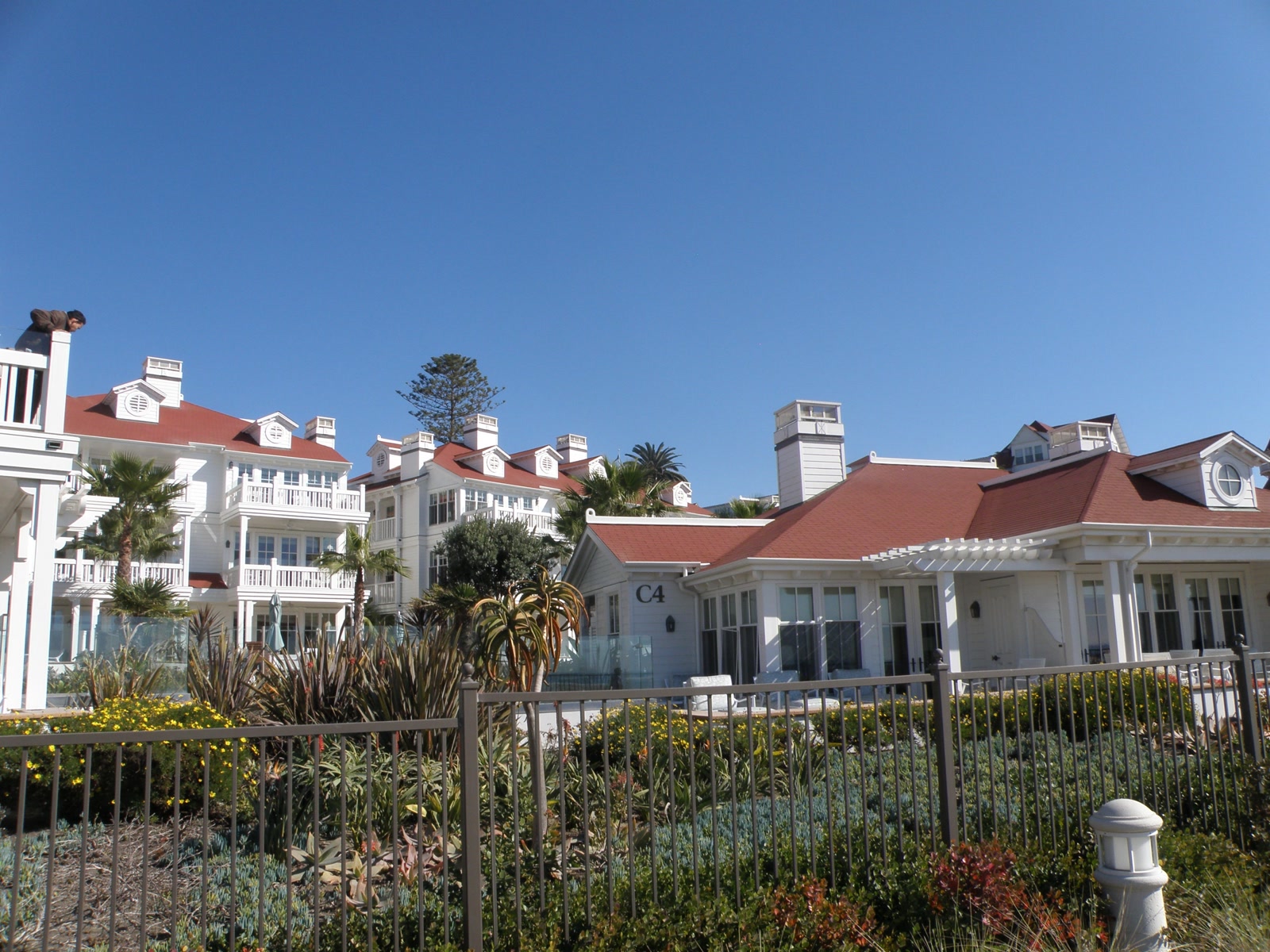
Coronado is the calm half of the day. Walk from the Ferry Landing along Orange Avenue to the Hotel del Coronado, the white and red Victorian resort that opened in February 1888 and was designated a National Historic Landmark in 1977. The wide, white-sand beach in front of it is public, and the hotel itself is the photograph. Take the ferry back at sunset, when the downtown skyline lights up behind you.
Dinner is in the Gaslamp Quarter, a short walk from the Broadway Pier landing: restaurants and bars in old Victorian storefronts, at their best after dark.
Day 3: La Jolla and the beaches
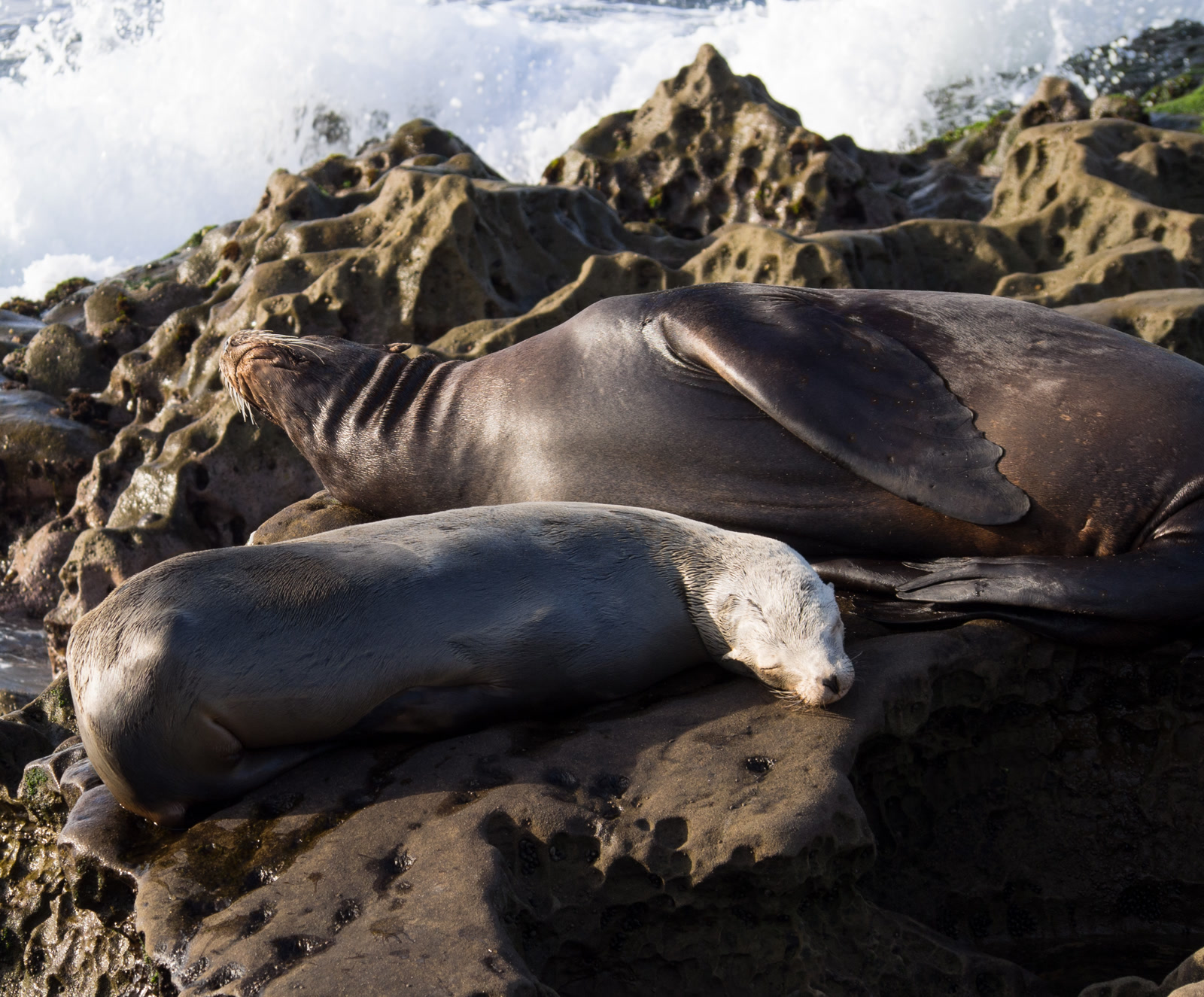
Day three is the coast, and it is the one day you need a car. La Jolla sits about 12 miles north of downtown, and the plan is simple: the Cove in the morning, the coast road in the afternoon, and Sunset Cliffs for the last light. Start at La Jolla Cove, where California sea lions haul out on the rocks at Point La Jolla and you can watch them free from the sidewalk above. Point La Jolla itself is closed to the public year-round since 2023, to protect the colony, so stay behind the barriers and the signs. Pupping season runs from early May through October, so keep at least 20 feet from any animal. The Children’s Pool beach, a short walk southwest, closes from December 15 to May 15 every year for harbor seal pupping season.
If you want a walk first, drive to Torrey Pines State Natural Reserve, just north of La Jolla: the Guy Fleming loop runs above the ocean, and the longer trails drop to the beach. Go early — the main lot fills by mid-morning on weekends. Then come back through La Jolla village for lunch and spend the afternoon on the sand: Pacific Beach and Mission Beach are the busy, easy ones, Ocean Beach quieter. End at Sunset Cliffs, where the cliffs face west and the last light is the whole point. It costs nothing.
The car decision: one car day, not three
San Diego spreads out, but only day three needs a car. Days one and two run on the trolley, the ferry and your feet: the Zoo and Balboa Park sit together, Old Town has a trolley station at its edge, and the ferry carries you to Coronado and back. Rent a car for day three only, or use rideshares for the La Jolla run. If you do rent, remember the parking: the Zoo lot is $16 a car, Balboa Park is paid from 8 a.m. to 6 p.m. in 2026, and Old Town’s lots are free for up to four hours.
Without a car, day three still works, just slower: MTS bus Route 30 links Old Town with Pacific Beach and La Jolla. What does not work is renting for all three days: you pay to park it at the Zoo and the park, and you sit in it on the freeway between regions the trolley and the ferry cover better.
Getting around: trolley, ferry and the airport
The San Diego Trolley is light rail, and it is the backbone of days one and two. Since October 1, 2026, a one-way adult ride is $3, with two hours of transfers when you pay with PRONTO or a contactless card. With a PRONTO card or the PRONTO app, daily fares cap at $7, so once you spend $7 in a day the rest of the day’s rides are free. Riders aged 18 and under ride free with a Youth PRONTO account or card. The trolley covers downtown, Old Town, Mission Valley and the border, but it has no airport or beach stations, which is why day three needs a car or a bus.
San Diego International Airport sits about 3 miles from downtown. MTS bus Route 992 runs between both terminals and downtown every 15 minutes for the standard $3 fare, roughly 4:30 a.m. to 1 a.m. A taxi or rideshare is a short ride.
Where to stay: Little Italy or the Gaslamp
Stay in Little Italy or the Gaslamp Quarter, and the whole plan works on foot and by trolley. Little Italy is quieter: cafes and restaurants, a short walk to the waterfront, and a trolley stop on the doorstep. The Gaslamp is livelier: restaurants and bars in old Victorian storefronts, near the ferry landing, and noisier at night.
Avoid the suburbs or the airport hotels: the savings go into driving, and you lose the evenings. Both Little Italy and the Gaslamp sit on the trolley, both are a short ride from Old Town, and both put you within walking distance of the ferry.
What to book first
Book in this order. First, the USS Midway tickets online: $39 for adults against $41 at the door, and the online ticket skips the entry line. Second, the Zoo pass: buy online, and check whether your date is a Value Day, when the 1-Day Pass is $73 for adults and $63 for children instead of $78 and $68. Third, the sunset cruise: Flagship runs 1-hour and 2-hour harbor cruises from the Embarcadero, and the evening sailings are the ones to book a few days ahead. Everything else can wait: Old Town is free and walk-in, the ferry tickets are sold on the day, and La Jolla costs nothing.
FAQ
Is 3 days enough for San Diego?
Yes, for a first trip. Three days covers the park, the bay and the coast. A fourth day adds the Safari Park, SeaWorld or a longer stretch of the coast.
Do I need a car in San Diego?
For one day, not three. Days one and two run on the trolley, the ferry and your feet. Day three is the car day: the trolley does not reach the beaches. Rent for one day, or use rideshares for the La Jolla run.
What is the best time of year to visit San Diego?
September and October, when the weather is warm, the ocean is at its warmest and the summer crowds are gone. May and June bring the marine layer, May Gray and June Gloom, when mornings sit under cloud until noon.
Should I do the Zoo or the museums on Day 1?
The Zoo if you came for animals: the pandas alone are worth the morning. The museums if you prefer art and science: 17 museums in one park, and the Timken is always free. Do not try both.
The Short Version
This san diego itinerary works when you give each region its own day and let the trolley and the ferry do the work. Day one is the Zoo and Balboa Park, with dinner in Little Italy. Day two is Old Town, the USS Midway and the ferry to Coronado. Day three is La Jolla and the coast by car: the Cove in the morning, Torrey Pines or the beach in the afternoon, and Sunset Cliffs for the last light. One car day, not three, and book the Midway tickets first.