
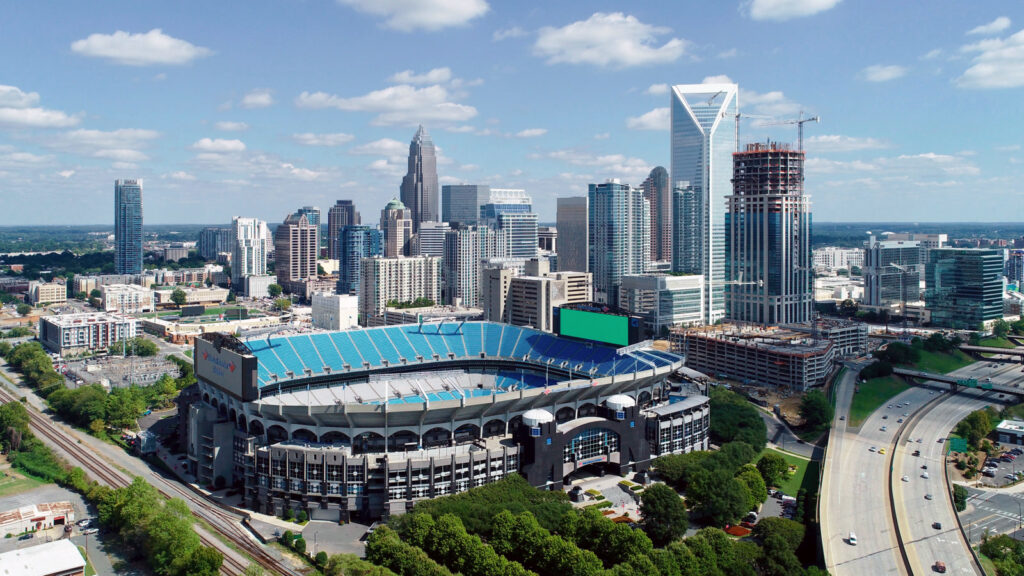
Charlotte surprises people. It is the biggest city in North Carolina and a major banking centre, yet the best things to do in Charlotte North Carolina are not boardroom serious at all: a park lawn under the towers, a banked ramp full of stock cars, murals on old cotton-mill walls, and a man-made whitewater river where Olympic paddlers train. The centre is compact, the neighbourhoods each have their own personality, and you can cover a lot of it on foot and by light rail.
One local habit to learn before you arrive: nobody here says “downtown”. The city centre is Uptown, and most first-time visitors do best by starting there, then fanning out to NoDa, South End and the river. This guide follows that order, from the crossroads at the heart of the four wards to the rapids on the city’s edge.
Start at Trade and Tryon, the Crossroads of the Four Wards
Uptown Charlotte grew out from one intersection: Trade and Tryon Streets. The four historic wards of the city meet here, and the corner is marked by four large bronze sculptures, one on each side. Transportation honours the African-American railroad workers who built the lines, Industry shows textile mill workers, Future is a mother holding a child, and Commerce is a gold miner — a nod to 1799, when gold was found near Charlotte in what is counted as the first documented gold discovery in the United States.
Stand here for a minute and the layout of Uptown clicks into place. The towers around you belong to one of America’s biggest banking hubs, which is why the skyline looks so new and so tall. From this corner, almost everything in Uptown is within a ten-minute walk, and the LYNX Blue Line light rail runs a block or two away for the neighbourhoods further out.
Romare Bearden Park, With the Ballpark Across the Street
Five minutes from Trade and Tryon, Romare Bearden Park is where Uptown goes to breathe. The 5.4-acre park opened in 2013 and is named for Romare Bearden, the celebrated collage artist who was born in Charlotte. Its design borrows from his artwork: patterned stonework, gardens, a waterfall wall and a wide open lawn facing the skyline. On a warm evening the lawn fills with picnic blankets and families letting children run before dinner.
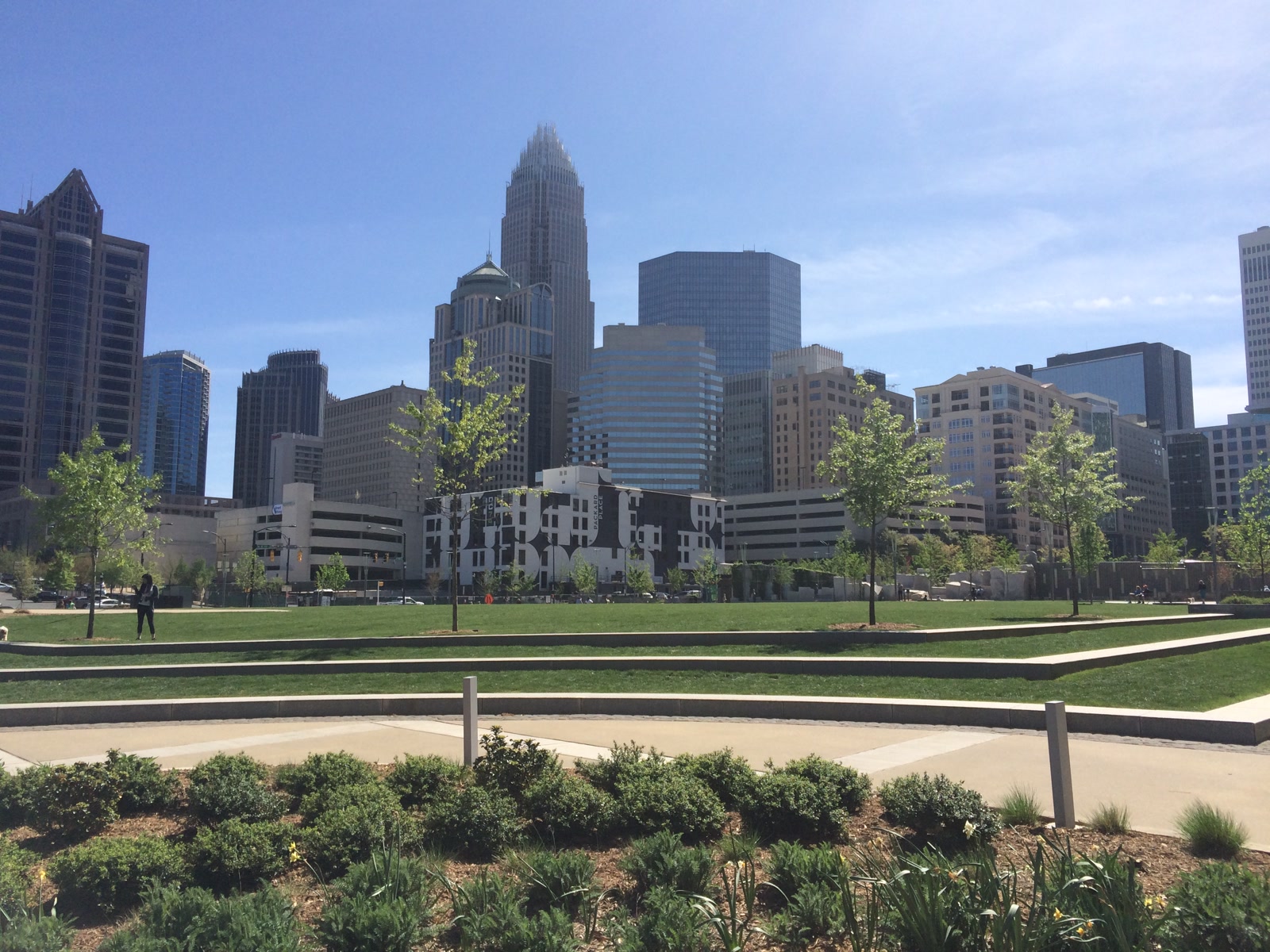
The park has a second act right across Church Street. Truist Field, home of the Charlotte Knights, the city’s Triple-A baseball team, sits so close that the outfield and the towers share one view. A Knights game on a clear night is one of the great cheap evenings in Charlotte: minor-league prices, a major-league skyline. Even without a game, timing a park visit for sunset, when the glass towers catch the last light, is worth doing.
The NASCAR Hall of Fame, Charlotte’s Racing Shrine
Charlotte is NASCAR country. Most of the sport’s race teams are based around the city, and its shrine, the NASCAR Hall of Fame, stands on East Martin Luther King Jr. Boulevard at the edge of Uptown. It opened in 2010 and works just as well for the merely curious as it does for lifelong fans.
The centrepiece is Glory Road, a banked ramp — banked at 33 degrees, like the steepest tracks — lined with historic stock cars, so you walk uphill through the sport’s history. Around it are the Hall of Honor for the inductees, racing simulators where you can run laps against other visitors, and a pit crew challenge that times you changing a tyre against the clock. The hall is open daily; allow two to three hours if the simulators tempt you.
Uptown’s Museum Row: The Firebird, the Mint and Hands-On Science
South Tryon Street holds Charlotte’s small but strong museum row. Start at the Bechtler Museum of Modern Art, a terra-cotta building by Swiss architect Mario Botta. Outside it stands the Firebird, a tall, mirror-tiled sculpture by Niki de Saint Phalle that sparkles in the sun — locals, with affection, call it the Disco Chicken. Inside is a focused collection of mid-century modern art, small enough to enjoy properly in an hour.
Across the street, the Mint Museum Uptown spreads five floors of art, craft and design through a bright, glassy building. Together with the African-American arts centre beside them, this one block — the Levine Center for the Arts — can fill a relaxed half-day. Note the weekly rhythm if you are planning: the Bechtler closes on Tuesdays and the Mint on Mondays, so the two are rarely both shut on the same day.
Families tend to head the other way, to Discovery Place Science on North Tryon Street: a hands-on science museum with an indoor rainforest you can walk through, live experiments and a giant-screen IMAX Dome theatre. With children in tow, it is usually the Uptown stop they talk about afterwards.
A Slow Walk Through the Fourth Ward
Not everything in Uptown is glass and steel. Walk a few blocks northwest of Trade and Tryon and the towers give way to the Fourth Ward, one of the city’s oldest neighbourhoods, where restored Victorian houses sit on quiet, tree-lined streets behind picket fences and small gardens. There is no ticket and no tour to join; the pleasure is simply wandering and enjoying how completely the mood changes within five minutes of the banking district.
Fourth Ward Park, a small green at North Poplar Street with fountains and a playground, makes a good turning point. Come in the late afternoon if you can, when the light is soft on the old porches, then drift back toward Tryon Street for dinner.
NoDa: Murals, Old Mills and Live Music
Every city has one neighbourhood where the artists got there first, and in Charlotte it is NoDa — short for North Davidson Street, about two miles northeast of Uptown. NoDa began in 1903 as a mill village for the workers of the Highland Park cotton mills, and the low brick mill buildings and small workers’ cottages still set its scale. When the mills faded, artists moved in, and the walls have been painted ever since.
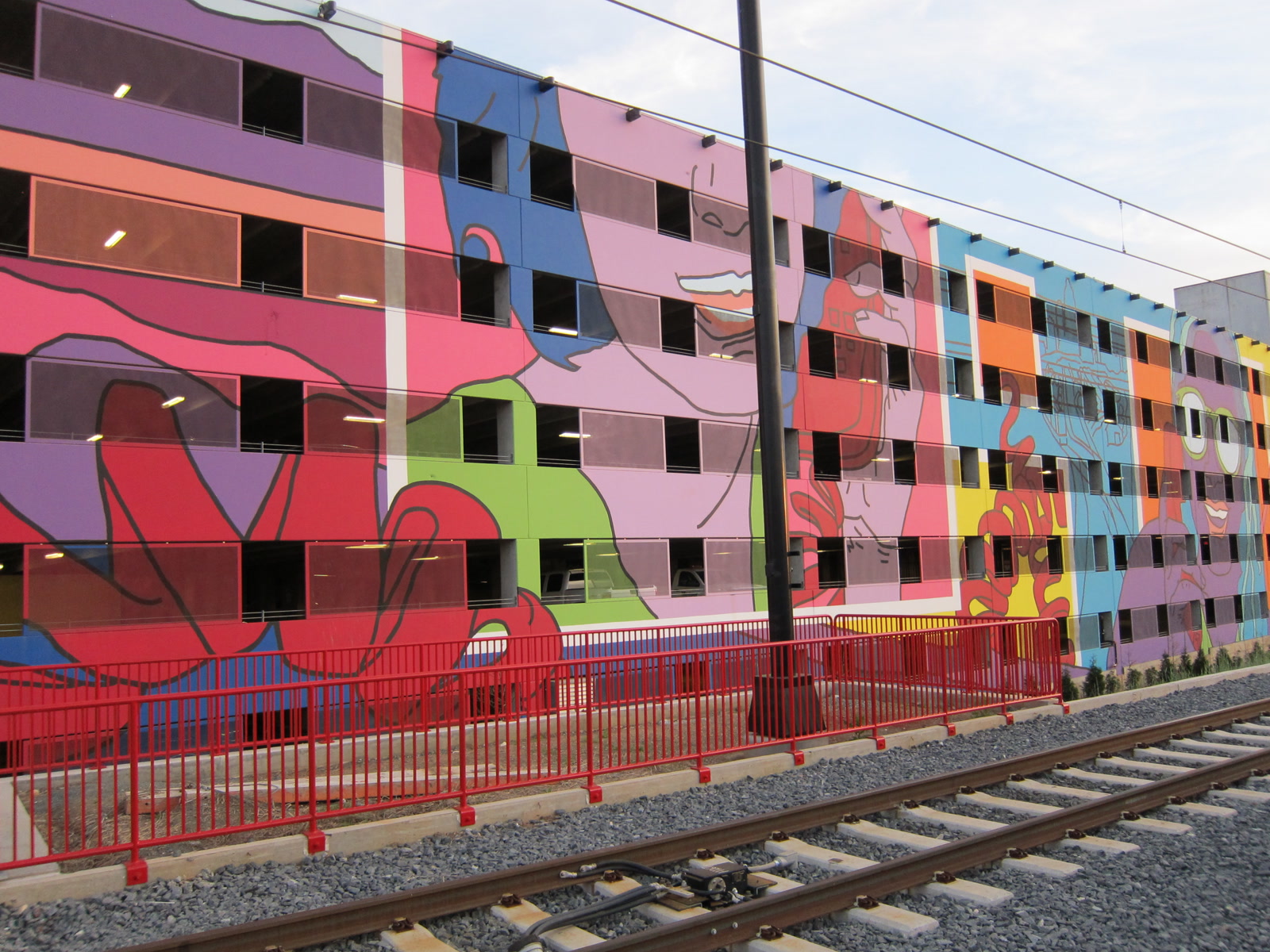
The main stretch, around North Davidson and 36th Streets, is made for an evening wander. Murals cover building after building — including one enormous, brightly painted apartment block you can see from the light rail tracks — and in between them sit galleries, vintage shops, tattoo studios and coffee houses. Heist Brewery pours its beer inside the old Highland Park Mill No. 3 building, and NoDa Brewing Company is a short walk away.
Music is the other half of NoDa’s identity. The Neighborhood Theatre, a converted cinema, and The Evening Muse, a small listening room, book local and touring acts most nights of the week. The LYNX Blue Line’s 36th Street station, which arrived with the line’s 2018 extension, makes all of this an easy car-free trip from Uptown: ride up in the early evening, eat, catch a show, ride back.
South End and the Rail Trail
South of Uptown, the Blue Line runs through South End, a former warehouse and mill district that has become the city’s brewery-and-apartment quarter. The nicest way to explore it is the Rail Trail, a paved walking and cycling path that follows the light rail line past public art, patios and converted industrial buildings. Locals use it the way other cities use a promenade — jogging it in the morning, drifting along it between breweries in the evening.
Of all the things to do in Charlotte North Carolina, this is the one that asks the least planning. Pick a station, get off, and walk a stretch of the trail; there will be somewhere to eat and something to look at within a few minutes in either direction. It is also the most natural add-on to an Uptown day, since the train ride between the two takes only a few minutes.
Freedom Park, Charlotte’s Green Front Room
When Charlotteans want a proper park rather than a city lawn, they go to Freedom Park. About three miles south of Uptown, between the Dilworth and Myers Park neighbourhoods, its 98 acres wrap around a seven-acre lake with a looping path, lawns, sports fields and tennis courts. On a fine weekend it feels as if half the city has had the same idea.
The park is also a good base for a slower half-day: the Little Sugar Creek Greenway connects nearby for a longer walk or ride, and Dilworth’s tree-lined streets and cafés begin at its edge. Each September it hosts Festival in the Park, a long-running arts festival — lovely if you coincide with it, and a reason to start early that weekend if you do.
The U.S. National Whitewater Center: Rapids on the Edge of the City
The most unusual of all the things to do in Charlotte North Carolina sits about twenty minutes’ drive northwest of Uptown, on the Catawba River. The U.S. National Whitewater Center spreads across 1,300 acres of protected land, and at its heart is the largest man-made recirculating whitewater river in the world: two concrete channels of Class II to IV rapids, where rafters bounce through in guided boats and Olympic-team paddlers train — the centre is an official US Olympic training site.
A day here is built around an activity pass. On the water there is guided rafting, whitewater kayaking, and calm flatwater kayaking and paddleboarding on the Catawba itself. Off it, there are ziplines over the channels, ropes courses, climbing walls — including a deep water solo wall where the landing is a pool — and mountain biking and hiking on roughly fifty miles of trails. In the evening the centre turns social, with food, drinks and the River Jam live-music series beside the water.
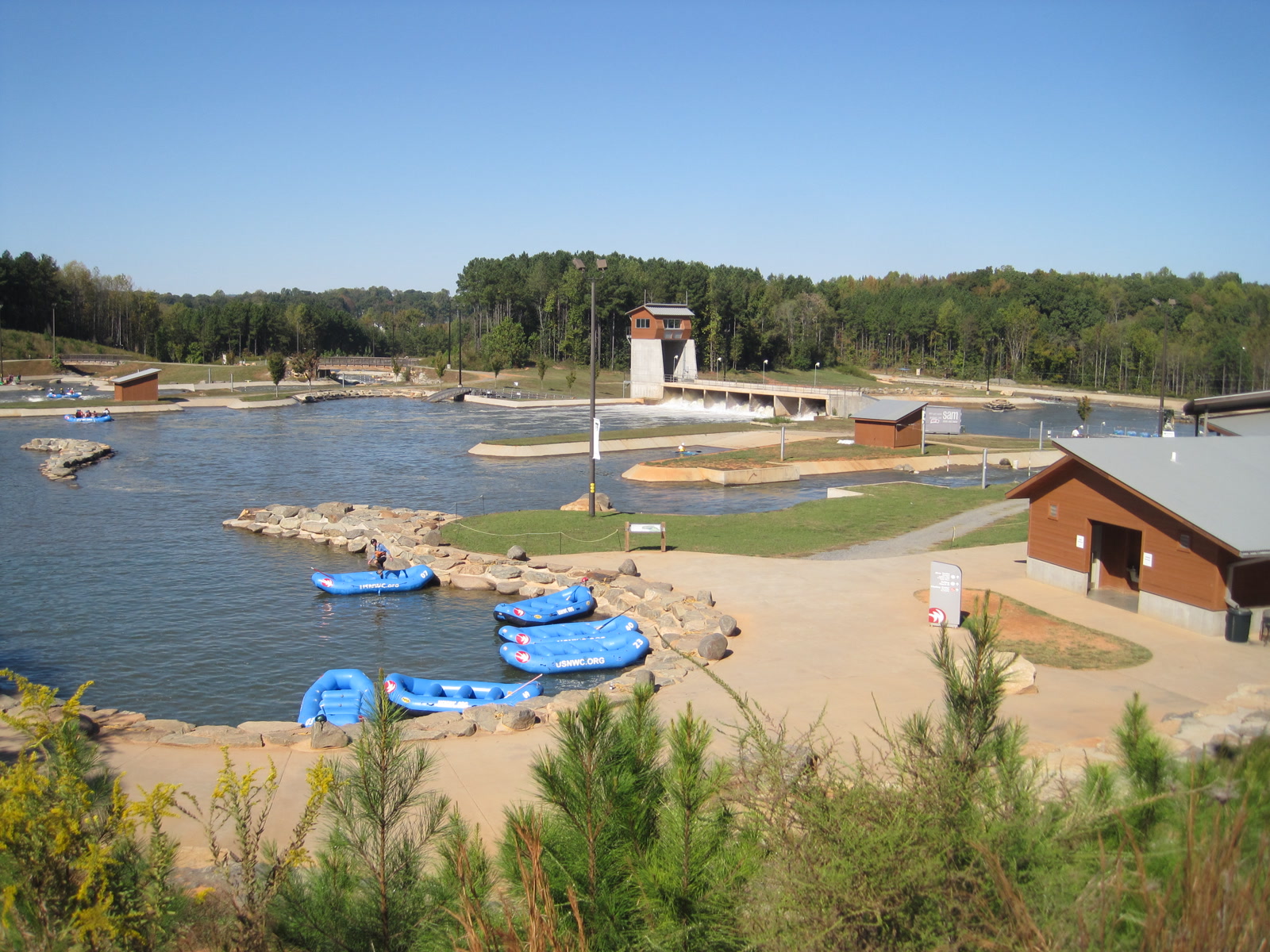
You do not have to get wet to enjoy it. The grounds and trails are open to wander, and plenty of visitors simply watch the rafts from the banks with a coffee. Do note that parking is charged, and the activity schedule changes with the season, so check the centre’s calendar for the day you plan to go before setting out.
FAQs About Visiting Charlotte
Why do people call downtown Charlotte “Uptown”?
It is the local name for the city centre, and it is what signs, locals and the light rail will all say. Either way, Uptown and downtown mean the same place here.
How many days do you need in Charlotte?
Two days covers Uptown’s museums, Romare Bearden Park and an evening in NoDa comfortably. Add a third if you want a full day at the Whitewater Center.
Can you visit Charlotte without a car?
The centre, yes. Uptown is walkable, and the LYNX Blue Line light rail links it with NoDa, South End and the university area. The Whitewater Center is the exception — it sits outside the rail network, so you will need a car or a rideshare to reach it.
What is the best time of year to visit Charlotte?
Spring and autumn bring the most comfortable weather for mixing museums with parks and trails. Summer is hot and humid, but it is peak season at the Whitewater Center and for evening baseball.
Is the Whitewater Center suitable for non-swimmers and children?
Yes, with the right choices. Flatwater paddling, the trails, the lower ropes courses and simply watching from the banks all work without tackling the rapids, and rafting is led by the centre’s own guides. Check age and weight limits for each activity on the centre’s site before you go.