
Los Angeles is not one city you walk across. It is five or six cities held together by freeways, and the best things to do in Los Angeles are spread across all of them — the sign on a hill in Hollywood, a pier over the Pacific in Santa Monica, a white hilltop museum in Brentwood, a food hall downtown that has been open since 1917. The mistake first-timers make is crossing town four times a day. This guide groups everything by area, so each day stays in one part of the map. Every price and hour below was checked in November 2026.
Los Angeles Is Five Cities in One: How to Group Your Days
Start with the map. Hollywood and Griffith Park sit in the hills north of the center. The coast — Santa Monica, Venice, Malibu — runs along the west edge. The museums cluster in two places: the Getty Center in Brentwood, and the Miracle Mile and Exposition Park corridor, where LACMA, the Academy Museum and the new Lucas Museum sit a few miles apart. The studios are in the Valley — Universal City and Burbank. Downtown is its own place again, east of it all.
The rule is simple: one area per day, never cross town twice. A morning in Hollywood and an afternoon in Santa Monica sounds fine on paper and costs two hours in traffic. Rush hour adds 30 to 60 minutes to almost any cross-town drive.
Hollywood and Griffith Park: The Sign, the Observatory, the Walk of Fame
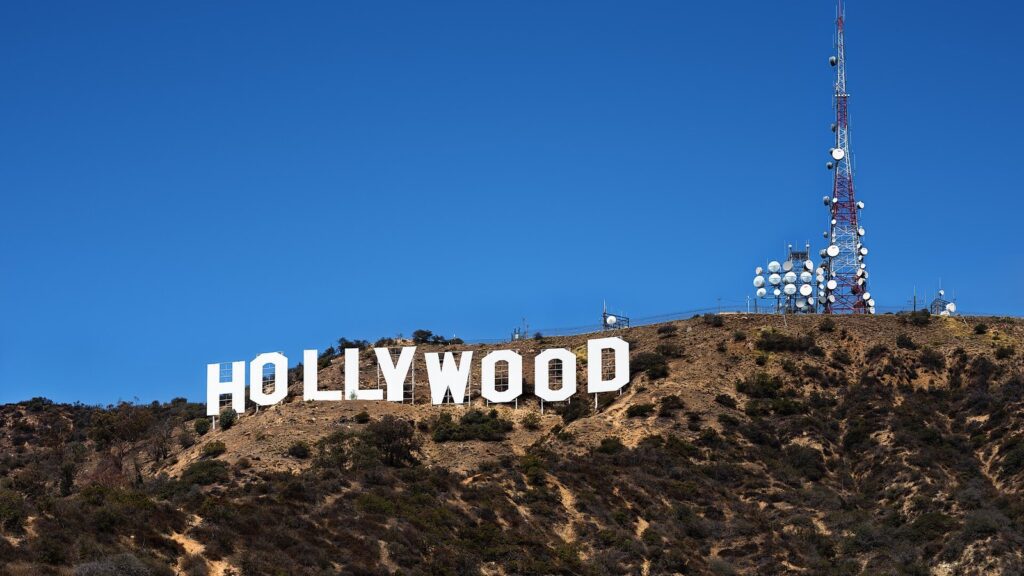
Hollywood is where most first trips start, and the sign is the reason. Nine white letters, each 45 feet tall, spell HOLLYWOOD across the south face of Mount Lee in Griffith Park. It went up in 1923 as a real-estate advertisement reading HOLLYWOODLAND, and was rebuilt in steel in 1978. Here is the part people get wrong: you cannot walk up to the letters. The ground around them is fenced and monitored. The good views are the point: Griffith Observatory, Lake Hollywood Park below the hill, and the trail from the observatory parking lot to the ridge behind the sign.
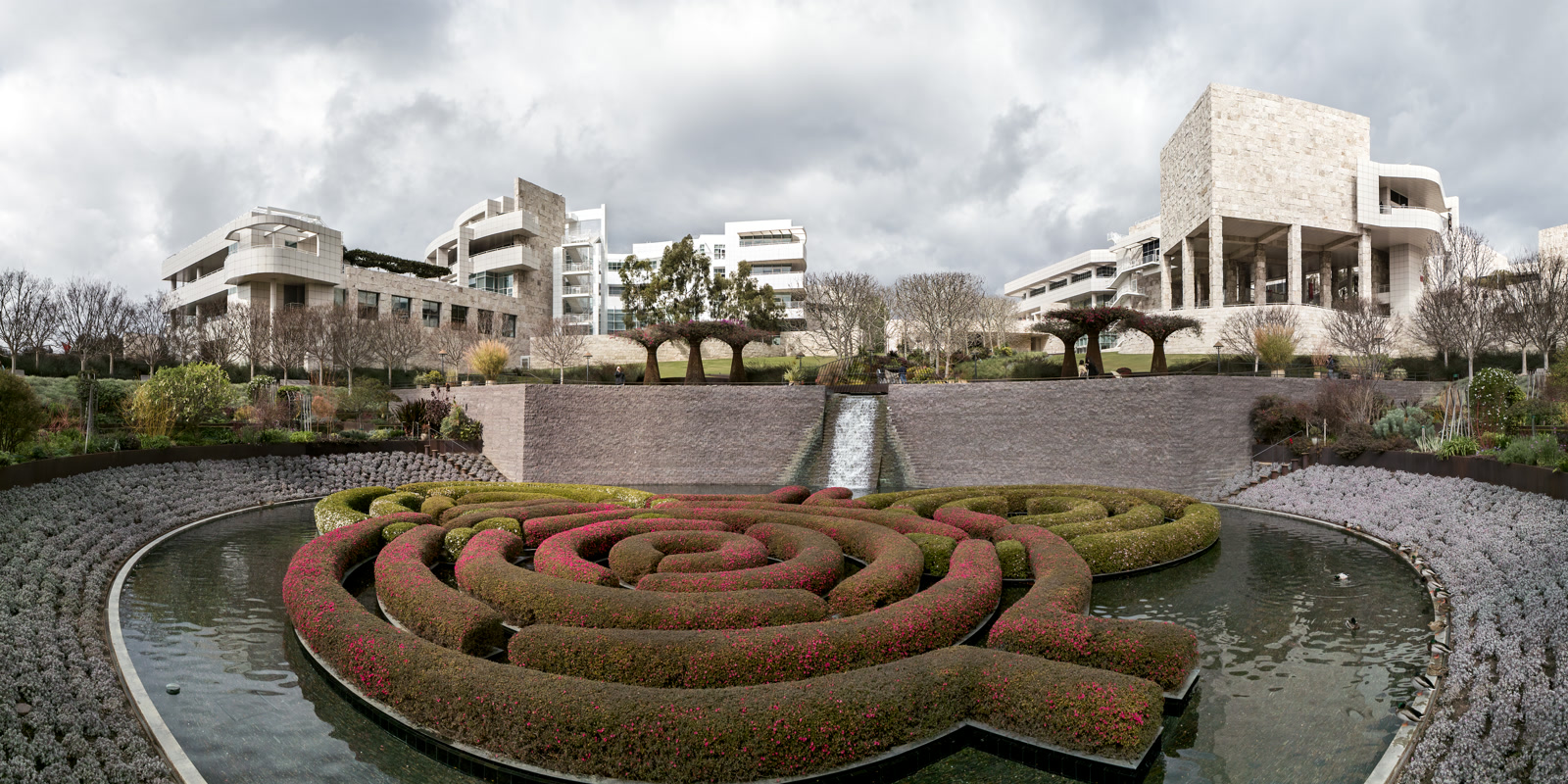
Griffith Observatory is the best free thing in the city. Admission is free. It is open Tuesday to Friday from noon to 10 PM and Saturday and Sunday from 10 AM to 10 PM, and it is closed on Mondays. The planetarium shows cost extra. Come for the terrace at sunset. Parking at the top fills early, so arrive before sunset or take the bus up the hill.
Then walk down to Hollywood Boulevard for the Walk of Fame. More than 2,700 pink terrazzo stars are set into the sidewalks along 15 blocks of Hollywood Boulevard and three blocks of Vine Street, honoring film, television, music, radio and live theater. The first stars were installed in 1960. The TCL Chinese Theatre, at the center of it all, has the handprints and footprints of about 200 stars in its forecourt. It is crowded, loud and built for tourists. Do the stars, stand in the theatre forecourt, and move on — an hour is plenty.
The Coast: Santa Monica, Venice and Malibu in One Day
The coast is one day: Santa Monica in the morning, Venice at midday, Malibu in the afternoon.
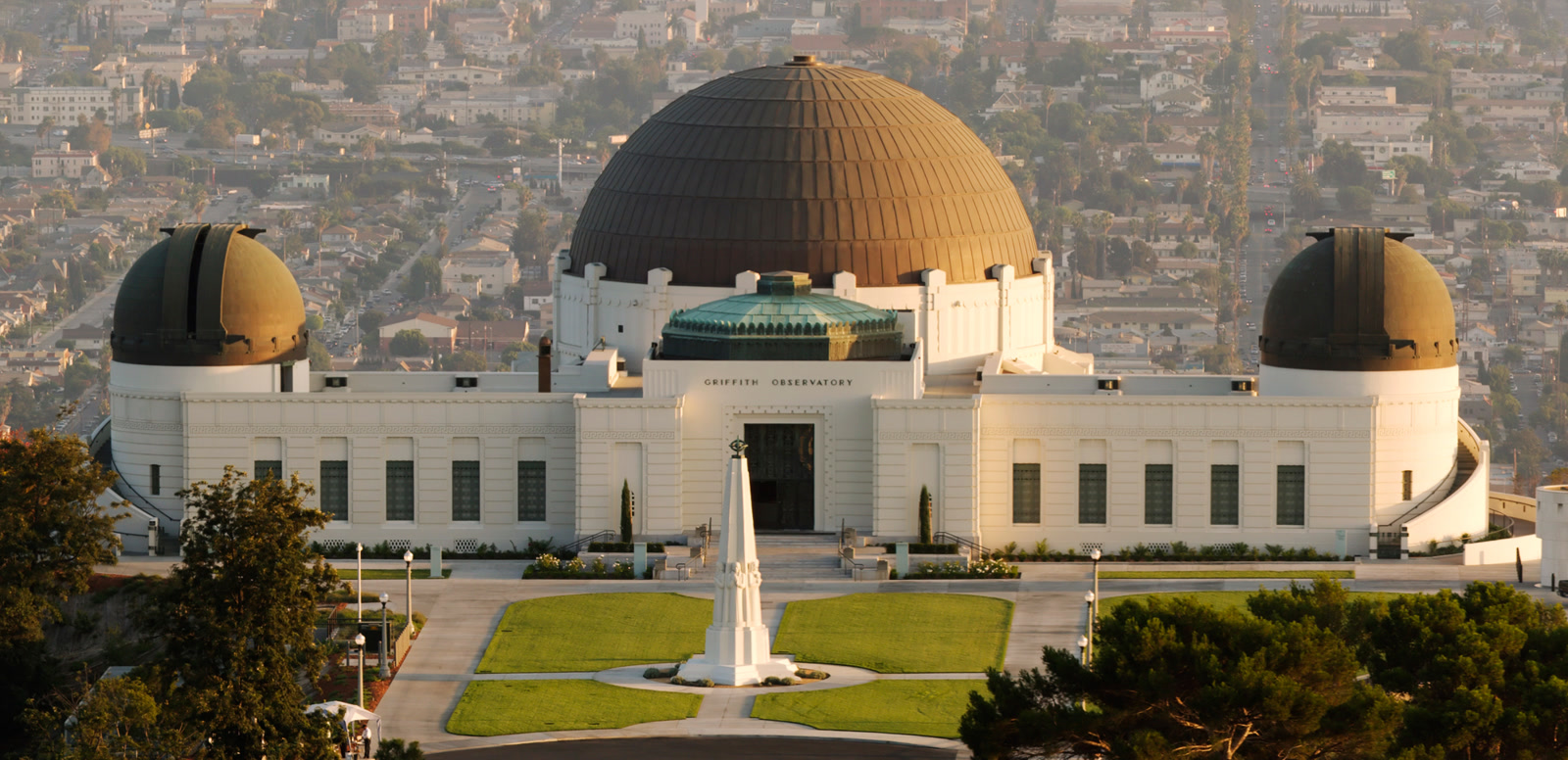
Santa Monica Pier is the anchor. The wooden pier opened in 1909, and walking onto it is free. Pacific Park, the small amusement park at the end of the pier, has no gate either — you pay per ride or buy a wristband. The pier is generally open from 6 AM to 10 PM, and the rides run roughly 11 AM to 11 PM in summer, with shorter hours in the cooler months. The Pacific Wheel, the solar-powered Ferris wheel, is the ride to pick.
Venice is ten minutes south and a different world. The boardwalk is loud and strange and worth an hour: street performers, the outdoor gym at Muscle Beach, the skate park, the vendors. Then walk two blocks inland to the Venice Canals, the quiet side of the neighborhood, and on to Abbot Kinney Boulevard for shops and cafes.
Malibu is the drive as much as the destination. The Pacific Coast Highway runs north past Zuma Beach and Point Dume, the rocky headland with a view back down the coast. Go in the late afternoon, when the light turns the water gold.
The Museums That Are Actually Worth It (Getty, LACMA, The Broad, Academy Museum)
Here is the honest shortlist — the four museums that earn a visit, plus the brand-new one.
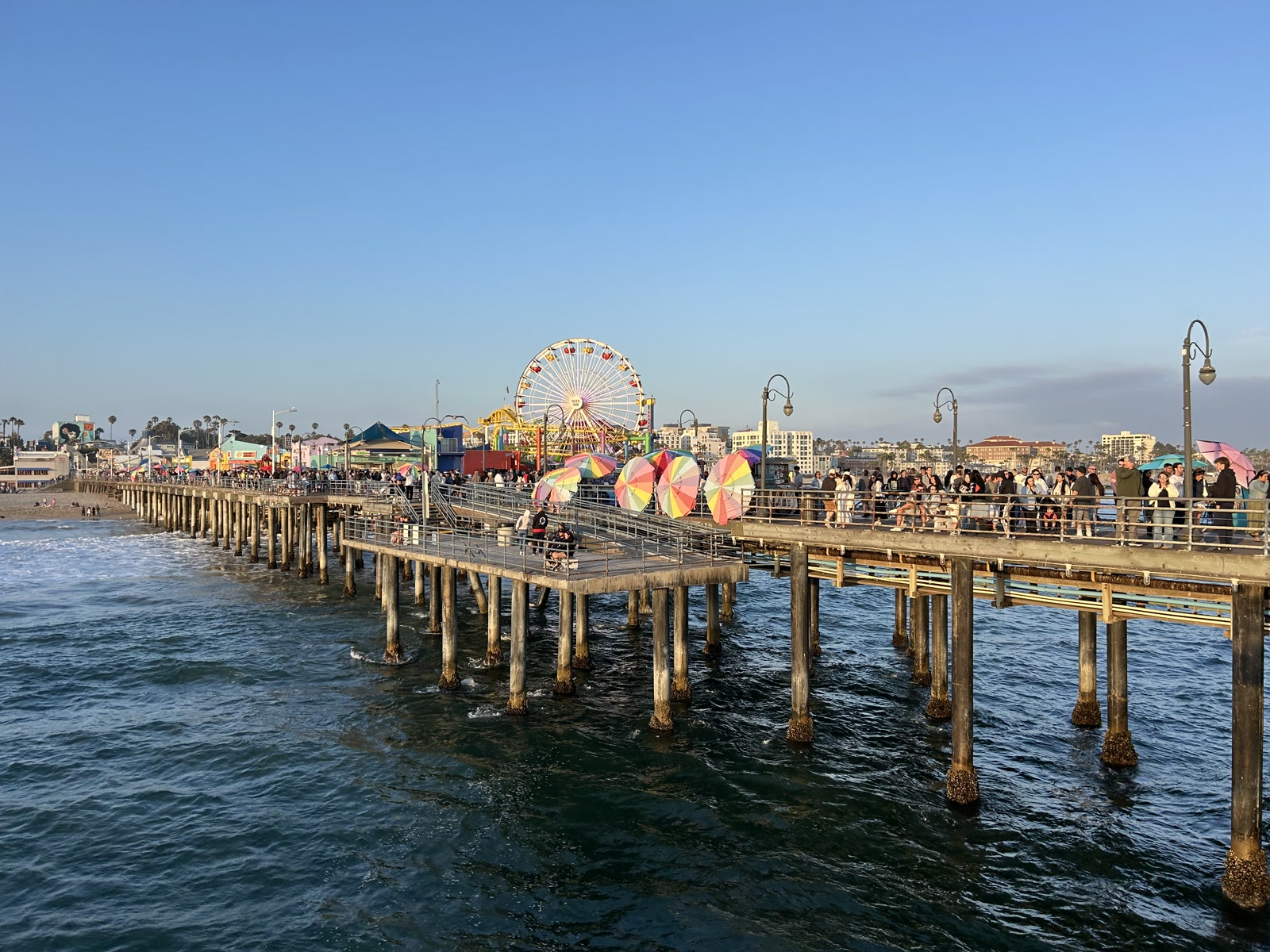
The Getty Center is the one to do first. Admission is free, but you need a timed-entry reservation. Parking is $25 per car, $15 after 3 PM and $10 after 6 PM, and free on Saturdays after 6 PM. The Center is open Tuesday to Friday and Sunday from 10 AM to 5:30 PM, and on Saturdays from 10 AM to 9 PM. One warning: the Getty Center closes on March 15, 2027 for modernization work and does not reopen until spring 2028.
LACMA, the Los Angeles County Museum of Art, sits on Wilshire Boulevard. It is closed on Wednesdays. Hours are Monday, Tuesday and Thursday from 11 AM to 6 PM, Friday from 11 AM to 8 PM, and Saturday and Sunday from 10 AM to 7 PM. Adult admission is $30 for visitors from outside LA County and $25 for county residents, with seniors and students at $26 and children aged 3 to 17 at $15. Admission is free on the second Tuesday of every month, and after 3 PM Monday to Friday for LA County residents. The Urban Light installation — 202 restored street lamps outside the entrance — is free to see from the street.
The Broad, downtown on Grand Avenue, is free — but you still need a timed ticket, released monthly on the last Wednesday at 10 AM Pacific time, so book ahead. The museum is closed on Mondays. The Infinity Mirrored Room needs a separate free timed ticket, and you get 45 seconds inside it.
The Academy Museum of Motion Pictures, in Exposition Park, charges $25 for adults, $19 for seniors 62 and over, $15 for students, and nothing for visitors 17 and under. It is open Wednesday to Monday from 10 AM to 6 PM and closed on Tuesdays.
The newest museum is the Lucas Museum of Narrative Art, also in Exposition Park. It opened on September 22, 2026, in a 300,000-square-foot building with more than 30 galleries. Admission is $25 for adults and $21 for seniors 65 and over, free for children 17 and under, and everyone needs a timed-entry ticket in advance.
Studio Day: Universal vs Warner Bros — and Why Disneyland Is a Different Trip
A studio day is a real choice, and the two options are not the same experience. Pick one.
Universal Studios Hollywood is a theme park built on a working studio lot, and the Studio Tour is the reason to go — an hour-long tram ride through the backlot that no other park can copy. One-day tickets run from about $109 to about $149 for adults, depending on the date. The newest ride is Fast and Furious: Hollywood Drift, opened in summer 2026. Arrive at opening and do the Studio Tour first while the lines are short.
The Warner Bros Studio Tour in Burbank is the quieter option: a guided walk through a working lot — soundstages, backlot streets, the prop and costume departments — rather than a theme park with rides. The standard tour starts at $79 for adults and runs about three hours, with tours departing daily from 8:30 AM to 3:30 PM. Children under 5 are not admitted. The TCM, Plus and Deluxe versions run from $99, $160 and $330.
What about Disneyland? It is not in Los Angeles. It is in Anaheim, a separate city in Orange County, about 27 to 30 miles southeast of Downtown Los Angeles. The drive takes 45 to 60 minutes in light traffic and 90 minutes or more at rush hour, and there is no direct Metro line. Give it its own day.
Downtown: Grand Central Market, the Arts District and the Concert Hall
Start at Grand Central Market. The food hall at 317 South Broadway has been open since 1917, with more than 40 vendors under one roof — tacos, egg sandwiches, Thai plates, coffee roasters, old produce counters. Entry is free; you pay each vendor for what you order. The market is open daily from 8 AM to 9 PM, though individual stalls keep their own hours, so come around lunchtime, when everything is running.
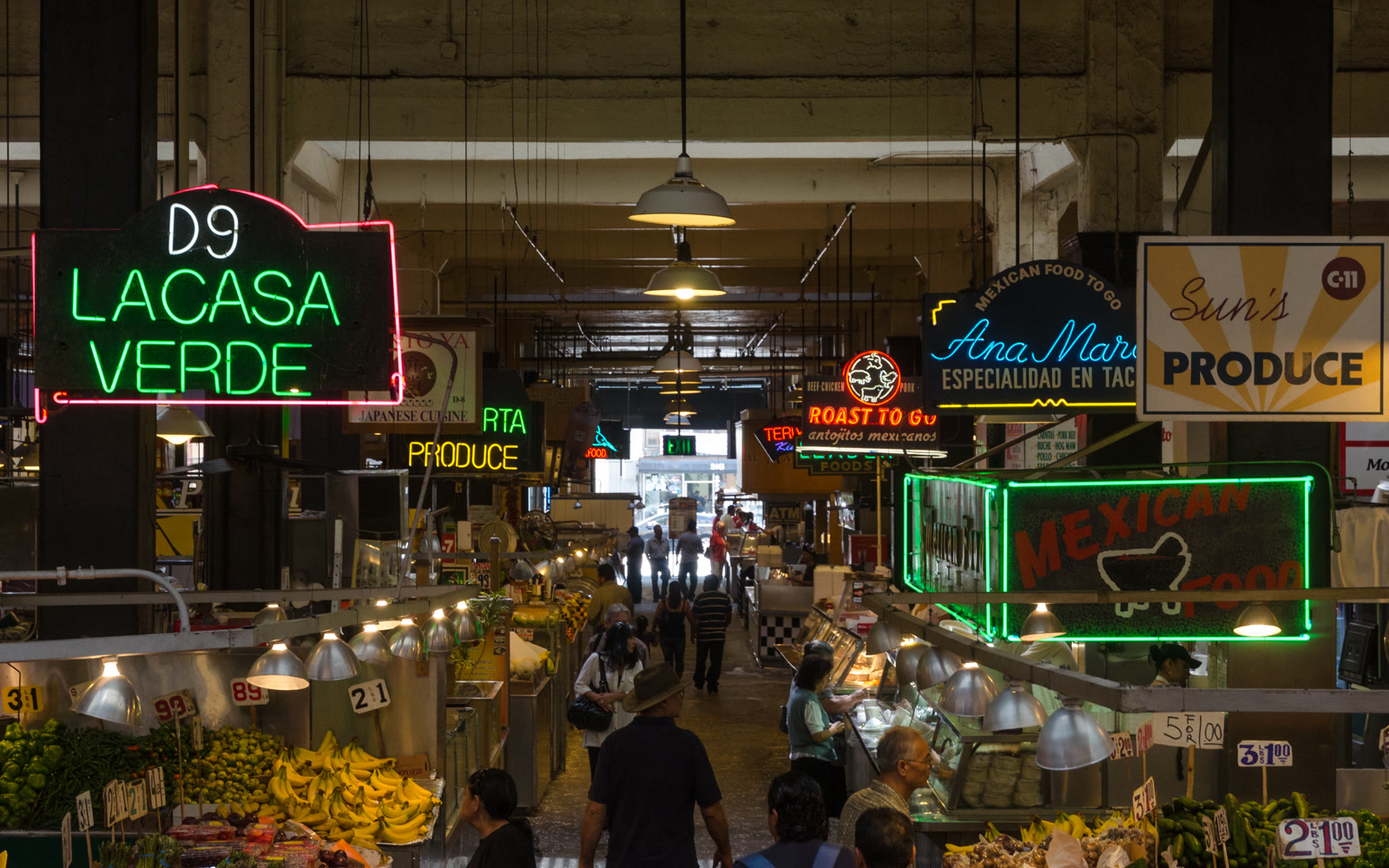
From the market, walk up the hill to Grand Avenue. The Walt Disney Concert Hall, Frank Gehry’s steel-sailed building, is worth the walk for the outside alone, and the garden behind it is a quiet place to sit. The Broad is on the same street.
Then go east to the Arts District, the old warehouse neighborhood across the freeway, where galleries, murals and coffee roasters fill the brick buildings. On the way, stop at Union Station and Olvera Street, the oldest part of the city — a narrow Mexican marketplace on the site where Los Angeles was founded.
The Neighborhoods Worth a Wander (Silver Lake, Los Feliz, Koreatown)
If you have a free afternoon, skip another attraction and walk a neighborhood instead.
Silver Lake, east of Hollywood, is the city’s coffee-and-cafe neighborhood: the reservoir walk is the local loop, and Sunset Junction is the crossroads of shops and restaurants.
Los Feliz sits at the southern edge of Griffith Park, below the observatory hill. Vermont Avenue is the main street, lined with bookshops and cafes. Barnsdall Art Park, on the hill above, holds Frank Lloyd Wright’s Hollyhock House.
Koreatown is the neighborhood that eats latest — Korean barbecue, late-night cafes and bars that stay open long after the rest of the city has gone quiet. Come hungry and come late.
Free in Los Angeles: The Best Things That Cost Nothing
Some of the best days in Los Angeles cost nothing at all. Griffith Observatory is free. The Getty Center is free — you pay for parking, not admission. The Broad is free. Walking the Santa Monica Pier is free, and so is the beach. The Walk of Fame is free. Grand Central Market costs nothing to enter. The views of the Hollywood Sign from Griffith Observatory and Lake Hollywood Park are free.
The one free thing that needs a warning is Runyon Canyon, the hiking park in the Hollywood Hills. The West Trail was closed for over a year after the Sunset Fire in January 2025. Local reporting in February 2026 said it had reopened, but the city’s own parks page still lists it closed. Check the LA Parks page the morning you plan to go.
How Many Days Los Angeles Really Needs
Three days is the honest minimum: one day for Hollywood and Griffith Park, one day for the coast, one day for Downtown and the museums. A fourth day buys a studio day — Universal or Warner Bros, not both. A fifth buys the neighborhoods at walking pace. Disneyland is not part of this count; it is a sixth day, in Anaheim, on its own.
Where you stay matters: a central base — West Hollywood, Silver Lake or Los Feliz — saves more time than any shortcut.
FAQ
Do I need a car in Los Angeles?
For this plan, yes. Metro reaches Downtown, Hollywood and Santa Monica, but the Getty, Malibu and the studio lots are awkward without a car. If you do not want to drive, base yourself in West Hollywood or Santa Monica and use rideshare.
Is Disneyland in Los Angeles?
No. Disneyland is in Anaheim, in Orange County, about 27 to 30 miles southeast of Downtown Los Angeles — 45 to 60 minutes in light traffic, 90 minutes or more at rush hour. It is a separate day trip, and searching for things to do in Los Angeles CA will not change that geography.
Can I walk up to the Hollywood Sign?
No. The letters sit on fenced, monitored ground on Mount Lee — see them from Griffith Observatory, Lake Hollywood Park, or the trail to the ridge behind the sign.
Is the Getty Center closing?
Yes. From March 15, 2027, the Getty Center closes for modernization work until spring 2028. If your trip is before then, go — and book the free timed-entry reservation early.
Is three days enough for Los Angeles?
Yes, if you group by area: Hollywood and Griffith Park, the coast, and Downtown with the museums. A fourth day buys a studio day, and a fifth buys the neighborhoods.
The Short Version
Los Angeles is five cities held together by freeways, so plan by area: Hollywood and Griffith Park for the sign and the observatory, the coast for Santa Monica, Venice and Malibu, the museum corridor for the Getty, LACMA, The Broad and the Academy Museum, Burbank for the studios, and Downtown for the market. The best things are often free — the observatory, the Getty, the Broad, the pier walk — and the rest are worth booking ahead. Disneyland is in Anaheim, not Los Angeles, and it needs its own day. Three days is the minimum; five is comfortable.