
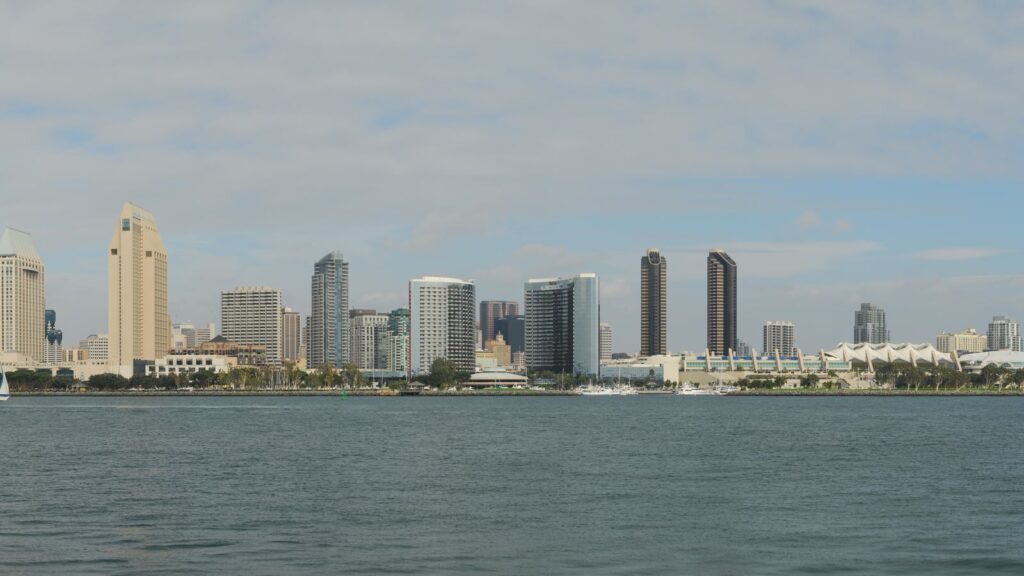
San Diego is the easiest big American city to plan badly. The things to do in San Diego are spread across the county — Balboa Park sits on a mesa above downtown, La Jolla is up the coast, Coronado is across the bay — and the usual lists hand you 22 stops with no order at all. This guide groups the city into pockets, one per day, with the cost and the real time each one takes. Three days covers it. You will want a car for most of it: most things sit 15 to 30 minutes apart by car, and the trolley does not reach the beaches or the airport. Every price and hour below was checked in November 2026.
San Diego spreads out: group by pocket or pay for it
The mistake is treating San Diego like a downtown city. It is not. Balboa Park and the Zoo sit together on one mesa, the Embarcadero museums line up along a single waterfront walk, and La Jolla stacks a cove, a bluff reserve and an aquarium within a few miles. Drive between pockets and the day falls apart; stay inside one pocket and it runs itself. The three pockets are Balboa Park and the Zoo, the Embarcadero and Coronado, and La Jolla and the coast. With 70 miles of coastline and more than 260 sunny days a year, the weather almost never decides the plan.
Balboa Park: the park that eats a whole day
Balboa Park is 1,200 acres of Spanish Colonial Revival architecture, gardens and museums above downtown, and it can swallow a whole day without trying. The grounds are free: the Botanical Building and its lily pond, the walkways along El Prado and the Alcazar Garden cost nothing to wander. The 17 museums charge individually, most of them roughly $10 to $35 for adults, and hours vary from building to building. Pick two museums, not six: the Museum of Art and the Natural History Museum are the two most people come back for.
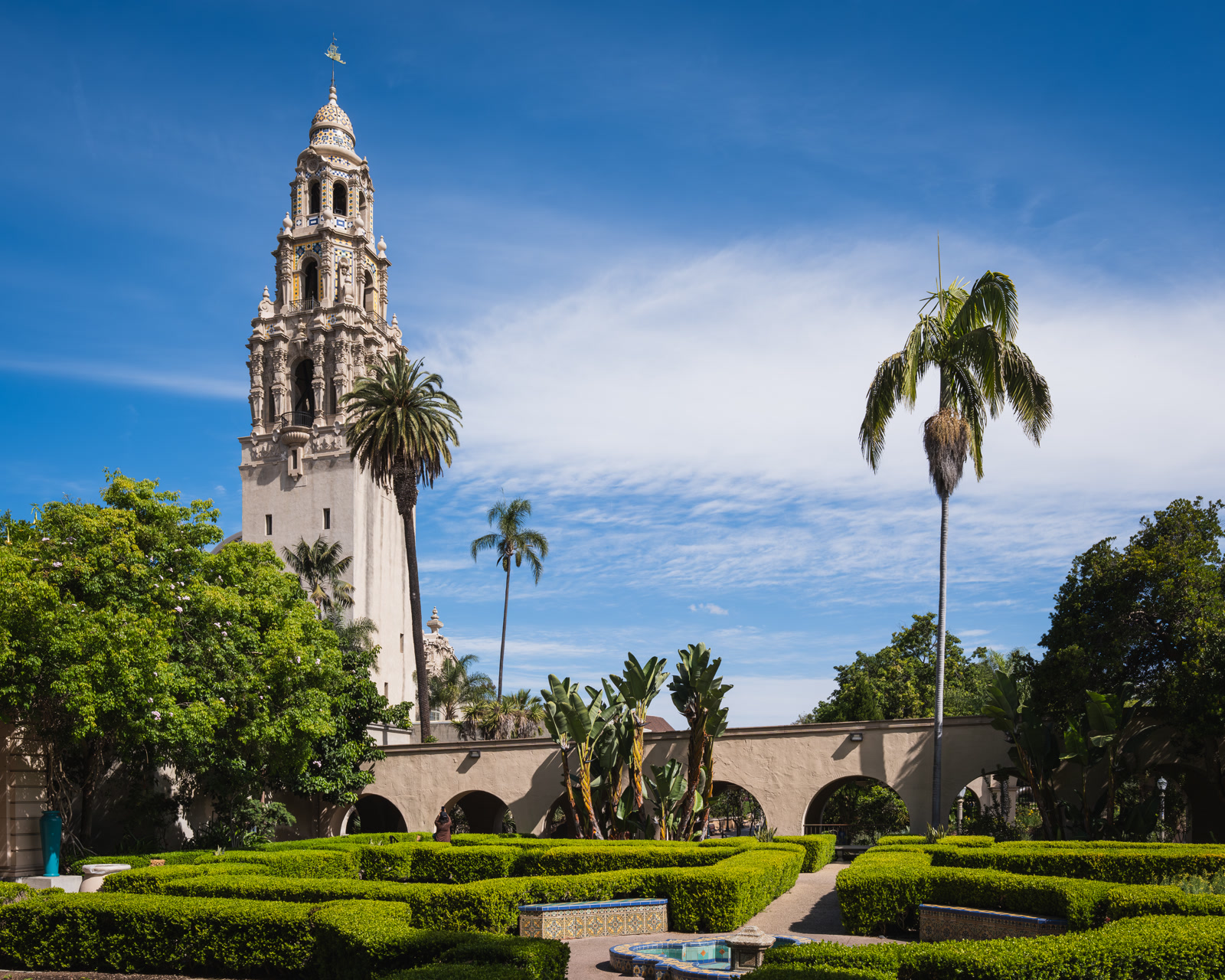
For more than two museums, do the maths on the Explorer Pass first. The Parkwide Pass costs $78 for adults and $52 for children, covers 16 of the park’s museums, and is valid for seven consecutive days. The one-day Limited Pass covers any four museums for $66 per adult. The pass does not cover the Zoo or the Comic-Con Museum. Plan the museums for the morning, the free gardens for the hot afternoon.
The Zoo: the full-day decision
The San Diego Zoo sits inside Balboa Park on 100 hilly acres, and it is a full day on its own — not a half day you bolt onto the park. It holds almost 4,000 animals in canyon habitats, and the zoo recommends allowing at least four to six hours. A 1-Day Pass costs $78 for adults and $68 for children 3 to 11, under 3 free, including the Guided Bus Tour and the Skyfari tram — take the bus tour first. Value Days bought online in advance cost $73 for adults and $63 for children. The zoo opens at 9 a.m. every day and closing time changes with the season; in November it closes at 5 p.m. Parking costs $16 per car per day since January 5, 2026. Do the Zoo on its own day and the rest of Balboa Park on another.
The Embarcadero: the Midway, the Maritime Museum and the bay
The Embarcadero is the one pocket you can do without a car. Start at the USS Midway Museum, at 910 N. Harbor Drive on Navy Pier: the carrier served for 47 years, and you walk the hangar deck, the berthing spaces, the engine room and the flight deck. Adult tickets are $39 online or $41 at the door, youth 4 to 12 are $29 online or $31 at the door, veterans $26, children 3 and under and active-duty military free. Open daily 10 a.m. to 5 p.m., last admission 4 p.m., closed only Thanksgiving and Christmas Day. Allow four to five hours.

Next door, the Maritime Museum is a floating museum of historic ships, and one ticket covers the whole fleet. The centrepiece is the Star of India, an 1863 iron barque and the world’s oldest active sailing ship, alongside the 1898 steam ferry Berkeley and the Soviet submarine B-39, which you can climb through. Open daily 10 a.m. to 5 p.m. Walk south to Seaport Village for the bay views. This pocket is flat and walkable — nothing here needs a reservation or a car.
La Jolla: the cove, the sea lions and the tide pools
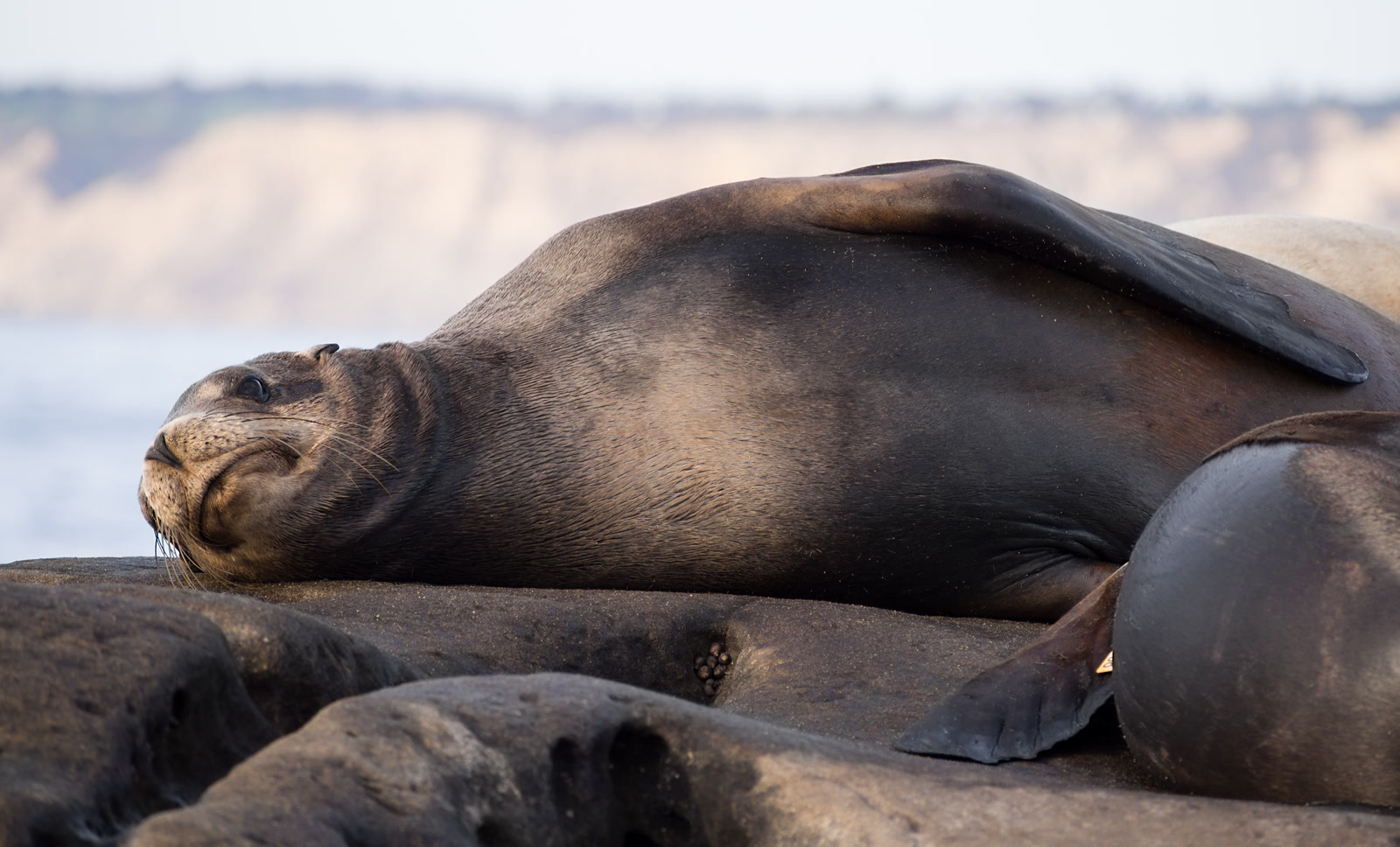
La Jolla is the prettiest pocket in San Diego, and the one most people get wrong: they go to the wrong beach for the wrong animal. La Jolla Cove is the small, cliff-framed beach below Ellen Browning Scripps Park, inside the San Diego–La Jolla Underwater Park Ecological Reserve. The snorkelling is the city’s signature shore snorkel: garibaldi in the kelp, bat rays, sea lions, visibility 15 to 30 feet on a calm day. Go on a calm summer or early-fall morning — the entry is surge-prone, for confident swimmers only. The sea lions haul out on the rocks year-round, and the viewing is free from the walkway above.
The leopard sharks are the trap. They do not gather at the Cove. They gather over the warm, sandy shallows at La Jolla Shores, about a mile north, roughly off The Marine Room restaurant, from June through December, peaking in August and September. They are harmless, and you can wade out among them for free with your own gear; guided tours run about $54 per person. La Jolla Shores is the gentler beach — wide sand, lifeguards, easy entry — the one for beginners. Harbour seals pup at Children’s Pool in deep winter. North of the Shores, the Torrey Pines trails run along the bluffs. La Jolla is about 20 minutes from downtown; parking at the Cove is the hardest part — arrive before 9 a.m.
Coronado by ferry: the beach and the Hotel del Coronado
Coronado is the easiest half day in San Diego. Flagship runs from two downtown docks — Broadway Pier, hourly, and the Convention Center, every 30 minutes — and the crossing takes about 15 minutes. The fare is $9 one way for ages 4 and up, under 4 free, with no round-trip discount — the return costs another $9. Tickets are valid on any departure on your route, but check the timetable before your last boat home. It is a passenger boat, and a transit pass does not cover it.
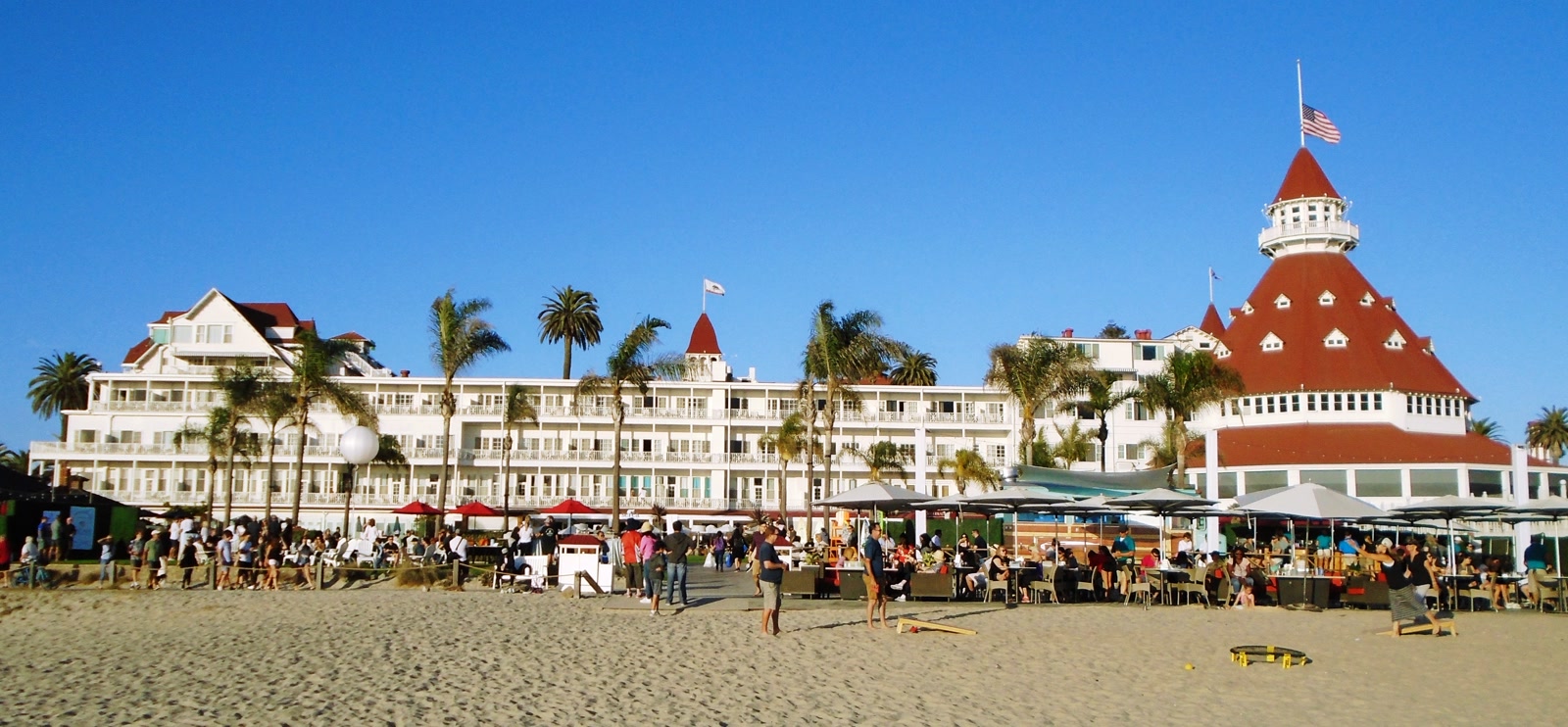
Coronado Beach is a mile and a half of wide, flat sand that sparkles with mica — the beach to come to for space rather than surf. Behind it stands the Hotel del Coronado, the red-turreted Victorian hotel that opened in February 1888, a National Historic Landmark on 28 oceanfront acres. Its verandas and restaurants are open to non-guests. Orange Avenue has the shops and cafés, and the island — technically a peninsula — is flat and easy on foot or by bike. Take the evening ferry back for the skyline.
Old Town and the Gaslamp: the two histories
Old Town and the Gaslamp are the two histories of San Diego, ten minutes apart by trolley. Old Town is where California began: the first European settlement in California was established here in 1769, when the Spanish built the Presidio and the Mission above the river. Old Town San Diego State Historic Park, established in 1968, recreates the Mexican and early American town of 1821 to 1872 in five original adobe buildings, including La Casa de Estudillo, built around 1827. Admission to the park and its museums is free.
The Gaslamp Quarter is the other history: sixteen and a half blocks of Victorian-era buildings between Fourth and Sixth Avenues, from Broadway to Harbor Drive, listed on the National Register in 1980. Alonzo Horton bought the land in 1867 and built the New Town that became downtown; the Davis-Horton House, built in 1850, is the oldest building downtown and holds the Gaslamp Museum. The district spent decades as the Stingaree, a saloon and gambling quarter, before the 1970s restoration turned its Victorian facades into restaurants, bars and theatres. Come in the evening, when the lamps are on. Petco Park sits at its edge, home of the Padres, the region’s only big-league team.
Free in San Diego: the best things that cost nothing
San Diego is an expensive city to do badly and a generous one to do slowly, because the best half of it is free. The grounds and gardens of Balboa Park cost nothing, including the Botanical Building and the lily pond. The sea lions at La Jolla Cove are free to watch, and so is the snorkelling with your own gear. Sunset Cliffs in Point Loma is free, and it is the best sunset in the city. Old Town’s park and museums are free, the Gaslamp is free to walk, and Coronado Beach is free to sit on all day. The catch is that free does not mean cheap to reach: the bus and trolley cover downtown, Old Town and the Gaslamp at $3 a ride with a $7 daily cap, but the beaches and La Jolla are a car or a rideshare away. Budget for the car.
The theme-park question: SeaWorld, LEGOLAND and the Safari Park
Three parks, three different days, and the honest answer is that you should pick one. SeaWorld sits on Mission Bay, and the ticket is the whole decision: dated single-day tickets start from about $60 online, while the gate price is around $127 — never pay at the gate. Parking is $32 a car. LEGOLAND is in Carlsbad, 30 minutes north on the I-5, built for children aged 2 to 12 — older children should skip it. One-day tickets start from about $79 online and $119 at the gate, and parking is $40. The San Diego Zoo Safari Park is the third choice, in Escondido about 30 miles north, for animal lovers who already did the Zoo: the same $78 adult admission, $20 parking, and open-range habitats the downtown zoo cannot fit. Each park needs a full day and a car — choose one.
FAQ
Is 3 days enough for San Diego?
Yes. One day each for Balboa Park and the Zoo, the Embarcadero and Coronado, and La Jolla and the coast. A fourth day adds a theme park.
Do I need a car in San Diego?
For most trips, yes. Most things sit 15 to 30 minutes apart by car, and the trolley does not reach the beaches, La Jolla or the airport.
What is the best time of year to visit San Diego?
September and October, when the water is warmest and the crowds have thinned. The city gets more than 260 sunny days a year — but the leopard sharks are only at La Jolla Shores from June through December.
Is San Diego expensive?
The Zoo at $78, the Midway at $39 online, the ferry at $9 each way, the theme parks from about $60 to $79 online. The counterweight: Balboa Park’s grounds, the sea lions, Sunset Cliffs, Old Town and Coronado Beach are all free.
Can you do San Diego without a car?
Downtown, Old Town and the Gaslamp, yes. The beaches, La Jolla, Coronado and the theme parks need a car or a rideshare. Without a car, plan the coast as one rideshare day.
Is La Jolla worth it?
Yes — the Cove, the sea lions, the snorkelling and the Shores are the best half-day in the city. Go to the Shores for the leopard sharks, not the Cove, and arrive before 9 a.m.
The Short Version
The things to do in San Diego work when you group them by pocket instead of chasing a list across the county. One day for Balboa Park and the Zoo, one day for the Embarcadero and Coronado by ferry, one day for La Jolla and the coast. The Zoo is a full day, the Midway needs four hours, the leopard sharks are at the Shores, not the Cove, and the theme parks are one each. Start early, drive between pockets, walk inside them.