
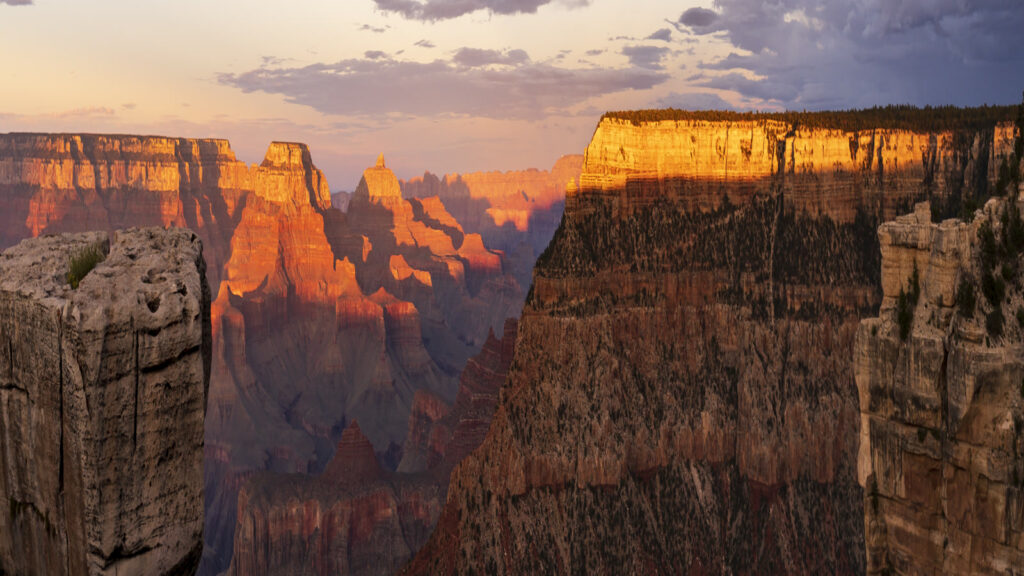
A grand canyon in one day trip works — but only if you treat it as one day and nothing more. This plan covers the South Rim’s best viewpoints, one short hike below the rim, and the sunset, in that order. It does not try to reach the river, and it does not pretend a day is enough for the whole park: the canyon runs 277 miles, and the South Rim alone deserves a week. What one day does give you is the classic Grand Canyon — the wide views, the stone tower at Desert View, the trail below the rim, and the light at Hopi Point. The order is the whole trick.
One warning before the plan: this is a day trip, not an overnight stay. The lodges inside the park have taken no overnight guests since 31 August 2026, after a flash flood broke the waterline that supplies the South Rim. The closure runs through 19 November 2026, and the lodges plan to reopen on 20 November — but that date is a plan, not a promise, and it has already moved three times. Sleep in Tusayan, seven miles south of the South Entrance, or in Flagstaff, and check the park’s alerts before you book anything inside the park.
Can you do the Grand Canyon in one day? The honest answer
Yes — for the South Rim’s highlights. A single day buys you the Desert View Drive, the Village viewpoints, one short hike below the rim, the Hermit Road viewpoints and the sunset, between an early start and a 5 p.m. sunset in November. What one day does not buy you is the river. Phantom Ranch is closed through at least 31 January 2027, both river bridges are closed, and the North Kaibab Trail is closed, so there is no rim-to-river hike to attempt — and the park’s own rule is not to try the rim-to-river round trip in a day anyway. The North Rim is a different trip entirely, about five hours and 220 miles away. If you have more than a day, our Grand Canyon Itinerary spreads the same ground over three days. If you have one day, this is the plan.
The one-day route: east entrance to sunset in order
Enter at the East Entrance, at Desert View, and drive west along the rim to the Village, then out along Hermit Road to Hopi Point for sunset. The day runs like this: Desert View and the Watchtower first thing, the Desert View Drive viewpoints through the morning, Mather Point and the Village around midday, the South Kaibab Trail down to Ooh Aah Point in the early afternoon, the Hermit Road shuttle through the late afternoon, and Hopi Point for the sunset. In mid-November the sun sets around 5:15 p.m., so start at first light and do not linger over breakfast. From Flagstaff, the East Entrance is about two hours away via US-89 and Cameron; if you come in through the South Entrance instead, run the same stops in reverse and leave by the East Entrance.
Morning: Desert View Drive and the Watchtower
Start at Desert View, the South Rim’s eastern end. The 23-mile Desert View Drive runs west from here to Grand Canyon Village, past six developed viewpoints, and it is open to private cars all year. Stop at three of them: Grandview Point, at 7,399 feet, with the widest east-to-west panorama on the drive and several bends of the Colorado River in view; Moran Point, at 7,160 feet, named for the painter Thomas Moran; and Navajo Point, at 7,461 feet the highest developed overlook on the South Rim, with the Watchtower in view to the east. Skip Lipan Point: it is closed to all visitors from 22 June through 23 December 2026 for rehabilitation work, and Navajo Point gives you the same eastern view. The drive takes about 45 minutes without stops; with three viewpoints, allow two hours.
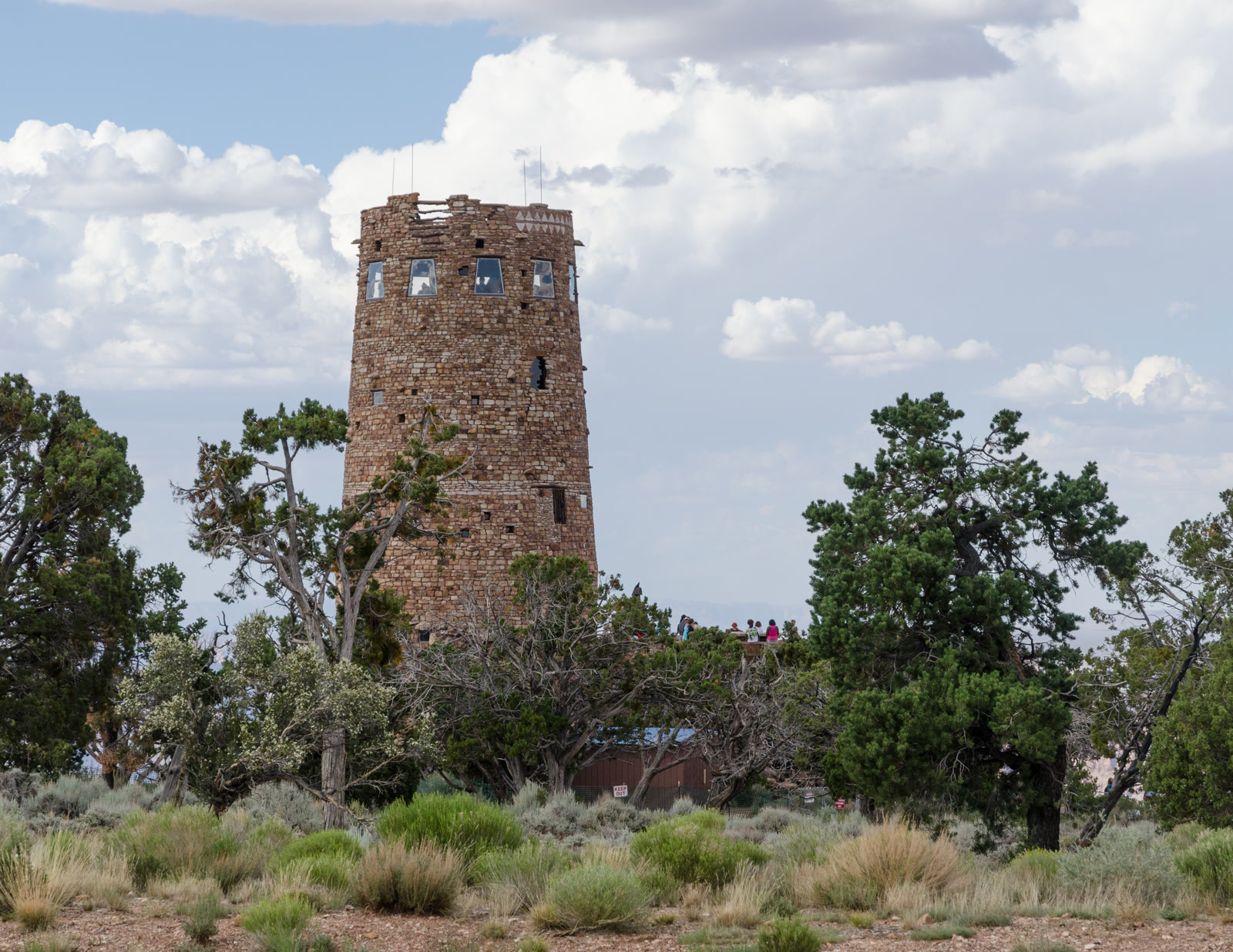
The Watchtower is the reason to start here. Mary Colter designed it for the Fred Harvey Company and it was completed in 1932 — a 70-foot stone tower with a 30-foot base, built as a re-creation of an Ancestral Puebloan watchtower, with a steel frame hidden inside the stonework. Climb the 85 interior steps for the view from 7,438 feet, and look at the walls on the way up: the murals are by Hopi artist Fred Kabotie, painted in 1932. Check the tower’s hours before you go; Desert View Point outside it is open all day.
Midday: Mather Point, the Village and lunch
By midday you are at Grand Canyon Village, and the first stop is Mather Point, a short walk from the Visitor Center parking area. It is the busiest viewpoint in the park for a reason: the canyon opens up here in both directions, and the fenced overlooks let you stand right at the edge without a hike. Walk the paved Rim Trail west from Mather Point for ten minutes and the crowds thin fast — the trail runs 12.8 miles from here to Hermits Rest, flat and mostly paved. The Yavapai Geology Museum, a little further west along the rim, explains the rock layers you have been looking at all morning.
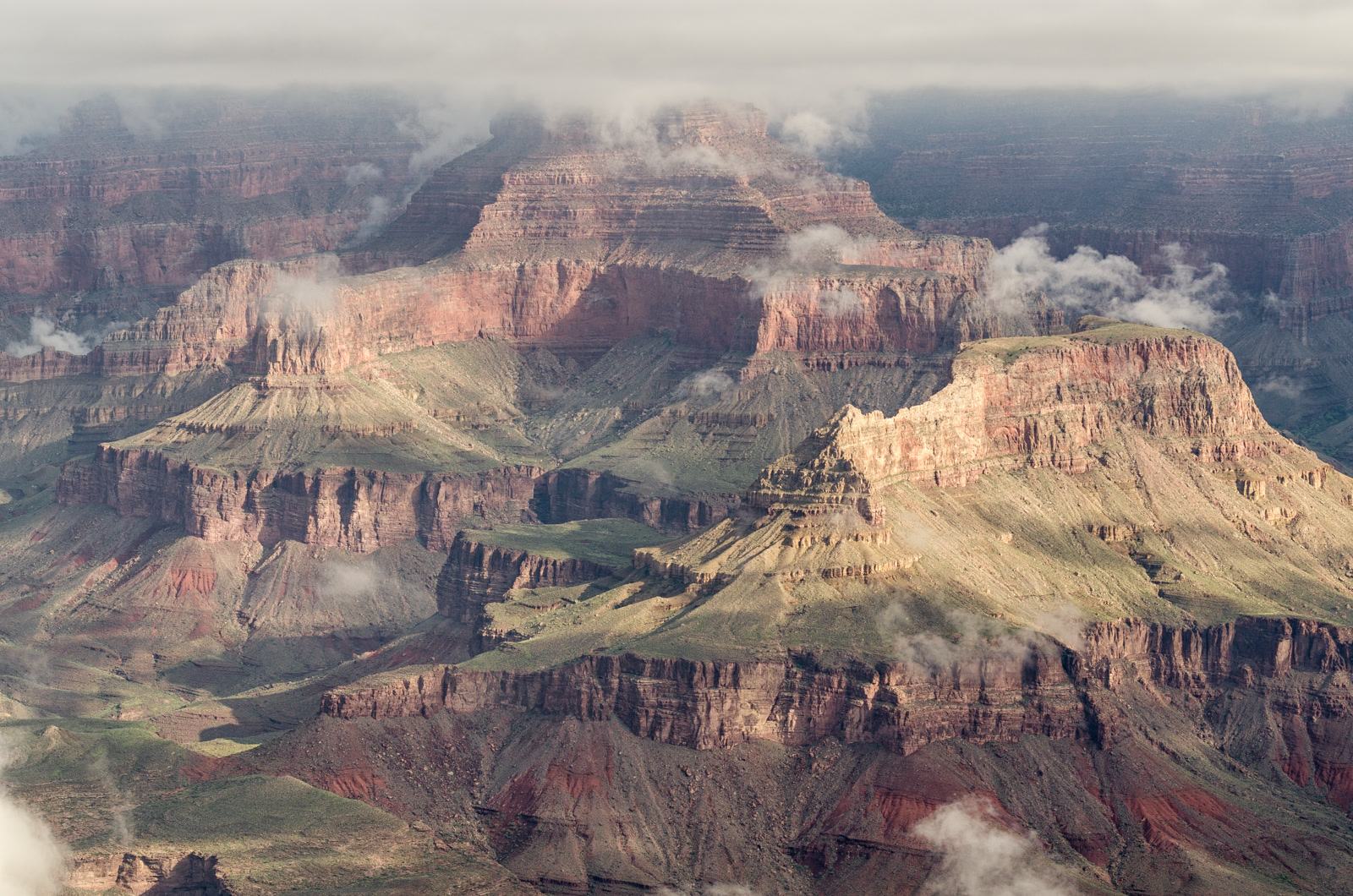
Eat in the Village. The lodges’ dining rooms and the food court stay open for day visitors, though under the Stage 4 water restrictions some places shorten their hours, so check the board at the Visitor Center rather than assuming a late lunch. Fill your water bottles here: water below the rim is unreliable, and what you bring is the only guaranteed water on the afternoon hike. Buy the park pass on the way in if you have not already — $35 per private vehicle, valid for seven days, card only, no cash at the entrance stations. Non-US residents aged 16 and over pay an extra $100 per person on top of that, unless they enter with an annual or America the Beautiful pass.
Afternoon: below the rim — one short hike, not the river
The afternoon belongs to the South Kaibab Trail, the one short hike in this plan. Take the free Kaibab Rim (Orange) shuttle from the Visitor Center to the trailhead — private cars cannot reach it — and walk down to Ooh Aah Point, 0.9 miles down and 1.8 miles round trip, about 600 feet below the rim and one to one and a half hours there and back. The trail follows an exposed ridge, so the views open up from the first switchback, and Ooh Aah Point is the first wide panorama. Turn around there. The trail stays open down to Black Bridge, but the river is seven miles down, both bridges are closed, and the climb back out is the hard part — every step down has to be climbed again, in the open, with no water and no shade anywhere on the trail.
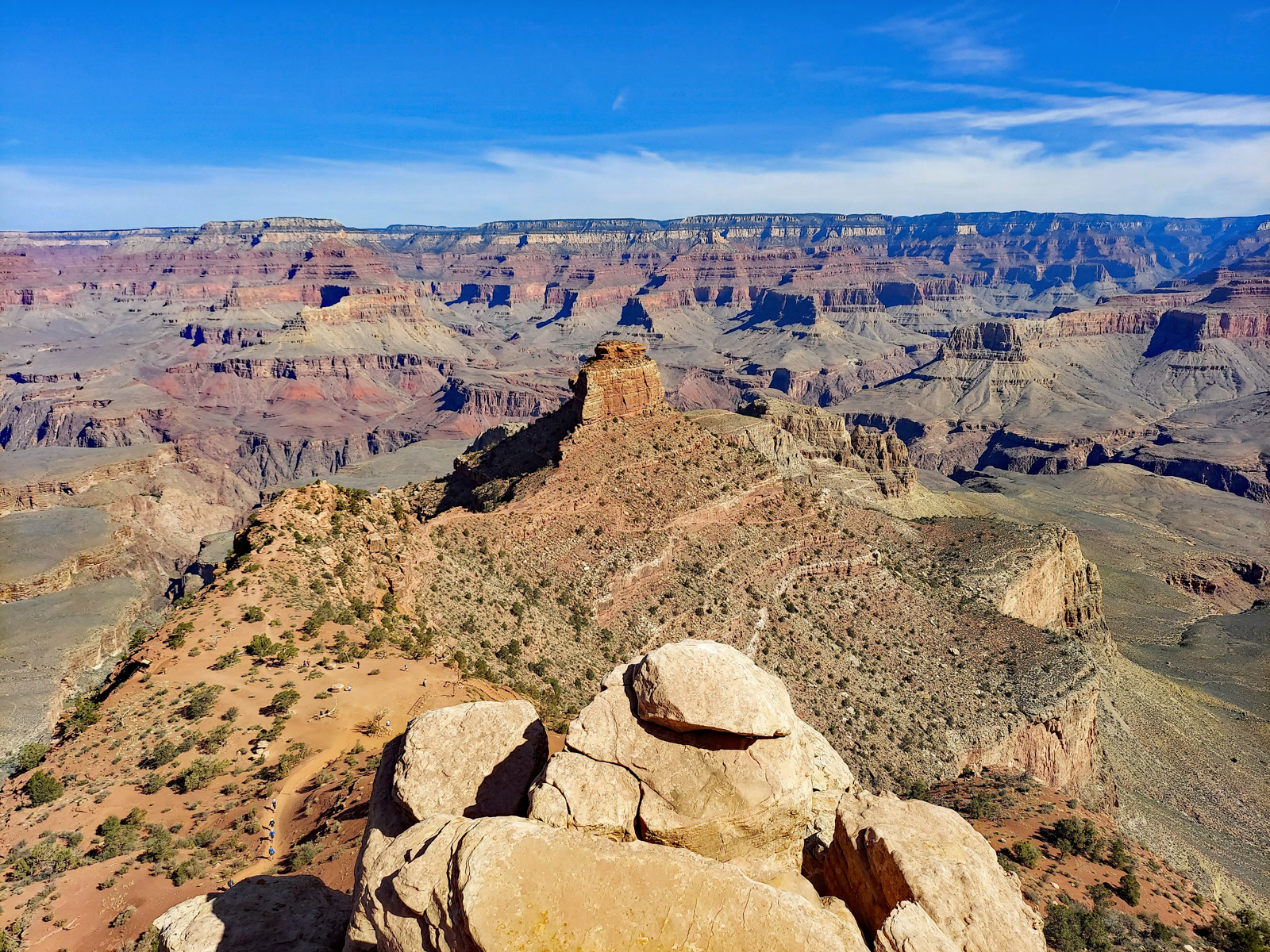
If you are strong and the light is good, Cedar Ridge is the only extension worth considering: three miles round trip, about two and a half to three hours. Whatever you choose, start early in the afternoon: the Orange shuttle starts at 6 a.m. and runs about every 15 to 20 minutes until an hour after sunset, with an early Hikers’ Express from Bright Angel Lodge at 6, 7 and 8 a.m. — but the sun sets early in November, and the climb out takes longer than the walk down. Check the trail and water status board at the trailhead before you start, and treat every water source below the rim as unconfirmed until you see it running.
The Hermit Road shuttle and the viewpoints that matter
Back on the rim, take the Hermit Road (Red) shuttle west from the Village. Hermit Road is closed to private cars from 1 March through 30 November, so the free shuttle is the only way along it for most of the year — first bus at 8 a.m., every 12 minutes, 80 minutes round trip if you stay on the bus. Get off at three stops and skip the rest: Mohave Point, for the river view straight below; Pima Point, the widest westward panorama on the road; and Hermits Rest, Mary Colter’s 1914 stone building at the end of the road, where the shuttle turns around. The bus stops at every viewpoint on the way out, but on the way back it only stops at Hermits Rest, Pima, Mohave and Powell. The last bus leaves one hour after sunset.
Sunset at Hopi Point
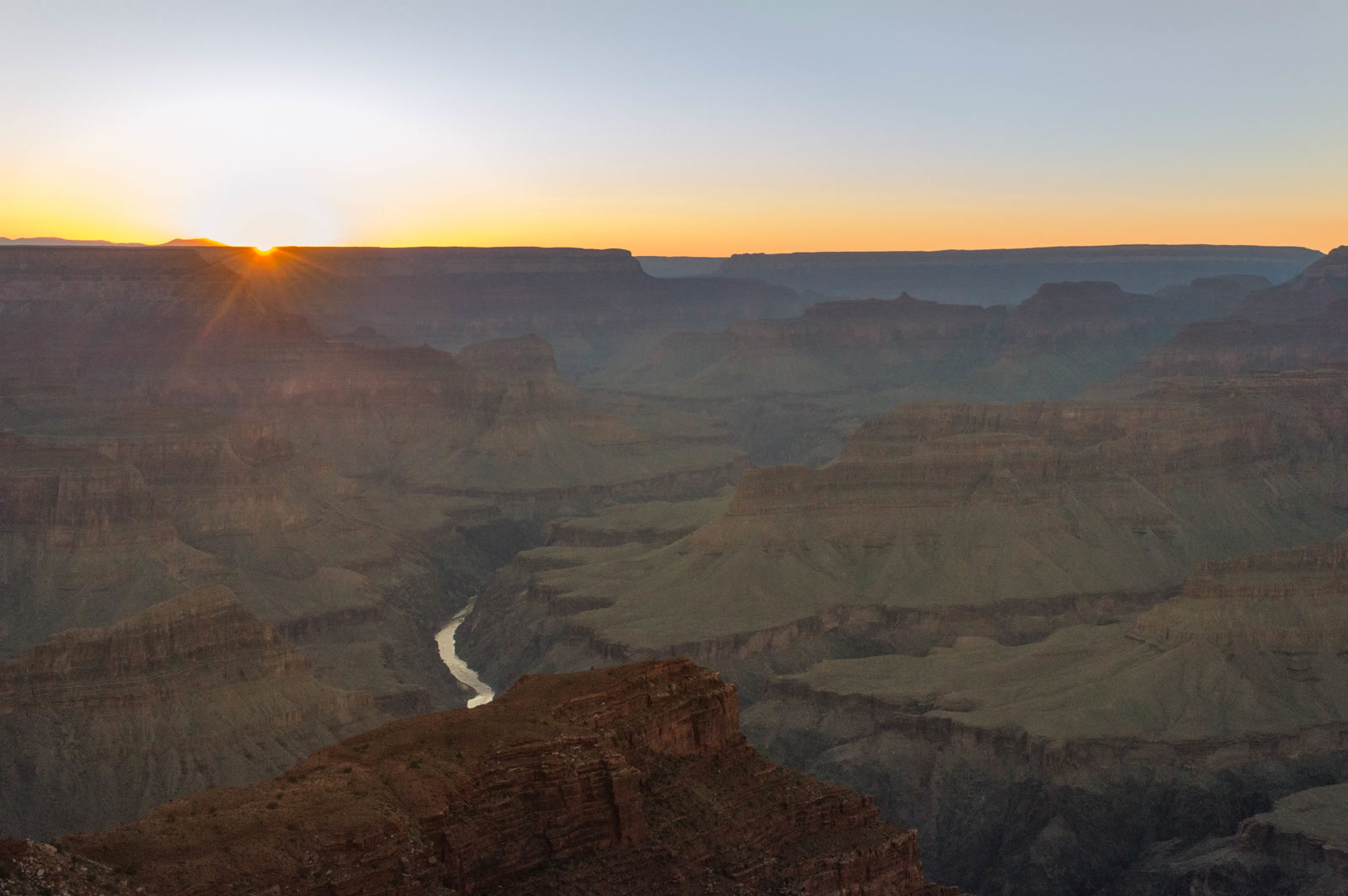
End the day at Hopi Point, the classic sunset viewpoint on the South Rim. The point juts further into the canyon than the viewpoints around it, so the sunset fills the whole western sky and the light runs along the rim in both directions. Arrive at least 45 minutes before sunset — in mid-November that means around 4:30 p.m. — because the good standing spots go early and the shuttle fills up. Stay for the whole sunset and a few minutes after: the light on the canyon keeps changing after the sun drops, and the rim goes quiet in a way it never is at midday. Then catch the last Red shuttle back to the Village, or walk the Rim Trail back if you still have light — it is flat, paved, and the walk takes about half an hour.
Getting there and back: Flagstaff, Sedona, Phoenix and Las Vegas
Most one-day visitors base themselves in Flagstaff, 80 miles and about an hour and a half from the South Entrance via US-180. Phoenix is 230 miles and three and a half to four hours via I-17 and US-180 — leave by 6 a.m. at the latest, or the drive eats the morning. Las Vegas is about 275 miles and four and a half hours, too far for a comfortable single day; from Las Vegas, stay overnight in Tusayan or Flagstaff instead. Sedona sits on the Phoenix route via AZ-89A and is worth a stop on the way back, but not on the way there: every hour in Sedona is an hour off the canyon. Williams, 60 miles south on I-40 and AZ-64, is a good fallback if Flagstaff is full.
FAQ
Is one day enough for the Grand Canyon?
For the South Rim’s highlights, yes: the Desert View Drive, the Village viewpoints, one short hike below the rim and the sunset all fit in a day if you start early and follow the order in this plan. It is not enough for the river, the North Rim or any overnight hike.
Do I need a reservation to enter the park?
No. There is no timed entry or reservation to enter Grand Canyon National Park in 2026. You pay the entrance fee — $35 per private vehicle, valid seven days, card only — or show an accepted pass.
Can I stay overnight inside the park?
Not right now. The in-park lodges have taken no overnight guests since 31 August 2026 and are closed through 19 November 2026, with a planned reopening on 20 November that is still tentative — stay in Tusayan or Flagstaff.
Can I drive Hermit Road myself?
Only in December, January and February, when the road is open to private vehicles under 22 feet. From 1 March through 30 November it is shuttle, foot, bicycle or commercial tour only.
Can I hike to the river and back in one day?
No — and right now you cannot reach it at all. Both river bridges, Phantom Ranch and the North Kaibab Trail are closed, and the park’s own advice is never to attempt a rim-to-river round trip in a single day. Ooh Aah Point, 1.8 miles round trip, is the right turnaround for a one-day visit.
What does it cost to enter the park?
$35 per private vehicle, valid for seven days and covering everyone in the car. Non-US residents aged 16 and over pay an extra $100 per person unless they enter with an annual or America the Beautiful pass. Entrance stations take cards only — no cash.
The Short Version
This grand canyon in one day plan works because of its order: enter at the East Entrance, drive Desert View Drive west past Grandview, Moran and Navajo Points to the Watchtower, reach the Village by midday for Mather Point and lunch, hike the South Kaibab Trail down to Ooh Aah Point in the afternoon, ride the Hermit Road shuttle to Mohave and Pima Points, and finish at Hopi Point for the sunset. Start at first light, carry your own water, turn around at Ooh Aah Point, and sleep in Tusayan or Flagstaff — the lodges inside the park are closed through 19 November 2026. One day, one rim, in the right order.