
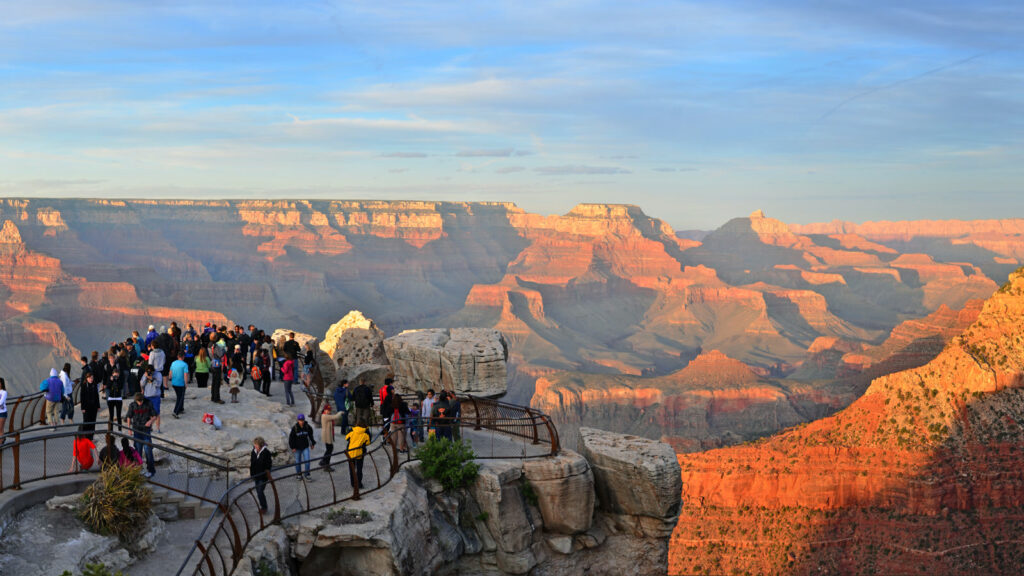
The grand canyon best month to visit is October. The rim is cool enough to walk all day, the summer crowds have gone, the light turns gold, and the North Rim is still open for its last weeks. The two windows that work are April to May and September to October, and October is the best single month inside them. This guide goes month by month, then season by season, with the 2026 catches — the lodging closure, the North Rim fire recovery and the new nonresident fee — stated plainly so you can pick your month with real dates, not vibes.
The short answer: the two windows that work
The Grand Canyon has two good windows, on either side of summer. The first runs from April to May, when the rim warms up, the snow melts off the trails and the summer crowds have not arrived yet. The second runs from September to October, when the heat breaks, the monsoon storms end and the crowds thin out again. Inside those windows, October wins: the average high on the South Rim is about 65°F, the average low about 33°F, and you can walk the Rim Trail and watch the sunset without queuing for a viewpoint. April and May run close behind, and September is nearly as good as October, with warmer evenings and the elk rut starting on the North Rim. If you can only pick one month, pick October. If you want the longest days, pick May. Summer is not a mistake — it is just hotter, busier and wetter — and winter is the park at its emptiest, with snow on the rim.
Grand Canyon month by month
The numbers below are the NOAA 1991–2020 normals for Grand Canyon Village on the South Rim, at 6,785 feet. They describe the rim, where you will spend most of your time. The inner canyon, down by the Colorado River, runs 20 to 30 degrees warmer than the rim in every season, so a pleasant 65°F day on the rim can be a 95°F afternoon at the river.
| Month | Average high | Average low | What it feels like |
|---|---|---|---|
| January | 44°F | 19°F | Cold, quiet, snow on the rim |
| February | 46°F | 21°F | Cold, quiet, snow on the rim |
| March | 54°F | 25°F | Warming up, icy trails |
| April | 61°F | 29°F | Mild days, good hiking |
| May | 70°F | 36°F | Warm, long days |
| June | 82°F | 43°F | Hot and dry, crowds arrive |
| July | 85°F | 50°F | Hottest rim month, monsoon |
| August | 82°F | 50°F | Hot, afternoon storms |
| September | 76°F | 44°F | Cooling down, crowds thin |
| October | 65°F | 33°F | Cool, clear, golden light |
| November | 53°F | 25°F | Cold, quiet, North Rim closing |
| December | 43°F | 18°F | Coldest nights, snow, empty |
Two things jump out. First, the rim never gets truly hot: even July averages 85°F. Second, the nights are cold for most of the year — from October through April the average low is at or below freezing, so a jacket is not optional, even in the months this guide recommends. The canyon’s real heat lives below the rim: at Phantom Ranch the average high in July is 106°F, and daytime highs down there can top 120°F. That gap between rim and river decides whether you can hike below the rim at all.
Spring on the South Rim: the first good window
By April the South Rim averages 61°F in the daytime, the snow is gone from the village paths, and the trails below the rim are open and dry. March is the transition month: the upper parts of the Bright Angel and South Kaibab trails can still be icy in the morning, and the wind is stronger than in any other season. By May the rim averages 70°F, the days are long, and the park feels fully awake: the shuttles run on their full schedule, the Desert View Watchtower is open, and the wildflowers are out on the rim.
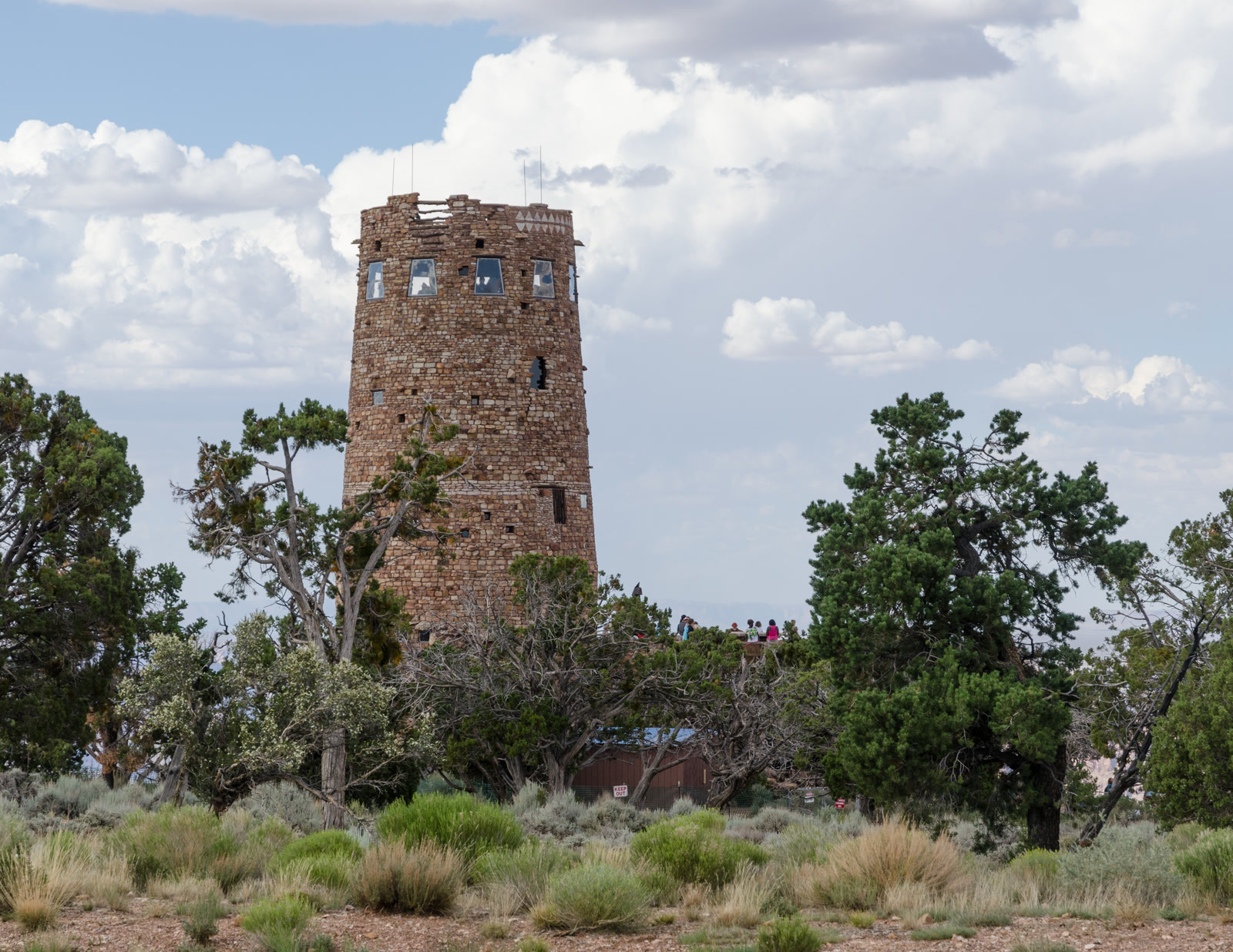
The Desert View Watchtower, built in 1932 to a design by Mary Colter, stands 70 feet tall at the east end of the South Rim, and it is the best first stop in spring: the drive out along Desert View Drive is quiet in April and May, and the watchtower’s top floor gives you the widest view in the park. Spring’s one real catch is the North Rim. It opens on May 15 in a normal year, and in 2026 it reopened on May 15 after the Dragon Bravo Fire, but only for day visits, with no lodging and almost no services. If your trip is in April or early May, plan it as a South Rim trip.
Summer: what the heat and the monsoon actually do
Summer is the busiest season, and the heat is the reason it is not the best one. The rim is manageable — July and August average 82 to 85°F, with low humidity and cool nights — but the inner canyon is a different place. At Phantom Ranch the average high in July is 106°F, and the National Park Service warns that daytime highs down there can top 120°F. The park’s advice is blunt: do not hike in the inner canyon between 10 a.m. and 4 p.m. in summer. Start before dawn, or hike in the evening. Water is the other summer problem: the trails below the rim have limited water, and in 2026 the park is under Stage 4 restrictions after the August flood damaged the Transcanyon Waterline, so carry more than you think you need and check the water status at the visitor centre before you descend.
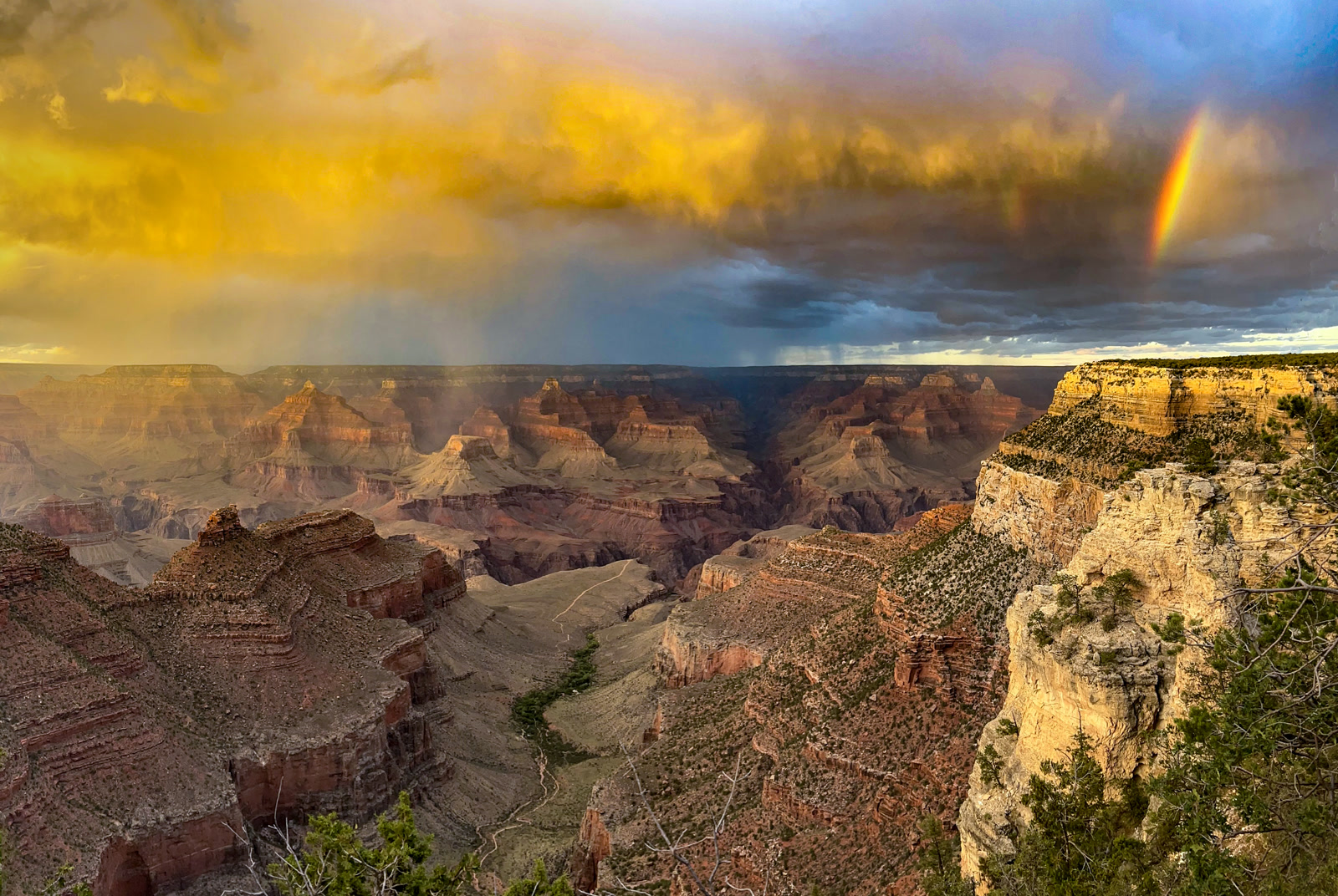
Then there is the monsoon. From mid-July through mid-September, moist air pushes in from the south and builds afternoon thunderstorms: a clear morning, clouds by early afternoon, and a hard, short storm in the late afternoon, sometimes with lightning and flash flooding in the side canyons. The storms are spectacular from the rim — rain shafts hanging over the canyon, rainbows after the rain — but they are dangerous below the rim, where a storm miles away can send a flash flood down a dry wash. Check the forecast every morning in July and August, get off exposed viewpoints when lightning starts, and never enter a slot canyon when rain is forecast. Summer’s upside is real: every road and trail is open and the days are long. If summer is the only time you can go, go — just plan around the heat and the storms instead of through them.
Fall: why October is the best single month
October is the grand canyon best month to visit because everything lines up at once. The average high on the South Rim is about 65°F and the average low about 33°F, so you can hike all day in a light jacket. The summer crowds are gone: the park recorded 4,919,163 visits in 2024, and the bulk of them came in June, July and August, so by October the viewpoints are quiet and the parking lots are half full. The light is the other reason: the sun sits lower, and the red rock glows in the late afternoon in a way it never does under the high summer sun. The aspen groves on the Kaibab Plateau turn gold, and on the North Rim the forest is at its best, with golden trees set against the red rock. October is also the last full month for the North Rim: in 2026 it stays open for limited day visits through November 30, but the services are already gone — the campground closed on October 16, the general store on October 15. September is nearly as good, with warmer days and the elk rut starting on the North Rim, but October’s cooler air and thinner crowds edge it.
Winter: snow on the rim and an empty park
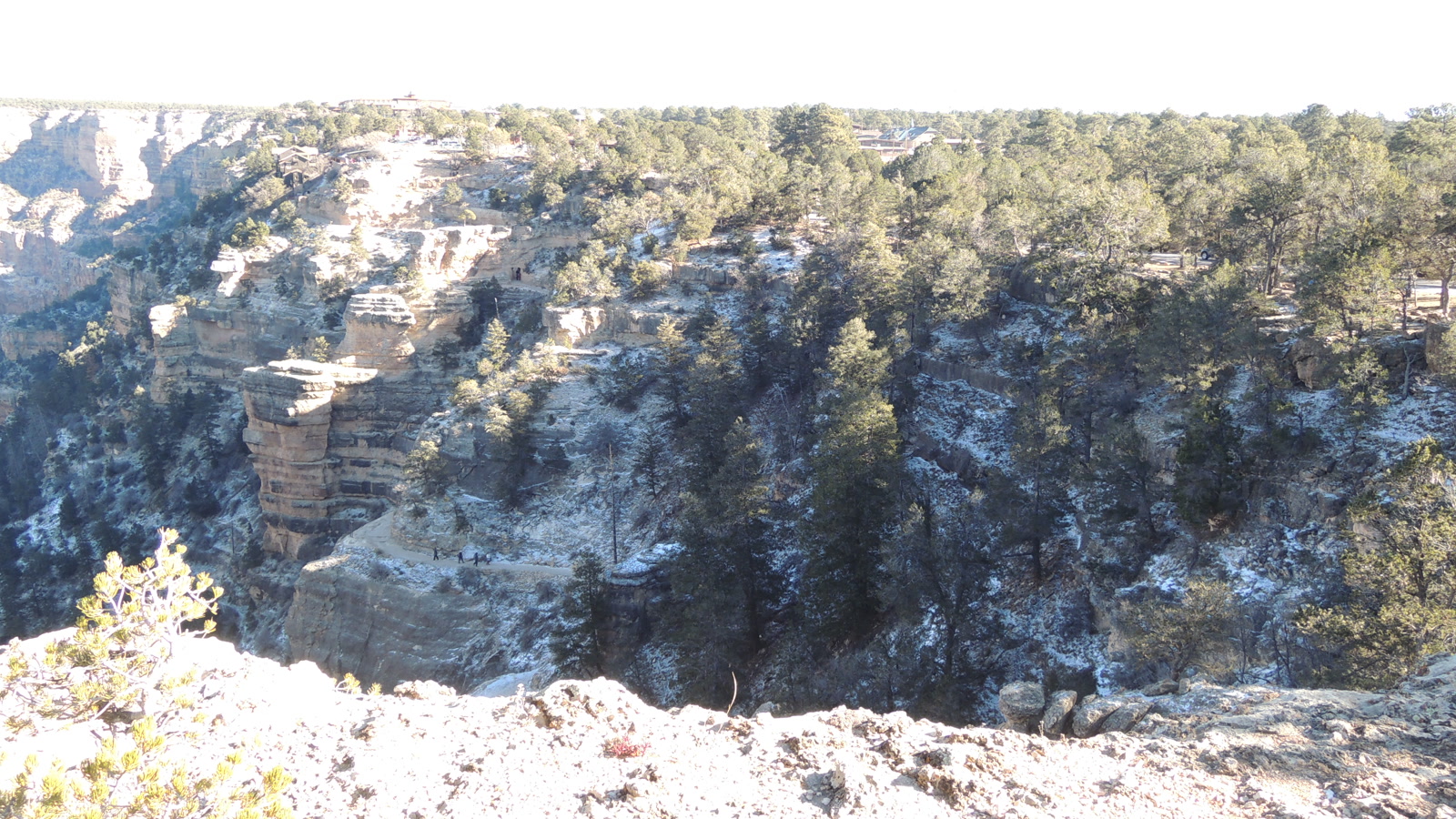
Winter is the Grand Canyon at its emptiest, and the most underrated season in the park. The South Rim stays open all year, 24 hours a day, and in December and January the average high is in the low to mid 40s with lows in the teens and low 20s. Snow falls on the rim, the red rock turns white at the edges, and the viewpoints that were packed in July have a handful of people on them. The trade-offs are real: the days are short, the wind is cold, and the upper parts of the Bright Angel and South Kaibab trails ice over, so you need traction devices on your boots and should not hike below the rim without checking trail conditions first. Hermit Road, shuttle-only from March through November, opens to private cars in December, January and February, so winter is the one season you can drive the whole rim road yourself. The lodges are the other winter story: in 2026 the in-park hotels have been closed since August 31, with a reopening planned for November 20, so a December trip should be able to stay inside the park again — but check before you book, because the date is a plan, not a promise.
South Rim vs North Rim: two different calendars
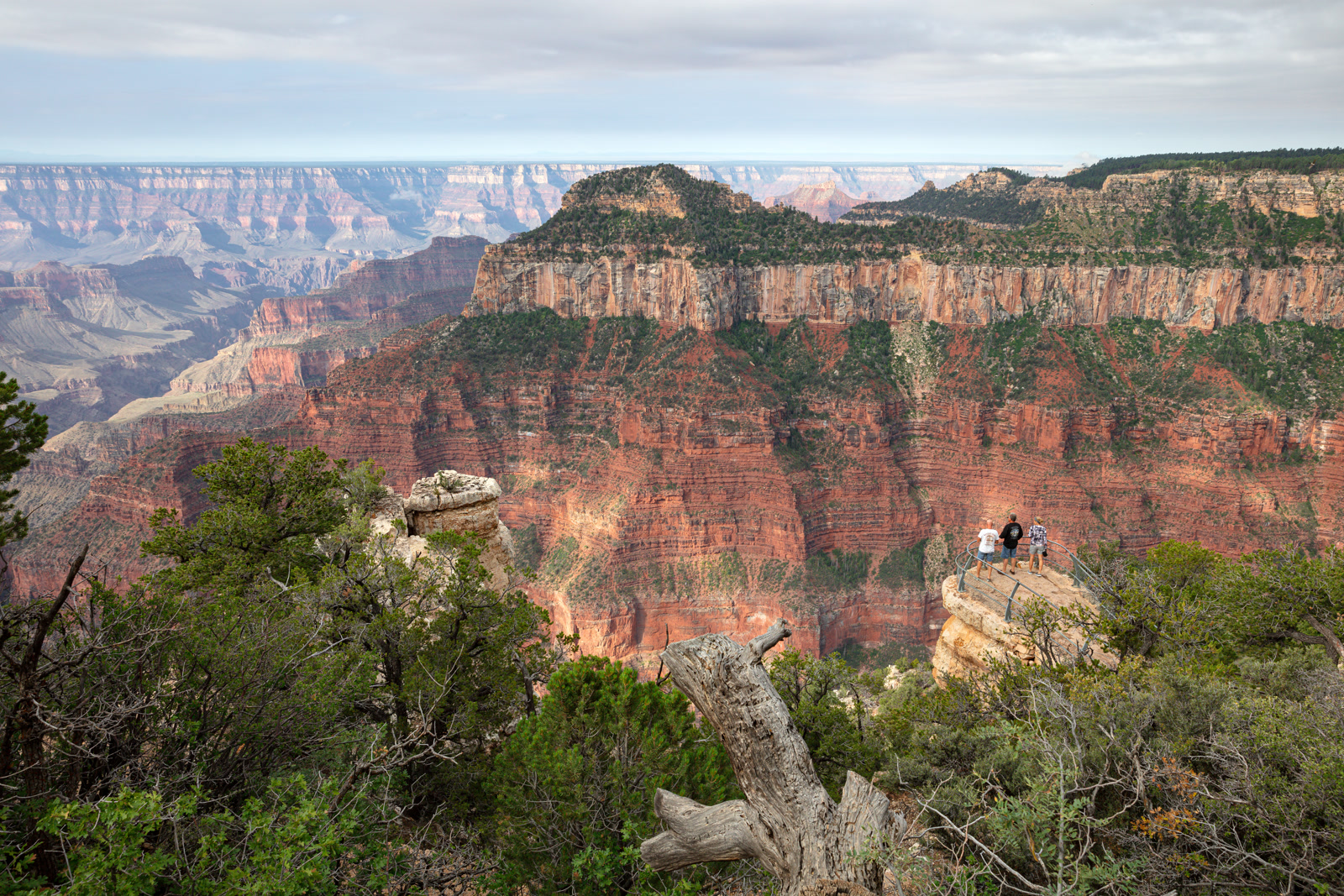
The South Rim and the North Rim run on two different calendars, and the month you pick decides which one you can see. The South Rim is open all year, 24 hours a day, with the visitor centre, the lodges, the restaurants and the free shuttles. It is where roughly nine out of ten visitors go. The North Rim is higher — over 8,000 feet, against the South Rim’s roughly 7,000 — cooler, wetter, forested with ponderosa pine and aspen, and far quieter. In a normal year it opens on May 15 and closes on October 15, with the lodge, the campground and the services running in between. In 2026 that calendar changed. The Dragon Bravo Fire, which started on July 4, 2025, destroyed the historic Grand Canyon Lodge, and the North Rim reopened on May 15, 2026 for day visits only: no lodging, no potable water, no gas, and the campground and store closed in mid-October. It stays open for limited day use through November 30, 2026, or until the first major snowstorm, and then the road closes to vehicles from December 1, 2026 to May 14, 2027. The two scenic roads on the North Rim, Cape Royal and Point Imperial, were closed for repairs from October 15 to November 3, 2026. So for 2026, the North Rim is a day trip for the self-sufficient: bring your own water, fuel up at Jacob Lake before you drive in, and do not plan on staying the night.
The 2026 catch: lodging, fees and what is actually open
The month you pick matters more than usual in 2026, because three things changed at once. First, the lodging. A flash flood on August 29, 2026 damaged the Transcanyon Waterline, the pipe that carries water to the South Rim, and the park went to Stage 4 water restrictions on August 31. Every in-park hotel on the South Rim — El Tovar, Bright Angel Lodge, Kachina, Thunderbird and Maswik — stopped taking overnight guests from August 31 through November 19, 2026, and Grand Canyon Lodges plans to reopen them on November 20. Phantom Ranch is closed through at least January 31, 2027, and the North Kaibab Trail is closed with it. Until the lodges reopen, stay in Tusayan, seven miles south of the South Rim entrance, or in Williams or Flagstaff. Second, the fees. The standard entrance fee is still $35 per private vehicle, $30 per motorcycle and $20 per person, valid for seven days — but since January 1, 2026, every non-US resident aged 16 and over pays an extra $100 per person on top of the entrance fee, unless they enter with an annual pass. The America the Beautiful pass costs $80 a year for US residents and $250 a year for non-residents, and it covers the surcharge. The park takes cards only. Third, the crowds: visits fell from 4,919,163 in 2024 to 4,430,653 in 2025, down 9.9%, after the fire closed the North Rim. None of this changes the pick. October is still the grand canyon best month to visit; it just needs a booking in Tusayan if you are going before November 20, and a check of the park’s current conditions page before you go.
FAQ
What is the grand canyon best month to visit?
October. The South Rim averages about 65°F in the daytime and 33°F at night, the summer crowds are gone, and the North Rim is still open for its last weeks. April–May and September are the runners-up.
Is the North Rim open in 2026?
Yes, for day visits through November 30, 2026, or until the first major snowstorm — but with no lodging, no potable water and no gas inside the park. From December 1, 2026 to May 14, 2027 the road is closed to vehicles.
Can I stay inside the park in November 2026?
Not before November 20. The South Rim lodges are closed to overnight guests from August 31 through November 19, 2026, with a reopening planned for November 20. Phantom Ranch is closed through at least January 31, 2027. Stay in Tusayan, Williams or Flagstaff until the lodges reopen.
How much does it cost for a non-US visitor in 2026?
The vehicle entrance fee is $35 for seven days, plus $100 per person aged 16 and over who is not a US resident, unless you enter with an annual pass. The America the Beautiful pass is $250 a year for non-residents and covers the surcharge.
Is summer a bad time to visit the Grand Canyon?
No, but it needs a plan. The rim averages 82 to 85°F, but the inner canyon averages 106°F at Phantom Ranch in July, and the park advises against hiking below the rim between 10 a.m. and 4 p.m. The monsoon brings afternoon thunderstorms from mid-July through mid-September.
The Short Version
The grand canyon best month to visit is October: cool days, cold nights, thin crowds, golden light and the North Rim still open. April and May are the spring window, September is nearly as good as October, summer is hot below the rim with monsoon storms in the afternoons, and winter is the empty park with snow on the rim. In 2026, book outside the park until the lodges reopen on November 20, budget the $100 nonresident fee if it applies to you, and treat the North Rim as a self-sufficient day trip. Pick October, walk the rim in the late light, and let the canyon do the rest. If you have more than a day, our Grand Canyon Itinerary turns this month-by-month picture into a day-by-day plan.