
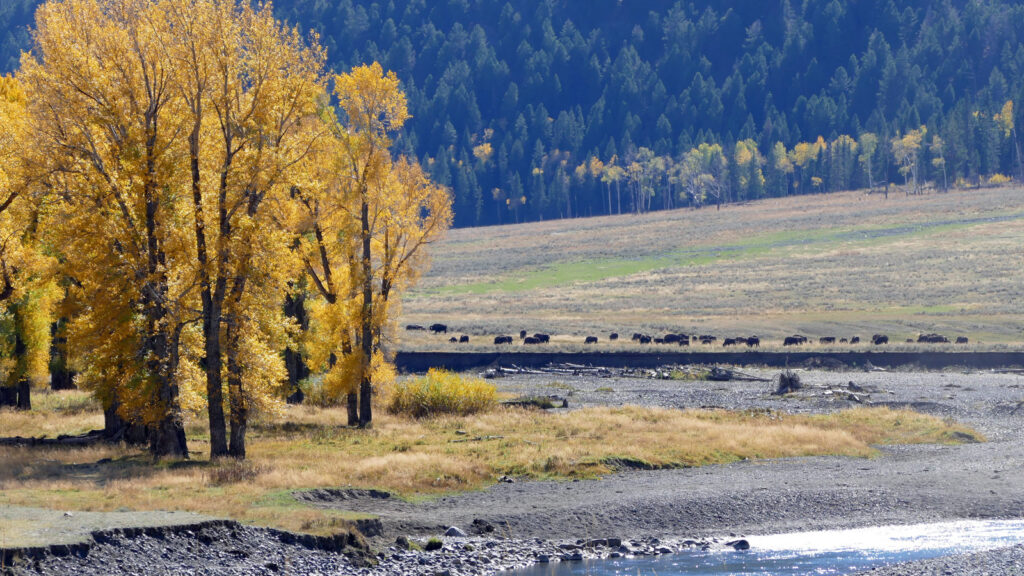
The best month to visit Yellowstone is September. Every road is open, the days are still warm enough for a T-shirt at midday, the elk rut starts around Mammoth Hot Springs, and the summer crowds have started to thin. The two windows that work are June and September, and September is the better of the two: it keeps all of June’s access and loses the worst of its crowds. This guide goes month by month, then season by season, with the 2026 catches — the new nonresident fee, the staged road openings and the November shutdown — stated plainly.
The short answer: September, and why
September wins because it is the only month that gives you everything at once. All five entrances are open and every road on the Grand Loop is drivable, the way it is in July, but the park is quieter: on the 2021–2025 average, September drew 796,027 visits against July’s 922,896, about 14% fewer, and the crowds fall further as the month goes on. In 2025 the gap was the same shape — 839,579 visits in September against 975,109 in July. At Mammoth the monthly averages give September a high of 67.8°F and a low of 37.0°F: cool mornings, pleasant afternoons, frost by mid-month. The elk rut runs from early September to mid-October, and the bulls gather where you can watch them, around Mammoth and the northern range. June is the runner-up — everything open, the longest days, the waterfalls at full flow — but busier, and the high country is still shaking off snow.
Yellowstone month by month
The numbers below are the National Park Service’s monthly averages: temperatures from the NPS weather page at Mammoth Hot Springs (6,194 feet), and visits from NPS Visitor Use Statistics, averaged across 2021–2025. They describe the northern, lower side of the park, which is warmer than the interior. In 2025 the park recorded 4,762,988 recreation visits, the second-highest total in its history.
| Month | Average high | Average low | Visits (2021–2025 avg) | What it feels like |
|---|---|---|---|---|
| January | 28.6°F | 9.6°F | 42,153 | Deep winter, snowcoach only |
| February | 34.0°F | 13.0°F | 44,668 | Cold, quiet, steam and snow |
| March | 39.6°F | 17.2°F | 33,479 | Still winter, roads closed to cars |
| April | 49.4°F | 26.0°F | 73,470 | Melting, muddy, west roads open late |
| May | 60.4°F | 34.3°F | 508,111 | Calves, waterfalls, roads opening |
| June | 70.0°F | 41.2°F | 830,987 | Everything open, crowds arrive |
| July | 79.6°F | 46.7°F | 922,896 | Warmest, busiest, afternoon storms |
| August | 78.3°F | 45.3°F | 820,128 | Hot, hazy, still very busy |
| September | 67.8°F | 37.0°F | 796,027 | Cool, golden, the elk rut |
| October | 55.7°F | 29.4°F | 302,468 | Cold, quiet, roads closing |
| November | 38.7°F | 19.2°F | 23,807 | Nearly empty, most roads shut |
| December | 30.5°F | 11.8°F | 33,648 | Snow, steam, oversnow travel starts |
Two things jump out. First, the crowd curve is far steeper than the weather curve: July has about 39 times as many visits as November, while the temperature gap between the two months is only about 40 degrees. Second, September is not the quiet month people remember it as: it still averages 796,027 visits — 86% of July’s — and in 2026 September drew more visits than August for the first time in the park’s records, 868,450 against 856,467. The quiet weeks are the last two weeks of September, not the whole month.
Spring: calves, snow and roads opening in stages
Spring in Yellowstone is a wildlife season, not a sightseeing season — and the roads decide which one you get. In 2026 the park reopened to cars in stages: April 17 for the West Entrance roads to Madison, Old Faithful, Norris and Canyon; May 1 for the East Entrance over Sylvan Pass and the Canyon to Lake Village stretch; May 8 for the South Entrance and the Tower-Roosevelt to Tower Fall road; and May 22 for Dunraven Pass and the Beartooth Highway. Every date is projected, not promised: a late storm can push an opening by days, and in April 2026 a winter storm pushed the first opening from 8 a.m. to noon. The one road that never closes is the North Entrance road from Gardiner to Cooke City, open to cars all year.
What spring gives you is the babies. Bison calves — the rust-red “red dogs” — are born from mid-April to late May, with the peak in May, and the best place to see them is Lamar Valley and Hayden Valley. Elk calves follow in late May and June, and bears come out of their dens with cubs in April and May. The waterfalls are at their fullest in May and June, fed by snowmelt. The catch is the weather: April averages a 49.4°F high and a 26.0°F low at Mammoth, with snow still normal. Many lodges, campgrounds and services are still closed, and the high country is shut until late May. Come in spring for the wildlife, bring layers and a flexible first day — but do not plan a first visit around the thermal basins alone: half the park is still behind snow.
Summer: full access, full parking lots
Summer is the only season when the whole park is open, and it shows. From late May every road, lodge, campground and visitor centre is running, the days are long, and the weather is the warmest it gets: July averages 79.6°F at Mammoth, August 78.3°F. It is also the only season when you will queue for a parking space. July is the busiest month in the park — 922,896 visits on the 2021–2025 average, and 975,109 in July 2025 alone, roughly a fifth of the year’s total in a single month. Old Faithful’s parking lot fills by mid-morning, and the Midway boardwalk is shoulder to shoulder on a sunny afternoon.
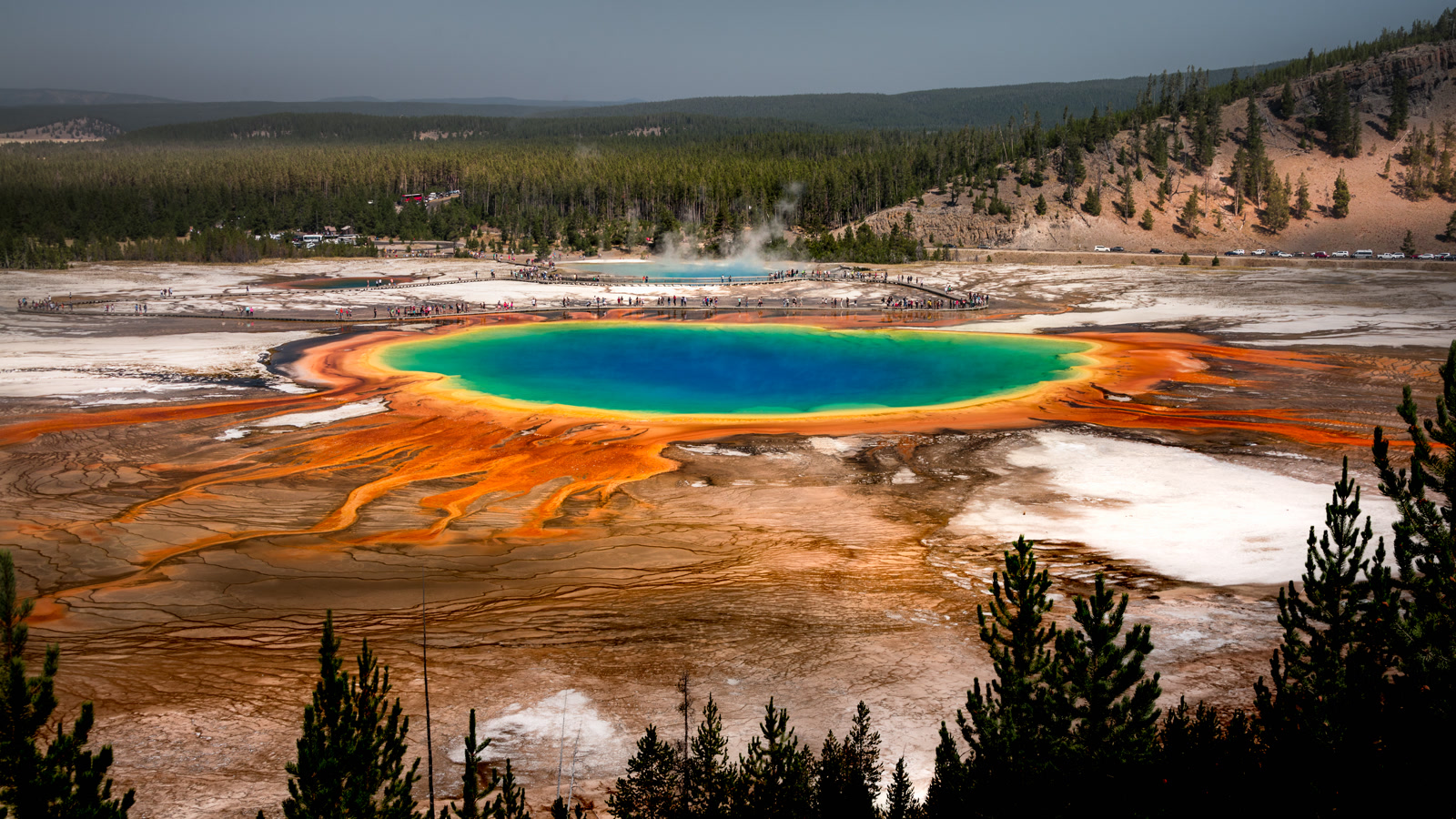
The heat is manageable, but the afternoons bring thunderstorms, and the steam makes the basins feel hotter than the thermometer says. Start early: the geyser basins before 9 a.m., the lake in the morning before the wind picks up, and the wildlife valleys at dawn. Grand Prismatic Spring, the largest hot spring in the United States at about 370 feet across, is best from the overlook trail above the boardwalk, where the blue centre and the orange rings show properly — from the boardwalk itself you mostly see steam. One closure to know in 2026: Biscuit Basin has been closed since a hydrothermal explosion on July 23, 2024 destroyed its boardwalk, and a second, smaller explosion on June 13, 2026 kept it shut.
Summer’s upside is real: every road is open, the boat tours run on Yellowstone Lake, and the long evenings make a full day possible. If summer is the only time you can go, go — just book lodging months ahead and arrive at the popular basins before 9 a.m.
Fall: the elk rut and the quiet weeks
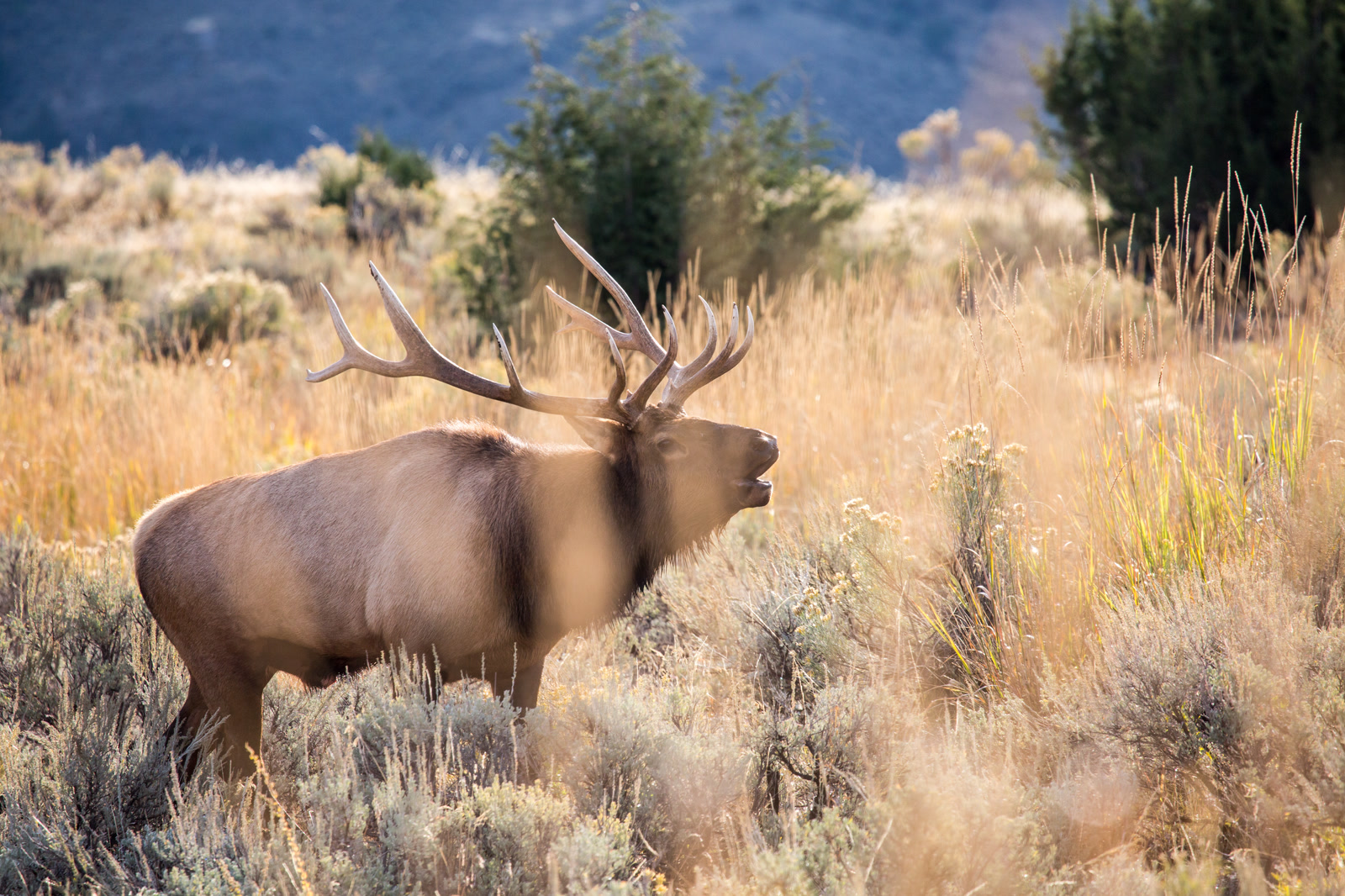
Fall is why September is the best month to visit Yellowstone, and the elk rut is the reason. The mating season runs from early September to mid-October, and the bulls gather on the northern range — around Mammoth Hot Springs, in the Madison River valley and along the Lamar — bugling, herding cows and challenging each other. It is the single best wildlife spectacle in the park, and it happens where the roads are: you can watch a bull bugle from the sidewalk at Mammoth, though the rangers keep the crowds back, and the bulls are at their most unpredictable in September, so the distance rules matter. The aspens turn gold on the northern range in late September, and the light goes low and warm.
The other half of fall is the quiet. From about mid-September the parking lots at Old Faithful, Midway and Artist Point stop filling before mid-morning, and by the last week you can have Hayden Valley almost to yourself at dawn. But September is two months in one: Labor Day weekend still runs near peak, every lodge is full, and the Old Faithful lots fill by 10 a.m. The park also starts dismantling itself for winter while you are there: in 2026 Roosevelt Lodge closed on September 6, and the big campgrounds followed — Bridge Bay on the 13th, Canyon on the 19th, Grant on the 26th. October is the real shoulder: 302,468 visits on the average, cold nights at 29.4°F, and the first snow dusting the high country — and most roads close on November 1, so an October trip needs to be early in the month.
Winter: snowcoaches, steam and an empty park
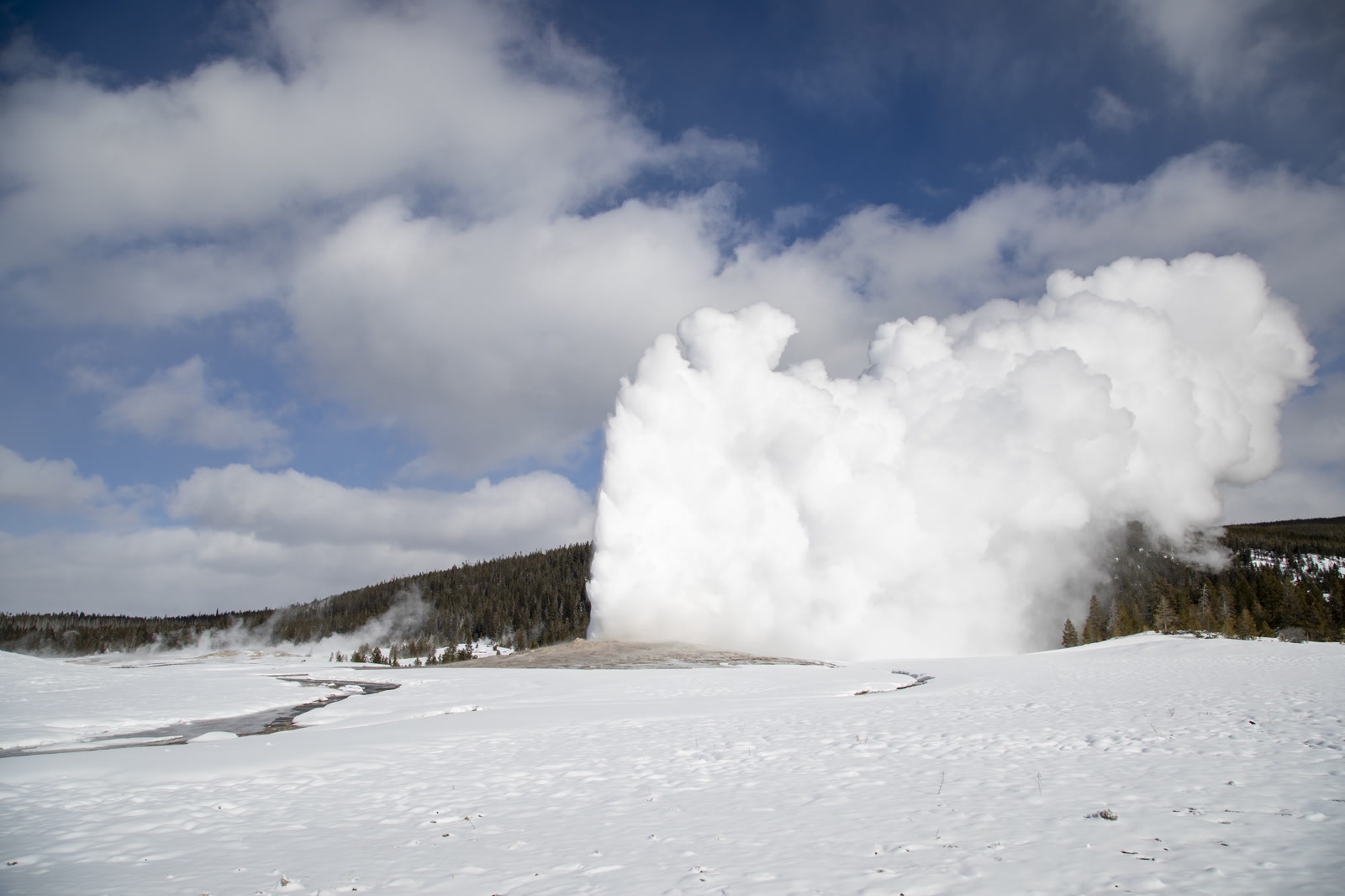
Winter is Yellowstone at its emptiest, and the most underrated season in the park. The park itself is open 24 hours a day, 365 days a year, but from November 1 most roads close to regular cars, and the only road open to cars all winter is the North Entrance road from Gardiner to Cooke City. Everything else is oversnow travel only: guided snowmobiles and snowcoaches, running from December 15, 2026 to March 15, 2027. The numbers tell the story — January averages 42,153 visits and February 44,668, against July’s 922,896.
The cold is real: January averages a 28.6°F high and a 9.6°F low at Mammoth, and the interior runs colder. But the cold is the point: the geysers throw steam higher in freezing air, the bison stand frosted in the valleys, and the snow makes the thermal areas look like another planet. Only two lodges stay open inside the park in winter — Old Faithful Snow Lodge and Mammoth Hot Springs Hotel — and both need booking well ahead. Winter is not a casual trip: you need a guided tour or a snowcoach booking to see anything beyond the northern range.
The months to avoid: November and April
November is the quietest month in the park — 23,807 visits on the 2021–2025 average, about 3% of July’s — but it earns that quiet. Most roads close on November 1, the lodges and campgrounds are shut, the oversnow season does not start until December 15, and the weather is cold and grey: a 38.7°F high, a 19.2°F low, and an average of 9 inches of snow. What is left is the Gardiner to Cooke City road and the wildlife of the northern range. For a first visit it is the worst month, because most of the park is simply unreachable.
April is the other gap month: the park is waking up, but most of it is still asleep. The west roads do not open until April 17, the East and South entrances are shut until May, and Dunraven Pass and the Beartooth are closed until May 22. The averages look mild — a 49.4°F high, a 26.0°F low — but snow is still normal, the trails are mud and slush, and services are thin. April works for one thing: the first bison calves, and the northern range with almost nobody else on it. For anything else, wait until May.
Picking your month by what you want most
The best month depends on what you came for. For the elk rut and the quiet weeks, September — early September for the rut at its loudest, late September for the empty roads. For wildlife babies, May: the bison calves in Lamar and Hayden valleys, the bears with cubs, and the waterfalls at full flow. For the longest days and the fullest access, June — the second-busiest month. For the classic geyser basins and the lake, July and August, shared with nearly a million other visits a month. For snow and steam with almost nobody else, January or February, by snowcoach. For the cheapest, quietest trip, November — if you are happy with the northern range alone.
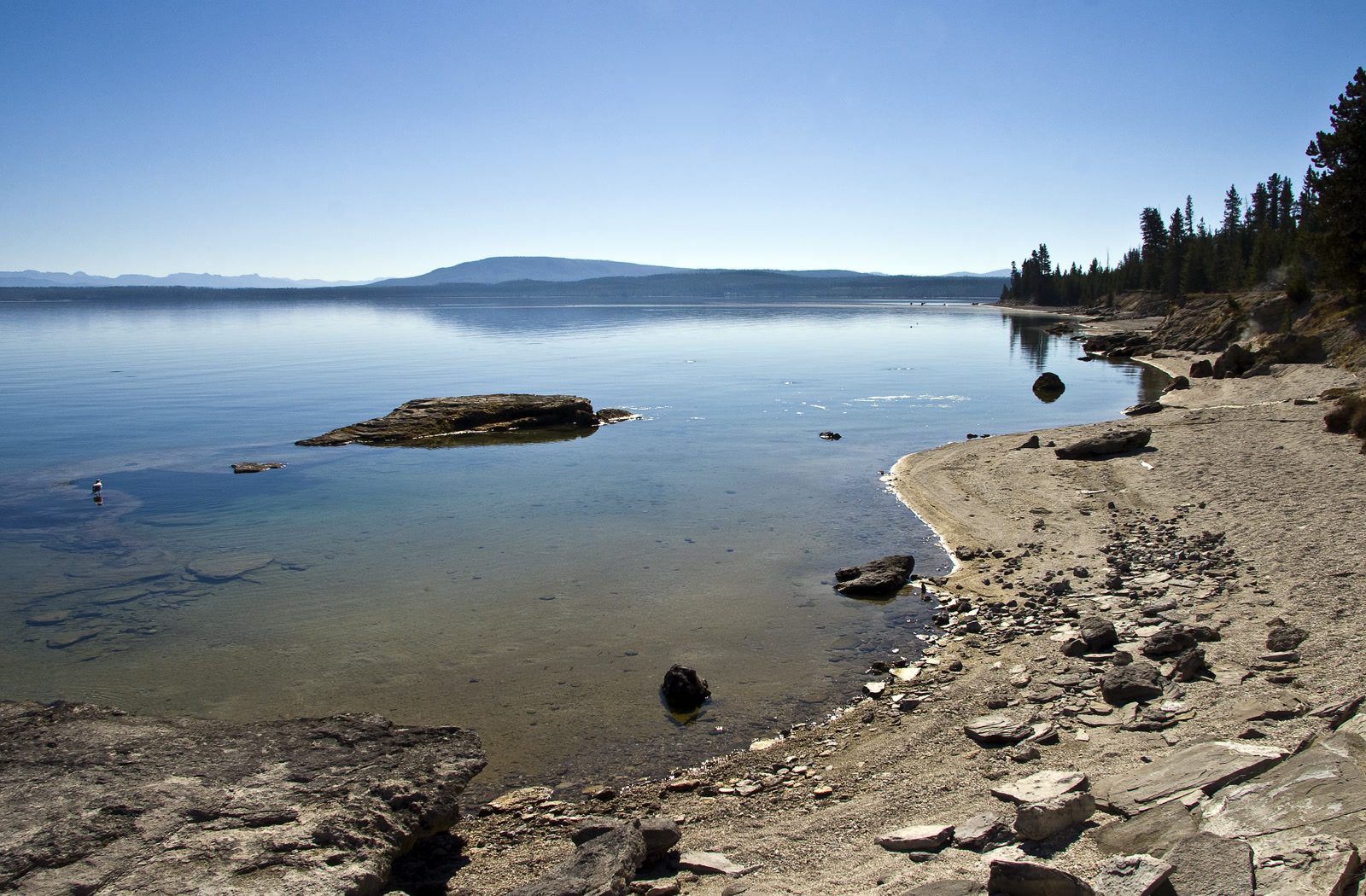
Yellowstone Lake is the quiet test of the season: the largest high-elevation lake in North America, its surface at 7,733 feet. In summer it is blue and busy with boats; by October it is steel-grey and empty, and by December it is frozen. If the lake is on your list, go between June and September.
The fees are the same in every month, and they changed in 2026. A private vehicle pass is $35 for seven days, a motorcycle $30, and walkers and cyclists $20 per person. Since January 1, 2026, every non-US resident aged 16 and over pays an extra $100 per person on top of the entrance fee, unless they enter with an annual pass — the America the Beautiful pass costs $250 a year for non-residents and covers the surcharge.
FAQ
What is the best month to visit Yellowstone?
September. Every road is open, the days average 67.8°F at Mammoth, the elk rut runs from early September to mid-October, and visits run about 14% below July — with the last two weeks of the month much quieter than the first.
Is Yellowstone open in winter?
Yes — the park is open 24 hours a day, all year. But from November 1 most roads close to regular cars, and the interior is reachable only by guided snowmobile or snowcoach from December 15 to March 15. The only road open to cars all winter is Gardiner to Cooke City, and only two lodges stay open inside the park: Old Faithful Snow Lodge and Mammoth Hot Springs Hotel.
How much does it cost for a non-US visitor in 2026?
The vehicle entrance fee is $35 for seven days, plus $100 per person aged 16 and over who is not a US resident, unless you enter with an annual pass. The America the Beautiful pass is $250 a year for non-residents and covers the surcharge.
When do Yellowstone’s roads open in 2026?
April 17 for the West Entrance roads to Madison, Old Faithful, Norris and Canyon; May 1 for the East Entrance and Canyon to Lake Village; May 8 for the South Entrance; May 22 for Dunraven Pass and the Beartooth Highway. All dates are projected and move with the snow, and most roads close on November 1.
When is the elk rut in Yellowstone?
From early September to mid-October, with the best viewing around Mammoth Hot Springs and on the northern range. The bulls are at their most unpredictable, so keep the distance the rangers ask for.
The Short Version
The best month to visit Yellowstone is September: every road open, days around 68°F, the elk rut at Mammoth, and about 14% fewer visits than July — quieter still in the last two weeks, after Labor Day. June is the runner-up, with the longest days and the fullest waterfalls, but the second-biggest crowds. May is the month for bison calves and snowmelt waterfalls, winter is the empty park by snowcoach, and November and April are the months to skip. In 2026, budget the $100 nonresident fee if it applies to you, check the road dates before you book, and remember Biscuit Basin is still closed. If you have more than a day, our Yellowstone Itinerary turns this month-by-month picture into a day-by-day plan.