
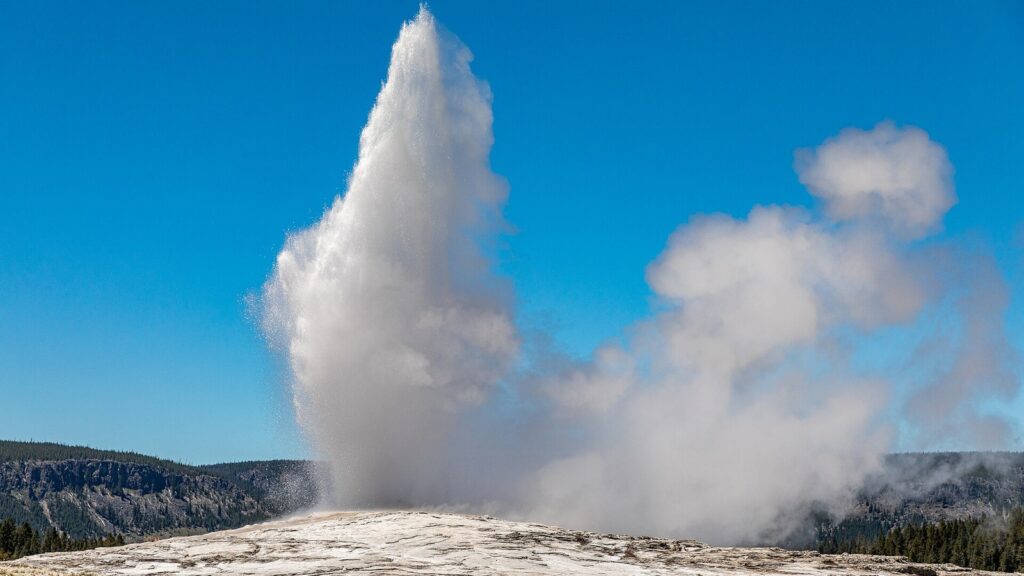
Yellowstone is the largest national park in the lower 48 states, and it does not work like a city trip. The sights are spread around a 142-mile loop road, the speed limit is 45 mph, and a bison jam can add an hour to a drive you planned in forty minutes. This Yellowstone itinerary gives you a realistic route for three or five days — the geysers, the canyon, Lamar Valley, and, on the five-day version, Grand Teton — with real 2026 park fees and hotel prices, so you know what the trip costs before you go.
The short answer: three days covers the essentials — Old Faithful, Grand Prismatic Spring, the Grand Canyon of the Yellowstone, Lamar Valley, and Mammoth Hot Springs. Five days is the comfortable version, with a slower north loop and a full day in Grand Teton. Everything below is built around that, for a family of four sharing one room.
How Many Days Do You Need in Yellowstone?
Yellowstone rewards time more than almost any park in America, because the driving itself is part of the trip. The Grand Loop is a figure-eight of road, and each leg takes 30 to 60 minutes. Here is the honest comparison.
| 3 days | 5 days | |
|---|---|---|
| What you see | Old Faithful, Grand Prismatic, Grand Canyon of the Yellowstone, Yellowstone Lake, Lamar Valley, Mammoth Hot Springs | Everything in 3 days, plus Norris Geyser Basin, a slower Mammoth morning, and a full Grand Teton day |
| Pace | Full days, early starts, one area a day | Comfortable, with time for a second look at the geysers |
| Best for | A long weekend or a first taste | Families who want both parks without rushing |
| Rough cost per person | About $374–$449 | About $612–$737 |
Three days is enough for the park’s greatest hits, but you will drive past things you wish you had stopped for. Five days is the version where you see both Yellowstone and Grand Teton properly — and the extra days cost less per day than the first three, because the park fees cover seven days.
Day 1: Geysers and Old Faithful
Enter through the West Entrance — the closest to the town of West Yellowstone, where most families stay — and drive the 30 minutes to Madison Junction. From there, the road south runs through the Midway Geyser Basin, home of Grand Prismatic Spring, the largest hot spring in the United States and the most photographed sight in the park. Stop at the boardwalk first, then drive on to the Fairy Falls trailhead if you want the overlook view, which shows the spring’s colours from above.
Old Faithful is the afternoon. The geyser erupts roughly every 90 minutes, and the visitor centre posts the predicted time — plan to arrive 30 minutes early for a seat on the benches. Give the area two hours: the geyser itself, the Upper Geyser Basin boardwalk, and the Old Faithful Inn, the log hotel that has stood here since 1904. Stay in the Old Faithful area for the night if you can, or drive back to West Yellowstone the same way you came.
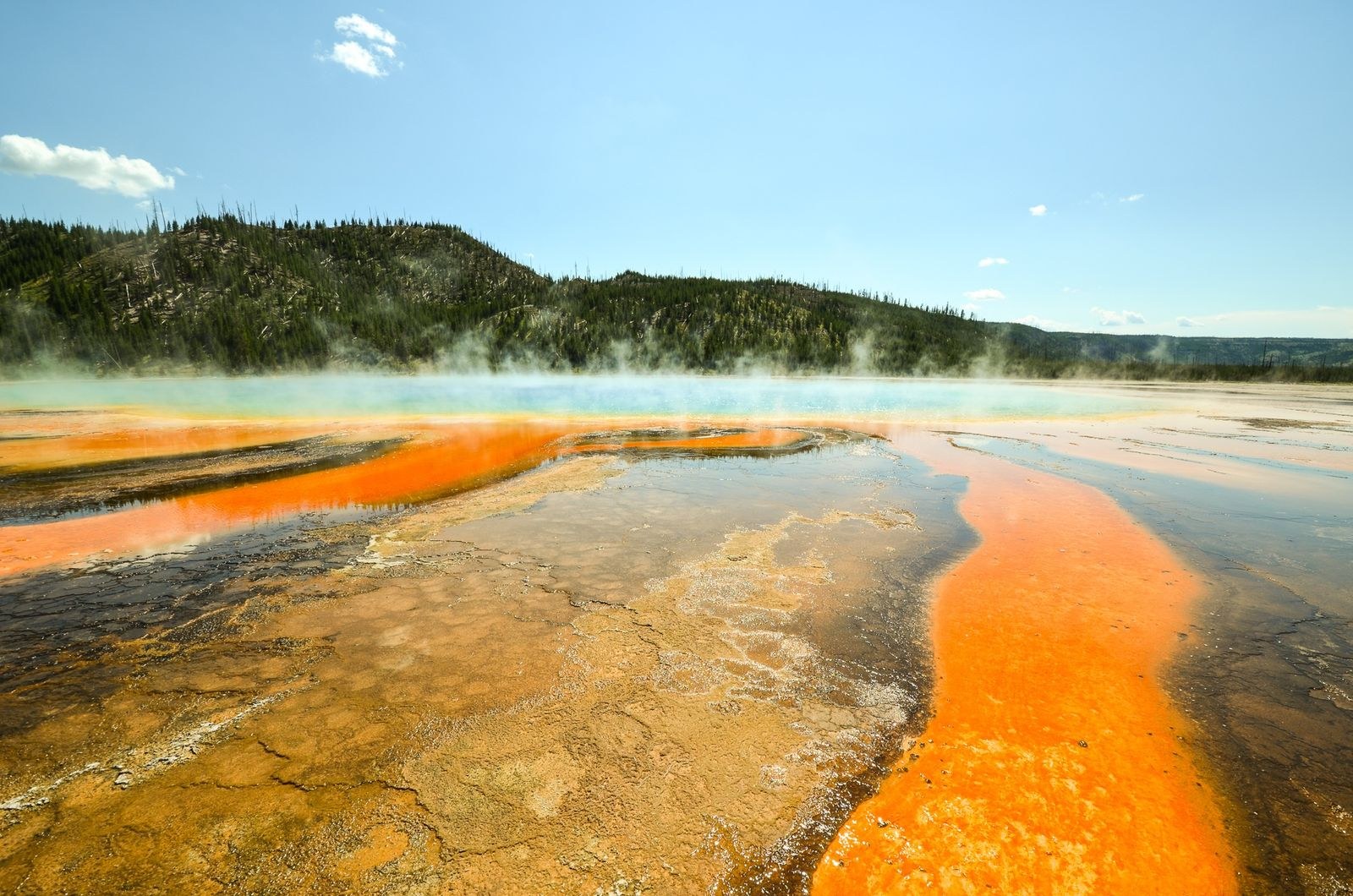
Day 1 is the day Yellowstone stops being a name on a map and becomes a place. The ground steams, the water is impossibly coloured, and the scale of the caldera — the volcano underneath the whole park — starts to make sense.
Day 2: The Grand Canyon of the Yellowstone and the Lake
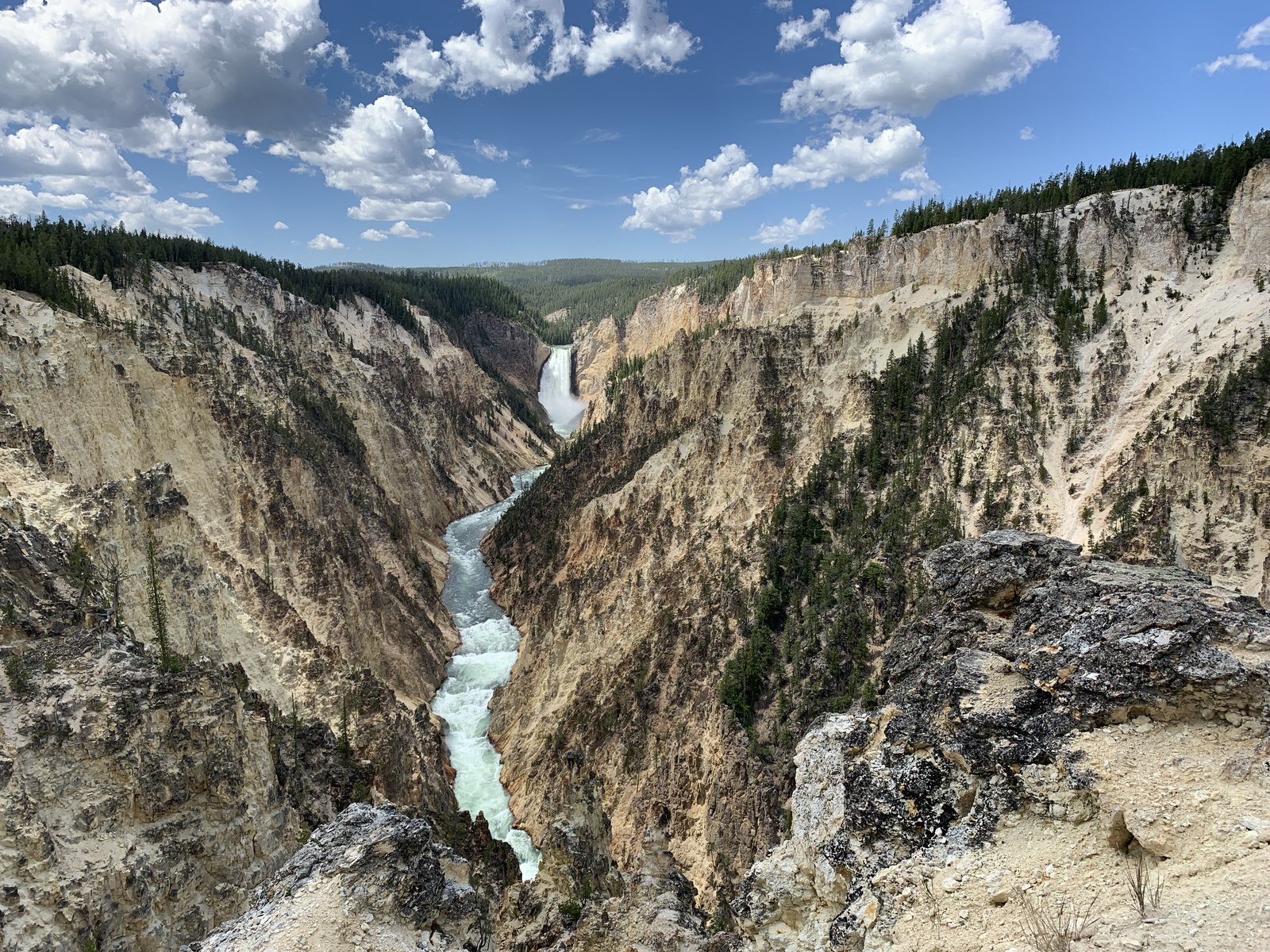
Drive from Old Faithful to Canyon Village, about 50 miles via the Grand Loop. The Grand Canyon of the Yellowstone is not the Grand Canyon of Arizona — it is a smaller, yellower canyon cut by the Yellowstone River, and its Lower Falls is nearly twice the height of Niagara. Walk the South Rim Trail to Artist Point for the classic view, then drive the North Rim road to the Brink of the Lower Falls and Lookout Point.
Spend the afternoon at Yellowstone Lake, the largest high-elevation lake in North America. The Fishing Bridge and Lake Village area is the quiet side of the park — a good place for a picnic, a lakeside walk, and an early night. If you are staying in West Yellowstone, the drive back is about 35 minutes from Canyon Village to the Lake, then the same again to the west side; plan the day so you are not driving the loop in the dark.
Day 3: Lamar Valley and Mammoth Hot Springs
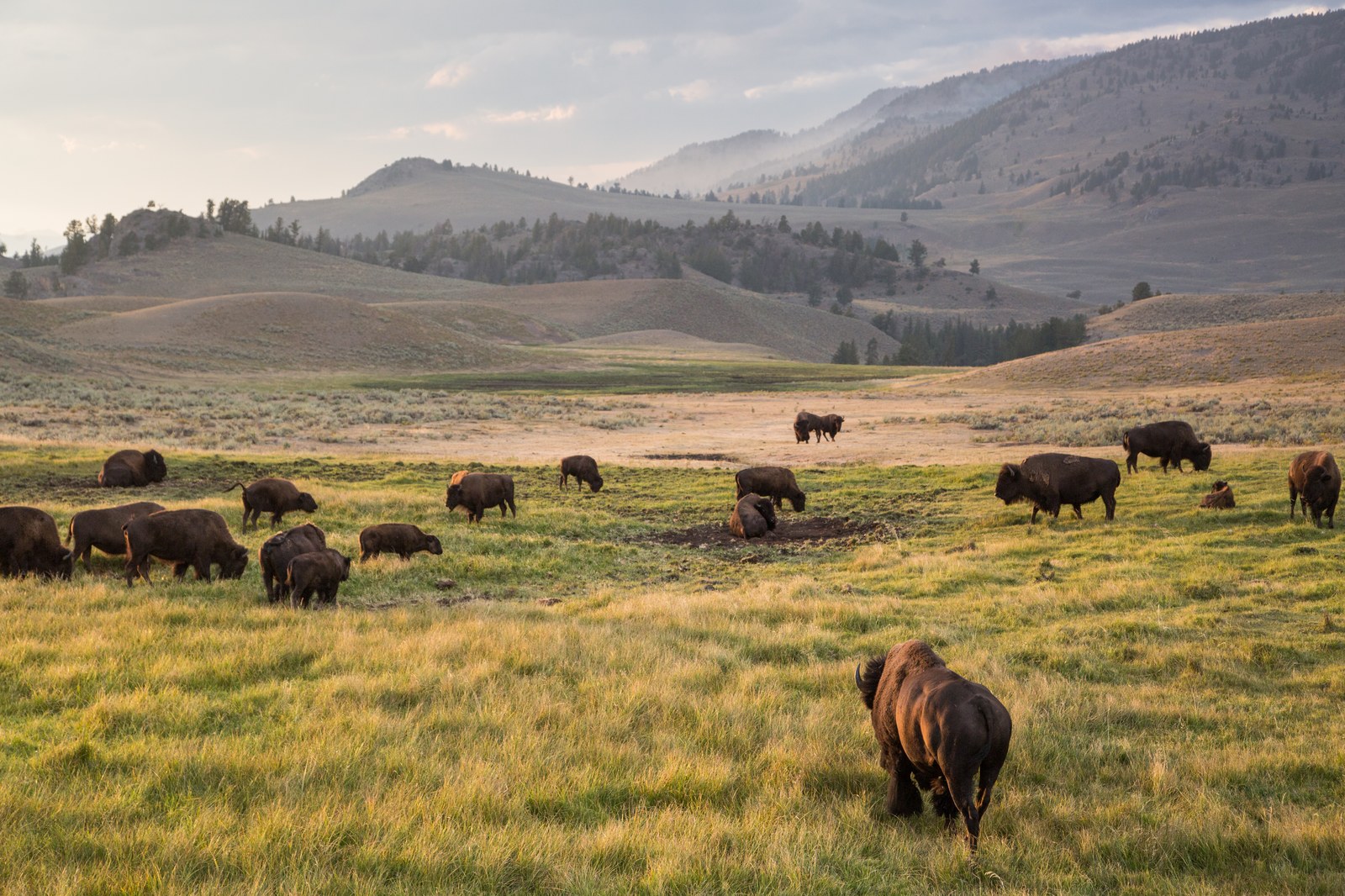
Start early — Lamar Valley is the park’s wildlife capital, and the animals are most active at dawn. Drive from Canyon Village to Tower Junction (50 to 60 minutes), then east along the Lamar Valley road, watching for bison herds, elk, and, with luck and binoculars, wolves. The valley is wide and open, and the light in the morning is the best in the park.
Continue to Mammoth Hot Springs, the park’s headquarters area in the north. The terraces are unlike anything else in Yellowstone — white and orange travertine steps built by hot water over thousands of years — and the elk that wander the lawns around the old army buildings are part of the scene. From Mammoth, the North Entrance at Gardiner is 15 minutes away, and the drive back to West Yellowstone runs through Norris and Madison. End the day in West Yellowstone: three days, done.
Days 4–5: Norris, and Grand Teton
Day 4 is Norris Geyser Basin and a slower north loop. Norris is the hottest and most changeable geyser basin in the park — Steamboat Geyser, the tallest active geyser in the world, is here, though its eruptions are unpredictable. Walk both the Porcelain Basin and Back Basin boardwalks, then drive north to Mammoth for a second, unhurried look at the terraces, and stop at the viewpoints you passed too fast on Day 3. Day 4 is the day the 3-day plan does not have, and it is the difference between seeing Yellowstone and knowing it.
Day 5 is Grand Teton. Drive south from Grant Village through the South Entrance and the John D. Rockefeller, Jr. Memorial Parkway into Grand Teton National Park — a different park entirely, where the mountains rise straight from the valley floor. Take the boat across Jenny Lake and hike to Hidden Falls and Inspiration Point, then drive to Mormon Row in the afternoon: 27 homesteads, including the Moulton Barns, listed on the National Register of Historic Places in 1997, with the Tetons behind them — the most photographed barns in America. End in Jackson, the town at the park’s south end, for dinner.
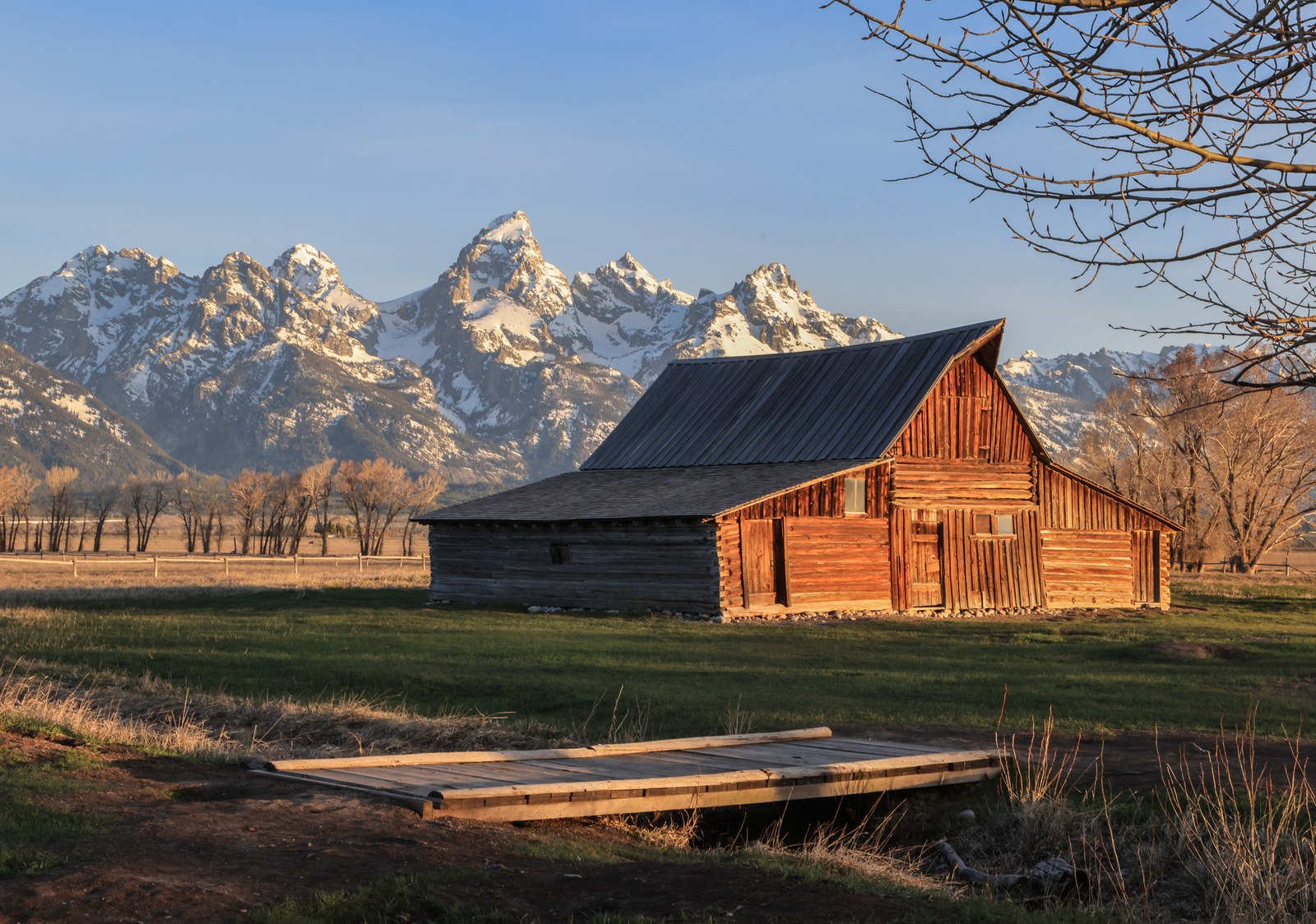
Two parks, two fees: Yellowstone and Grand Teton each charge a separate $35 vehicle entrance fee, valid for seven days. The America the Beautiful Annual Pass ($80 for US residents) covers both. One flag for international readers: Grand Teton charges non-US residents an additional $100 per vehicle from 1 January 2026.
What It Costs
Here is the full cost for one person in a family of four sharing one room, based on the prices verified on 11 November 2026. The hotel is a single representative example — the City Center Motel in West Yellowstone — not an average.
| Item | 3 days | 5 days |
|---|---|---|
| Park fees, per person (two parks, per vehicle ÷ 4) | $17.50 | $17.50 |
| Hotel, per person sharing | $206.54 | $344.61 |
| Food, per person (estimate) | $150–$225 | $250–$375 |
| Total per person | About $374–$449 | About $612–$737 |
The park fee line is $35 for Yellowstone plus $35 for Grand Teton, divided by four people in one vehicle — both passes are valid for seven days, so the 5-day trip pays no extra fee. The hotel line is the City Center Motel at $237 a night: 3 nights cost $826.15 after tax, or $206.54 per person. The 5-day hotel line is 5 nights at the same verified $237 nightly rate, estimated at $344.61 per person after tax.
The food line is an estimate, not a verified price: roughly $50 to $75 per person per day for casual meals, snacks, and groceries. Neither the Park Service nor the park concessionaire publishes a per-day food cost, so this is a planning figure — label it as such when you budget. A family that cooks in the room or picnics from the general stores will spend less; a family that eats every meal in the park dining rooms will spend more.
Flights, a rental car, and gas are not included in these totals. Gas stations are inside the park at Canyon Village, Fishing Bridge, Grant Village, Mammoth Hot Springs, Old Faithful, and Tower Junction, with 24-hour self-service fueling.
Where to Stay
Three bases cover most trips, and the choice is really about how early you want to start the day.
West Yellowstone is the best base for a first visit: the town sits 0.8 miles from the West Entrance, with the most hotels, restaurants, and grocery stores of any gateway. The City Center Motel used in the cost table above is on Madison Avenue in town. You drive the loop every day, but you sleep outside the park with full services.
In the park — the Old Faithful Inn and the Lake Yellowstone Hotel — puts you at the sights before the day-trippers arrive, and it is the only way to see Old Faithful at dawn without a long drive. It costs the most, and it books up far in advance: the Park Service says lodging in Yellowstone fills quickly and reservations should be made as early as possible.
Gardiner, at the North Entrance, suits a trip weighted toward Lamar Valley and Mammoth Hot Springs. It is quieter than West Yellowstone and open year-round — the North Entrance road to Cooke City is the only park road open all winter.
Book early whatever you choose. July is the busiest month, and the best rooms in West Yellowstone sell out months ahead.
When to Go
Yellowstone’s seasons are set by its roads. Most park roads are closed to regular vehicles from early November to late April, and the only road open all year is the North Entrance to Northeast Entrance stretch. The 2027 openings run from 16 April (West Entrance to Madison and Old Faithful) through 28 May (Canyon to Tower Fall and the Beartooth Highway). The Park Service does not call any month the “best,” but June, July, and August are peak season with all facilities open; September has thinner crowds and some facilities closed; October has many facilities closed.
July is the warmest month — Mammoth Hot Springs averages 83°F in the day and 49°F at night — and it is also the busiest. If your dates are flexible, the last two weeks of June or the first two weeks of September give you open roads with fewer people. Whatever month you choose, no vehicle reservation is needed to enter Yellowstone: the Park Service states plainly that vehicle reservations are not required, only the entrance pass.
Getting There
Three airports serve the park. Jackson Hole Airport is inside Grand Teton National Park itself — about an hour’s drive to Yellowstone’s South Entrance. Bozeman Yellowstone International Airport is about an hour and 42 minutes from West Yellowstone. Idaho Falls Regional Airport is about an hour and 48 minutes from West Yellowstone. Fly into Jackson if your trip includes Grand Teton, into Bozeman if it does not.
Once you are there, the driving is the trip. The Grand Loop speed limit is 45 mph, and the Park Service’s own drive times are the ones to plan by: West Entrance to Madison is 30 minutes, Madison to Old Faithful 35 to 45, Canyon Village to Lake Village 35, and Tower Junction to Canyon Village 50 to 60. Do not trust a mapping app for in-park distances in winter — when the roads are closed, the apps route around the park entirely.
Staying Safe
Two rules matter more than any other in Yellowstone. First, the wildlife distances: stay 100 yards from bears, wolves, and cougars, and 25 yards from all other animals, including bison and elk. Bison injure more visitors than any other animal in the park, and they can run three times faster than a person. Second, the phone: cell service is extremely limited, with reception only near the developed areas — Mammoth, Old Faithful, Canyon, Lake, and the West Entrance — and in summer it is often maxed out. Download maps offline before you enter the park, and do not count on calling for help from a trailhead.
Frequently Asked Questions
How many days do you need in Yellowstone?
Three days covers the essentials — Old Faithful, Grand Prismatic, the Grand Canyon of the Yellowstone, the Lake, Lamar Valley, and Mammoth. Five days adds Norris Geyser Basin and a full Grand Teton day.
Is 3 days enough for Yellowstone?
Yes, for the greatest hits, if you start early and drive the loop in order. You will miss Norris Geyser Basin and Grand Teton, and you will not have a slow day — but you will have seen the park.
Do you need a reservation to enter Yellowstone?
No. The Park Service states that vehicle reservations are not required to enter Yellowstone — only the $35 entrance pass, valid for seven days. Lodging is a different matter: book rooms as early as possible.
What is the best month to visit Yellowstone?
The Park Service does not name a best month. June, July, and August have all facilities open and the warmest weather; July is the warmest and the busiest. Late June and early September are the quieter choices with open roads.
Can you do Yellowstone and Grand Teton in 5 days?
Yes — that is exactly what the 5-day plan above does. The two parks are connected by the John D. Rockefeller, Jr. Memorial Parkway, and each charges its own $35 vehicle fee.
The Short Version
Yellowstone is a three-day park with a five-day soul. Give it three days and you will see the geysers, the canyon, the lake, Lamar Valley, and Mammoth. Give it five and you get Norris and a full day in Grand Teton, where the mountains rise straight out of the valley. Come in late June or early September if you can, stay in West Yellowstone, book the rooms early, and remember the two numbers that matter most: 100 yards from bears, 25 yards from everything else.
Prices and sources
All prices checked 11 Nov 2026 on official sites. Prices are “from” prices and may change; check the linked source before booking.
- Yellowstone entrance fee $35/vehicle, 7 days; Grand Teton $35/vehicle separately (“Two Parks, Two Fees”) — https://www.nps.gov/yell/planyourvisit/fees.htm — https://www.nps.gov/grte/planyourvisit/fees.htm
- Seasonal road openings 2027 and closures — https://www.nps.gov/yell/planyourvisit/parkroads.htm
- Seasons and temperatures — https://www.nps.gov/yell/planyourvisit/seasons.htm
- Drive times on the Grand Loop — https://www.nps.gov/yell/planyourvisit/directions.htm
- Lodging: City Center Motel, West Yellowstone, 3 nights 9–12 Jul 2027, $710.22 before tax / $826.15 after tax — https://www.booking.com/hotel/us/city-center-motel-west-yellowstone.html — in-park lodges book early — https://www.nps.gov/yell/planyourvisit/lodging.htm
- Wildlife safety distances (100 yards bears/wolves/cougars; 25 yards all other animals) — https://www.nps.gov/yell/planyourvisit/safety.htm
- Cell service extremely limited; gas stations inside the park — https://www.nps.gov/yell/planyourvisit/basicinfo.htm — https://www.nps.gov/yell/planyourvisit/goodsandservices.htm
- Grand Teton: Jenny Lake, Mormon Row, parkway connection — https://www.nps.gov/grte/planyourvisit/index.htm — https://www.nps.gov/grte/learn/historyculture/mormon.htm — https://www.nps.gov/grte/planyourvisit/directions.htm