
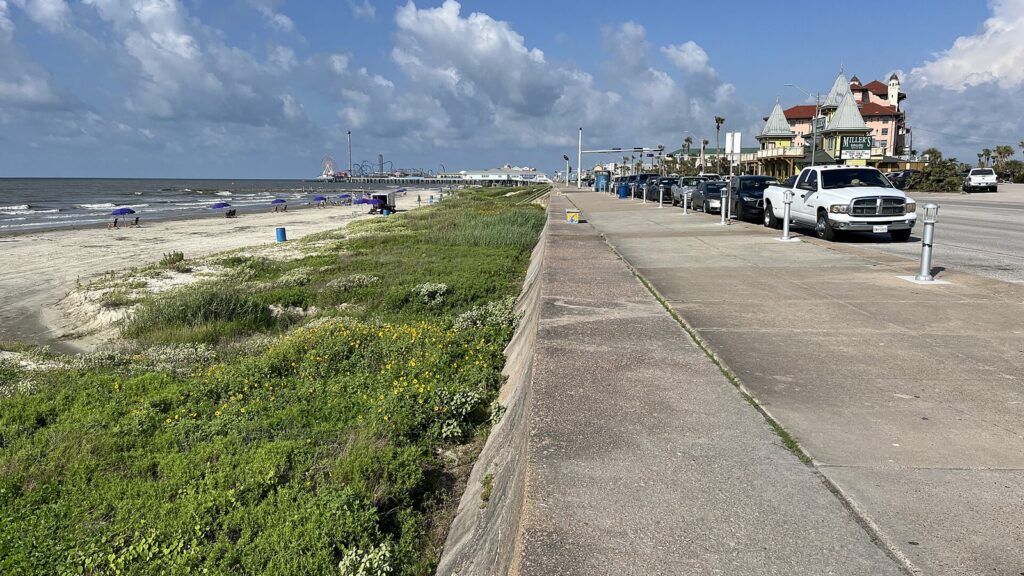
The best things to do in Galveston, Texas start on the Strand in the morning, spend the afternoon at a beach or at Moody Gardens, and end on the Seawall watching the Gulf. The island is small enough to walk through in districts — the historic harbour quarter, the long beachfront, the Victorian east end and the quiet west end — and you do not need a car to move between the first three. Galveston sits about 50 miles southeast of Houston, roughly an hour’s drive, with 32 miles of Gulf shoreline: close enough for a day trip, and worth a second day if you want the beaches and the ferry as well as the history.
Short Version: Galveston in One Day or Two
One day: the Strand in the morning, the Seawall and a beach in the afternoon, Pleasure Pier at sunset. Two days: add Moody Gardens on the second morning, the Victorian east end after lunch, and the free Bolivar Ferry in the late afternoon. Cruise travellers arriving a day early should follow the two-day plan; day-trippers from Houston, the one-day plan.
| Plan | What you do | Who it suits |
|---|---|---|
| One day | Strand morning, Seawall and beach afternoon, Pleasure Pier at sunset | Day-trippers from Houston, cruise passengers with a single free day |
| Two days | Day 1 as above; Day 2 Moody Gardens, Bishop’s Palace and Moody Mansion, Bolivar Ferry | First-timers who want the beaches and the history, families |
| Cruise add-on | Arrive a day early or stay a day after the cruise and follow the two-day plan | Anyone sailing from Galveston |
Do not try to do everything in a day: Moody Gardens alone takes half a day, the ferry queue can eat an afternoon on a summer weekend, and the beaches deserve unhurried time. Pick the plan that matches your days.
The Strand: Start Where Galveston Started
The Strand is where Galveston started, and it is still the best place to start a first visit: the island’s Victorian-era downtown, a row of 19th-century storefronts along Strand Street, with more than 70 buildings dating from the 1800s. The whole district is a National Historic Landmark — cast-iron facades, brick paving, trolley tracks down the middle of the street — and walking it feels like walking through the port city Galveston was before the devastating 1900 hurricane.
Start at the harbour end and walk east, giving the Strand a slow morning rather than a quick pass. The shops and galleries are the point here, not any single sight: bookshops, art galleries, antique shops, cafes and restaurants fill the ground floors. Two hours, with a coffee stop, is about right. The Texas Seaport Museum sits at the harbour end, and the tall ship Elissa, an 1877 sailing ship moored beside it, is worth the walk even if you do not go aboard. The Railroad Museum is a short walk away in the restored 1932 Santa Fe Depot, with more than 40 vintage locomotives and passenger cars, and a caboose ride on Saturdays.
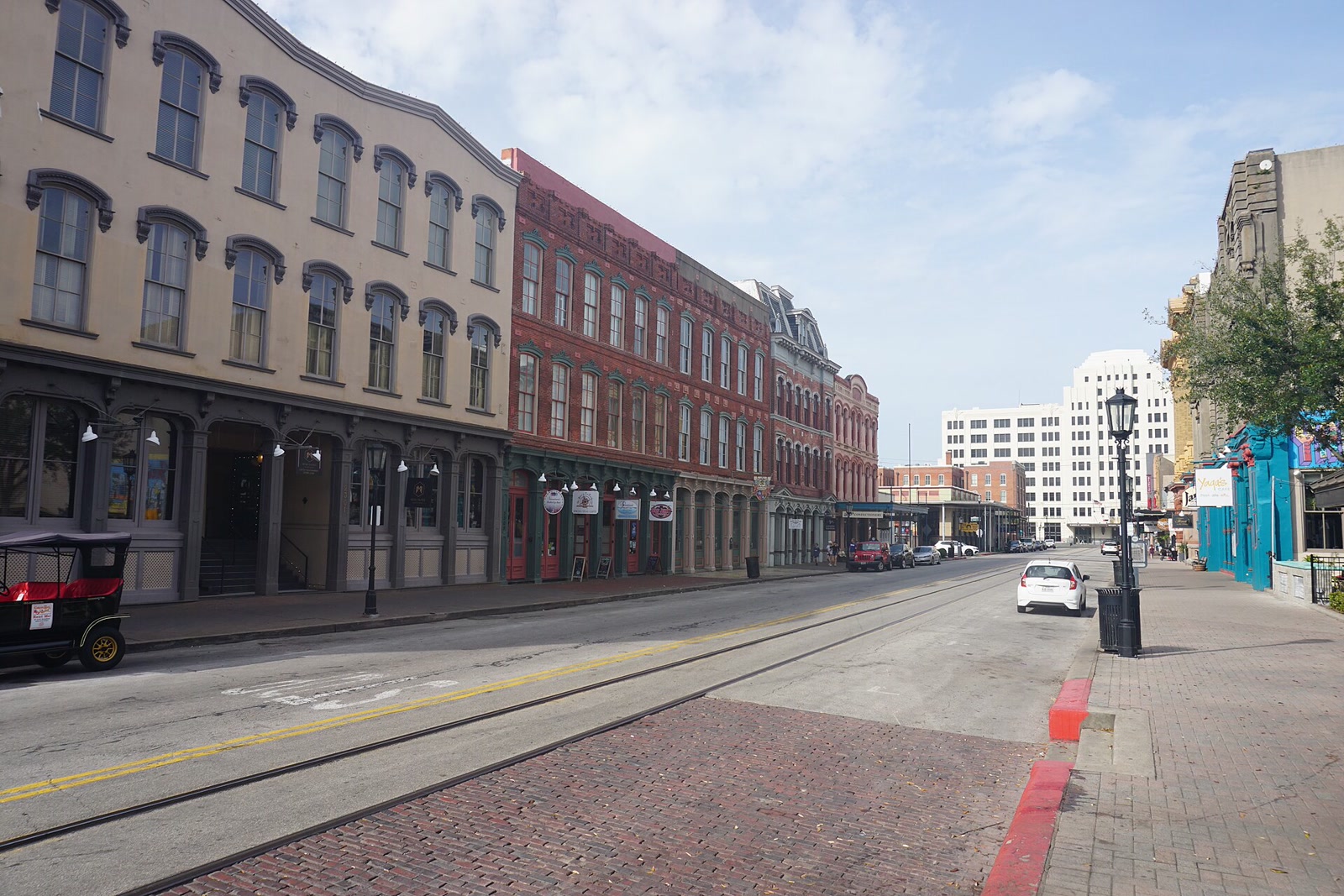
The Strand is also where the cruise terminal sits, so on sailing days the district fills up by late morning. Arrive early and you will have the street almost to yourself. Either way, the Strand rewards a slow start — it sets the tone for the whole island, and everything else makes more sense once you have seen where the city began.
Moody Gardens: The Three Pyramids Worth Half a Day
Moody Gardens is the one attraction that needs half a day, and it is worth planning around rather than squeezing in. The 242-acre complex on the west side of the island is known for its trio of glass pyramids on the waterfront: the Aquarium Pyramid, the Rainforest Pyramid and the Discovery Pyramid. Each is a separate world inside — aquarium, rainforest, rotating exhibitions — and together they make the best rainy-day or hot-afternoon outing on the island.
Plan for three to four hours to see all three pyramids properly, and check the day’s calendar before you go: Moody Gardens is ticketed, and hours and exhibitions change by season. Families with young children should start with the Aquarium Pyramid, the easiest to enjoy at any age; the Rainforest Pyramid suits older children and adults who want to linger over the birds and the planting. For a first-timer on the two-day plan, a morning at the pyramids followed by lunch and the Victorian east end is the right balance.
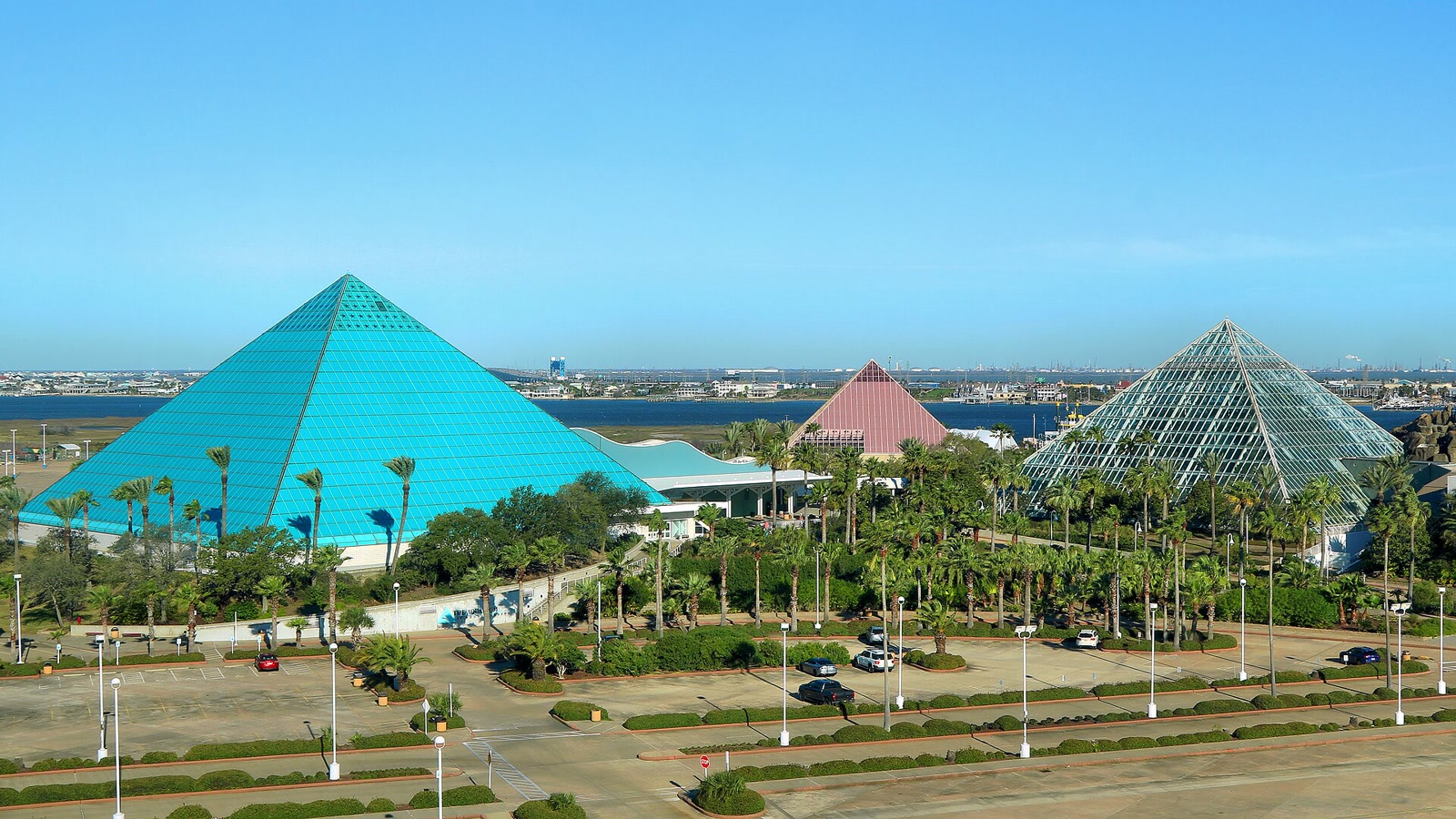
One practical note: Moody Gardens sits away from the Strand and the Seawall, so you will want a car or a rideshare to get there and back. That is the main reason it belongs on the second day rather than the first — the first day works on foot, and the second day is when you start moving around the island.
The Beaches: Stewart, East Beach and the Quiet West End
Galveston’s beaches are a string, not one beach, and picking the right one matters more than picking the closest. Stewart Beach, at 201 Seawall Boulevard, is the family pick: lifeguards in season, restrooms, showers and umbrella rentals, and the closest beach to downtown. East Beach, further east, is the liveliest — festivals, live music and a party atmosphere in summer. Galveston Island State Park, out on the west end, is the quietest and most natural: birding, kayaking and paddling on the bay side, long empty sand on the Gulf side.
The water is comfortable for swimming from late March or early April through October, and the peak beach season runs from June to September — also the busiest time, so arrive before mid-morning for a good spot at Stewart Beach. Outside summer the beaches are quieter, the walking is better, and the gulls and pelicans are out in force. Bring your own shade and water at the state park, which has far fewer facilities than Stewart Beach, and check the day’s conditions before you swim: the Gulf is gentle on a calm day and choppy when the wind picks up.
The Seawall: Ten Miles of Gulf on Foot or by Bike
The Seawall is the spine of Galveston, a 10.3-mile wall along the beachfront, built after the 1900 hurricane and standing 17 feet tall. The wide walkway on top is the best free walk on the island — the Gulf on one side, the beach below, the hotels and Pleasure Pier on the other — and a Seawall Interpretive Trail runs along it for walking and biking.
Walk it in the morning before the heat, or in the late afternoon when the light turns gold over the water. The full 10 miles is a serious walk — most first-timers do the stretch between the Strand end and Pleasure Pier, about an hour at a strolling pace. Bikes are easy to rent, and cycling is the best way to cover the whole length. The benches along the wall are the island’s best free seats: pick one and watch the ships, and you will see why locals treat the Seawall as the island’s front porch.
Bishop’s Palace and Moody Mansion: The Victorian East End
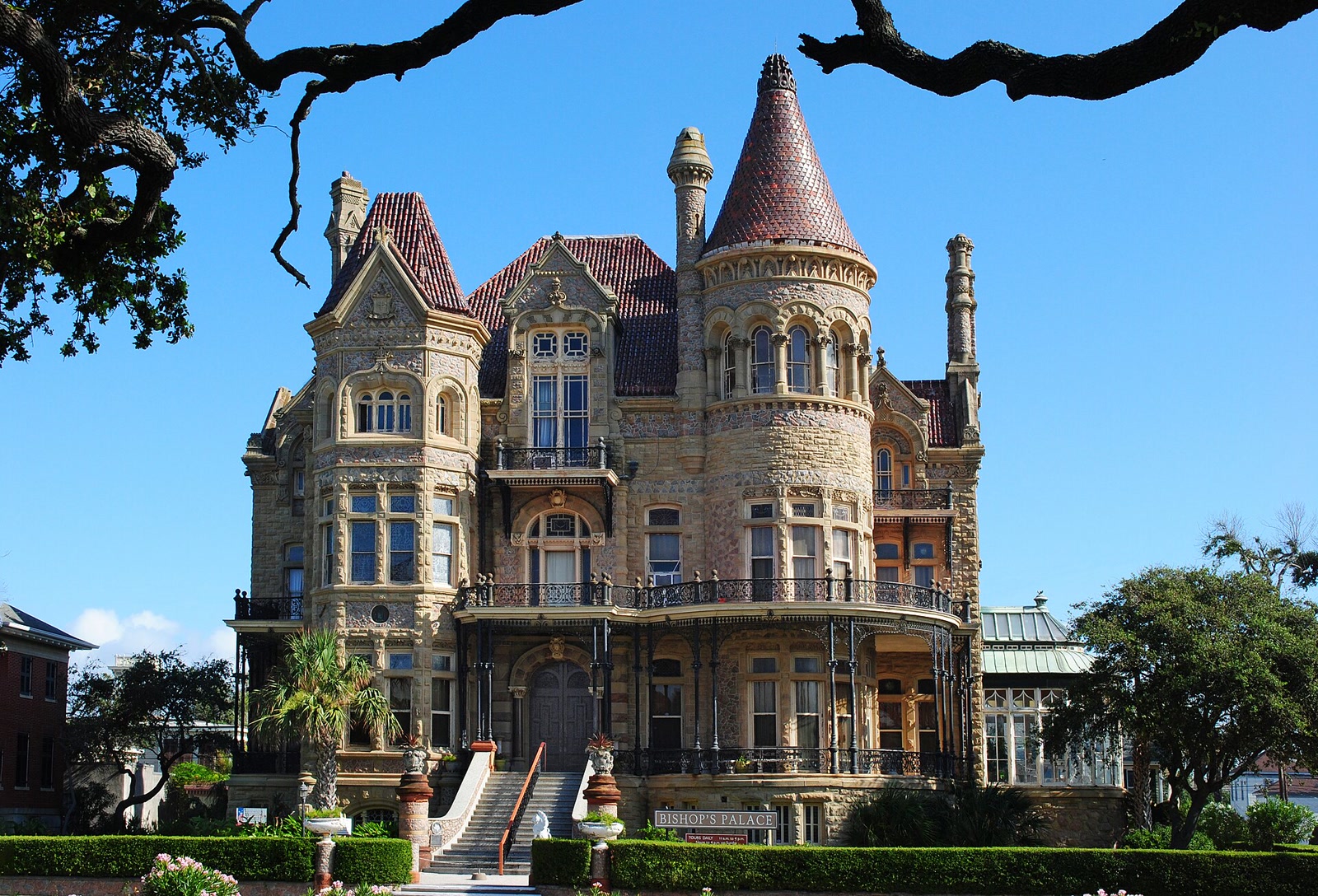
East of the Strand, along Broadway, sits the grandest surviving piece of Victorian Galveston. Bishop’s Palace, at 1402 Broadway, is an 1892 mansion designed by Nicholas Clayton for Walter Gresham that survived the 1900 hurricane virtually unscathed. It is a National Historic Landmark and one of the most-visited attractions on the island: the stone and woodwork inside are as elaborate as the turrets and gables outside, and the guided tour tells the story of the house and the family that built it.
A few blocks away at 2618 Broadway stands Moody Mansion, a 31-room house completed in 1895 where the Moody family lived for more than 80 years. It is a quieter visit — a self-guided audio tour through rooms that still hold the family’s furniture — and the two houses together show how Galveston’s wealthy families lived before the storm. Allow an hour for each, and visit them on the second day after Moody Gardens. The streets between them are worth the walk too: Broadway is lined with Victorian houses, some restored and some still waiting.
The Free Bolivar Ferry: The Best Free Ride in Texas
The Galveston–Bolivar Ferry is the best free ride in Texas, and the one thing on this list that costs nothing at all. Run by the Texas Department of Transportation, it crosses the 2.7-mile ship channel to the Bolivar Peninsula 24 hours a day, 365 days a year, weather permitting, in about 18 minutes. It is a working ferry, not a tour boat — cars, trucks and foot passengers ride together, with a view of the harbour, the ships and the open Gulf.
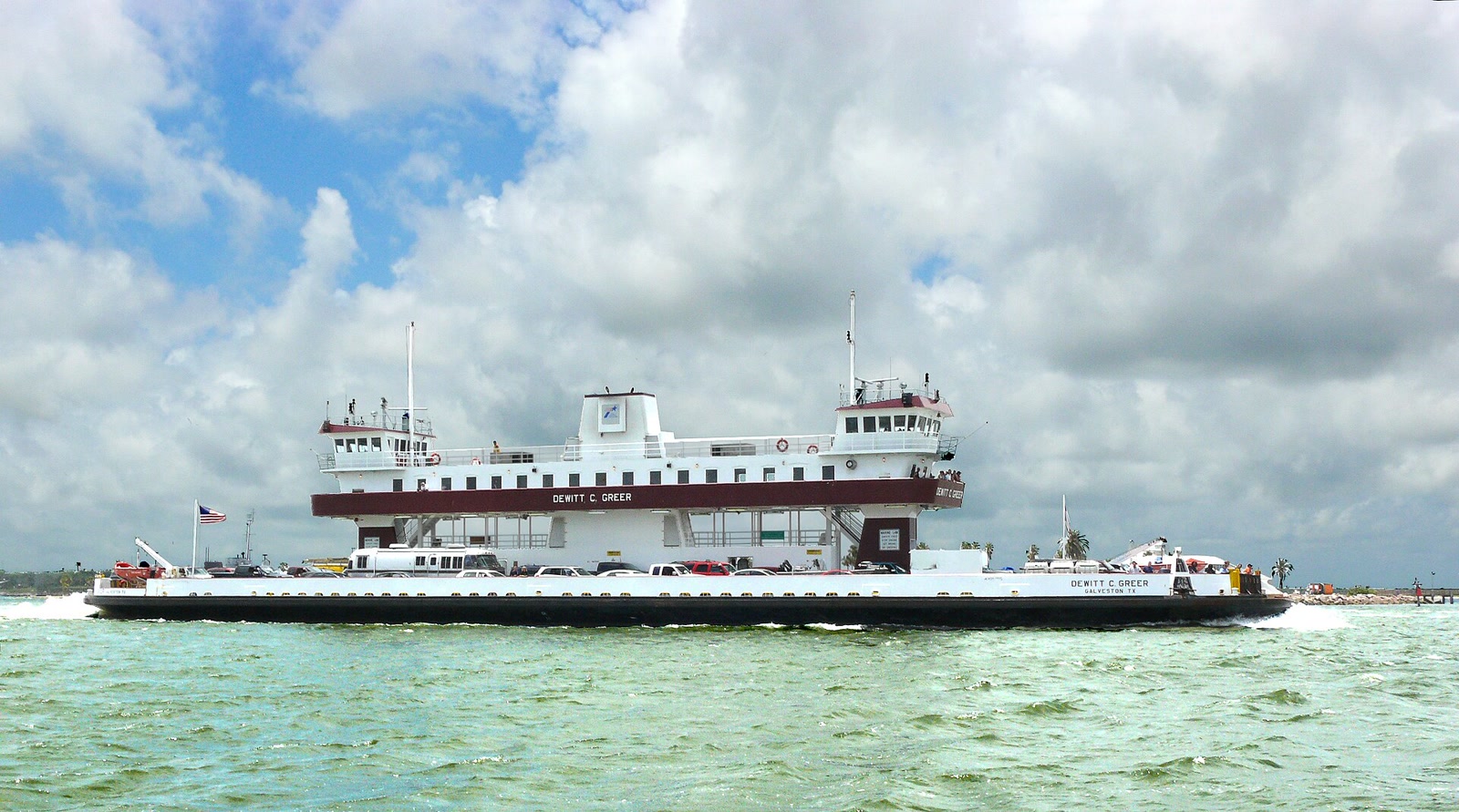
Foot passengers walk straight on; drivers join a queue that can stretch to two or three hours on summer weekends. Check the live wait-time site before you drive over — if the queue is long, park on the Galveston side and cross on foot. The Bolivar side is a quiet stretch of beach and marsh, good for an hour’s walk and a look back at the island. Dolphins are often spotted from the deck, especially late morning and afternoon. The ferry is free in both directions, and the closest thing to a cruise Galveston offers without a ticket.
Pleasure Pier and Schlitterbahn: The Family Afternoon
Pleasure Pier is Galveston’s amusement pier, a 1,130-foot boardwalk over the Gulf at 2501 Seawall Boulevard, with a roller coaster, a Ferris wheel, midway games and a 5D theatre. It is lit up at night and looks its best at sunset, when the rides are running and the lights come on over the water. Hours change with the season and the weather, so check the day’s calendar — the pier closes in bad weather. Come for the rides if you have children, or for the walk and the view if you do not: the end of the pier is one of the best places to watch the sun go down.
Schlitterbahn, the island’s waterpark, is the other half of the family afternoon, and a summer-only outing — check the season calendar before you plan around it. Between the pier and the waterpark, a family can fill a whole afternoon without leaving the Seawall. Without children, the pier is still worth an evening visit for the lights and the view, but the waterpark can safely be skipped.
Eating in Galveston: Gulf Seafood Without the Tourist Trap
Galveston eats well, and the rule is simple: eat Gulf seafood, away from the busiest stretch of the Seawall. The island’s restaurants serve the catch of the day — shrimp, oysters, red snapper and crab — and the best meals are usually in the smaller places on the Strand and the streets behind it, where the locals eat. The Strand has the widest choice, from oyster bars to fine dining in the old merchant buildings, and is the best place to eat on your first evening. On the Seawall, walk a block inland and you will usually eat better for less.
Order the Gulf shrimp if you only order one thing, and ask what came in that morning — the catch changes with the season, and the daily special is usually the freshest thing on the menu. Breakfast is worth planning too: the Strand’s cafes open early, and a slow breakfast there beats a rushed one at the hotel. Over two days, eat on the Strand the first night and the Seawall the second, and you will avoid the one mistake that spoils a good meal here — eating at the first place you see on the busiest corner.
Before You Go: Timing, Getting There and the Cruise Question
The best time to visit Galveston is late April to early June, and again in September and October, when the weather is warm, the water is comfortable and the crowds are thinner. The peak beach season runs from June to September, when the island is busiest — book ahead, arrive early at the beaches, and expect queues at the ferry and the pier. Hurricane season officially runs from 1 June to 30 November: worth knowing rather than worrying about, as long as you check the weather before you travel.
Getting there is straightforward: about 50 miles southeast of Houston, roughly an hour’s drive, with Houston’s Hobby and Intercontinental the nearest airports. On the island, the Strand, the Seawall and the east end are all walkable; a car is only really needed for Moody Gardens, the state park and the west end. For two days, a car on the second day is worth having; for one day, you can manage without one.
The cruise question matters because Galveston is a major Gulf cruise port, and many visitors arrive the day before they sail or stay a day after they come back. If that is you, follow the two-day plan — the Strand and the Seawall on the first day, Moody Gardens and the east end on the second. Most Galveston cruises sail to the Caribbean, so our Caribbean Cruise Packing List is genuinely useful if you are packing for one. And if you are doing several ticketed attractions, check the Galveston Island Pass first: the official pass bundles four or more attractions and advertises 40% off posted prices, valid for 30 days after purchase.
What is the #1 thing to do in Galveston? Start on the Strand in the morning and spend the afternoon on the Seawall and a beach — that pair gives you the history and the Gulf in a single day, and everything else is a bonus.
Is Galveston worth a day trip from Houston? Yes — it is about an hour each way, and the one-day plan in this guide fits comfortably into a day trip. Stay overnight if you want Moody Gardens and the ferry as well.
When is the best time to visit Galveston? Late April to early June and September to October, for warm weather and thinner crowds. June to September is the peak beach season and the busiest time on the island.
Do I need a car in Galveston? Not for the first day — the Strand, the Seawall and the east end are walkable. A car helps on the second day for Moody Gardens, the state park and the west end.