
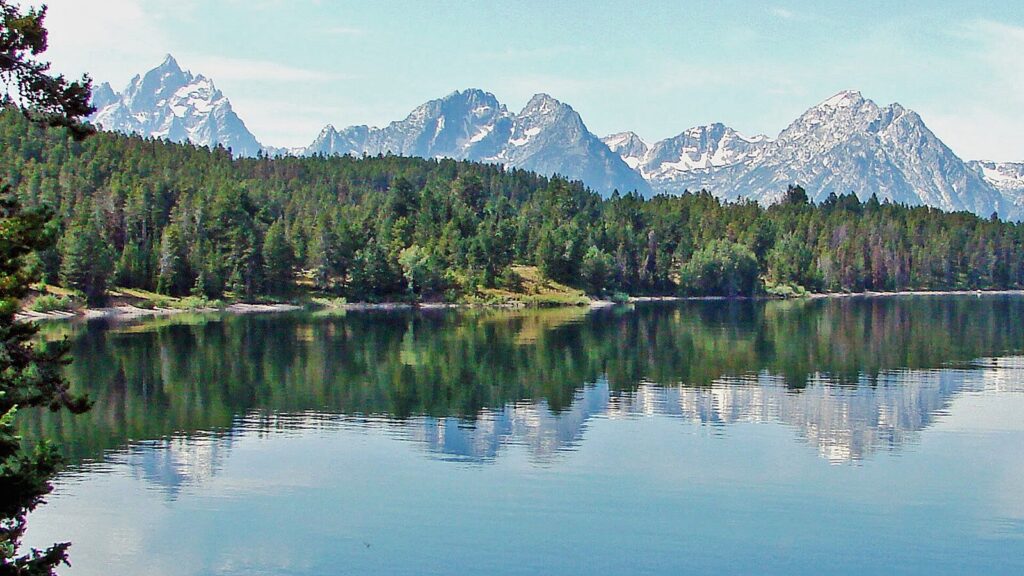
The best hikes in Teton National Park are not hard to find — the hard part is picking one. This is a shortlist of 10 trails, sorted by difficulty, from flat lakeside walks to a 19-mile loop over a mountain pass. Three are easy, three are moderate, and four are strenuous, so a first-timer and a fit hiker can both find their trail in the table below without wading through a 23-hike list.
One honest note first: this article publishes in mid-November 2026, after the hiking season has ended. The 2026 season is over, so treat this as the planning guide for the 2027 season — valley trails are usually snow-free by mid-June, the high trails not until late July, and the best hiking months are late July through September. Two places on this list are affected right now: Death Canyon Road and Trailhead are closed to all use, and Taggart Lake Trailhead is only partially open while construction continues. Both are stated where they matter below, not buried in a footnote.
Short Version: 10 Hikes, Picked by Difficulty
Pick your difficulty first, then your trail. Distances are given as ranges because sources disagree by a few tenths of a mile on almost every trail here — a range is honest, a single figure to two decimal places is not.
| Hike | Distance | Elevation gain | Difficulty | Time |
|---|---|---|---|---|
| Taggart Lake | ~3.2 miles round trip | ~330–400 ft | Easy | 1.5–2 hours |
| Schwabacher Landing | ~1–1.8 miles | Minimal | Easy | Under 1 hour |
| String Lake to Leigh Lake | ~3.7 miles | Minimal | Easy | 2 hours |
| Hidden Falls + Inspiration Point | ~1.8–2 miles with boat; ~5.7–6.2 miles without | ~550 ft | Easy–moderate | 2–3 hours |
| Jenny Lake Loop | ~7.1–7.9 miles | ~600–1,040 ft | Moderate | 3–4 hours |
| Cascade Canyon (Forks) | ~9.1–9.4 miles with boat; ~12.4–13.3 miles without | ~1,100–1,480 ft | Moderate | 5–6 hours |
| Lake Solitude (via Cascade) | ~16.6 miles | ~2,600 ft | Strenuous | 8–9 hours |
| Amphitheater Lake | ~9.6 miles | ~2,700 ft | Strenuous | 5–6 hours |
| Delta Lake | ~7.4–7.5 miles | ~2,300 ft | Strenuous scramble | 5–6 hours |
| Paintbrush–Cascade Loop | ~19.7 miles | ~3,975 ft | Strenuous | 10–12 hours |
The one-line verdicts: if you only do one hike, do Hidden Falls and Inspiration Point. If you want the easiest real mountain view, walk to Taggart Lake. If you want the best single day of hiking in the park and your legs are up for it, do Cascade Canyon — and if they are really up for it, keep going to Lake Solitude. Delta Lake is the prettiest water in the park and also the one trail on this list that is not a maintained park trail at all, which is why it gets its own warning in the hard-lakes section.
Before You Lace Up: The Rules That Change the Hike
Grand Teton is grizzly country, and the park states its hiking rules as rules, not tips. Hike in groups of three or more, make noise on the trail, and carry bear spray — and know how to use it before you need it. Stay at least 100 yards from bears. Solo hiking, off-trail hiking and trail running are not recommended by the park, headphones are strongly discouraged, and for any backcountry route you should carry a topographic map. These are the conditions under which every trail below is hiked, and they are the reason the easy walks on this list are genuinely easy: they are short, popular and close to the road, so you are rarely alone on them.
Day hikes need no permit beyond the park entrance pass. Overnight backcountry camping does need a permit, booked through Recreation.gov, and the backcountry permit offices are closed for the season from November. Parking is the other practical rule: trailhead car parks fill early in summer and autumn, especially at Jenny Lake, String and Leigh Lakes, Lupine Meadows, the Laurance S. Rockefeller Preserve and Granite Canyon. Start early, and have a backup hike in mind — the park’s own advice is to be flexible, because a full car park at Jenny Lake at 10 a.m. is a normal summer day, not bad luck.
The Season Problem: When the Trails Are Actually Open
The Teton Range rises straight out of the Jackson Hole valley floor with no foothills in between, which is why the views are so abrupt — and why the snow lingers. Valley trails are usually snow-free by mid-June, but mountain trails and passes may not be snow-free until late July. The best months for high trails are late July through September, when the snow is gone and the afternoon thunderstorms are the main thing to watch: in July and August they arrive nearly every afternoon, so start hard routes before 7 a.m. and plan to be off exposed ridges before 2 p.m.
Right now, in November, the picture is different. The Jenny Lake shuttle boat’s 2026 season ended on 30 September, and the boat runs roughly mid-May through September in season — so for 2027, count on the walk-in distances until the operator confirms its opening date, and treat every “with the boat” distance in this guide as the in-season option. Teton Park Road closes to vehicles from 1 November to 30 April each year between Taggart Lake Trailhead and Signal Mountain Lodge. Death Canyon Road and Trailhead are closed to all use for construction, and Taggart Lake Trailhead and Trail are only partially open with construction ongoing — check the park’s current-conditions page before you go, because construction timelines move.
The park entry fee is $35 per vehicle, valid for seven days, and the America the Beautiful pass is $80 for US residents. Non-US residents aged 16 and over pay an additional $100 per person on top of the standard fee, unless admitted with an annual or America the Beautiful pass — the nonresident annual pass is $250. That per-person figure is from the park’s own fees page, so if you have seen it quoted per vehicle elsewhere, that version is wrong.
Easy First: Three Short Walks That Still Feel Like the Tetons
Taggart Lake is the easiest real mountain walk in the park: about 3.2 miles round trip with only 330–400 feet of gain, through forest and meadow to a lake with the Tetons filling the far shore. It is the walk to do on your arrival afternoon, or with children, or when the weather is turning. Two things to know: the trailhead is only partially open while construction continues, so check conditions before you set out, and the popular extension around Bradley Lake stretches the walk to about 6 miles if you want more. The lake rewards an early start — the water is calmest in the morning, and the car park fills fast.
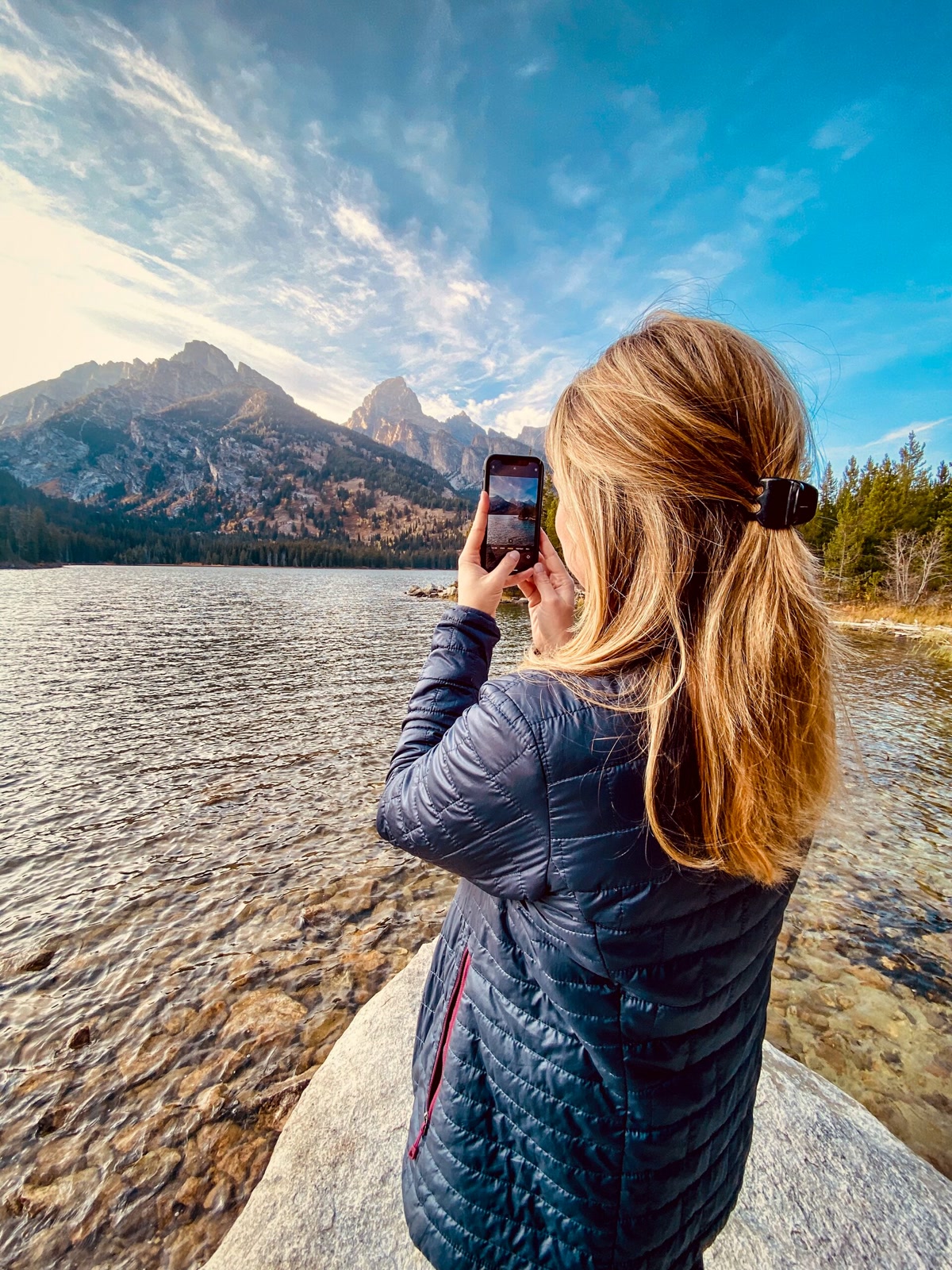
Schwabacher Landing is even shorter, a flat wander of one to two miles along beaver ponds at the foot of the range, and it is the best sunrise spot in the park: the Tetons reflect in the still water while the light is pink. Go at dawn, bring a camera, and keep your voice down — photographers line the ponds before first light, and the beavers are the reason the water is this still.
String Lake to Leigh Lake is the third easy walk, and the best of the three for swimming on a hot day. String Lake is shallow and warms up faster than the other lakes; the trail to Leigh Lake runs about 3.7 miles along the shore through forest, flat almost the whole way, and the full Leigh Lake extension is about 7 miles. It is also one of the busiest trailheads in the park, so the early-start rule applies here more than anywhere on the easy list.
The Jenny Lake Pair: Hidden Falls and Inspiration Point
If you only do one hike in the park, do this one. Hidden Falls drops down Cascade Creek into Jenny Lake, and Inspiration Point sits above it with the classic view back across the lake to the valley. The National Park Service calls it one of the park’s most popular trails, and the popularity is earned — it is the shortest route to the two sights every visitor wants to see.
The boat is the whole decision. In season, the shuttle boat across Jenny Lake cuts the round trip to about 1.8–2 miles with roughly 550 feet of gain, which is why families with children do this hike. Without the boat, the same sights cost about 5.7–6.2 miles around the south shore of the lake. Either way the trail is the same once you reach the falls: a short, steep climb past the cascade, then on to the viewpoint. The boat’s 2026 season is over, so if you are planning for 2027, budget for the walk-in distance unless the operator confirms its opening date — and start early either way, because the Jenny Lake car park is the first in the park to fill.
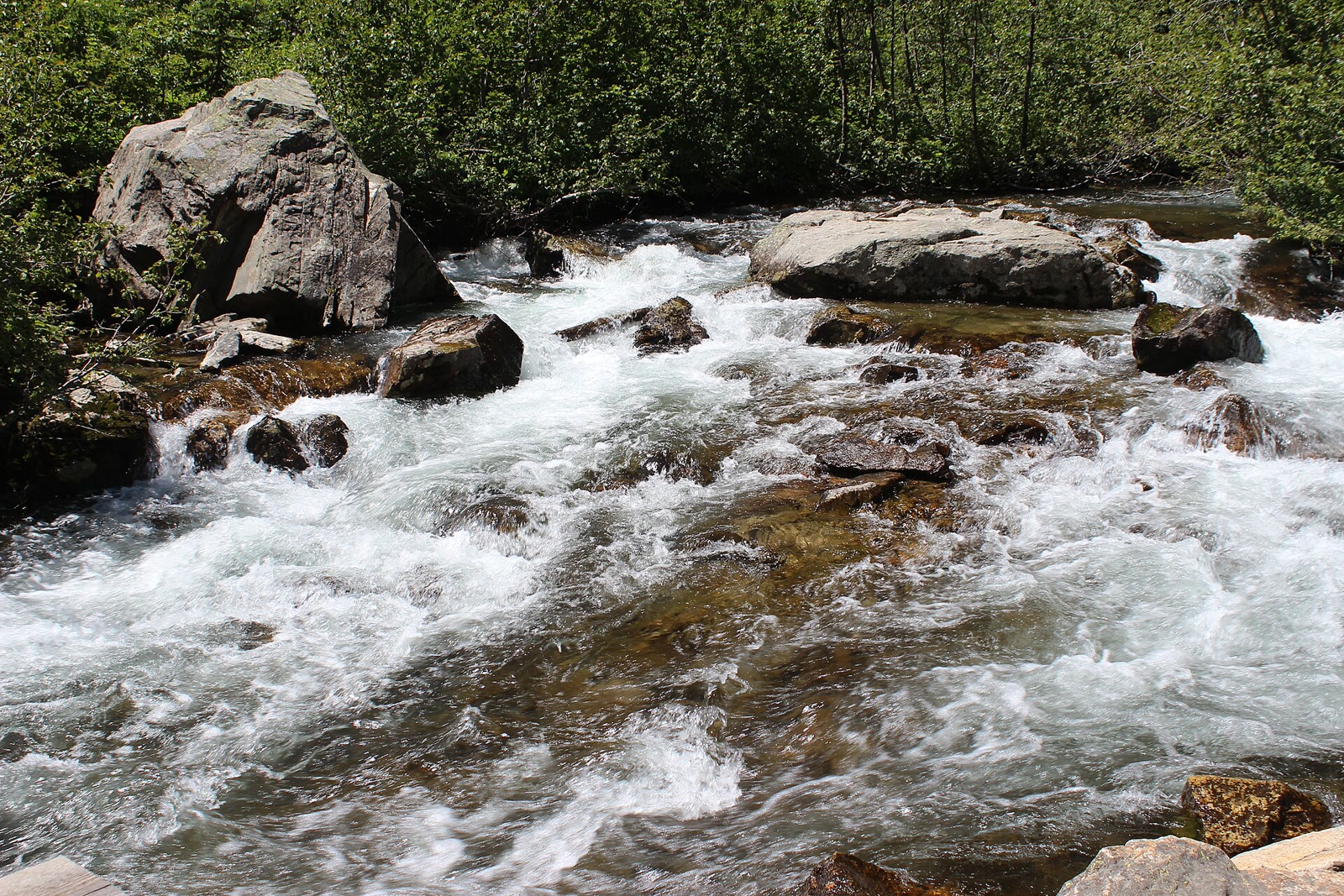
The Jenny Lake Loop is the quieter alternative to the pair: a 7.1–7.9-mile circuit of the whole lake, moderate, with about 600–1,040 feet of gain. It takes three to four hours and it gives you the lake from every side, including the west shore where the crowds thin out. It is the hike to pick if you want Jenny Lake without the queue at the boat dock, and it pairs naturally with the falls — walk the loop, stop at the falls on the way round.
The Canyon Walk: Cascade Canyon and the Lake Solitude Question
Cascade Canyon is the moderate classic, and the best single day of hiking most visitors will do in the park. From the west shore of Jenny Lake — reached by boat in season, or on foot around the lake — the trail climbs gently up the canyon between the high peaks, past waterfalls and wildflower meadows, to the Forks at about 9.1–9.4 miles round trip with the boat, or 12.4–13.3 miles without it. The gain is 1,100–1,480 feet, spread so evenly that it never feels steep, and the canyon keeps giving you reasons to keep walking: a waterfall, a moose in the willows, a marmot on a rock.
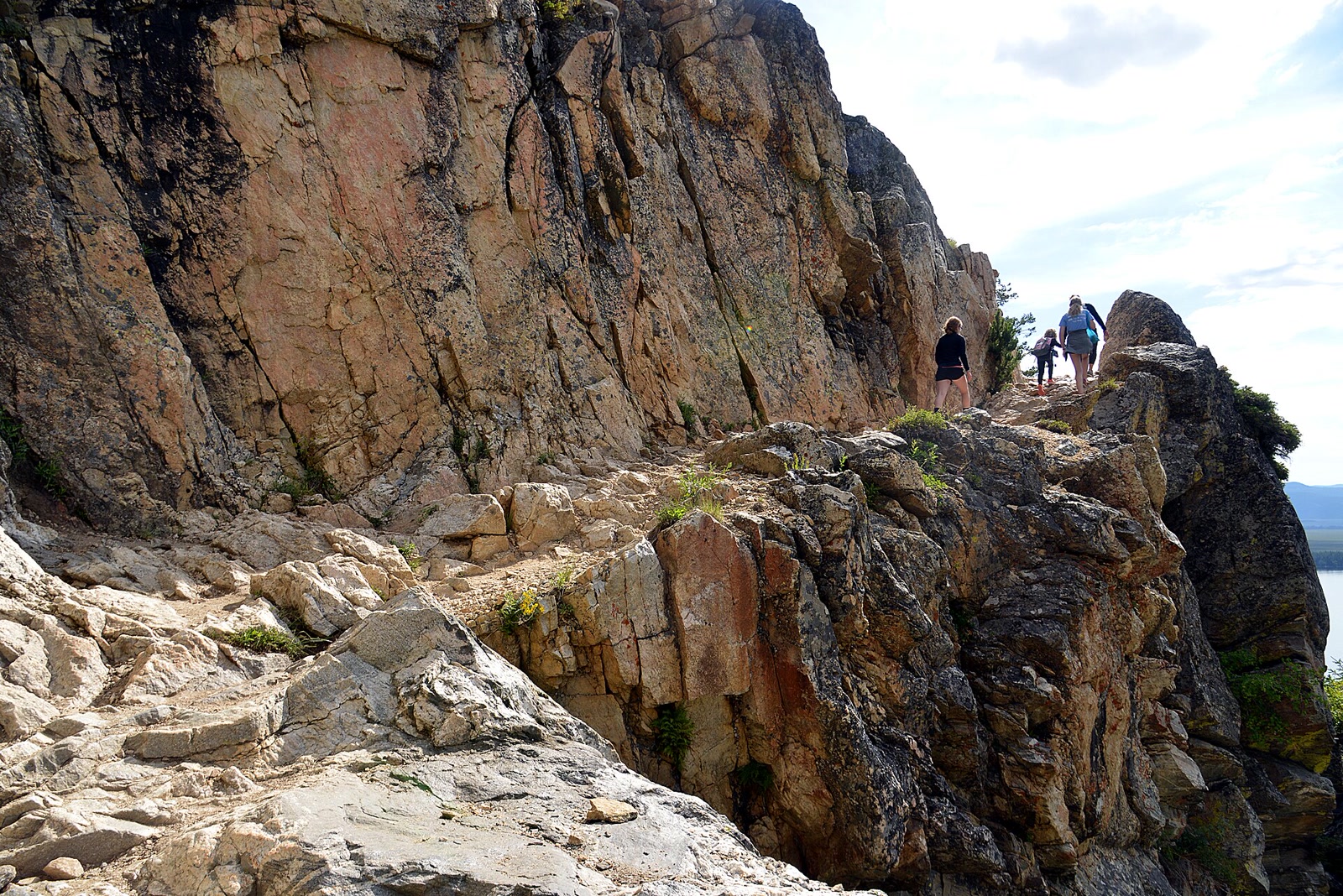
The question every hiker asks at the Forks is whether to keep going to Lake Solitude. It is another 3.5 miles each way, taking the day to about 16.6 miles and 2,600 feet of gain, which moves the hike from moderate to strenuous. The lake itself is a small alpine tarn under the peaks, and on a clear late-summer day it is worth it — but only if you started early, carry enough water, and are honest about your pace. The wrong version of this decision is the one made at 2 p.m. with a thunderstorm building: turn back at the Forks, and Lake Solitude will still be there next year.
The Hard Lakes: Amphitheater, Delta and Paintbrush
The three hard lakes are the payoff hikes, and they are hard in different ways. Amphitheater Lake climbs about 9.6 miles and 2,700 feet from the Lupine Meadows trailhead to a lake sitting in a granite bowl under the peaks — a steady, unrelenting uphill with no flat stretches to recover on, and one of the best views-per-step ratios in the park. It is the strenuous hike to pick if you want a single big climb with a lake at the top and you are in shape for it.
Delta Lake is the most photographed water in the park, a turquoise pool beneath the Grand Teton itself — and it is not a park trail. The route to it is an unofficial, unmaintained scramble off the Amphitheater Lake trail, with a steep boulder field near the top and no signs, no maintenance and no safety net. People do it every summer and the photos are real, but go in knowing what it is: a scramble, not a trail, and a bad place to be in bad weather or with tired legs. The caption on the photo below says the same thing, because a picture of that water without the warning would be dishonest.
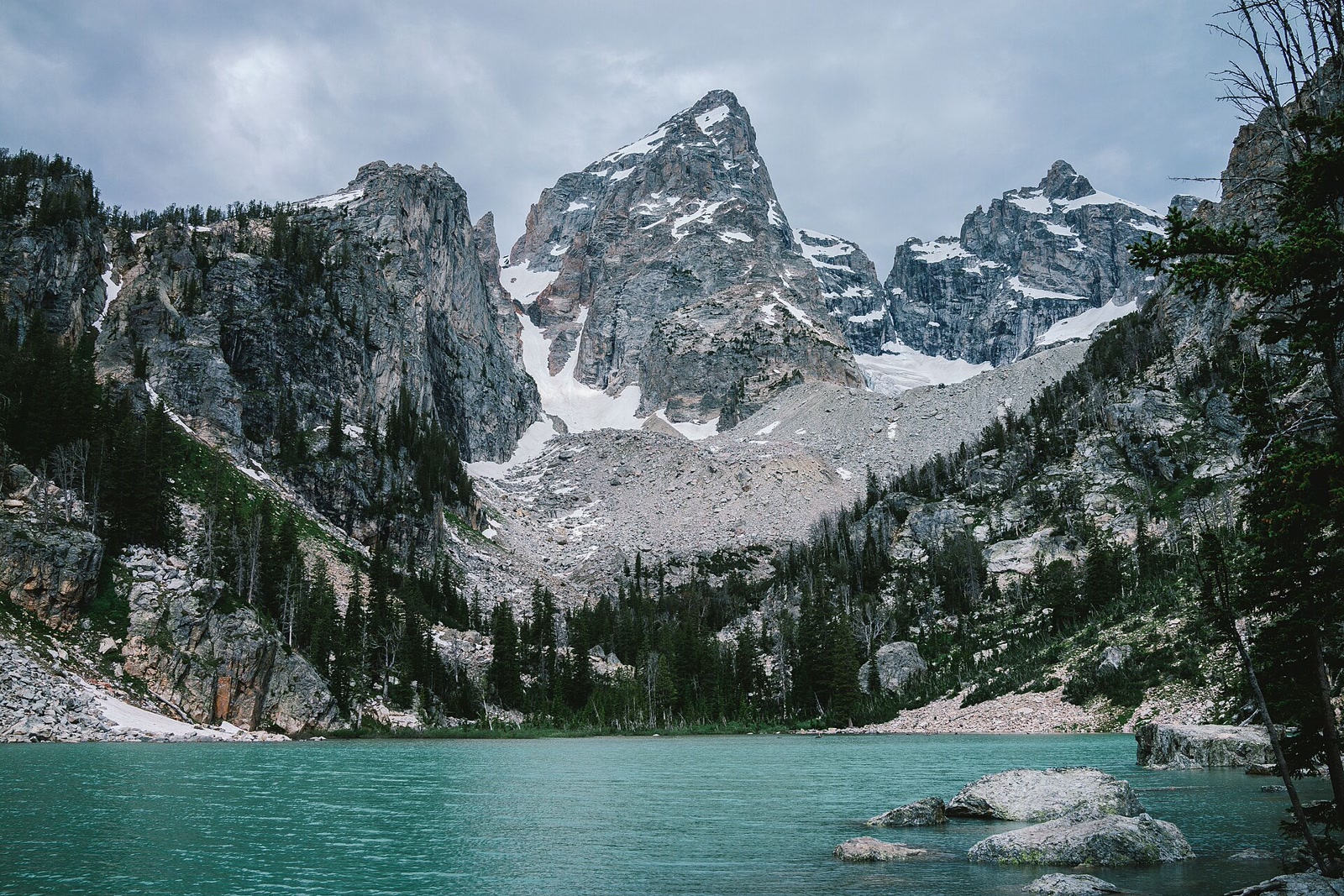
Paintbrush Canyon to Holly Lake is the third hard lake, about 13 miles and 2,700 feet of gain, moderate to hard, and the quietest of the three — fewer people than Amphitheater, a long climb through forest and meadow to a lake under Paintbrush Divide. It is also the first half of the big loop in the next section, which is the point: Holly Lake is a fine destination on its own, and the natural next step for a hiker who does it and wants more.
The One Big Loop: Paintbrush–Cascade in a Day
The Paintbrush–Cascade loop is the hardest day hike on this list and the one that separates hikers who are ready from hikers who think they are. About 19.7 miles and 3,975 feet of gain, up Paintbrush Canyon, over Paintbrush Divide, and back down Cascade Canyon — a full day, ten to twelve hours, with the high pass not snow-free until late July at the earliest. The divide is the crux: exposed, often holding snow into August, and the place where the afternoon thunderstorm rule matters most, because there is nowhere to shelter on the pass itself.
Who it is for: a fit hiker with an early start, plenty of water, and experience at altitude. Who should skip it: anyone who has not done a 15-mile day before, anyone starting after 8 a.m., and anyone who would rather have two good days than one punishing one — Cascade Canyon on one day and Paintbrush Canyon to Holly Lake on the next is the same scenery at half the daily cost. If you do attempt the loop, check the backcountry conditions page first: the park updates trail conditions from May to October only, and by November the permit offices are closed for the season.
The Backpacker’s Teaser: Teton Crest Trail in Pieces
The Teton Crest Trail is the park’s classic multi-day route, about 40 miles and 9,400 feet of gain along the high ridge, and it is not a day hike — but you do not need a week to taste it. The trail is best done as an overnight trip with a backcountry permit booked through Recreation.gov, and the permits are the hard part: they are competitive, and you should plan months ahead. For a day-hiker, the honest teaser is the tram: ride up from Teton Village, walk the ridge-top sections above the resort, and come back down — a high-alpine walk without the permit, the pack or the 40 miles. The full Crest is a trip in its own right, not a box to tick on a Teton hiking weekend, and this shortlist is better for admitting that than pretending otherwise.
The Hiker’s Checklist: What to Pack, What to Skip, and the Questions Everyone Asks
Pack like the weather will change, because it will: water and a high-energy snack, a first-aid kit, layers including a waterproof shell, sunscreen and sunglasses, a map and compass or other navigation, and bear spray — the park’s own hiking-essentials list, in that order. Leave the headphones at the lodge, leave the dog at home (pets are not allowed on any park trail or in the backcountry, by park rule — they may only go where cars may go), and leave the “just one more mile” instinct for a day when the sky is clear. Tell someone where you are going and when you expect to return, and carry out all of your rubbish: the park’s rule is to hike on established trails and leave nothing behind.
What is the best hike in Teton for beginners? Taggart Lake. About 3.2 miles, gentle gain, a real mountain lake at the end, and the car park is close enough that a bad-weather retreat is easy. Schwabacher Landing is shorter still, but it is a viewpoint walk rather than a hike — Taggart Lake is the one that feels like hiking.
Do you need a permit to hike in Teton? No, not for a day hike — your entrance pass covers it. You need a permit only for overnight backcountry camping, booked through Recreation.gov, and for the Teton Crest Trail that means planning months ahead.
When is the best time to hike? Late July through September for the high trails, mid-June onwards for the valley trails. The 2026 season is over as this publishes, so the dates that matter now are the 2027 ones — and the high passes may hold snow until late July, so do not book a Paintbrush Divide attempt for June.
Can you combine Teton with Yellowstone? Yes, and most visitors do — the two parks sit next to each other, and a day in Teton pairs with the Yellowstone itinerary that covers the Teton side in a single day. Our Yellowstone Itinerary spends its fifth day in Grand Teton, at Jenny Lake, Hidden Falls, Inspiration Point and Mormon Row, so the two articles fit together: hike Teton first, then drive north.
Are dogs allowed on the trails? No. Pets are prohibited on all park trails and in the backcountry, and they must stay within 30 feet of a roadway, on a leash no longer than six feet. The surrounding Bridger-Teton National Forest does allow dogs on its trails, which is the alternative if you are travelling with one.