
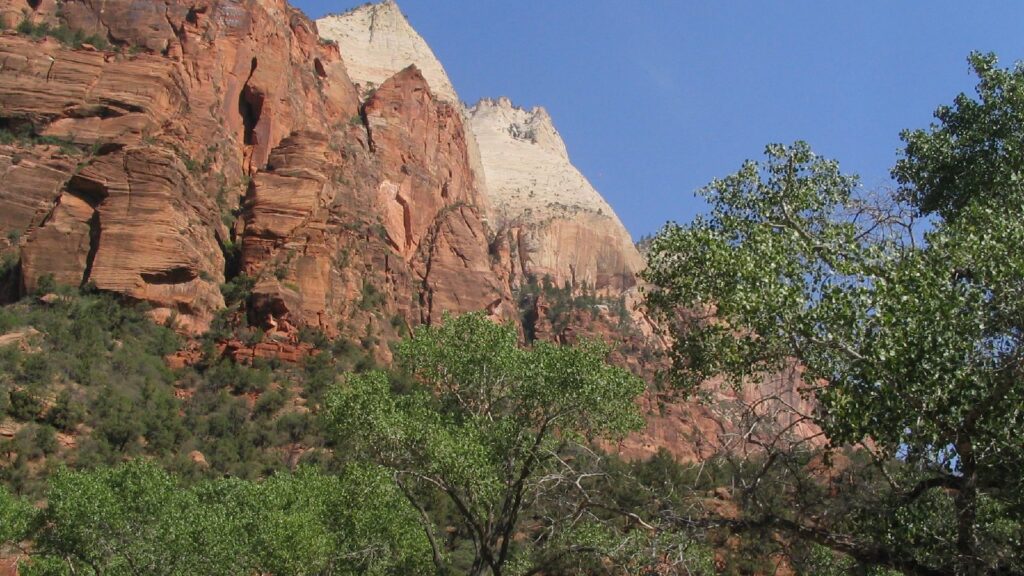
Zion to Las Vegas is about 160 miles and takes 2.5 to 3 hours without stops, via UT-9 west out of Springdale and then I-15 south all the way into the city. It is one of the easiest drives in the desert Southwest: one turn onto the interstate, one long stretch of open road, and then the Strip rising out of the valley floor. The only real decision is whether to take the direct route or spend an extra hour on the Valley of Fire detour, and the only thing to check before you go is the road that only just reopened inside Zion itself.
This guide is written in the direction you are actually driving it — leaving Zion, not starting in Vegas. Most guides online answer the reverse trip, a day trip out of Las Vegas, which is a different drive with different timing. Here, the shuttle, the permits and the last fuel stop are all framed from the Zion end, because that is where your day starts.
The Drive in One Paragraph: Distance, Time and the One Decision That Matters
Zion to Las Vegas is roughly 160 miles from Springdale, the town at Zion’s south entrance, to central Las Vegas — Google Maps typically shows 158 miles, and other sources put it at up to 172 depending on exactly where you start and finish. Plan on 2.5 to 3 hours of driving without stops, on a route that is almost entirely interstate once you leave Springdale. Leave before 8 a.m. if you want the quiet version of it: the road is empty in the early morning, the light on the gorge is at its best, and you reach Las Vegas with the whole afternoon in front of you.
The one decision that matters is the Valley of Fire detour. The direct route is faster and simpler, and on a day when you are tired from hiking, that is a genuine argument. The detour adds about 30 to 45 minutes and roughly 25 extra miles, and in exchange you get the red-rock scenic byway that most drivers only ever see in photographs. There is no wrong answer, but there is a wrong way to decide it — at the exit, with no fuel and no plan. Decide before you leave Springdale, and the rest of the drive takes care of itself.
The Direct Route: UT-9 to I-15, Step by Step
The drive breaks into four legs, and the only turn that matters is the one onto the interstate.
- Springdale to the interstate: UT-9 west from Springdale through Rockville and Hurricane, about 30 minutes to I-15 at Exit 16. This is the slow, pretty part — two-lane road, red rock on both sides, and the last look back at the canyon country.
- Hurricane to St. George: I-15 south, about 15 miles and 20 minutes. St. George is the last proper Utah town on the route.
- St. George to Mesquite: I-15 south through the Virgin River Gorge and across the Arizona Strip, about 40 miles and 40 minutes. This is the most dramatic stretch of the whole drive.
- Mesquite to Las Vegas: I-15 south across the Nevada desert, about 80 miles and 1 hour 15 minutes, with the Strip appearing on the horizon long before you reach it.
Once you are on I-15, the navigation is trivial — stay on it, south, until the city. The speed limits are generous on the long desert sections, with stretches posted at 80 mph through the Arizona Strip and Utah, but the road still rewards attention: the gorge is narrow, the wind can push a high vehicle around, and the merge where I-15 meets I-215 on the edge of Las Vegas is the one place the drive gets busy.
The Scenic Detour: Valley of Fire, and Whether It Is Worth the Hour
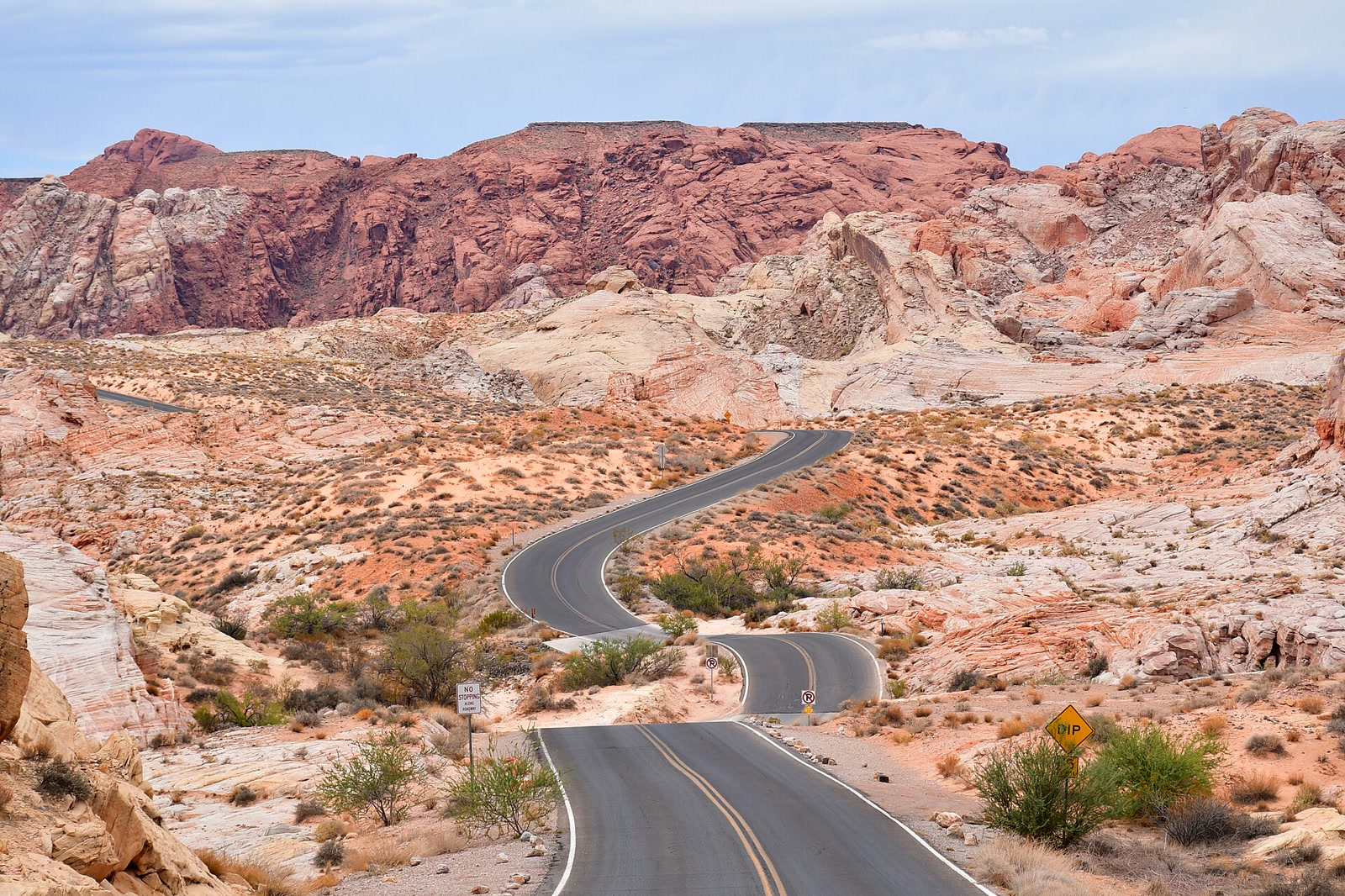
The Valley of Fire detour leaves I-15 at exit 75, follows NV-169 east into the park, runs the scenic byway through the red sandstone, and rejoins I-15 near Overton. It adds about 30 to 45 minutes and roughly 25 extra miles to the day, and the park itself sits about 50 miles northeast of Las Vegas and about 120 miles from Zion — close enough that the detour never feels like a wrong turn.
Whether it is worth the hour depends on what kind of day you are having. If you left Zion early, the light is good and you have energy left, it is the best hour on this drive: the byway winds between walls of Aztec sandstone that glow red in the morning sun, and the short stops along it — the viewpoints, the petroglyphs, the strange white domes — are the kind of thing you remember long after the interstate fades. If you left late, the sun is already high and you are driving into the afternoon heat, skip it and save the park for a day trip out of Las Vegas instead.
Two closures decide the detour for you, so check them before you commit. The park’s West Entrance — the one the detour naturally reaches first — is closed Monday to Thursday through the end of 2026 while Nevada State Parks builds a new entrance lane and fee booth. On those days it is open Friday to Sunday only, and weekday drivers should enter through the East Entrance instead, via State Route 169 or 167. And the whole park closes for its annual maintenance shutdown from December 1 to 14, 2026, reopening December 15 — during those two weeks there is no visiting at all, on foot or by car. Both closures come from Nevada State Parks notices, and both are worth a five-minute check on the park’s page on the morning you drive, because construction schedules can change.
The Gorge in the Middle: What the Virgin River Stretch Actually Looks Like
About forty minutes south of St. George, I-15 drops into the Virgin River Gorge, and for the next stretch the interstate stops feeling like an interstate. The road narrows between sheer rock walls, the river runs alongside it, and the cliffs on either side are close enough that you can see the layers in them. It is the single most scenic piece of freeway on this drive, and it is also the piece where you should put the phone down and drive: the lanes are tight, there are no services, and there is nowhere to pull over except the occasional viewpoint.
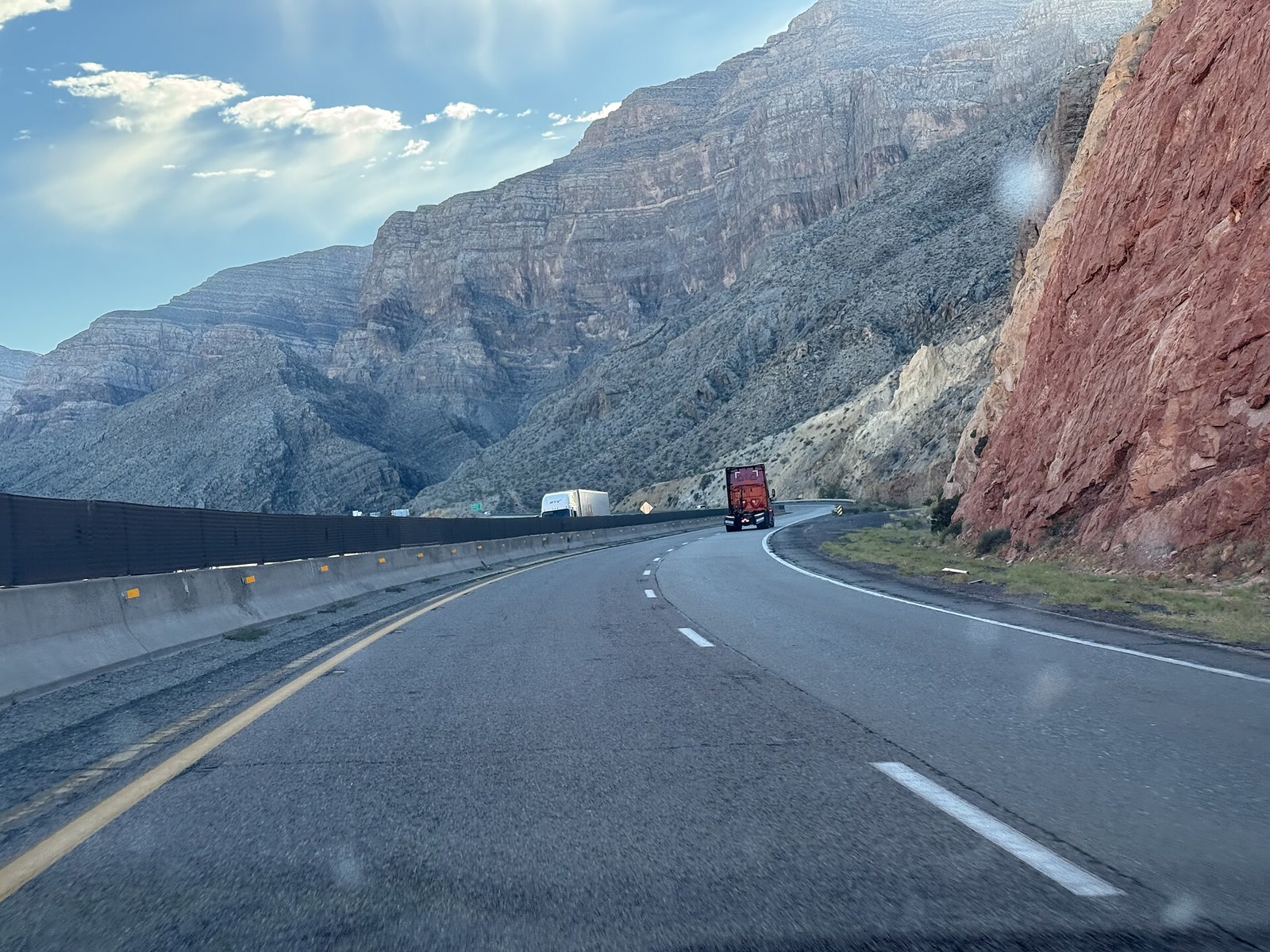
The gorge is also the reason the drive feels shorter than it is. You cross the Arizona Strip in the middle of it — a stretch of Arizona with almost nothing in it — and then the road opens out again into Nevada and the long, flat run to Mesquite. Drivers who have done this route before will tell you the gorge is the part they remember, and the desert after it is the part they forget. Give it your full attention for the twenty minutes it lasts, and it pays you back.
Where to Stop: St. George, Mesquite and the Last Cheap Fuel
St. George is the stop that matters. It is the last proper town before the long desert run, and it has everything within a couple of miles of I-15: fuel, groceries, restaurants and a place to stretch your legs properly. Fill up here. Fuel gets pricier the further you get from the towns, and the stretch after exit 25, north of Mesquite, is where the prices climb and the options thin out. A full tank in St. George means you never have to think about fuel again until Las Vegas.
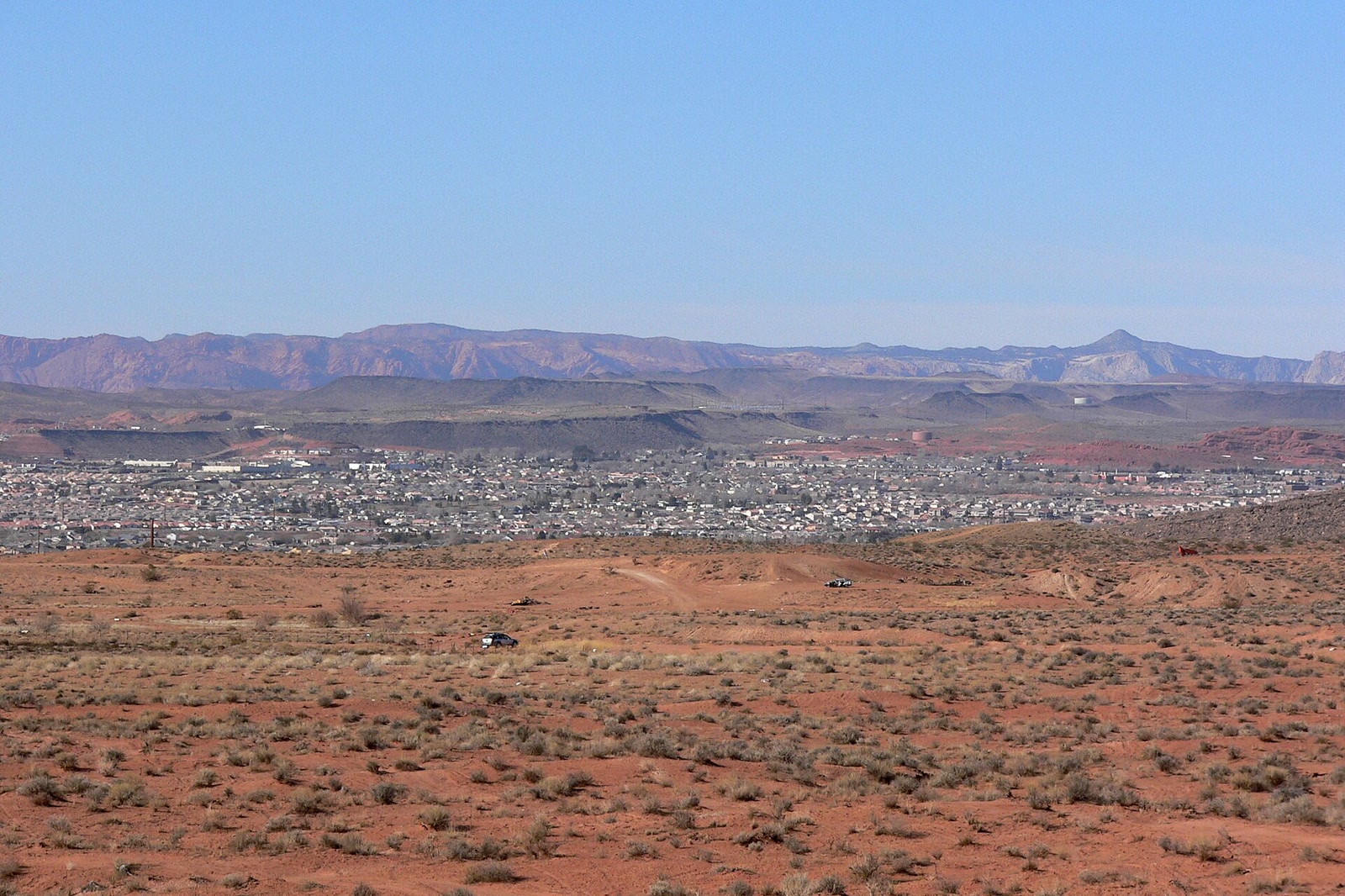
Mesquite is the second stop, and it is a different kind of place — a small Nevada casino town on the state line, about an hour from Las Vegas. It works as a lunch stop or a last break before the final run, and it is the last fuel before the city if you skipped St. George. Hurricane, the small town between Springdale and the interstate, is the stop for the other direction: if you are driving back to Zion, it is the last place to eat and fuel up before the park. On the way to Vegas, pass through it early and do not linger — the day is in front of you, not behind you.
The Time-Zone Trap: Gaining an Hour You Did Not Expect
Utah runs on Mountain Time and Nevada on Pacific Time, so driving from Zion to Las Vegas you gain an hour. Leave Springdale at 8 a.m. and you arrive in Las Vegas at about 10:30 a.m. local time, with the whole day still ahead of you. It feels like a gift, and mostly it is — but it is also the easiest way to miss something.
The trap is the booking made in the wrong time zone. A hotel check-in, a show, a dinner reservation or a flight out of Las Vegas are all on Pacific Time, and a phone that has not updated its clock will happily tell you otherwise. Check the clock on your phone when you cross the state line, not when you reach the hotel, and read every confirmation in Las Vegas time. The same hour works against you on the way back: leave Las Vegas at 8 a.m. and it is already 9 a.m. in Springdale, which is why the return drive always feels an hour longer than it is.
Before You Leave Zion: Shuttle, Permits and the Road That Just Reopened
Before you drive anywhere, settle the Zion end of the day. Private cars are not allowed on the Zion Canyon Scenic Drive in peak season, from April to October — the free park shuttle is mandatory, and it is the only way up the canyon. If you hiked Angels Landing, you already know the permit system: a lottery on recreation.gov, six dollars per person, and Scout Lookout as the fallback if you did not get one. The park entry fee is thirty-five dollars per vehicle for a seven-day pass, and non-US residents pay an additional one hundred dollars per person, ages sixteen and over, from 1 January 2026 — the same fee our Yellowstone guide corrected earlier this year.
The road news matters more than any of that, because it changed while the older guides were still being written. A large rockfall closed the Zion–Mt. Carmel Highway, between Canyon Junction and the East Entrance, on 30 September 2026. The park reopened the upper 7.5 miles, from the East Entrance to Great Arch Overlook, on 6 October, and full visitor access returned on 9 October. The repaired section is covered in temporary gravel and the park has not set a date for repaving, so drive it slowly and use caution through the work area. Some October updates online still say the highway is closed — they are outdated, and the National Park Service’s own release of 9 October is the authority. One more thing for night drivers: construction crews have been closing the tunnel road overnight, from 9 p.m. to 6 a.m., on construction nights since late October, so check the park’s alerts page if your plans involve the east side after dark.
If you are driving anything oversized, there is a rule that changed this summer too: since 7 June 2026, vehicles over 35 feet 9 inches long, 7 feet 10 inches wide, 11 feet 4 inches tall or 50,000 pounds are not permitted between Canyon Junction and the East Entrance, and the old ranger escort system is gone. Most rental cars and SUVs are nowhere near those limits, but a large RV or a truck with a trailer needs to know before it reaches the junction.
Arriving in Las Vegas: Where the Drive Ends and the Strip Begins
The desert gives you plenty of warning. The Strip appears on the horizon long before you reach it, a cluster of towers shimmering in the haze, and then I-15 carries you straight into the city. The one busy spot is the interchange where I-15 meets I-215 on the southern edge of Las Vegas, and on a Sunday afternoon between 3 and 7 p.m. it can slow to a crawl as the weekend traffic heads home. If you can, time your arrival for a weekday morning or an early afternoon, when the road is clear and the city is still waking up.
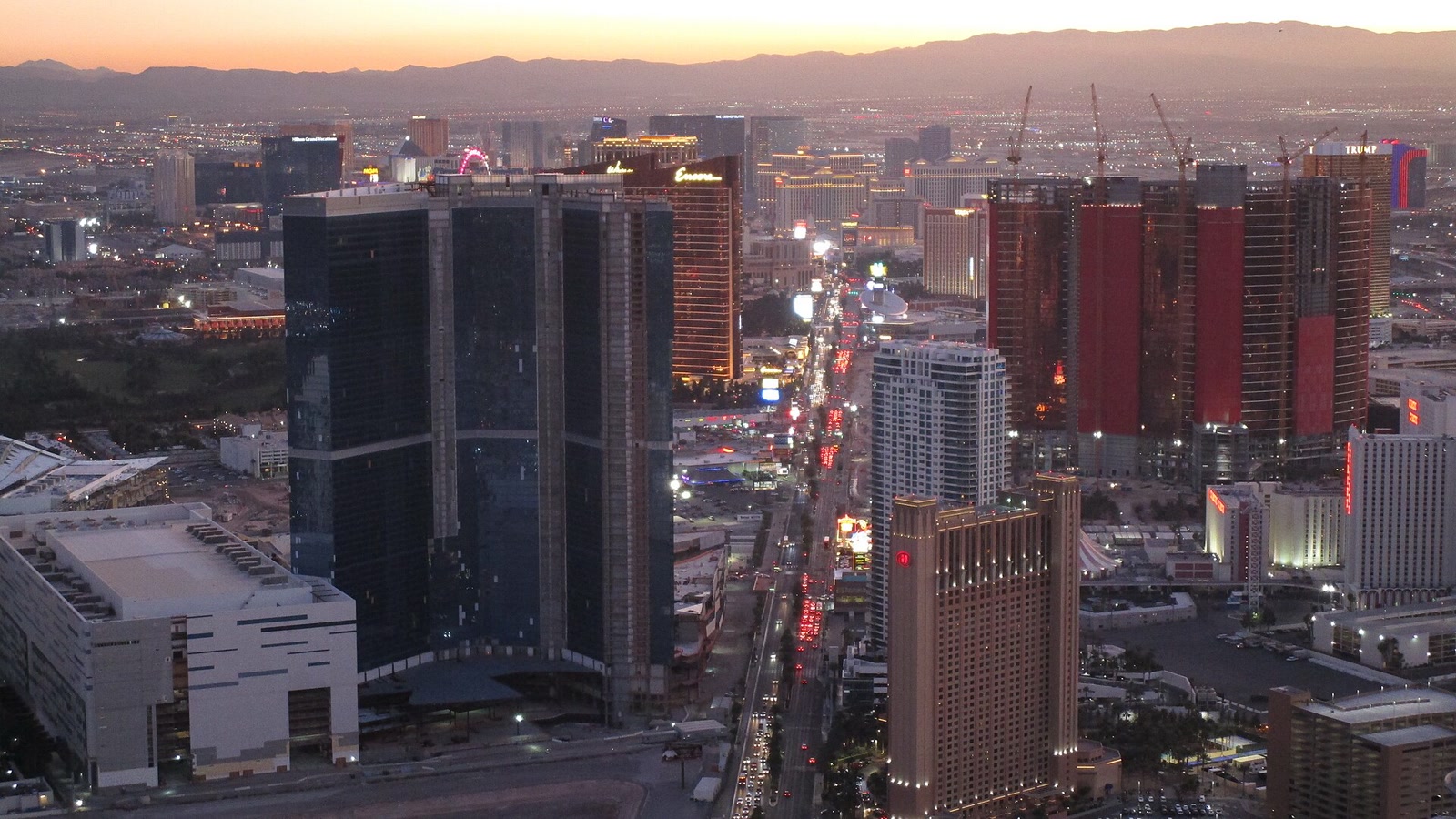
Once you are in, the drive is over and the trip changes character completely. Zion was quiet trails and early mornings; Las Vegas is the opposite, and the best way to handle the switch is to have a plan for the first evening rather than improvising at the hotel desk. Our Las Vegas Itinerary lays out the city in the same practical order — where to start, what to skip, and how to spend the first night without wasting it — and it is the natural next read once the car is parked.
Stretching It: Zion to Vegas in Two or Three Days
The direct drive is 2.5 to 3 hours, but the route earns a slower version. Give it two days and the Valley of Fire stops being a detour and becomes a morning: drive to St. George on the first afternoon, spend the night there, and take the scenic byway in the early light before the heat builds. Give it three days and you can add a night in Mesquite or a slow morning in Springdale, hiking one last short trail before you leave the canyon behind.
The other way to stretch it is to treat Las Vegas as a base rather than a finish line. From the city, the desert opens in every direction, and the drives out of it are the same shape as the one you just finished — short interstate, long desert, something extraordinary at the end. Our Las Vegas to Death Valley guide covers the best of them, and it pairs naturally with this drive: Zion behind you, Death Valley ahead, and Las Vegas in the middle as the place to rest, refuel and reset.
The Return Question: Driving Back, Flying Out, or Looping to Bryce
The return drive is the same road in the other direction, and it is worth doing at least once — the gorge looks completely different heading north, the light falls on the opposite cliffs, and the time-zone hour you gained on the way down comes back with interest. Leave Las Vegas early, remember that it is already an hour later in Utah, and you can be back in Springdale by lunchtime with the afternoon free for one more hike.
Flying out of Las Vegas is the other clean option, and it is the one most Zion visitors choose: drive down, drop the car, and fly home from Harry Reid International. If you rented the car in Utah, check the one-way drop-off terms when you book — a one-way rental is straightforward, but it is not the same as a round trip, and the terms are set at booking, not at the counter.
The third option is the one that turns the drive into a longer trip: loop to Bryce Canyon. Bryce sits about 86 miles from Zion, roughly an hour and a half by car, and the road between the two parks is one of the great drives in Utah in its own right. Zion, Bryce and Las Vegas make a natural triangle — canyon, amphitheatre, city — and the drive you have just done is the leg that closes it. Whichever way you go, the road itself is the point: 160 miles of desert, one gorge, one detour worth taking, and an hour gained along the way.