
Las Vegas looks like a city you can wing. It is not. The Strip is longer than it looks, the heat is real, the shows sell out, and the desert outside town is the best part. This las vegas itinerary is built for a first visit: three full days, one zone per day, one paid anchor per day, and no car.
Day one is the Strip, walked south to north. Day two is Downtown and the Arts District, finishing under the lights of Fremont Street. Day three is Red Rock Canyon in the morning and one last show at night. The Grand Canyon does not fit in these three days — this itinerary says so honestly.
How this 3-day Las Vegas itinerary works
One zone per day is the whole trick. Las Vegas punishes zigzagging: the Strip is 4.2 miles end to end, Downtown is a separate trip, and the desert is a third.
One paid anchor per day is the budget trick. A show ticket, a museum, a timed-entry drive — one thing you pay for, and everything else around it is free or cheap. The fountains are free. The sign is free. Fremont Street is free. The desert costs twenty dollars a car.
No car is a genuine choice here. The monorail runs the east side of the Strip, the Deuce bus runs the whole Strip and down to Downtown around the clock. The one exception is the Red Rock morning. Stay on Center Strip, and book the Sphere and the Red Rock timed entry early — they sell out.
Day 1: the Strip, walked south to north
Start at the south end, at the Welcome to Fabulous Las Vegas sign. It is free to visit, and the photo line moves fast in the morning. From there, walk north up Las Vegas Boulevard. The Strip runs 4.2 miles from Sahara Avenue to Russell Road, and walking it end to end without stopping takes 90 to 120 minutes. Treat the whole walk as your day, not an errand.
The south end is the themed end — Mandalay Bay, Luxor’s pyramid, Excalibur’s castle — and the most spread out stretch, so do not linger. The middle is where the Strip earns its name. The Bellagio fountains are the best free show in the city: every 30 minutes from 3 PM to 7:30 PM on weekdays, then every 15 minutes from 8 PM to midnight, and from noon on weekends and holidays. Wind can cancel a show; the lakeside sidewalk was closed for Formula 1 work through November 9, 2026, and should be open again.
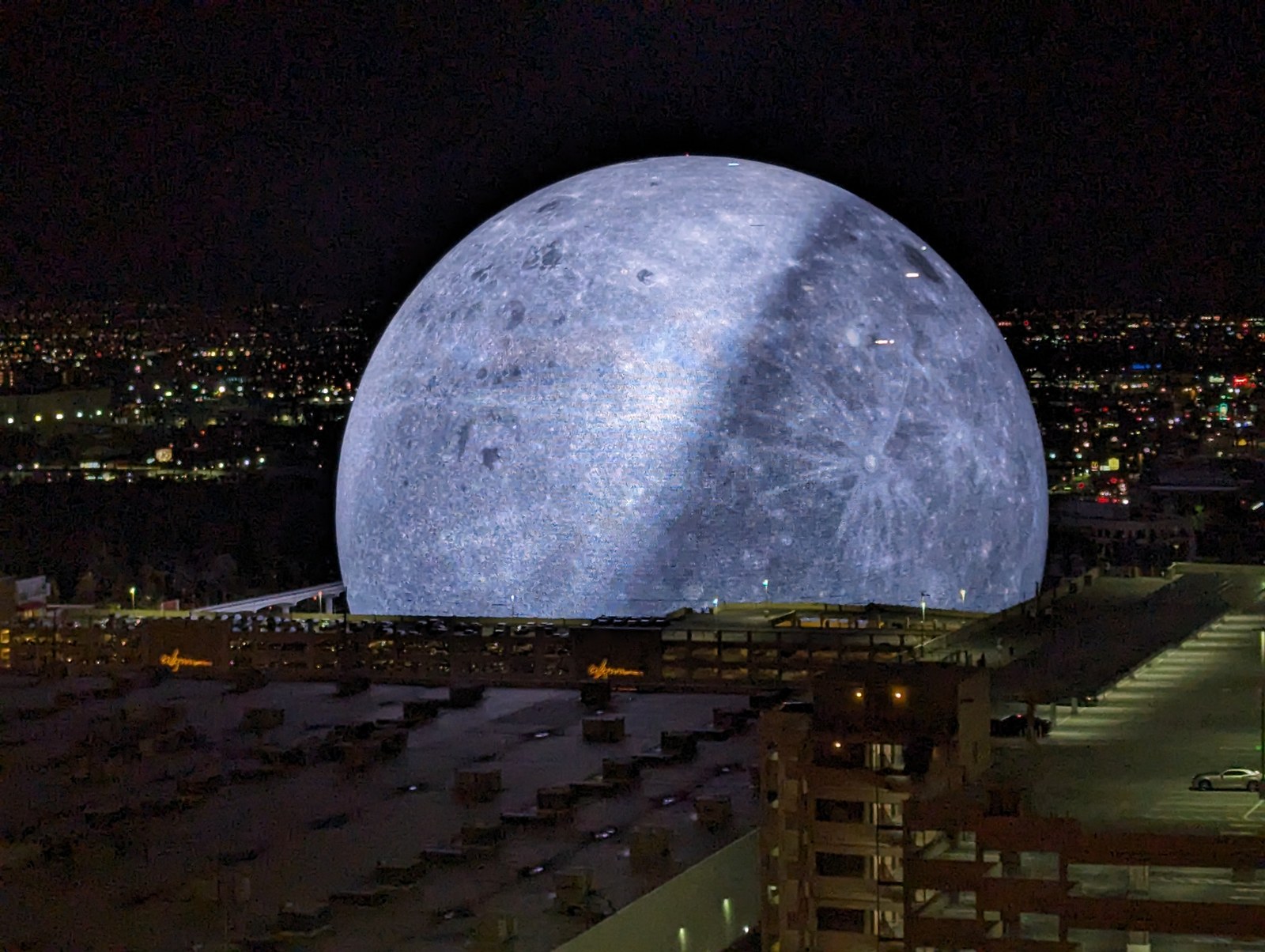
Keep walking north past Caesars Palace and the Venetian to the newest landmark on the Strip: the Sphere, at 255 Sands Avenue next to the Venetian. Its outside is a giant LED screen that turns the whole building into a moon, an eyeball, or a basketball. Inside, the show to book is The Wizard of Oz, which premiered on August 28, 2025: about 75 minutes, ages 6 and up, tickets from $104, several showtimes a day. The popular dates sell out — book it weeks ahead.
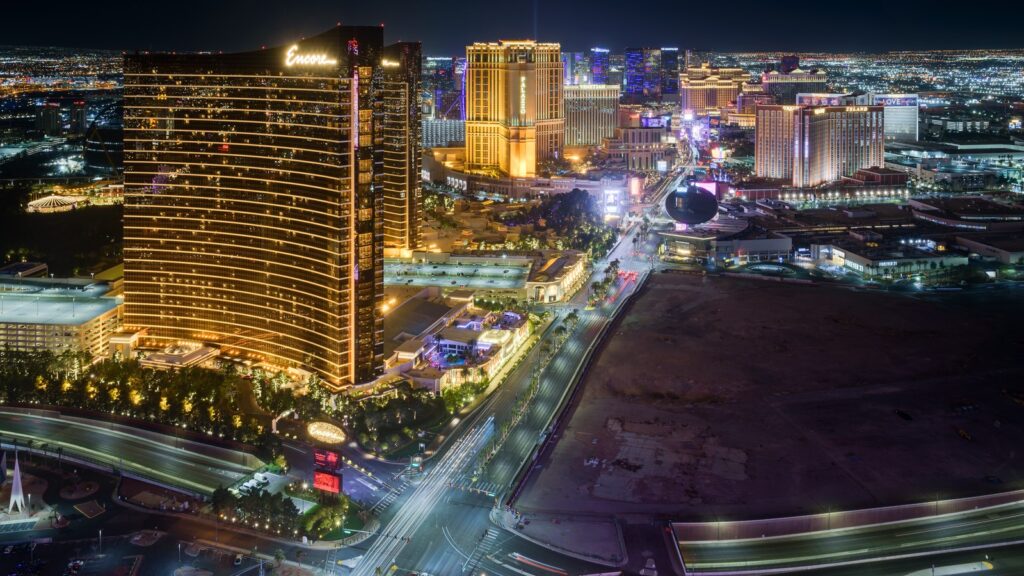
Finish at the north end, around Wynn, Encore and Resorts World, and ride the monorail back south. One rule for the whole day: you must be 21 to gamble or drink in Nevada. Nobody minds the family walking through a casino floor, but the machines and tables are not for children.
Day 2: Downtown, the Arts District and Fremont after dark
Day two belongs to the other Las Vegas. Downtown is where the city started: smaller casinos, cheaper tables, neon that is actually old.
Start in the Arts District, just south of Downtown around Main Street and Charleston Boulevard: galleries, coffee shops, murals and antique stores — the most walkable neighbourhood in the city. It is the best place in town for a slow morning after day one.
From there, take a short rideshare to the Neon Museum at 770 North Las Vegas Boulevard, the boneyard where the city’s retired signs stand in an outdoor lot. Go in the evening if you can — the signs light up, and that is the point. Daytime admission runs from $25 (3 to 5 PM), evening from $35 (5 to 11 PM), with timed entry — book ahead, because the evening slots go first. From January 1, 2027, it switches to a single combined ticket from $21.
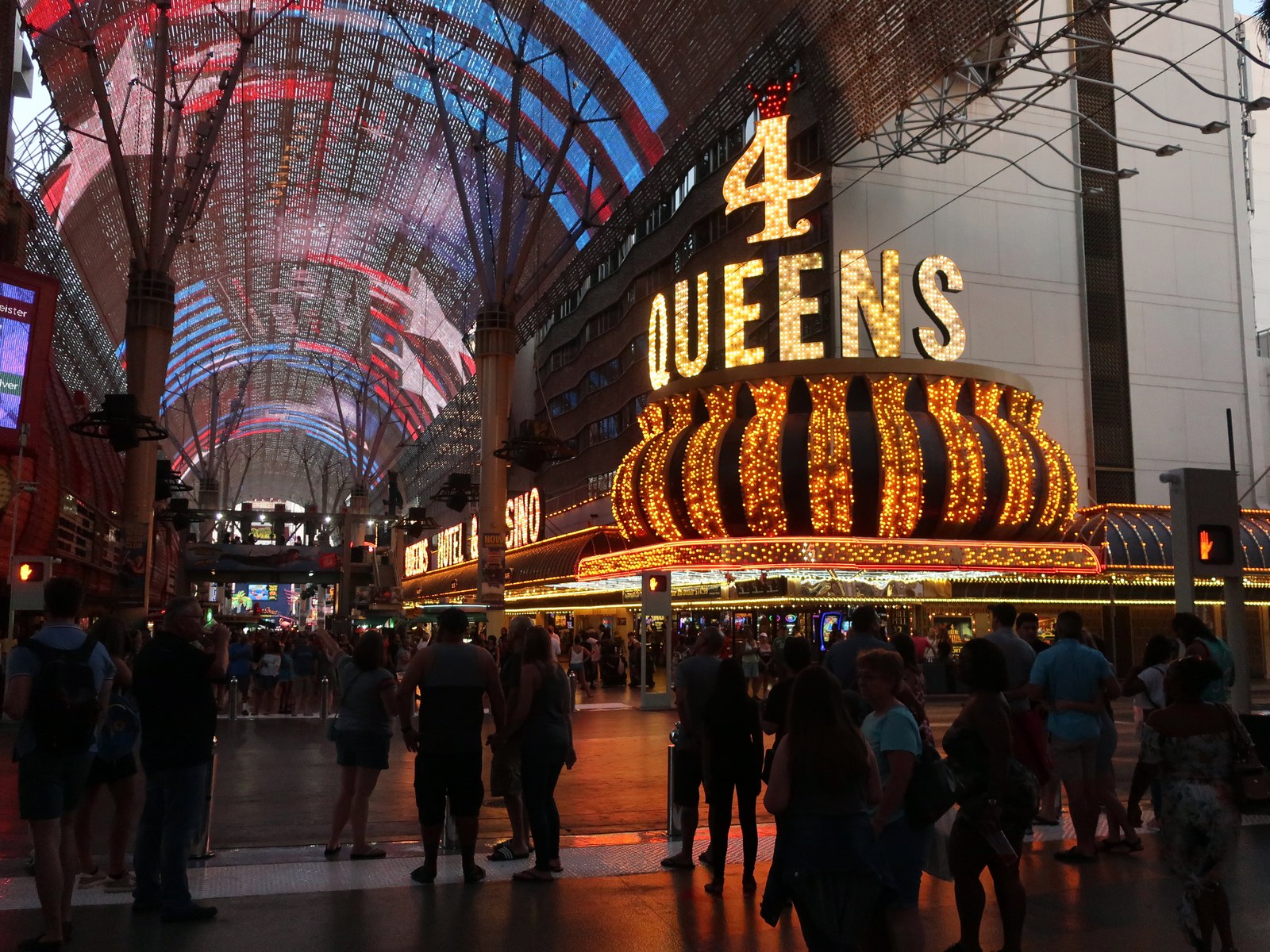
Come back to Fremont Street as the sun goes down. The Fremont Street Experience is a five-block pedestrian mall under the Viva Vision canopy, and it is free. The light shows run every hour on the hour from 6 PM to 1 AM, six to seven minutes each, set to a different artist’s music. Between shows there is free live music on three stages, every night of the year, and the SlotZilla zipline runs underneath the canopy — about $45 to $65 by line. The old casinos here — the Golden Nugget, Binion’s, the El Cortez — are worth a walk-through even if you never touch a machine.
Day 3: Red Rock Canyon in the morning, one last show at night
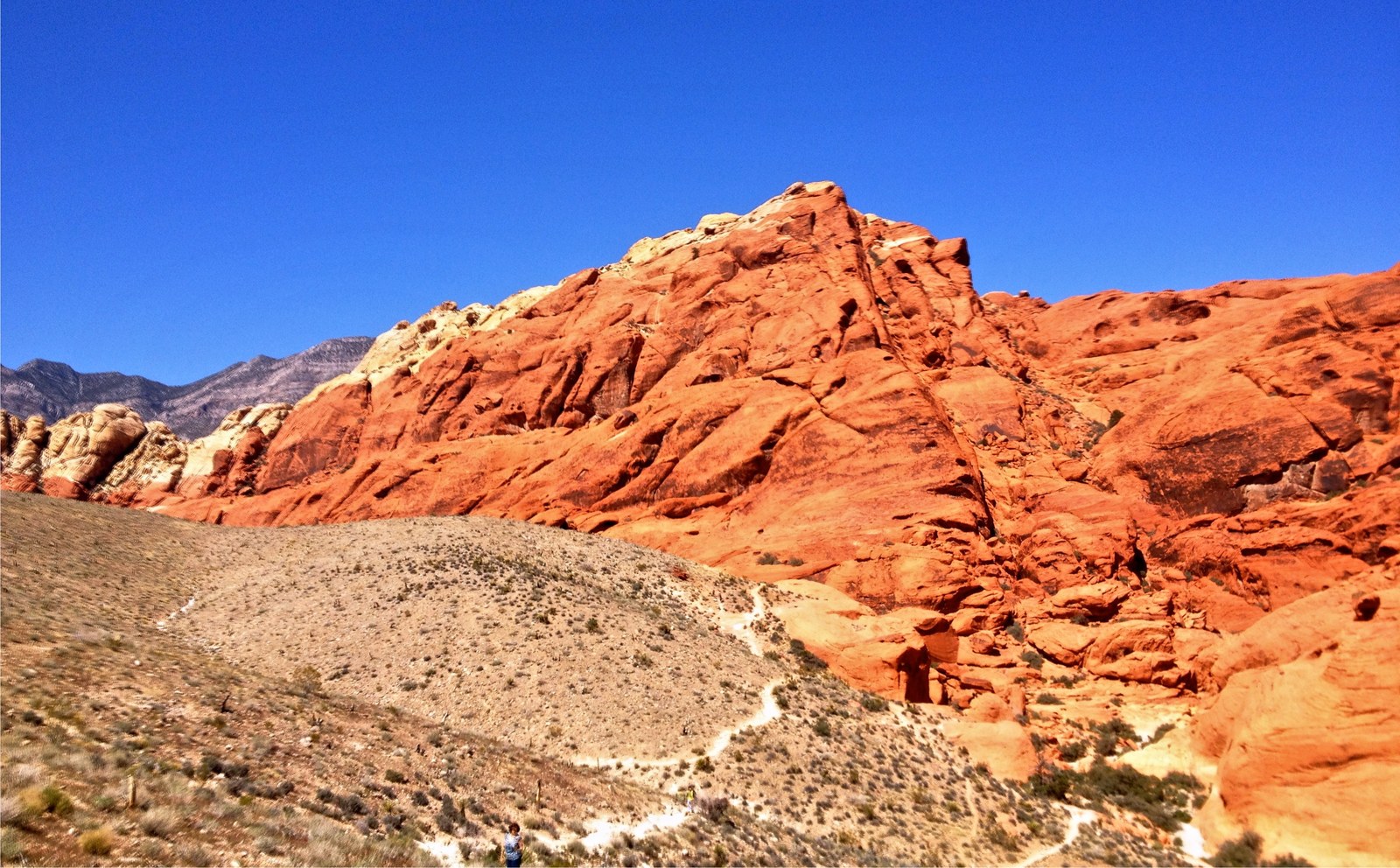
Save the desert for the last morning. Red Rock Canyon is 30 minutes from the Strip, and the light on the red rock is best before the heat arrives. There is no direct public bus from the Strip to the visitor center, so take a rideshare out and arrange the return before you leave — phone signal at the canyon is patchy.
Timed entry runs October 1 to May 31, 8 AM to 5 PM — book on Recreation.gov as soon as your dates are set. The fee is $20 per vehicle plus $2 to reserve; an America the Beautiful pass covers the entrance fee, but not the $2. From June 1 to September 30 there is no reservation — just heat.
The 13-mile Scenic Drive is the core of the visit: pullouts and short trails the whole way round, with the Calico Hills as the first and best stop. Give the loop two to three hours and you will be back on the Strip by early afternoon.
Spend the afternoon as you like, and make the evening your second show. Prices shift by date and seat, so check the venue’s own site, not a reseller, and book before you travel if there is one act you want to see. If shows are not your thing, a final walk from the Bellagio fountains to the Wynn is a fine last night.
The Grand Canyon question: day trip or fourth day?
The Grand Canyon does not fit in these three days without sacrificing a day. The South Rim is about 278 miles from Las Vegas, roughly four and a half hours of driving each way — nine hours in a car before you have seen anything. It deserves a fourth day, or an overnight at the rim.
The West Rim is the closer option, about two to two and a half hours each way, and it is the one the bus tours sell. It is not the national park, the Skywalk costs extra, and the views are narrower — but it is the only version that works as a day trip.
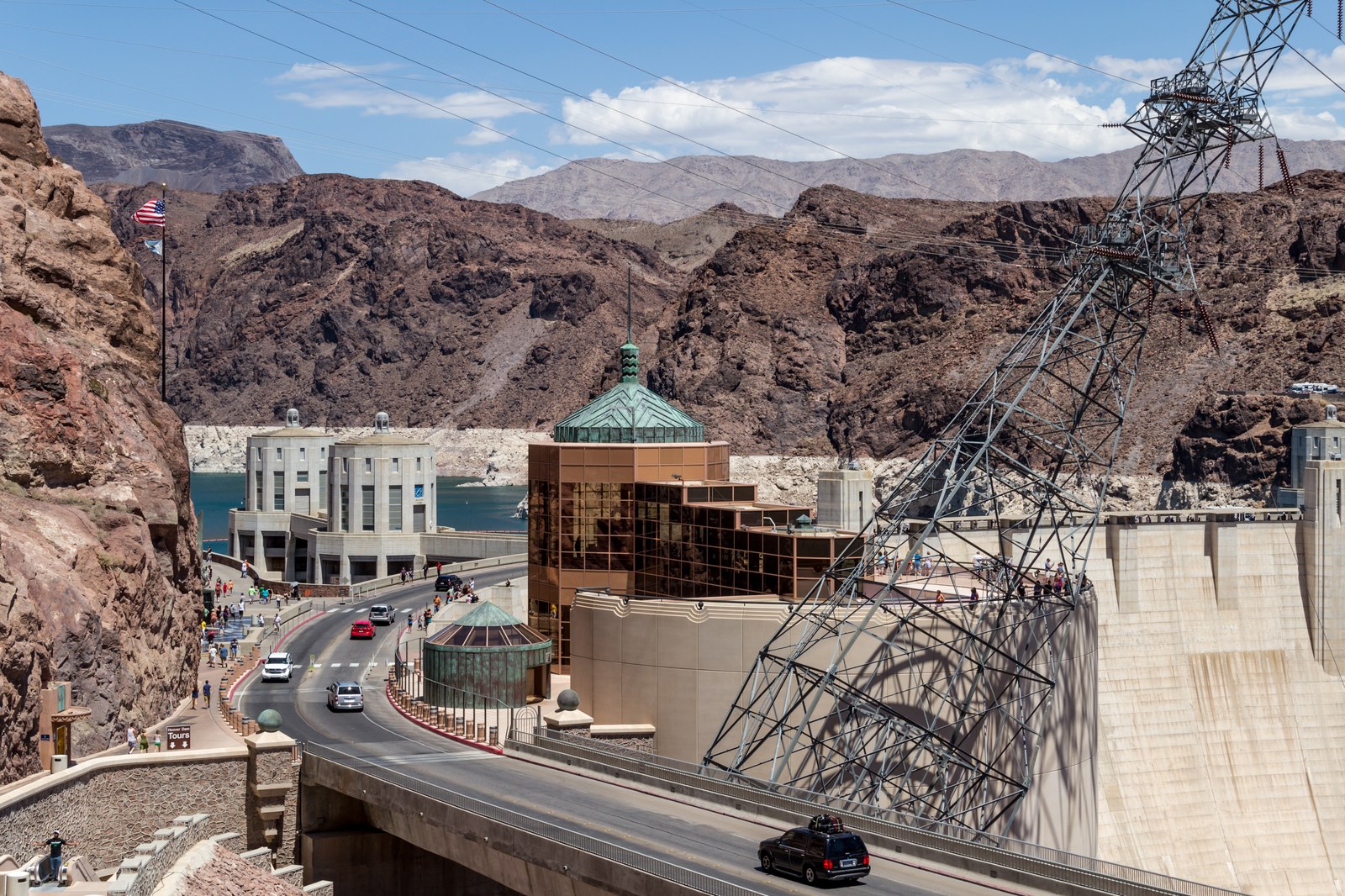
On the way, Hoover Dam is worth the stop: about 30 miles and 45 minutes from the Strip. Walking across the dam is free, the Visitor Center is $15, and the guided interior tours run $25 to $40. One warning for 2026: overnight lodging inside the park has been suspended since August 31, 2026, with no reopening date, so plan on staying in Tusayan or Flagstaff instead.
If the canyon pulls you in, read our Grand Canyon Itinerary and Grand Canyon Travel Guide before you decide which rim and how many days.
Getting around without a car: monorail, Deuce bus and walking
Walking is the main transport on this itinerary, and the Strip punishes anyone who underestimates it. The blocks are long, the casinos are deep, and two hotels that look adjacent can be fifteen minutes apart on foot. Use the pedestrian bridges, walk in the morning and evening in summer, and carry water — summer afternoons regularly pass 100°F.
The Las Vegas Monorail runs along the east side of the Strip, seven stations from MGM Grand to SAHARA. A single ride is $5.75 online or $6.25 at the station, and a 24-hour pass is $13.95 online or $15.50 at the station. It runs 7 AM to midnight on Mondays, 2 AM Tuesday to Thursday, 3 AM Friday to Sunday. Children 5 and under ride free. It does not go downtown, and it runs behind the hotels.
The Deuce runs the full Strip and down to Downtown, 24 hours a day, about every 15 minutes. A single ride is $4, a 2-hour pass is $6, a 24-hour pass is $8, and a 3-day pass is $20. Children 5 and under ride free. For this itinerary, the 3-day pass at $20 is the simplest buy. A fare increase has been proposed for January 31, 2027, and is not yet approved — check before you travel.
Rideshare covers the rest. The airport sits just east of the Strip — a short ride away, no rental car needed. Red Rock Canyon is a rideshare out and back. Everything else on this plan is feet, monorail, or Deuce.
Where to stay: Center Strip is the base
Center Strip is the base for this itinerary, and it is worth paying a little more for. The stretch around Bellagio, Caesars Palace, the Venetian and the Flamingo puts day one on foot and the fountains a five-minute walk away. South Strip is cheaper and quieter, but every walk is longer. Downtown is cheaper still, a fifteen-minute Deuce ride from the Strip — a good choice if Fremont Street is your favourite part of the city. Off-Strip only makes sense with a car, which this itinerary does not need.
Whatever you book, read the final price, not the headline rate. Most Strip hotels charge a resort fee of $45 to $55 a night before tax — budget properties around $35, the top tier $55 — plus 13.38% Clark County tax. Downtown is lower, from about $26. Since May 2025, the fee has to appear in the total price before you book — but check it anyway, because it is charged per night.
Room rates swing by weekend — a big fight, a convention or the Formula 1 weekend in November can double a room.
What to book first
First, the Sphere and any show you actually want to see. These sell out, and prices rise as the date approaches. The Wizard of Oz runs several showtimes a day, but the popular ones go first.
Second, the Red Rock Canyon timed entry, on Recreation.gov, as soon as your dates are set. It only applies from October to May, and the morning slots go first.
Third, the Neon Museum timed entry — especially the evening slot, when the signs are lit.
Fourth, the hotel — and check the events calendar before you lock the dates.
FAQ
Is 3 days enough for Las Vegas?
Yes, for a first trip. Three days covers the Strip, Downtown and Red Rock Canyon, plus one or two shows. A fourth day buys the Grand Canyon, or a slower pace.
How much does 3 days in Las Vegas cost?
Excluding the hotel and gambling, about $320 to $400 a person. A 3-day Deuce pass is $20; the Red Rock fee is $20 a vehicle ($10 each shared); the Sphere starts from $104; the Neon Museum is $25 by day, $35 in the evening. Food is the estimate in that range — allow $50 to $80 a day. The hotel is the swing factor, plus the $45 to $55 a night resort fee. A second show adds its ticket on top.
Can you do Las Vegas with kids?
Yes, with one adjustment: do Fremont Street early in the evening, before it gets packed. The fountains, the sign, the Sphere (ages 6 and up), Red Rock Canyon and the Neon Museum are all good with children. You must be 21 to gamble or drink, and children can walk through a casino floor with an adult but cannot stop at the machines.
Do I need a car in Las Vegas?
No, not for this itinerary. The monorail, the Deuce bus and your feet cover the Strip and Downtown, and rideshare covers the airport and Red Rock Canyon. You need a car — or a tour — only for the Grand Canyon.
The Short Version
Three days, one zone a day, no car. Day one: walk the Strip south to north, catch the Bellagio fountains, and book the Sphere’s Wizard of Oz (from $104). Day two: the Arts District in the morning, the Neon Museum as the sun sets ($25 by day, $35 in the evening), and Fremont Street after dark — free light shows, hourly from 6 PM to 1 AM. Day three: Red Rock Canyon in the morning ($20 a vehicle, timed entry October to May), and one last show at night. Stay on Center Strip, buy the $20 three-day Deuce pass, add $45 to $55 a night for the resort fee, and leave the Grand Canyon for a fourth day.