
Wichita tends to surprise people. It is the biggest city in Kansas, it built its name twice over — first as a cow town on the Chisholm Trail, then as the Air Capital of the World — and most of its best sights sit within a short walk of one river bend. If you are sorting out the best things to do in Wichita Kansas for a first visit, the good news is that the list plans itself: start at the statue where the two rivers meet, then work through the museums, gardens and brick streets around it.
This guide covers the sights in the order they fit a trip, with the hours and details that decide a day — when the Ring of Fire is lit, which museum is free, and which house tour you have to book before you arrive.
Start Where the Rivers Meet: The Keeper of the Plains
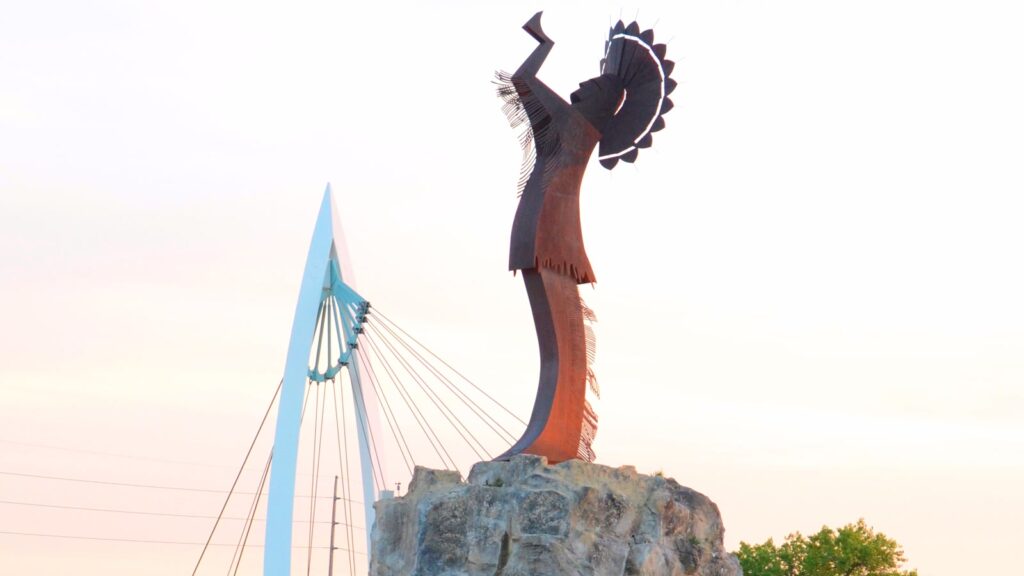
Every Wichita trip should begin at the Keeper of the Plains. The 44-foot steel sculpture by Kiowa-Comanche artist Blackbear Bosin stands on a rock outcrop where the Big and Little Arkansas rivers join, hands raised over the water. Bosin gave the work to the city, and it was dedicated in 1974 as part of the United States Bicentennial. Two slender pedestrian bridges, designed to suggest a bow and arrow, carry you out to the plaza from either bank.
The plaza is free and open every day from 5 a.m. to midnight, so it works at both ends of a day. Come in the morning for a quiet look at the interpretive displays about the Plains tribes who gathered at this meeting of the rivers for generations, then come back after dark. Every night, weather permitting, the fire drums around the sculpture are lit for the Ring of Fire — fifteen minutes of flame reflected in the river, at 9 p.m. in the daylight saving months and 7 p.m. in winter. High winds, rain or a swollen river can cancel it, because the fires are lit by hand. The Mid-America All-Indian Museum stands right next door on Seneca Street, and the two pair naturally if you want the fuller story of the ground you are standing on.
Walk or Ride the Arkansas River Path
The Keeper is also the best starting point for the Arkansas River Path, the paved trail that runs for about ten miles along the river through downtown. Through the central stretch the path runs on both banks, so you can cross one of the pedestrian bridges, walk the far side and loop back over another bridge without retracing your steps.
The route ties the whole river district together. Heading one way you pass Exploration Place and the museum lawns; heading the other you drift past downtown parks and the ballpark. It is flat, shaded in places and busy with local runners and cyclists. You do not need to walk all ten miles — the downtown loop between the Keeper and the Lincoln Street bridge is the stretch to pick on a fine morning.
Step Back Into the 1860s at Old Cowtown Museum
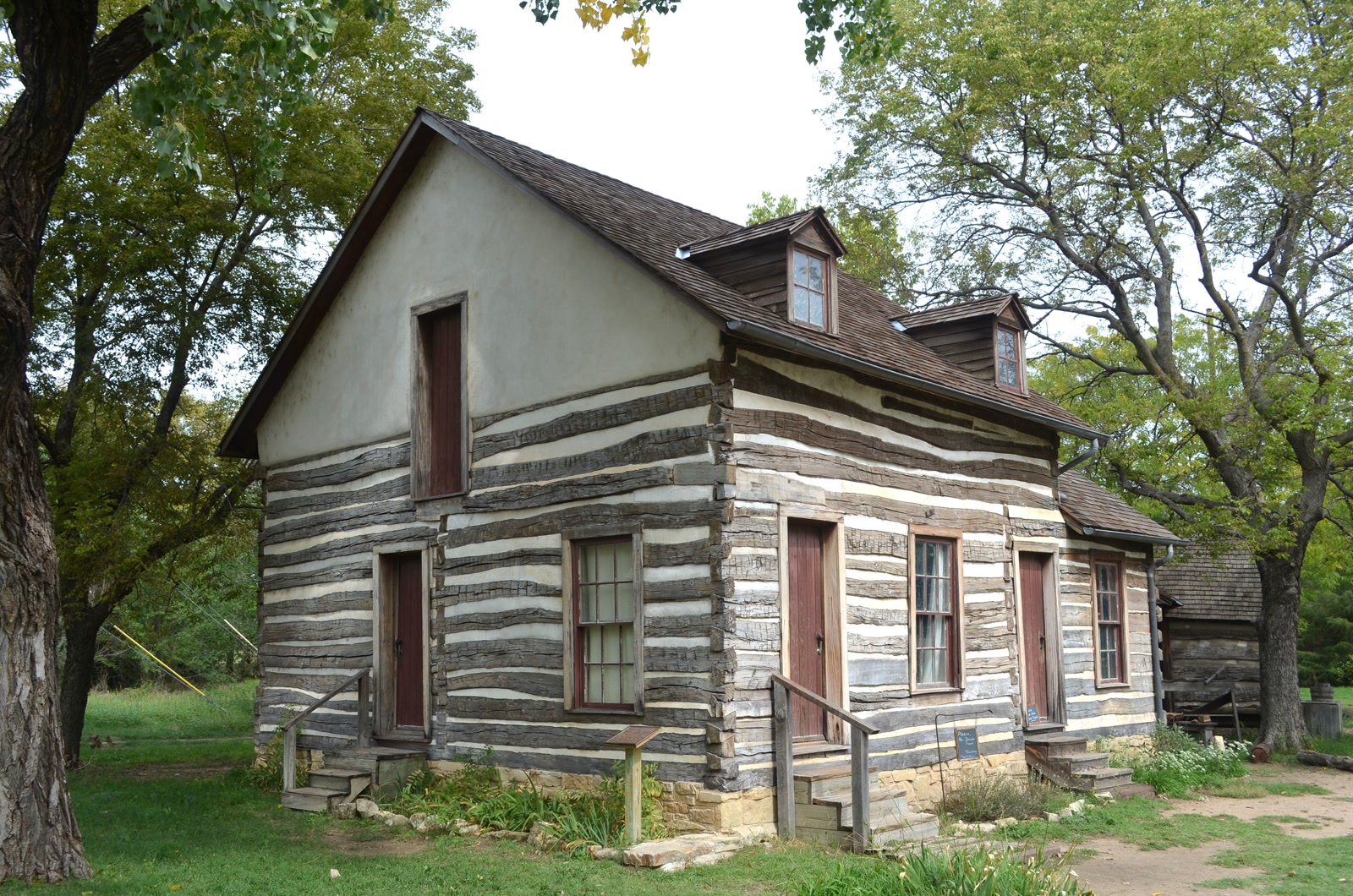
Ten minutes’ stroll upriver from the Keeper, Old Cowtown Museum rebuilds the Wichita of 1865 to 1880 at full scale. This is one of the oldest open-air history museums in the central United States, founded in 1952, and it now spreads 54 historic and recreated buildings across 23 acres beside the river — a full frontier town with a saloon, a blacksmith’s shop, a church, a jail and a working period farm.
The buildings are the draw, and many are genuine survivors moved here from across the region. The Darius Sales Munger House, a two-storey log house with chinked walls, was the home of one of Wichita’s earliest settlers, and walking its low doorways sets up everything else on the grounds: in season, costumed interpreters work the shops and trades, and staged gunfights break out on the dirt main street.
Plan around the seasons before you go. From April to October the museum opens Wednesday to Saturday, 10 a.m. to 5 p.m., and Sunday from noon to 5 p.m.; from November to March it opens Tuesday to Saturday instead. General admission is twelve dollars for adults, with lower rates for seniors and children and under-fives free — and in the main season, Sunday entry is pay-as-you-wish, which makes it the cheapest full day out in the city.
Take a Breather at Botanica, the Wichita Gardens
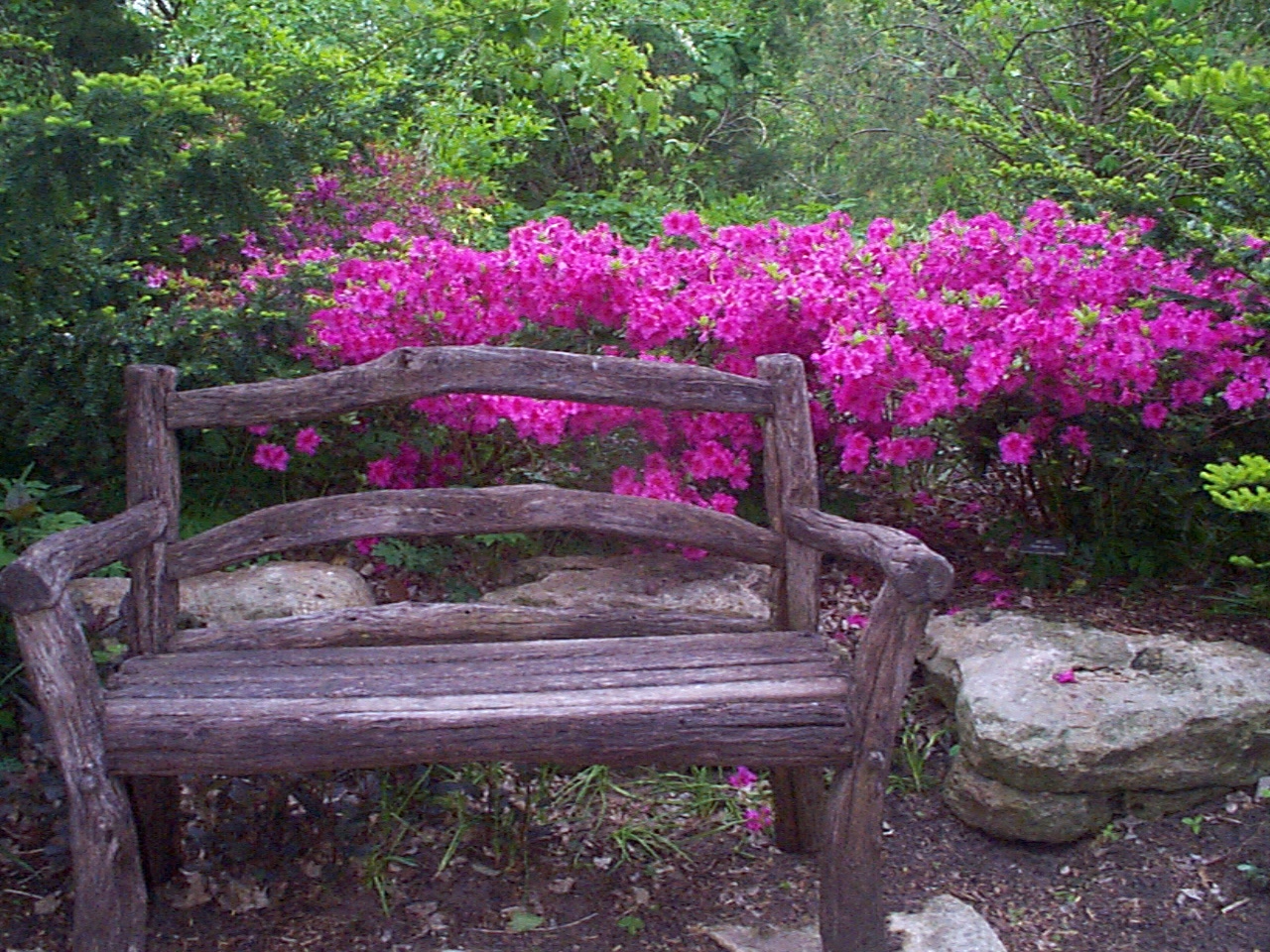
Botanica sits in the same Riverside neighbourhood, and it is the calm counterweight to Cowtown’s dust and timber. The gardens cover 20 acres with more than 4,000 plant species, arranged as a series of themed rooms: a Chinese Garden of Friendship, a Shakespeare garden, a sensory garden and the Downing Children’s Garden, where the paths, a tree house and a troll hill are scaled for small explorers.
Come in spring if you can. Botanica plants more than 50,000 tulips and 120,000 daffodils, and the beds peak in a rolling sequence that runs on into azaleas, irises and roses. The butterfly house and the koi pond slow everybody down in summer, and from late November the gardens flip into Illuminations, a walk-through holiday light show that runs into the first days of January on a separate ticket.
The gardens open daily from 9 a.m. to 5 p.m.; on event evenings the hours can run later, so check the garden’s own calendar if you are aiming for a sunset visit. Botanica was ranked sixth in USA TODAY’s 10Best list of American botanical gardens, and it earns the ranking.
Meet 3,000 Animals at Sedgwick County Zoo
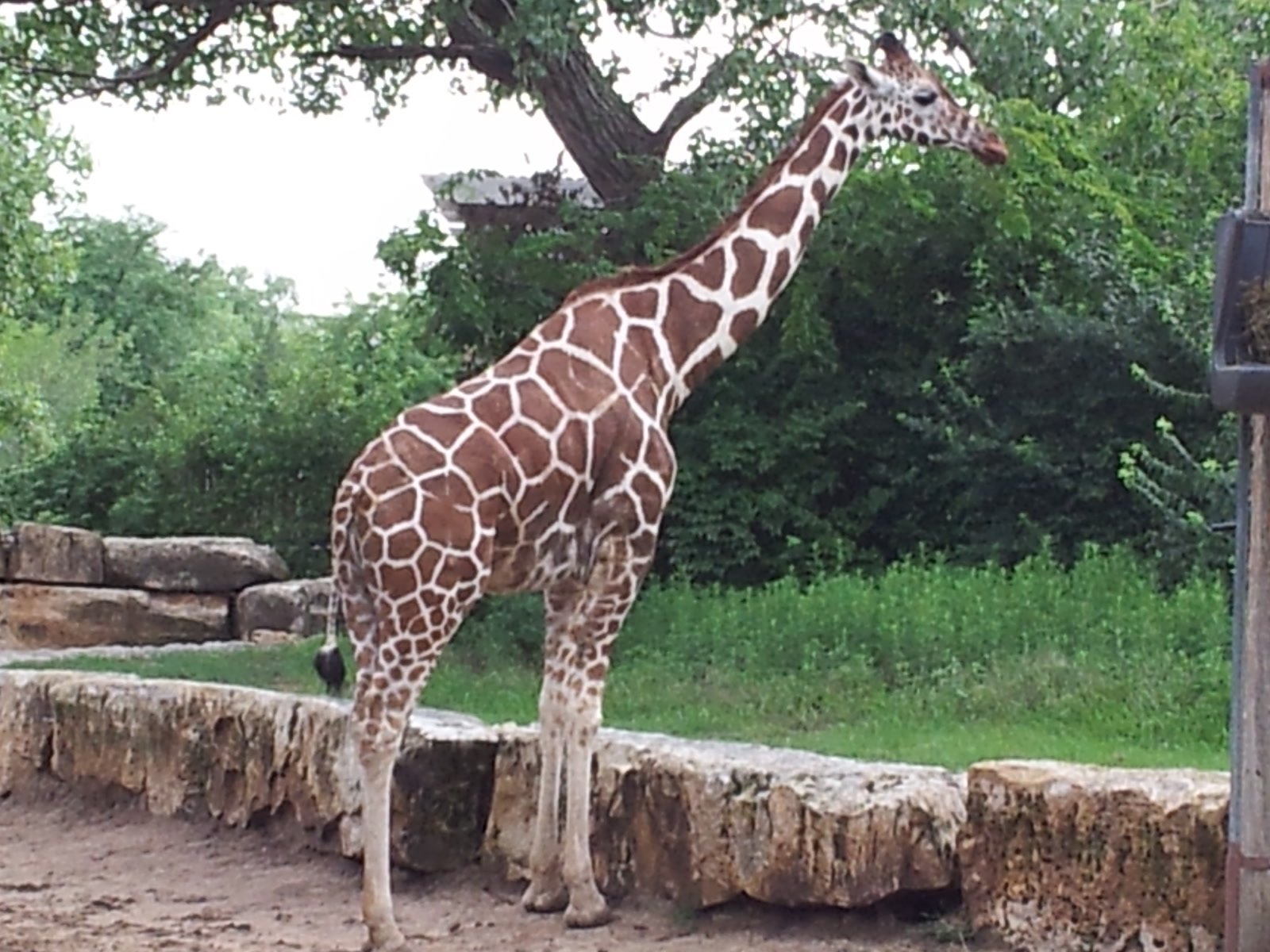
Sedgwick County Zoo is the one big sight that sits away from the river, about six miles northwest of downtown, and it justifies the drive on its own. More than 3,000 animals from over 400 species live here, grouped by continent, and the zoo is open 363 days a year — it closes only on the weekend after Labor Day, for its Zoobilee fundraiser. It calls itself the number one outdoor family attraction in Kansas, and on a busy Saturday that does not feel like a boast.
The signature spaces are the Elephants of the Zambezi River Valley, where the herd has room to behave like a herd, and the Tropics building, a walk-through rainforest that is also the zoo’s best bad-weather refuge. Giraffes work the feeding station in the African area, and the place is big enough that you should pick your must-sees on the gate map rather than trying to be thorough.
The zoo opens at 9 a.m. and closes at 5 p.m. every day, and the animals are at their most active before the afternoon heat builds. Adult admission is thirty-three dollars at the gate, and booking online takes five dollars off — worth doing, along with arriving early, on any weekend visit.
Let the Kids Drive the Science at Exploration Place
Back on the riverbank, Exploration Place is Kansas’ premier science centre, and its building — all swooping rooflines on the water’s edge — announces itself from the Keeper bridges. Inside, the exhibits are built to be touched: there is a three-storey castle to explore, a Dome theatre showing films and laser shows, and a Design Build Fly gallery that leans into Wichita’s aviation story.
The newest addition is outdoors. The Adventure Playscape, a 6.5-acre playground of towers, water and climbing structures on the riverfront campus, opened in March 2026 and is included with general admission. Exploration Place opens daily from 10 a.m. to 5 p.m., stays open until 8 p.m. on Thursdays, and closes only on Thanksgiving Day and Christmas Day — which makes it the most reliable rainy-day plan in the city.
Free Art and Chihuly Glass at the Wichita Art Museum
The Wichita Art Museum anchors the Museums on the River district and holds more than 10,000 works of American art — and general admission is free. You meet the museum’s most famous residents before you reach a single gallery: Dale Chihuly’s Persian Seaform installation glows in the ceiling of the entrance, and his Confetti Chandelier hangs over the Great Hall.
The galleries run from classic American painting to contemporary glass, and the building stays open until 9 p.m. on Fridays, which makes it an easy evening add-on. Outside, the eight-acre Art Garden holds thirteen sculptures along the river and is open around the clock, so even on the museum’s closed days — Monday and Tuesday — the grounds still give you a reason to walk up Museum Boulevard. Special exhibitions are ticketed separately; everything else costs nothing.
Mummies, a T. Rex and the Berlin Wall in Old Town
The Museum of World Treasures is the strangest good museum in Kansas. Spread over three floors of a converted Old Town warehouse, it walks you from Ivan the T. rex and two Egyptian mummies to a genuine section of the Berlin Wall, with dense military galleries and a hall of American presidents in between. Nothing about the mix should work, and all of it does.
It opens Monday to Saturday from 10 a.m. to 5 p.m. and Sunday from noon, closing only for Thanksgiving, Christmas and Easter. Because it sits inside Old Town rather than the river district, it pairs best with dinner — do the museum in the late afternoon, then step out into the district as the lights come on.
Eat, Drink and Wander the Brick Streets of Old Town
Old Town is Wichita’s old warehouse quarter, roughly fifty acres of late-1800s brick warehouses just east of the downtown core. The railroads built it, freight traffic abandoned it, and from the 1980s onwards the warehouses were converted into restaurants, breweries, bars, galleries, hotels and lofts. In 2008 the American Planning Association named it one of its Great Places in America.
By day it is an easy wander — brick-paved streets, the plaza on Old Town Square, and the Museum of World Treasures as the cultural anchor. By night it is the city’s entertainment district, with live music, brewpubs and late kitchens concentrated within a few walkable blocks.
Book Ahead for Frank Lloyd Wright’s Allen House
The Allen House is the sight that rewards planners. Completed in 1918 for Henry Allen — the newspaper publisher who became governor of Kansas the following year — and his wife Elsie, it is the only Frank Lloyd Wright house in Kansas and one of the last homes he designed in the Prairie style. The low horizontal lines, the art glass and more than thirty pieces of Wright-designed furniture survive as he intended, which is why Wright fans rank its tours among the best of any Wright house.
You cannot simply turn up. Visits run as guided tours on selected days, they are booked in advance through the Allen House foundation, and popular dates sell out — so if the house is on your list, reserve it before you book anything else in Wichita. It sits in a quiet residential street east of downtown; wear shoes you can stand in.
FAQ
When is the Ring of Fire lit at the Keeper of the Plains?
Every night, for fifteen minutes, at 9 p.m. during daylight saving time and 7 p.m. in the standard-time months. The fires are lit by hand and are cancelled in high wind, rain or when the river runs high, so a clear, calm evening is your best bet.
How many days do you need in Wichita?
One full day covers the river district well — the Keeper, the river path, Cowtown, Botanica and one museum. Add a second day if you want the zoo, the Allen House and an unhurried Old Town evening, which most visitors are glad they did.
What are the best free things to do in Wichita, Kansas?
The Keeper of the Plains plaza and the Ring of Fire cost nothing, the Arkansas River Path is free, the Wichita Art Museum’s general admission is free, and its Art Garden is open around the clock. Old Town’s streets and square are free to wander at any hour.
When is the best time of year to visit Wichita?
Spring brings Botanica’s tulip and daffodil displays and mild river-path weather; autumn is the other sweet spot. Summer is hot and best planned around mornings and evenings, while late November and December belong to Botanica’s Illuminations light show.