
The best things to do in Lafayette Louisiana all grow out of one story. In the late 1700s, French-speaking Acadians expelled from Canada made their way to the bayous of south Louisiana and built a culture that still runs this city: the music, the food, the French words sprinkled through everyday speech and the habit of turning any gathering into a dance. Lafayette sits about 135 miles west of New Orleans, and in 2014 the Wall Street Journal’s MarketWatch named it the Happiest City in America.
This is a working guide to the city, not a list of everything in it. It starts with the two culture stops that explain where you are, then takes in a second historic village, a cathedral shaded by a roughly 500-year-old oak, the jam sessions where the music actually happens, and the swamp ten miles east where egrets nest over alligator water. Time it right and you can fold in a big free festival too.
Start With the Story: Fisher Road’s Two Culture Stops
Fisher Road, a few minutes from downtown, holds the two stops that make the rest of Lafayette make sense, and they sit almost next door to each other. Start at the Acadian Cultural Center, run by the National Park Service as part of Jean Lafitte National Historical Park and Preserve. Admission is free, and the exhibits trace the Acadians’ journey from Canada to Louisiana and the Cajun culture that grew from it. A film, The Cajun Way: Echoes of Acadia, is shown every hour, and rangers give a short talk in the morning. The center is open Tuesday to Saturday and closes on federal holidays and Mardi Gras.
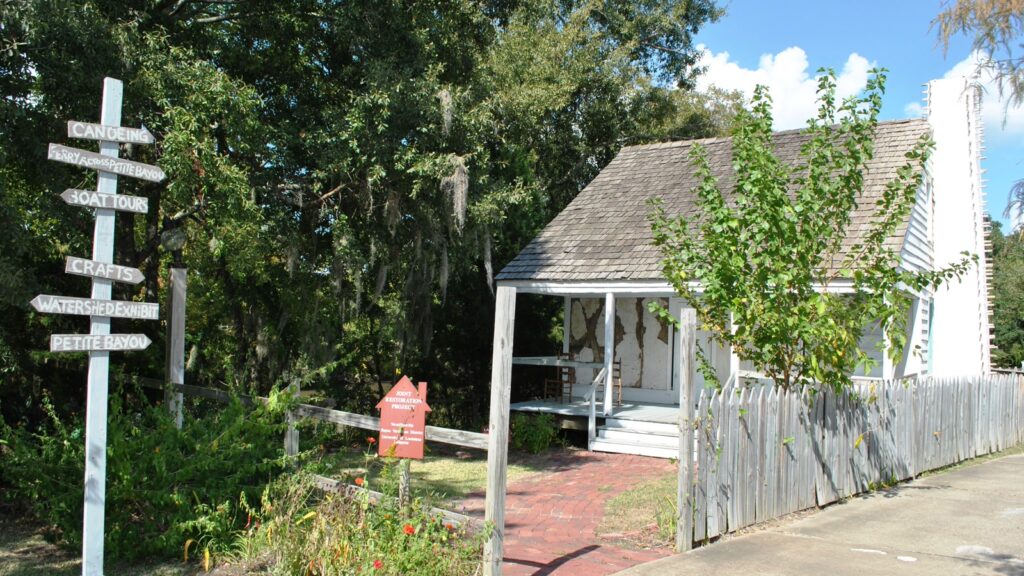
Then cross to Vermilionville, the living history village at 300 Fisher Road. Opened in 1990, it spreads across 23 acres on the banks of Bayou Vermilion, with 19 structures including seven restored original homes dating from about 1790 to 1880. Costumed artisans demonstrate the crafts of the Acadian, Creole, Native American and African-descended cultures of the region between 1765 and 1890, and a boat tour takes you out onto the bayou itself. Adult admission is twelve dollars, the village is open Tuesday to Sunday with last admission at 3 p.m., and it closes on Mondays. Come Saturday for the weekly Cajun jam, or Sunday, when the performance center fills with dancers.
A Second Village, Kept for a Good Cause
A second historic village rewards the short drive across town. LARC’s Acadian Village, on Greenleaf Drive, recreates an 1800s Cajun settlement on 32 acres, with a bayou winding through it. Seven of its 11 buildings are authentic 19th-century homes, moved here piece by piece and restored. The oldest, the Bernard House, came from St. Martinville and now holds an exhibit on Cajun music. Tours run Monday to Saturday, 10 a.m. to 4 p.m.
What makes this village different is where your admission money goes. Every dollar of revenue supports LARC, which provides programmes and vocational opportunities for people with intellectual and developmental disabilities. If you visit in December, come back after dark: the village strings its buildings and oaks with lights for Noël Acadien au Village, one of the prettiest holiday walks in Acadiana.
The Cathedral and the Oak That Was Old Before the Town
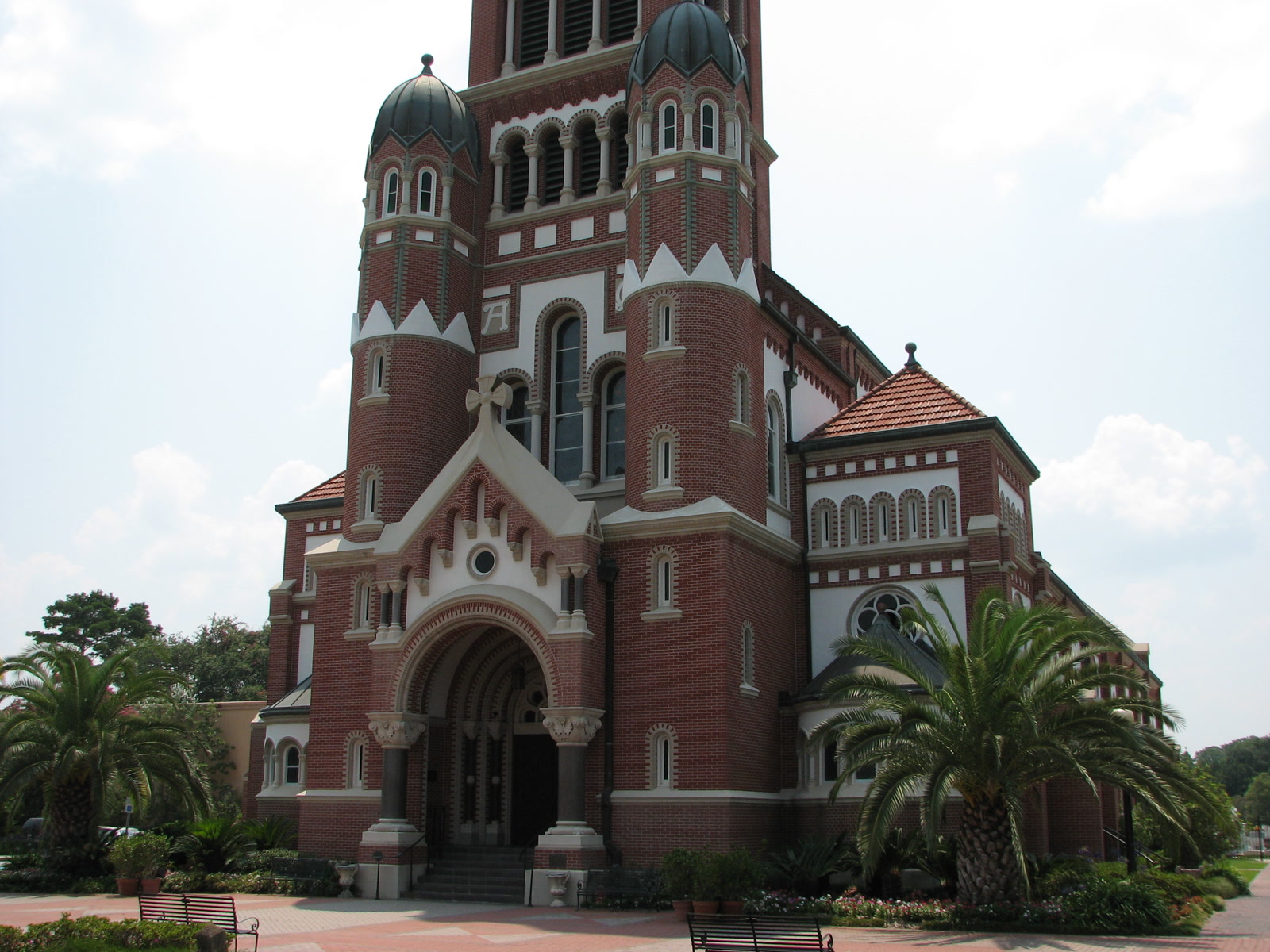
Downtown, on Cathedral Street, stands the Cathedral of St. John the Evangelist. The land was donated in 1821 by Jean Mouton, founder of Vermilionville, the settlement that became Lafayette. The red-brick Romanesque Revival church was completed in 1916 and raised to a cathedral two years later, and the cemetery beside it is the oldest in the city.
The real monument, though, is growing in the front corner of the grounds. The St. John Cathedral Oak is, by the cathedral’s own estimate, around 500 years old, which means it was already a mature tree when Mouton donated the land. Its trunk measures about 29 feet around, its branches spread wider than most houses, and it holds a founding membership in the Live Oak Society, the registry that admits only trees. Almost everything else on your Lafayette list happened within this tree’s lifetime.
Hear It Live: Jams, Dance Floors and a Back-Porch Honky Tonk
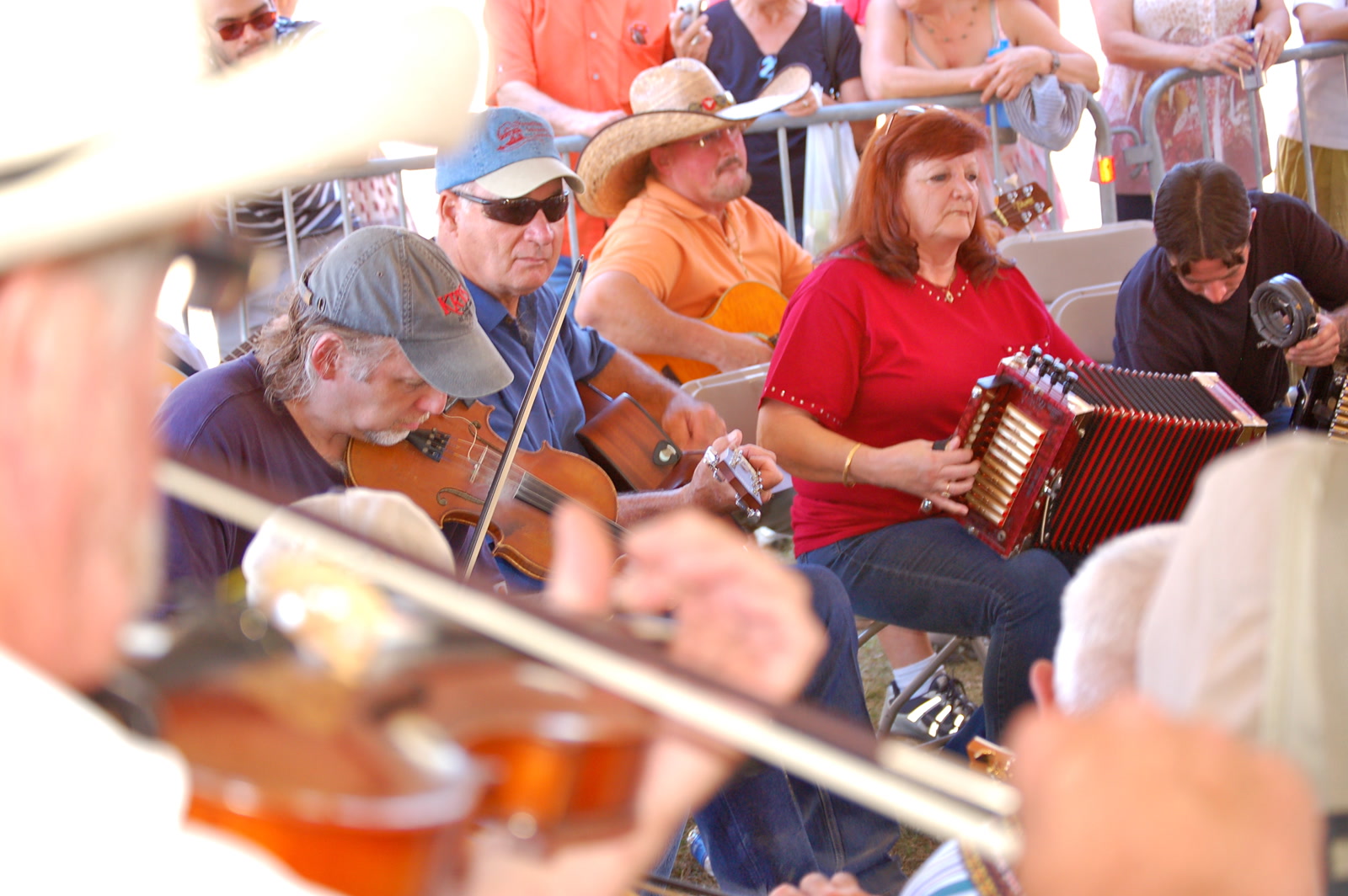
Cajun music is built on the accordion and the fiddle, with lyrics often sung in Cajun French, and zydeco, its Creole cousin, adds a washboard and a heavier rhythm. In Lafayette you do not have to hunt for either. Musicians here grow up playing at jam sessions where anyone with an instrument can pull up a chair, and visitors are welcome to listen or dance.
The essential night out is the Blue Moon Saloon, a honky tonk on the back porch of a guesthouse on East Convent Street. The house was hauled several blocks to this spot in 1900, on logs pulled by mules. The saloon opened in 2001 and has been packing its porch with dancers ever since, and its Wednesday-night Cajun jam is a local institution. Arrive not knowing the two-step and someone will teach you; that is how it works here. In spring and fall, watch for Downtown Alive!, the free Friday-evening concert series in Parc Sans Souci, where downtown drifts toward the music.
Two Free Festivals Worth Planning a Year Around
Festival International de Louisiane takes over downtown for five days each April, filling streets and parks with musicians from across the French-speaking world. Lafayette Travel calls it the largest international music festival in the country, and admission has always been free; you pay only for food, drink and merchandise, by cashless wristband. The 2026 edition, the festival’s 40th anniversary, ran April 22 to 26.
October belongs to Festivals Acadiens et Créoles, the celebration of Cajun and Creole culture that has run since 1974 in Girard Park, beside the University of Louisiana at Lafayette campus. It is free as well, and the 2026 edition, held October 8 to 11, brought more than 65 Cajun and zydeco bands to its stages, alongside craft stalls and the kind of food lines worth standing in. Both festivals belong on any serious list of things to do in Lafayette Louisiana.
Follow the Boudin: Meat Markets, Gas Stations and Scott
Boudin is the food to build a morning around. It is a Cajun sausage of pork, rice and seasonings, sold warm by the link — locals just call them “links” — in meat markets, grocery stores and, this being Louisiana, gas stations. Every maker seasons differently, which is exactly why Lafayette Travel maintains a Cajun Boudin Trail of producers in and around the city, and why locals argue about it with real feeling.
Make the short drive west to Scott, about ten minutes away. In April 2012 the Louisiana State Legislature designated Scott the Boudin Capital of the World, and the town earns it: several of Acadiana’s most famous makers line the roads off Interstate 10. The Best Stop, open since 1986, says it turns out around 2,000 pounds of boudin a day. Buy a link at two or three stops, eat them in the car park while they are hot, and pick your own winner. That is the activity.
Swamp Air: Lake Martin’s Cypress and Rookery
Ten miles east of Lafayette, near Breaux Bridge, the city gives way to one of the prettiest swamps in Louisiana. Lake Martin is an 800-acre cypress-tupelo lake protected inside the Nature Conservancy’s Cypress Island Preserve, nearly 10,000 acres of bottomland forest. Bald cypresses rise out of still, green water, and Spanish moss hangs in the branches.
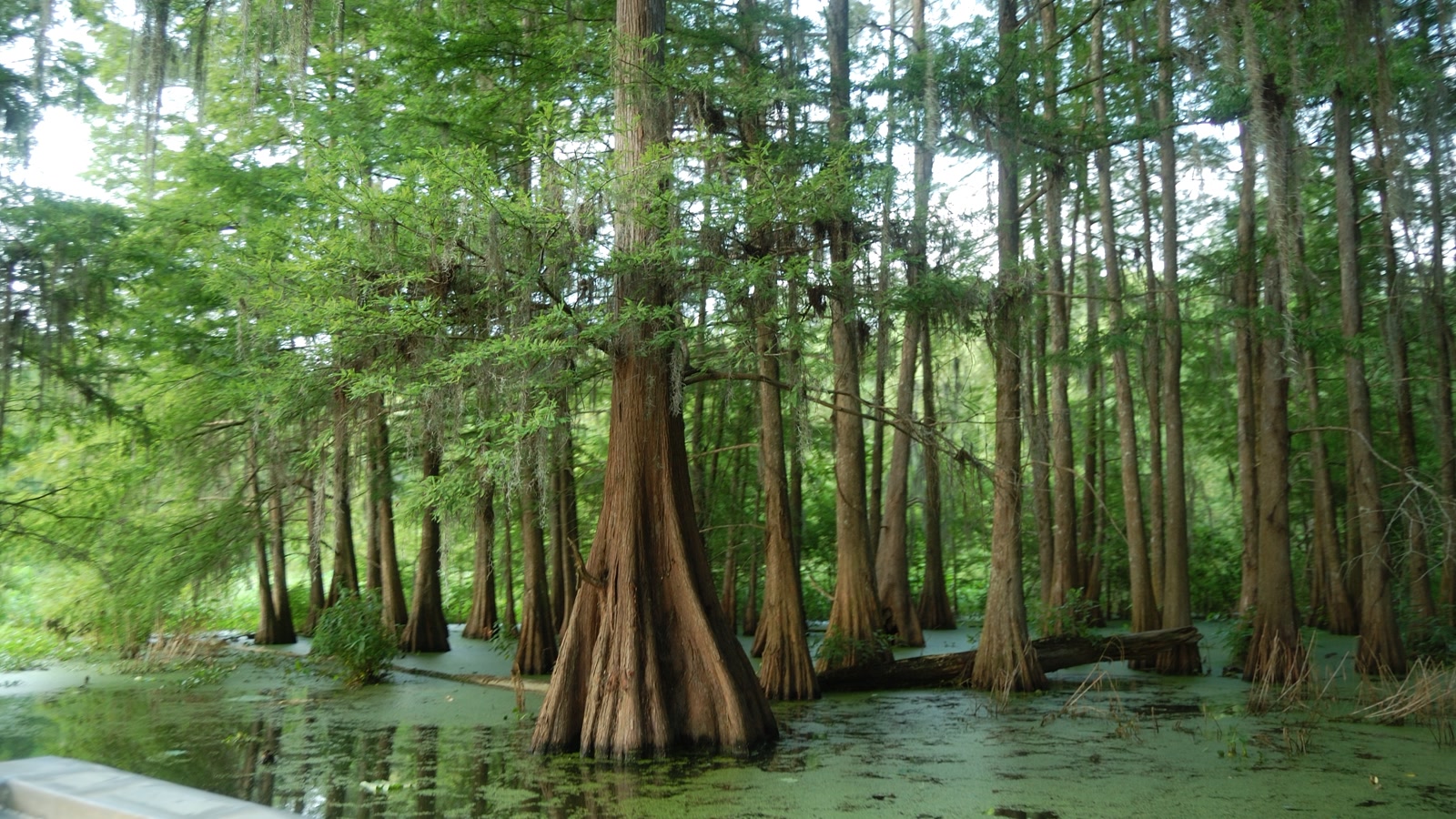
The lake is famous among birders for its wading-bird rookery, one of the largest in North America. More than 250 bird species have been recorded here, and from March into July the cypresses fill with nesting great egrets, snowy egrets, herons, ibis and pink roseate spoonbills. Alligators, more than a thousand of them, cruise underneath. You can take it in free from the boardwalk and the 2.5-mile levee trail off Rookery Road, or join a guided swamp boat tour that launches from the same road and slides quietly under the nests. Go early, when the rookery is loudest and the light comes through the moss.
The Swamp in the Middle of a University
You do not have to leave town for swamp. In the middle of the University of Louisiana at Lafayette campus sits Cypress Lake, a two-acre swamp-like lake that began, the university says, as a prehistoric bison wallow. Cypress trees ring the water, native irises bloom at the edges, and alligators live here year-round, in the middle of a working campus, watched by students on the plaza.
The university describes itself as the only one in the country with a managed wetland on its campus, and students call the lake The Swamp. It is a small stop, twenty minutes will do it, but there is nothing else quite like it: a piece of wild Louisiana between lecture halls. If Festivals Acadiens is on, you are already next door, since Girard Park borders the campus.
Mardi Gras, Lafayette Style
Come in Carnival season and Lafayette throws one of the largest Mardi Gras celebrations in Louisiana. The city’s first formal Mardi Gras ball and parade were held in 1869, and parades have rolled as an annual tradition since 1934. On Fat Tuesday the city crowns King Gabriel and Queen Evangeline, named for the hero and heroine of Longfellow’s poem Evangeline, the story of the Acadian exile.
The feel is different from New Orleans: smaller crowds, families camped along the route, and throws you can actually catch. And if you have a car, drive out to the prairie towns nearby for the older tradition, the Courir de Mardi Gras, where costumed riders on horseback go farm to farm begging for gumbo ingredients, then cook the gumbo and dance at a fais do-do, a Cajun dance party, to finish the day.
Putting It Together: A First Weekend in Lafayette
Two days is enough for the essentials. Spend the first morning on Fisher Road, the Acadian Cultural Center first and Vermilionville after. Eat a plate lunch, then drive to Lake Martin for the late afternoon, when the birds come back to the rookery and the cypresses turn gold. That night, find live music: the Blue Moon if it is a Wednesday or a weekend, or whatever stage your trip overlaps.
Give the second day to the city itself. Start with boudin, in Lafayette or out in Scott, then walk downtown to the cathedral and the oak, and cross town to LARC’s Acadian Village before it closes at 4 p.m. If your weekend runs Friday to Sunday, check whether Downtown Alive! or a jam session fills the evening. And if Louisiana is the bigger trip, Lafayette pairs naturally with New Orleans, about two hours east: our New Orleans itinerary shows how to give that city three days of its own.
FAQ
What is Lafayette, Louisiana best known for?
Cajun and Creole culture: the music, the food and the French heritage of the Acadians who settled here. The city calls itself the heart of Cajun Country and was named the Happiest City in America in 2014.
How many days do you need in Lafayette?
Two days covers the main sights comfortably: the Fisher Road culture stops, the historic villages, downtown and the cathedral oak, plus a swamp trip to Lake Martin. Add a day if your visit overlaps a festival or Mardi Gras.
What is the best time of year to visit Lafayette?
Spring and fall bring the mildest weather and the two big free festivals: Festival International in late April and Festivals Acadiens et Créoles in October. The Lake Martin rookery is at its best from March into early summer.
Is Lafayette worth visiting on a Louisiana trip?
Yes. It is about 135 miles west of New Orleans, easy to combine in one trip, and it shows a side of Louisiana the big city does not: smaller, French-speaking, and built around food and music.