
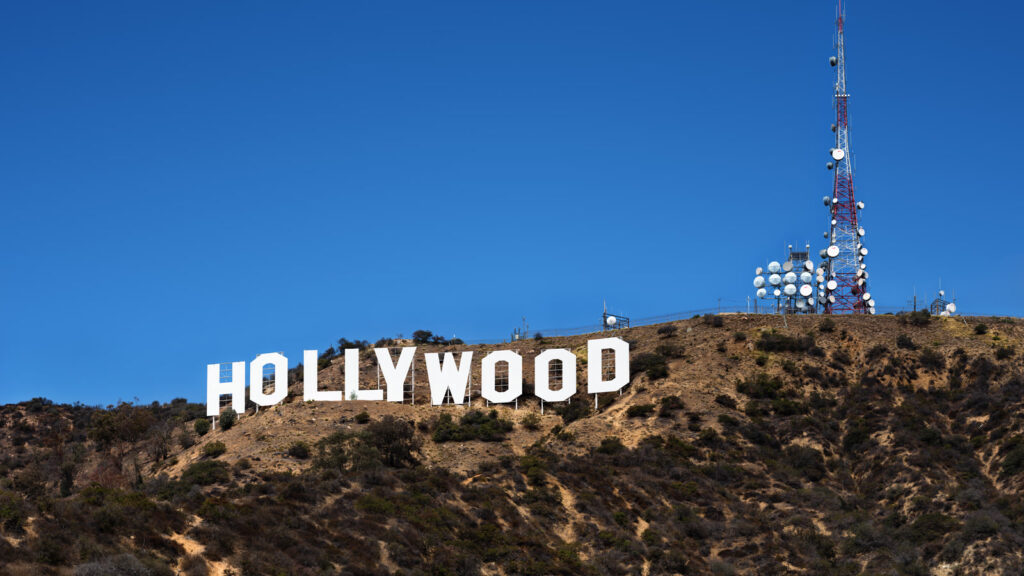
Los Angeles is not really one city. It is a county of neighbourhoods spread across a grid of freeways, and the mistake almost every first-timer makes is planning it like a normal city — a list of famous places, ticked off in whatever order looks logical on a map. On a map, Hollywood and Santa Monica look close; in a car at 5 p.m. they are an hour and a quarter apart. This los angeles itinerary is built around that single fact: three days, one area per day, and no crossing the city twice. Day one is Hollywood and Griffith Park. Day two is the coast — Santa Monica, Venice and, if the day runs ahead, Malibu. Day three is Downtown, the museums and the food. It is a first-timer’s plan, not a completionist’s checklist.
The traffic rule that decides this itinerary
Everything in this plan follows from one rule: never cross Los Angeles twice in one day. The freeways add 30 to 60 minutes at rush hour, and rush hour here runs roughly 7 to 10 in the morning and 3 to 7 in the evening. The best times to drive are between 10 a.m. and 2 p.m., and after 8 p.m. The I-405 through the Sepulveda Pass is the worst bottleneck in the city — any plan that crosses it twice a day spends its afternoon in traffic.
The numbers: Hollywood to Santa Monica is about 40 minutes with no traffic and about 75 at rush hour; Downtown to Santa Monica is 30 to 45 minutes off-peak and 60 or more at peak. This itinerary never asks you to make those drives twice. Each day starts where you are, stays there and ends there.
Day 1: Hollywood and Griffith Park
Start on Hollywood Boulevard, and keep it short. The Walk of Fame is a sidewalk with stars embedded in it: walk a few blocks, find the names you care about, and stop at the TCL Chinese Theatre forecourt for the handprints and footprints in the cement. An hour is plenty. The boulevard is busy and loud — part of the experience, not the whole day.
If you want the studio experience, this is the morning for it. The Warner Bros. Studio Tour in Burbank takes about three hours, runs from 8:30 a.m. to 3:30 p.m., and costs from around $76 for adults (ages 11 and up) and around $57 to $65 for children aged 5 to 10; children under 5 are not admitted. It is a working studio lot, not a theme park. If studios do not interest you, skip it.
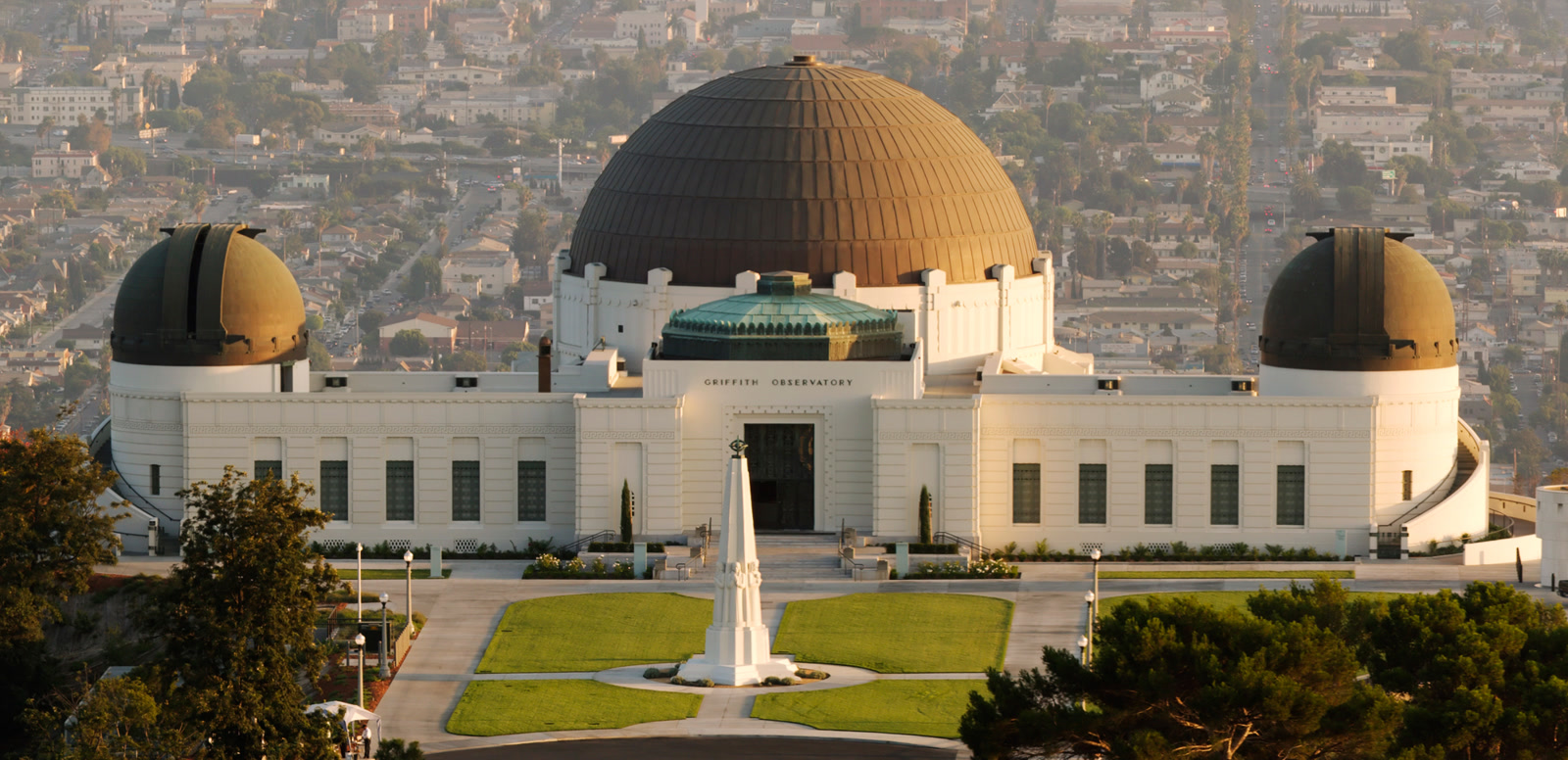
The afternoon belongs to Griffith Observatory, the anchor of the whole trip. Admission is free. It is closed on Mondays; Tuesday to Friday it opens at noon and closes at 10 p.m., and Saturday and Sunday it opens at 10 a.m. and closes at 10 p.m. Planetarium shows cost $12 for adults (ages 13 to 54), $10 for seniors and $8 for children aged 5 to 12. Arrive in the late afternoon and stay for sunset: from the terrace you get the two views that define the city, the downtown skyline one way and the Hollywood Sign the other, and then the lights coming on across the basin. Without a car, take the DASH bus from the Vermont/Sunset Metro station on the B Line; if you drive, arrive early — the car park fills up well before sunset.
Day 2: the coast — Santa Monica, Venice and Malibu
The coast is the slowest day in this plan, and that is deliberate. Start at the Santa Monica Pier in the morning, when the light is good and the crowds are still thin. The pier stretches out into the Pacific with its Ferris wheel and amusement rides. The Metro E Line ends at Downtown Santa Monica station, a short walk from the pier — this is the one day you can comfortably do without a car. If you do drive, beach car parks run about $7 to $18 a day, and the downtown parking structures are free for the first 90 minutes.
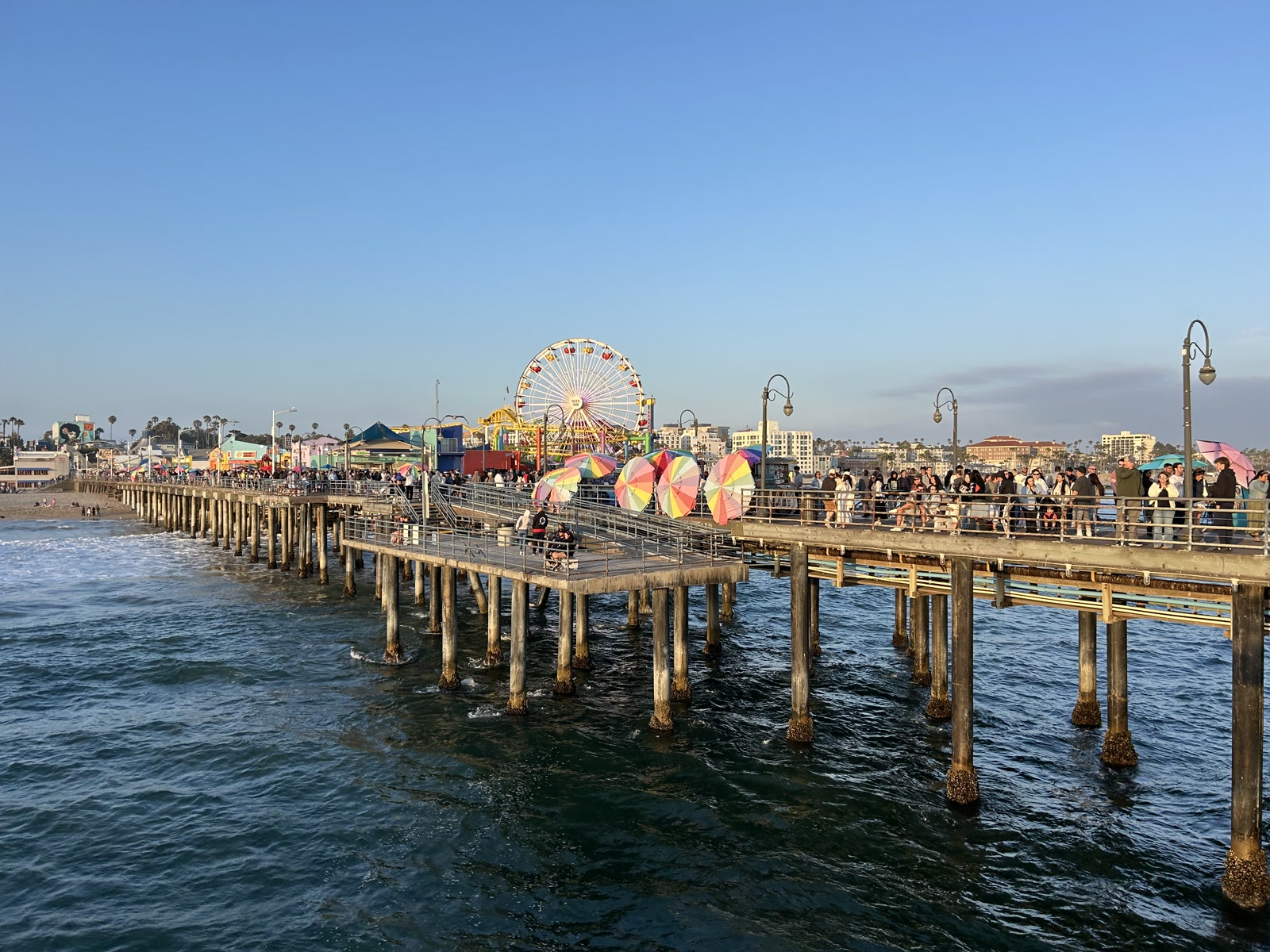
From the pier, walk or cycle south to Venice along the Marvin Braude Bike Trail, known as the Strand — a 22-mile paved path that runs the length of the bay. The pier to Venice is about 2 miles: 30 to 40 minutes on foot, about 10 minutes by bike, with rental stands all along the beach. Venice Boardwalk is the loud, strange heart of the coast — street performers, the skate park, Muscle Beach, vendors selling everything — worth an unhurried hour of wandering. Eat lunch at a cafe on the boardwalk or on Abbot Kinney Boulevard, a few blocks inland.
Malibu is an optional extension, not a squeeze. The drive north up the Pacific Coast Highway is the prettiest stretch of road in this itinerary, and Malibu’s beaches are quieter than Santa Monica’s. But Malibu is a half-day on its own, so only go if the coast day is running ahead of schedule — one beach and a slow drive back, not a second sightseeing list.
Day 3: Downtown, the museums and the food
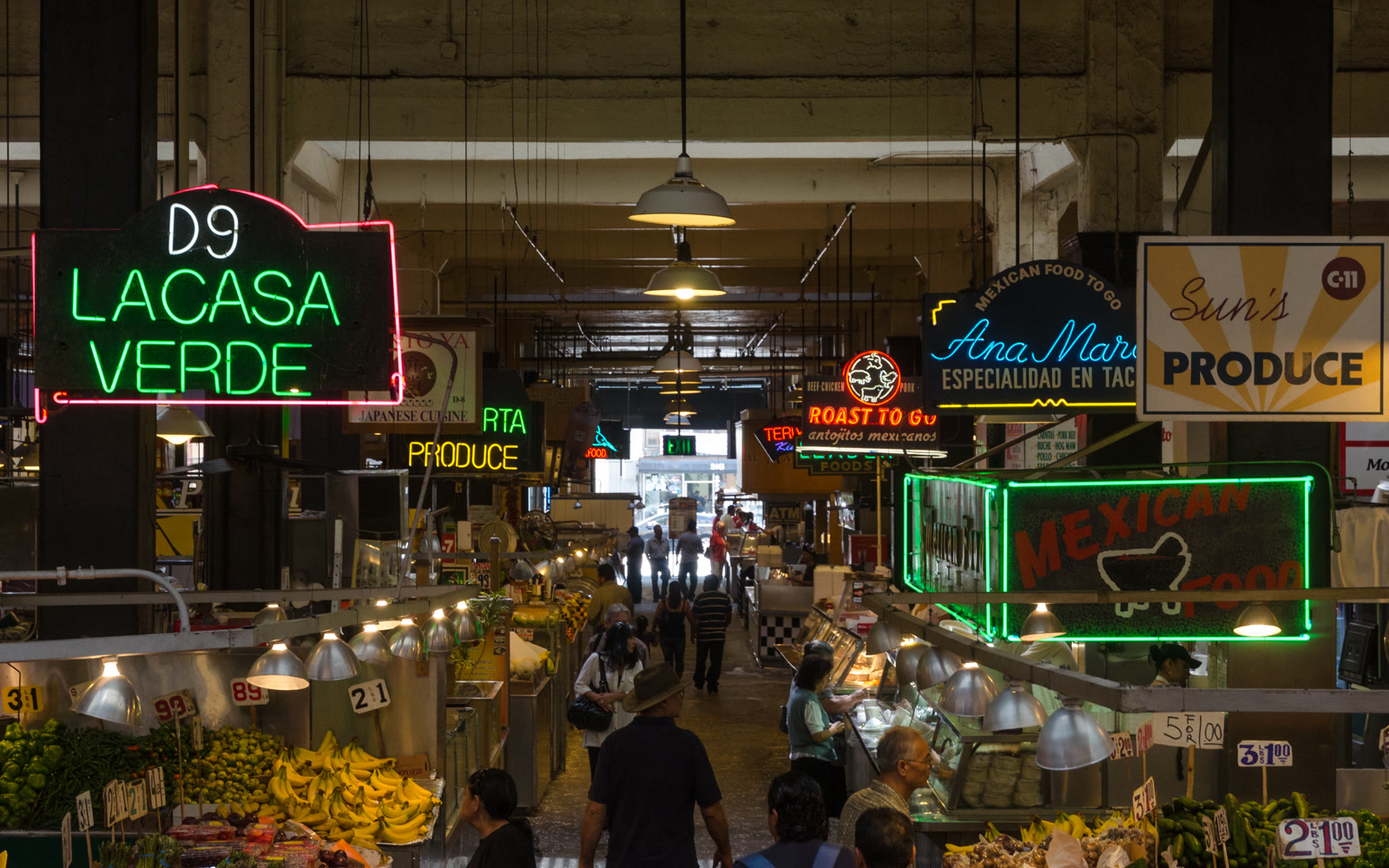
Downtown is the part first-timers most often skip, saved for last because it needs a full day. Start at Grand Central Market, the downtown food hall with its neon stall signs, produce stands and prepared-food counters — the best breakfast in the city, and the best introduction to how many different Los Angeleses exist in one building.
From the market, walk a few blocks to The Broad, the contemporary art museum on Grand Avenue. General admission is free, but a timed ticket is recommended. It is open Tuesday, Wednesday and Friday 11 a.m. to 5 p.m., Thursday 11 a.m. to 8 p.m., and Saturday and Sunday 10 a.m. to 6 p.m., closed on Mondays. The Yayoi Kusama Infinity Mirror Room needs a separate free ticket. Two hours is plenty.
The Los Angeles County Museum of Art, LACMA, is the city’s biggest art museum, on Museum Row. Adult admission is $30 for non-residents and $25 for county residents; seniors and students pay $26, children aged 3 to 17 pay $15, and children under 3 are free. It is closed on Wednesdays; Monday, Tuesday and Thursday it is open 11 a.m. to 6 p.m., Friday 11 a.m. to 8 p.m., and Saturday and Sunday 10 a.m. to 7 p.m. Pick one wing and one special exhibition — it is too big for a single afternoon.
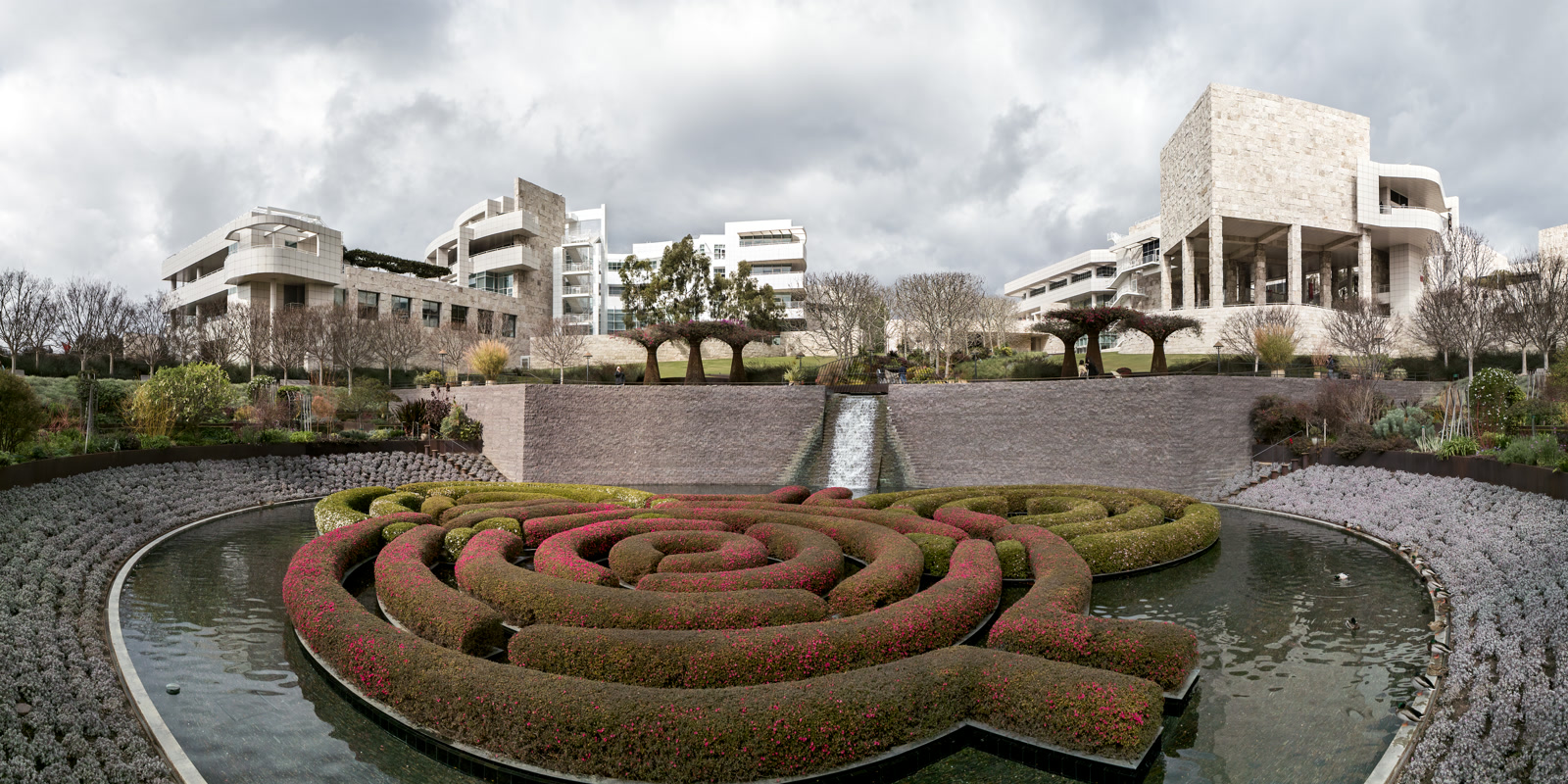
End the museum afternoon at the Getty Center, in the hills above the 405 in Brentwood. Admission is free, but a timed-entry reservation is required, so book it before you travel. Parking is $25, dropping to $15 after 3 p.m. and $10 after 6 p.m., and free on Saturdays after 6 p.m. The Getty is open Tuesday to Friday and Sunday 10 a.m. to 5:30 p.m. and Saturday 10 a.m. to 9 p.m., closed on Mondays. The Central Garden, with its maze of flowering hedges around a pool, is the calmest place in the city. The Getty closes on March 15, 2027 for about a year of renovation, reopening in spring 2028 — if your trip falls after that date, swap the Getty for an extra hour at LACMA.
Universal Studios: full day or skip it?
Universal Studios Hollywood is the one attraction that breaks this itinerary’s structure, because it eats a full day. A one-day general admission ticket runs $109 to $149 depending on the date, Express passes run about $199 to $309, and parking is about $40 before 5 p.m. and $10 after. The new Fast & Furious: Hollywood Drift coaster, which opened in 2026, is the headline ride. Do not bolt it onto Day 1: Hollywood and the studio are neighbours on a map, but a theme park day and a Griffith sunset do not fit in the same 12 hours.
Treat Universal as a fourth day, or swap it for Day 1 entirely. Go if you are travelling with children, or if theme parks are the reason you came. Skip it if the city itself is the reason — the studio experience is covered better, and in about three hours, by the Warner Bros. tour on Day 1.
Where to stay: West Hollywood vs Santa Monica vs Downtown
West Hollywood is the best all-rounder for a first trip: roughly in the middle of Hollywood, Beverly Hills and the west side, with walkable streets and restaurants and nightlife that take care of the evening.
Santa Monica is the beach base: cooler air, a walkable downtown, the pier on your doorstep, quieter evenings. The trade-off is that every inland day starts with a freeway drive — Day 1 and Day 3 both begin with the same 30 to 45 minutes the other bases avoid. Choose it if the coast is the point of your trip, not if Hollywood and the museums are.
Downtown is the transit base: the Metro hub is here, the market and The Broad are on foot, and the hotels tend to be the best value of the three. The trade-off is the evenings — Downtown quiets down earlier than West Hollywood, and it feels the least like the Los Angeles of the postcards. Stay in one place for all three nights — moving hotels mid-trip costs half a day, a sixth of the trip.
Getting around: car, Metro and rideshare — what actually works
A rental car is the default for this plan, because each day is one area and the car makes the one drive out and the one drive back simple. Downtown parking is expensive and slow; the Metro is genuinely useful where it reaches: a ride costs $1.75, transfers are free within two hours, the daily cap is $5 and the seven-day cap is $18, and a TAP card costs $2. The B Line serves Hollywood, the E Line serves Santa Monica, and the two meet downtown. The honest limits are that the Metro does not reach Griffith Observatory directly — take the DASH bus from Vermont/Sunset — or the Getty or Malibu at all.
Rideshare fills the gaps: the best option for evenings, when you do not want to drive back after dinner, and for the airport run. The combination that works: a car for the day’s main drive, Metro for Downtown and Hollywood, rideshare for the evenings.
What to book first
Book in this order, as soon as your dates are set. First, the Getty Center timed-entry reservation — free, required, and the one booking that can actually sell out. Second, a timed ticket for The Broad, also free and worth having in advance. Third, planetarium tickets at Griffith Observatory if you want a show, and a Warner Bros. Studio Tour slot if you are going — tours run 8:30 a.m. to 3:30 p.m. and the morning slots go first. Fourth, Universal Studios tickets if you are adding the fourth day, since the price is date-based and earlier is usually cheaper.
FAQ
Is 3 days enough for Los Angeles? Yes, for the first-timer highlights — one area a day, done properly, covers Hollywood, the coast, Downtown and the big museums. It is a tasting menu, not the whole city. Three days is enough to know whether you want to come back.
Do I need a car in Los Angeles? For this itinerary, yes in practice — or a car plus Metro. The Metro covers Downtown, Hollywood and Santa Monica well, but it does not reach Griffith Observatory, the Getty Center or Malibu directly. For the full three days, rent one.
Can I fit Disneyland into 3 days in Los Angeles? No. Disneyland is in Anaheim, a separate city in Orange County, about 25 to 30 miles southeast of Downtown Los Angeles. The drive is 30 to 60 minutes in light traffic and 90 minutes or more at rush hour on the I-5 South, and the park itself needs a full day. Either add a fourth day for Anaheim or save Disneyland for another trip.
The Short Version
Three days, one area a day: Day 1, Hollywood and Griffith at sunset; Day 2, the coast from the Santa Monica Pier to Venice; Day 3, Downtown, the market, The Broad, LACMA and the Getty. Book the Getty reservation first — free and required — and the Broad ticket second. Drive between 10 a.m. and 2 p.m. or after 8 p.m., or add 30 to 60 minutes to every trip. Universal Studios is a fourth day, not a squeeze. And Disneyland is a day in Anaheim, not a stop in Los Angeles.