
Chicago in winter is not a consolation prize. The city gets properly cold — the kind of cold that makes the lake wind feel like a personal insult — and that is exactly why it is worth visiting. The crowds thin out, hotel rates drop, the rinks open, the Christmas market fills Daley Plaza, and the museums become the warmest rooms in the city. This guide covers the best things to do in Chicago in winter, with confirmed 2026 dates and prices.
Chicago in winter: the honest cold
Start with the weather, because every other decision on this page depends on it. Chicago’s January normals, from the National Weather Service’s 1991–2020 figures, are a daily high of about 32°F and a low of about 19°F. December is a little milder, with highs around 37°F and lows around 24°F, and February runs about the same as January. January also averages about 11 inches of snow. What makes it feel colder is the wind off Lake Michigan: a 25°F day with a 20 mph lake wind feels like single digits.
Winter in Chicago is an indoor-outdoor rhythm, not an all-day outdoor walk. Plan one outdoor block in the morning, warm up inside for lunch or a museum, then go out again when the lights come on. The ‘L’ trains are heated, and every museum lobby is a warming station. Dress for it and the cold becomes part of the trip — exactly what to pack is at the end of this guide.
Ice skating: Millennium Park and Maggie Daley
The two rinks that matter are a five-minute walk apart, and they work differently, so pick the one that fits your day.
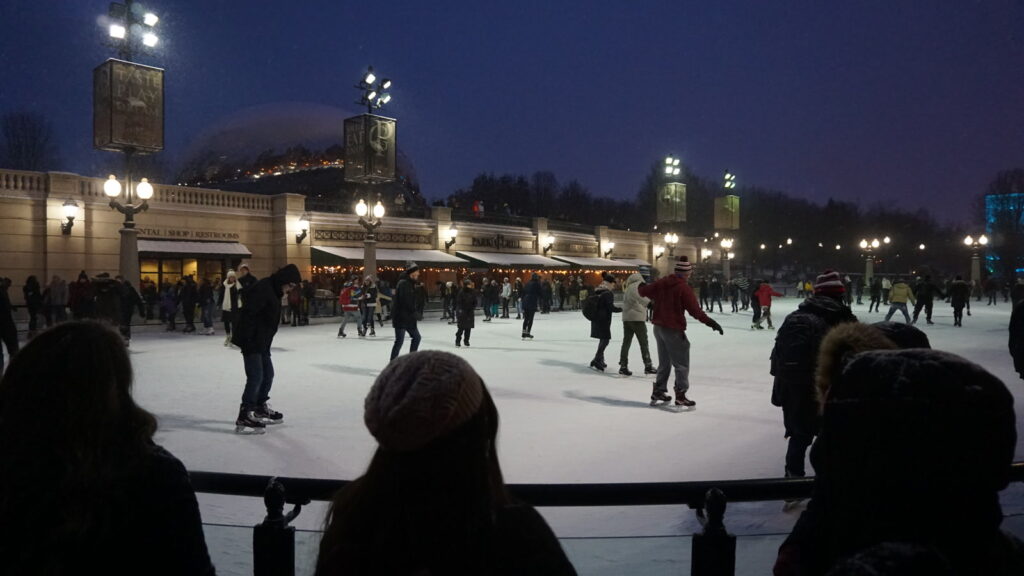
The McCormick Tribune Ice Rink in Millennium Park is the postcard. It sits under the skyline, a short walk from the Bean, and runs from November 20, 2026 through January 31, 2027, daily from 11 a.m. to 10:30 p.m. Sessions are 90 minutes. Admission is free for the 11 a.m. session and $5 for later sessions if you bring your own skates; with rentals it is $18 on weekdays and $22 on weekends. Online reservations are required; weather closures are posted on Millennium Park’s Facebook page. Free skating lessons run on Saturdays and Sundays from 9 to 10 a.m., but you have to register in advance and places are capped. Come at dusk, when the lights come on.
The Maggie Daley Park Ice Skating Ribbon is the better skate. Instead of going in circles, you glide along a winding quarter-mile path that loops through the park with the skyline all around you. It opens earlier and stays open longer: November 13, 2026 through March 7, 2027, with two-hour sessions. Skate rentals are $17 online or $19 at the walk-up window Monday through Thursday on non-holidays, and $21 online or $23 walk-up on Fridays, Saturdays, Sundays and holidays. If you bring your own skates, the 11 a.m. weekday session and the 8 a.m. weekend session are free, and other sessions are $5. The holiday season, December 11 through January 3, is priced like a weekend. Skate aids for beginners cost $11 per session. Every skater needs a reservation, and tickets are released in blocks on Mondays at noon — book the Monday two weeks before your trip.
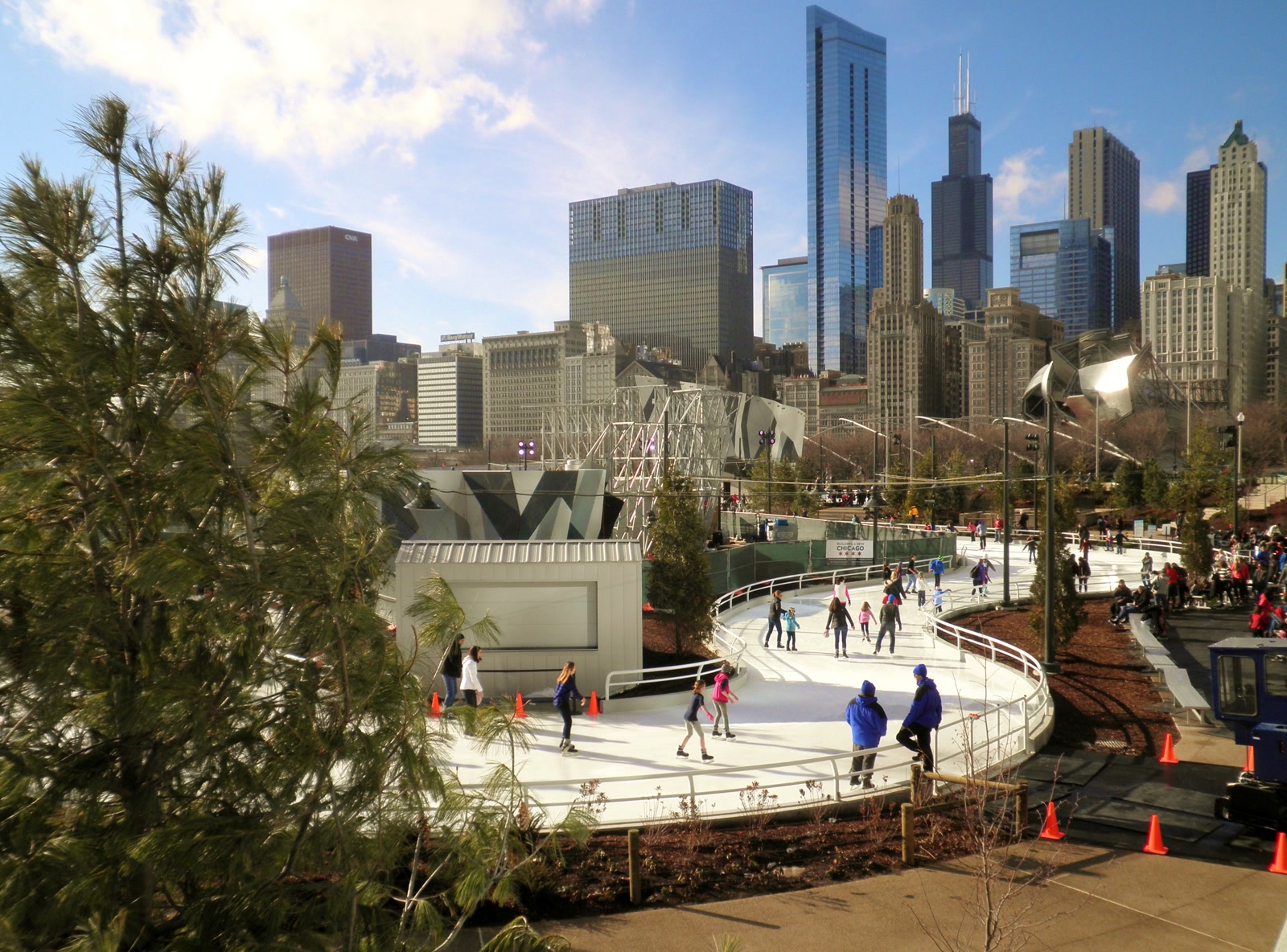
Skate the ribbon in the morning and walk past the Millennium Park rink at night. With small children, the ribbon’s penguin aids and gentle curves make it the easier first skate.
Christkindlmarket and the winter markets
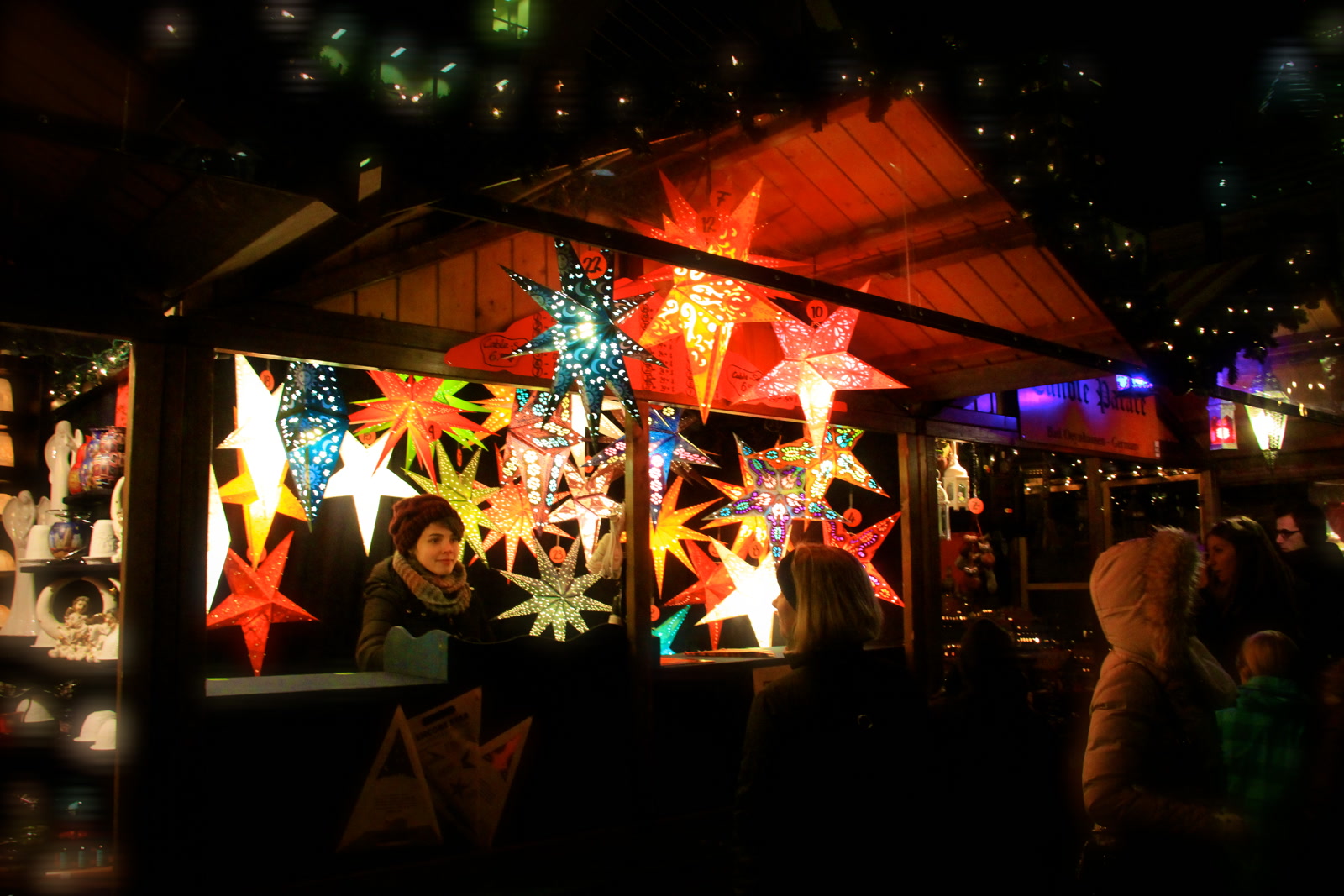
Christkindlmarket is the event that turns Chicago’s winter from something to endure into something to look forward to. The German-style open-air market fills Daley Plaza in the Loop with wooden stalls selling glühwein, sausages, pretzels, handmade ornaments and gifts, and 2026 is its 30th season. It runs from November 20 to December 24, 2026, and entry is free. Hours are 11 a.m. to 8 p.m. Sunday through Thursday and 11 a.m. to 9 p.m. on Friday and Saturday, with shorter hours of 11 a.m. to 4 p.m. on Thanksgiving and Christmas Eve. It is closed on Christmas Day.
Go in the early evening, when the lights are on, and go hungry. The glühwein comes in a collectible souvenir mug, the sausages are grilled in front of you, and the ornament stalls are the place to buy the one Christmas decoration you will actually keep. Two more locations run in 2026: Gallagher Way in Wrigleyville (through December 31) and RiverEdge Park in Aurora (Thursday through Sunday, through December 24). Daley Plaza is the original and the biggest — choose it if you only visit one.
After Christmas, the lights keep going at Lincoln Park Zoo. ZooLights runs from November 20, 2026 through January 3, 2027, from 4:30 to 9 p.m., with last entry at 8 p.m. The daytime zoo itself is free and open 365 days a year. ZooLights tickets are $7 to $12 in advance, or $20 on the day; admission is free on four Mondays — November 23 and 30 and December 7 and 14 — with registration required; free tickets are released one week ahead at 11 a.m. ZooLights is closed on Thanksgiving, December 1, 8 and 15, Christmas Eve and Christmas Day.
The museums that warm you up
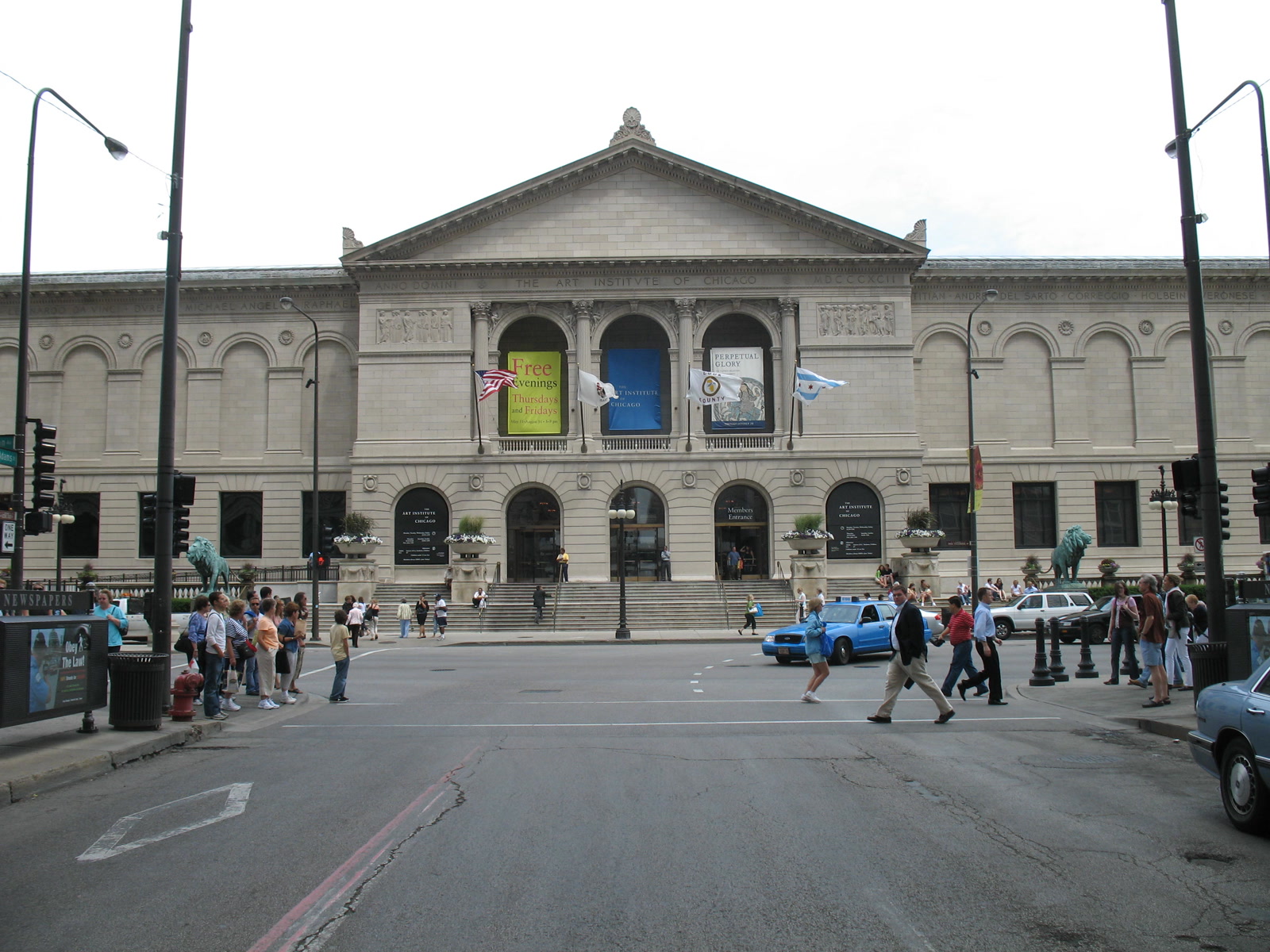
The Art Institute of Chicago, on Michigan Avenue at the edge of Millennium Park, is the one to start with. General admission is $32 for adults visiting from outside Illinois, $27 for Illinois residents and $20 for Chicago residents; seniors, students and teens pay $26, and children under 14 are always free. It is open Monday, Wednesday and Friday through Sunday from 11 a.m. to 5 p.m., and until 8 p.m. on Thursday. It is closed Tuesdays, Thanksgiving, Christmas Day and New Year’s Day. Give it at least three hours — the Impressionist wing and the American art, including American Gothic and Nighthawks, are each worth an unhurried hour.
The Shedd Aquarium, on the Museum Campus by the lake, is the warmest room on a cold day in the most literal sense — humid, tropical, and full of beluga whales, sea otters and a coral reef. It is open from 9 a.m. to 5 p.m. on weekdays and until 6 p.m. on weekends and holidays. Admission uses plan-ahead pricing, starting at about $39 for adults; Chicago residents pay about $19.95, and children under 3 are free. Illinois residents get free admission on Tuesday evenings from 5 to 9 p.m. on published December dates, though you still need to reserve. Book online in advance, because the cheapest dates sell first.
The Field Museum, next door to the Shedd, is the third stop on the same campus and the easiest to pair with it. Open daily 9 a.m. to 5 p.m., last entry 4 p.m.; closed Thanksgiving and Christmas Day. General admission starts at $30 for adults, with Chicago residents from $21, and Illinois residents get free basic admission on Wednesdays. SUE the T. rex anchors the main hall, and the Pokémon Fossil Museum runs through April 10, 2027. Three museums in one day is too much; pick two.
The river cruise in winter: what actually runs
The cruise that keeps going is Shoreline Sightseeing’s architecture tour. It runs a shorter 60-minute version through the colder months, from November 1 to April 15, instead of the 75-minute summer tour, with covered seating that keeps you out of the wind. Tickets start at about $39. The Chicago Architecture Center’s First Lady cruise, the 90-minute docent-led tour that most guides recommend first, is seasonal: its schedule ran into December 2026, with dates listed through December 20, so it is an option for a December trip but not a January or February one. Check the live booking calendar for your dates — winter departures are cut back and weather cancellations happen.
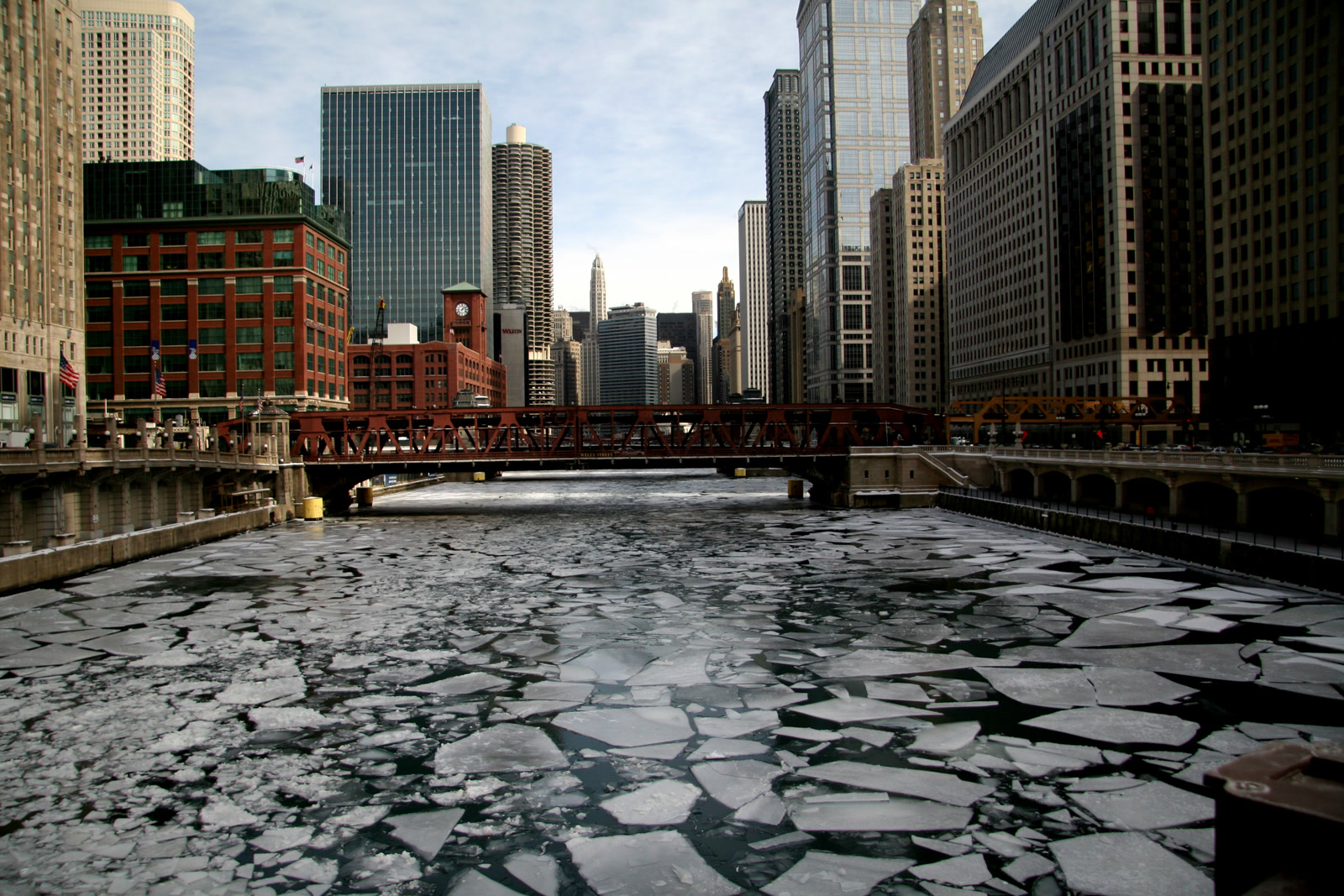
If no cruise is running on your day, walk the Riverwalk instead. It is free, quiet and snow-dusted in winter, and the bridges, towers and ice on the water do the work a narration would have done.
Food: deep dish, hot chocolate and the rest
Chicago’s winter food is built for cold weather, and it is the one part of a winter trip that needs no caveat. Deep-dish pizza is the obvious start: Lou Malnati’s and Giordano’s are the two names every local will argue about, and both have Loop locations. Order one pizza between two people. An Italian beef sandwich, dipped, from a counter spot is the cheaper, faster version of the same idea, and a Chicago-style hot dog with everything on it except ketchup is the third leg of the trio.
Hot chocolate is a serious pursuit here rather than an afterthought. The old-fashioned drinking chocolate at the cafes around the Loop and River North is thick enough to stand a spoon in, and it is the right drink for the walk back to the hotel when the wind is coming off the lake. Keep most meals casual: winter waits are shorter than in summer.
Where to stay in winter
Stay in the Loop, River North or the Magnificent Mile, and stay close to an ‘L’ station. Winter is not the season for a charming neighbourhood a forty-minute bus ride away; it is the season for stepping out of your hotel into a heated train station. The Loop is next to the market, the rinks and the Art Institute; River North to the restaurants and the river; the Magnificent Mile to the shopping.
Winter is also the cheapest season for Chicago hotels, so the room you could not afford in June is often in reach in January — check the price before assuming you need to stay far out. And ask whether the hotel has a heated indoor pool or a spa when you book, because after a day in 25-degree wind, an hour in warm water is worth more than any attraction.
The CTA’s ‘L’ trains and buses run on the Ventra system: a single ‘L’ ride is $2.50, a bus ride is $2.25, and a ride from O’Hare on the Blue Line is $5. A 1-day pass is $5, a 3-day pass is $15 and a 7-day pass is $20. The Blue Line runs 24 hours a day between O’Hare and the Loop, taking about 40 to 45 minutes. In winter, take the train over walking for anything more than a few blocks.
What to pack
Pack for 25°F with wind, not for 25°F on a calm day. The list is short: a warm, windproof coat that covers your hips; a hat that covers your ears; gloves; a scarf you can pull up over your face on the lakefront; and waterproof boots with grip, because the sidewalks are a mix of slush, salt and black ice. Layers matter most — you will go from 20°F outside to 72°F inside a museum in one doorway.
Don’t forget lip balm and moisturiser — the cold air is dry and the indoor heating is drier — and a portable charger, because phone batteries drain fast in the cold. Hand warmers are cheap insurance for the rink and the market.
FAQ
Is Chicago worth visiting in winter?
Yes, if you like the things winter is good for: ice skating, Christmas markets, museums without crowds, and lower hotel prices. Come for the rinks, the market, the museums and the food.
How cold does it get in Chicago in winter?
January averages a high of about 32°F and a low of about 19°F. The wind off Lake Michigan makes it feel colder than the thermometer says, and wind chills can drop well below zero on the coldest days. January also averages about 11 inches of snow.
Do river cruises run in winter in Chicago?
Some do. Shoreline Sightseeing keeps a shorter 60-minute architecture tour running through the winter months, with covered seating. The Chicago Architecture Center’s First Lady cruise runs into December but is seasonal, and the lake cruises stop for the winter. Check the live booking calendar for your dates, and walk the Riverwalk if no cruise is running.
What should I pack for Chicago in winter?
A windproof coat, a hat that covers your ears, gloves, a scarf, and waterproof boots with grip. Dress in layers, and bring lip balm, moisturiser and a portable charger.
The Short Version
Chicago in winter is cold, and that is the point. Skate the ribbon at Maggie Daley Park in the morning, warm up at the Art Institute in the afternoon, and end the day at Christkindlmarket with a glühwein. The museums are quiet, the hotels are cheaper, and the city looks its best in the dark. Dress for the wind and plan around warming up indoors.