
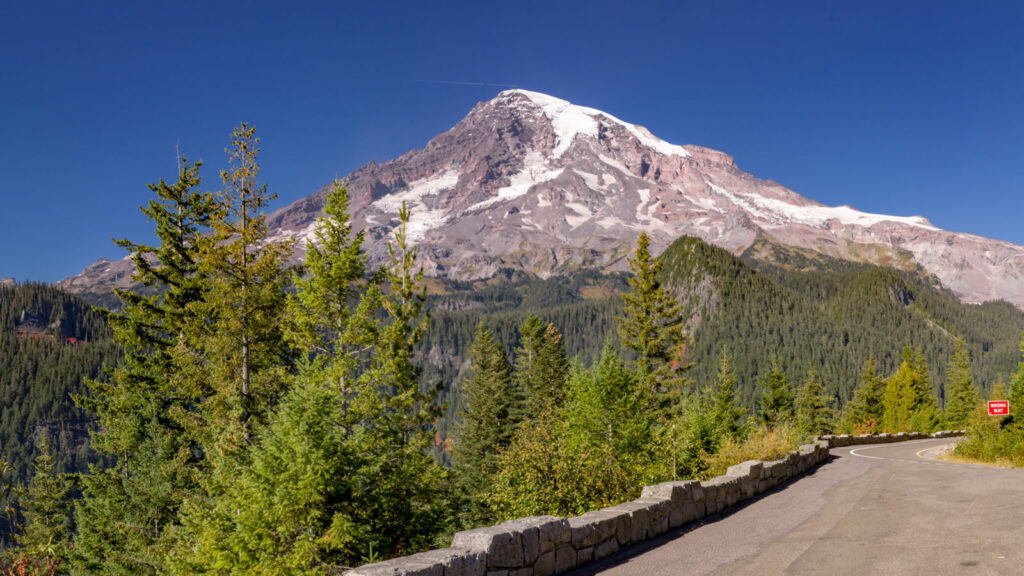
On a clear day, Mount Rainier fills the Seattle skyline — a 14,411-foot volcano about two and a half hours away by car. It is the closest national park to Seattle. The seattle to mount rainier day trip works, but only if you respect the math: roughly five hours of driving, one area of a 369-square-mile park, and an early start.
The honest math: 2.5 hours each way, one area only
Paradise, the park’s most visited area, is 107 miles from downtown Seattle — about two and a half hours of driving. The Nisqually Entrance is about two hours away, and the climb to Paradise adds another 25 minutes. The round trip is a little over 200 miles, so the whole day runs about 12 hours door to door.
There is no public transit to Mount Rainier, and no shuttle service from Seattle in 2026 — you drive yourself, or you book a guided tour. Either way, leave Seattle by 6 a.m. The Paradise parking lot is often full by 9 a.m. on summer weekends, and the entrance line grows after that. An early start also buys you the best chance of a clear view: locals say “the mountain is out” for a reason, because Rainier hides behind clouds on plenty of summer days, and mornings are clearer than afternoons.
The two ways in: Paradise or Sunrise
The Nisqually Entrance is the year-round way in. From Seattle you take I-5 south, then state routes 7 and 706 through Elbe and Ashford to the gate. The road climbs through Longmire — the park’s oldest developed area, at 2,700 feet — and on to Paradise at 5,400 feet, and it is plowed through winter.
The White River Entrance is the summer way in. From Seattle you drive state route 410 through Enumclaw to the park’s northeast corner, then up Sunrise Road to Sunrise at 6,400 feet — the highest point in the park you can reach by car. The road usually opens in late June or early July and closes in late September or early October, and the drive up takes about 45 minutes for 13 miles of switchbacks.
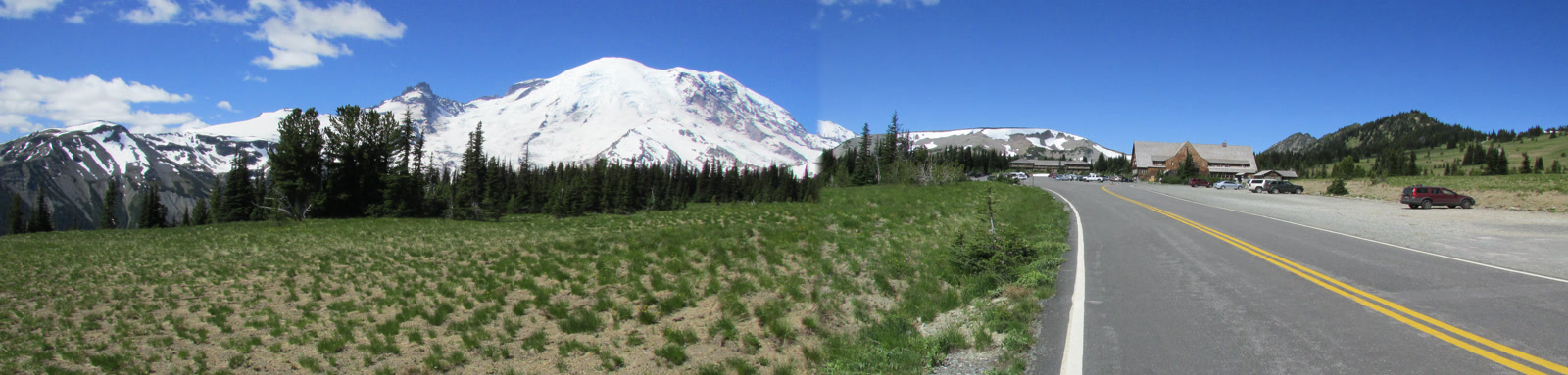
Paradise has the meadows, the visitor center, the historic inn and the short trails — everything a first-timer wants in one place. Sunrise has the altitude and the view: from the parking lot you look straight across at the summit and the Emmons Glacier, the largest glacier in the contiguous United States, with almost no walking required. Paradise is the better first trip. Sunrise is the better second one. Do not try to see both in a day — the road between them is a seasonal, winding drive of its own, and you would spend the day in the car.
Check the Park Service road status page the night before you go — roads here close for snow, construction and wildfire with little notice. In 2026, Sunrise Road was closed to vehicles from September onward because of the Grand Park 2 and Wonderland Complex fires, and Stevens Canyon Road closed for the season in late October.
Paradise: the meadows, the Skyline Trail and Myrtle Falls
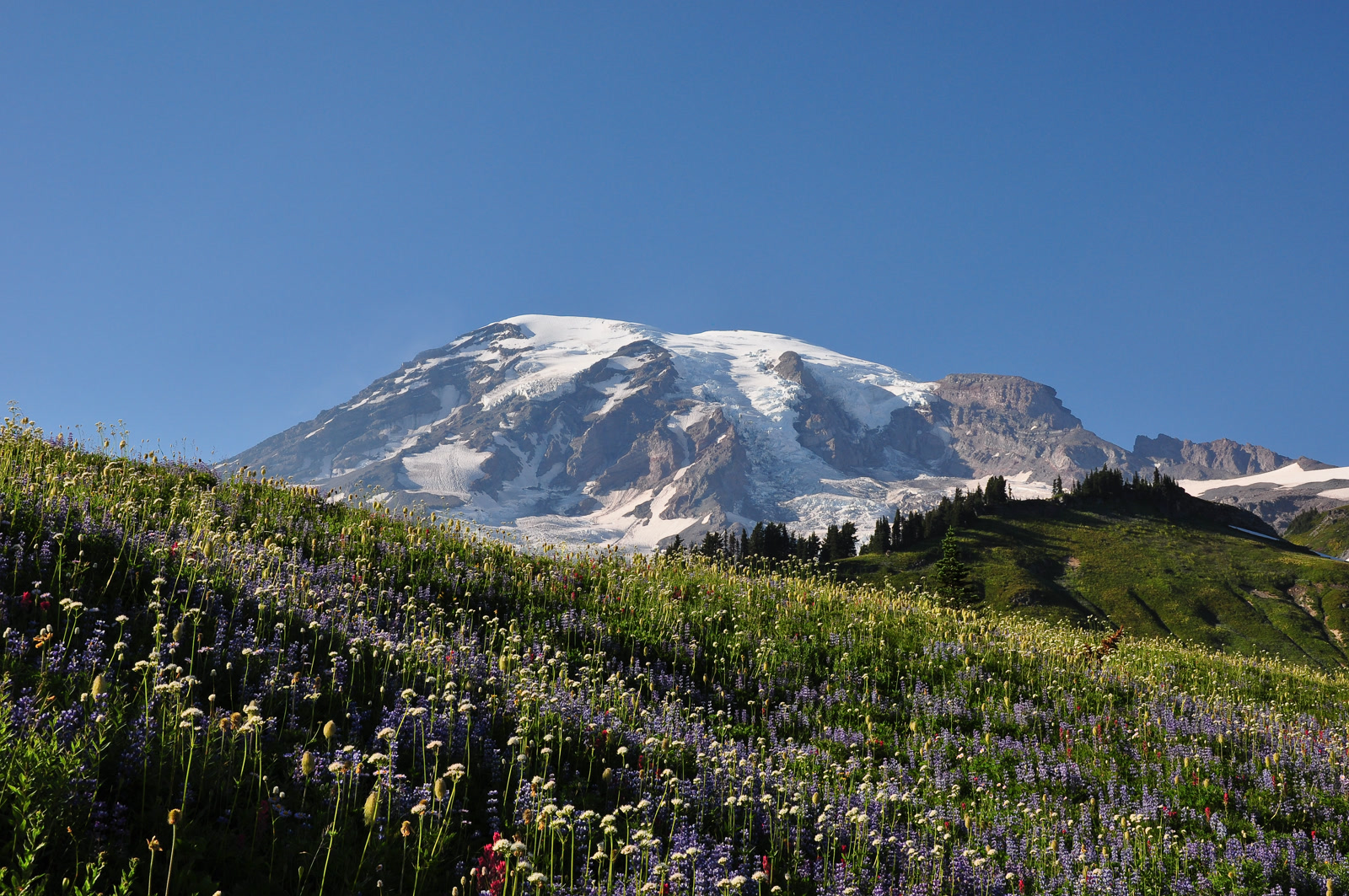
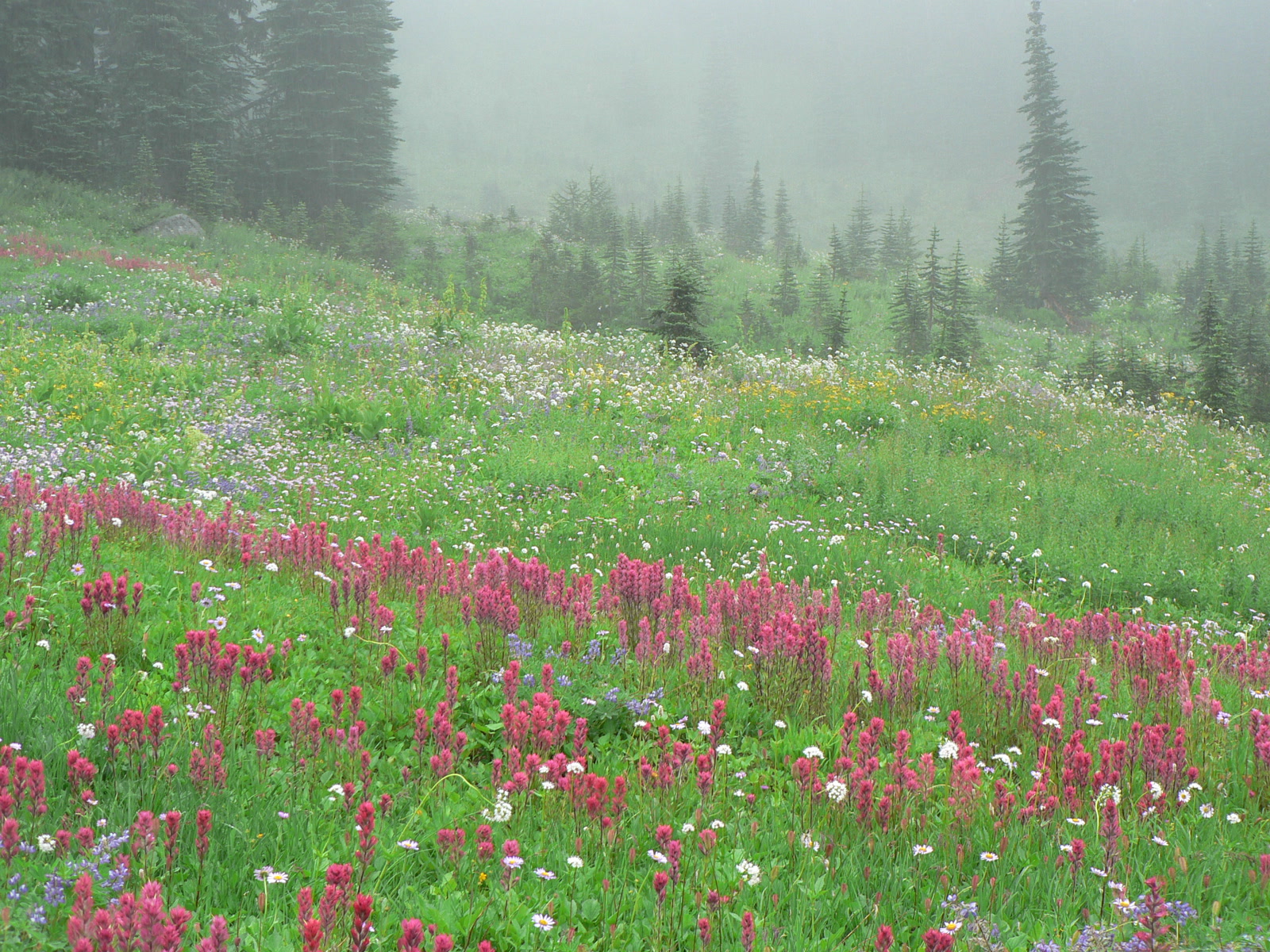
Paradise is the heart of the park, and it earns the name in July and August, when the meadows below the visitor center fill with wildflowers — lupine, paintbrush, avalanche lily — peaking from mid-July into August. Paradise averages around 640 inches of snow a year, and snow lingers on the high trails well into July, which is why the flowers come late and all at once.
The Henry M. Jackson Visitor Center is the base: exhibits, the park film, a deli and a gift shop, open daily in summer and weekends only in winter. Next door stands the Paradise Inn, built in 1917, a 121-room log-and-stone lodge generally open from mid-May through early October, its dining room serving lunch and dinner in season.
The walk to do is the Skyline Trail. The full loop is 5.5 miles with about 1,700 feet of climbing — a half-day hike, not a day-trip stroll. Walk the first stretch to Myrtle Falls instead, about a mile round trip on a mostly paved path, where a 72-foot waterfall drops under a footbridge with the summit behind it. It takes less than an hour; if you have more time and the snow is gone, keep climbing past the falls, where the meadows open up and the crowds thin out.
Sunrise: the highest road in the park
Sunrise sits at 6,400 feet, a full thousand feet higher than Paradise, and it feels like it: the air is thinner, the trees are gone, and the mountain fills the whole southern sky. At the top there is a visitor center, a day lodge, picnic tables and a handful of short trails that start right at the parking lot. The views need no hiking at all, which is exactly why Sunrise suits a day trip.
The trade-off is the season. Sunrise Road usually opens in late June or early July and closes in late September or early October. There is no food or fuel at Sunrise, and no gas anywhere inside the park, so you bring everything with you. In 2026 the road was also shut to vehicles from September because of the Grand Park 2 and Wonderland Complex fires — if Sunrise is your plan, check the road status the morning you leave, and have Paradise as the backup.
The Grove of the Patriarchs problem: the stop that is not there
Every older guide lists the Grove of the Patriarchs — a stand of thousand-year-old Douglas firs and cedars on an island in the Ohanapecosh River, reached by a suspension bridge. Do not build your day around it. The grove has been closed since November 2021, when a flood destroyed the suspension bridge that was the only safe way in. A replacement is in the planning stages, but the trail is not expected to reopen before 2029.
The grove sits on the park’s southeast side, off the Stevens Canyon Road, so a day trip that tries to include it wastes hours driving to a closed trailhead. Skip it. The old-growth experience is the drive itself: the road from Longmire to Paradise runs through deep forest, and the Trail of the Shadows at Longmire — a short, flat loop through old growth by the museum — gives you the big trees without the detour.
A day that works: the hour-by-hour plan
This is the Paradise plan for a summer day. Times are approximate — traffic on I-5 and the entrance line both run long in July and August.
- 6:00 a.m. Leave Seattle. Fill up before the park — there is no gas inside it; the last easy fuel is in Ashford, just outside the Nisqually Entrance.
- 8:00 a.m. Nisqually Entrance. Pay the $30 vehicle fee at the gate, good for seven days.
- 8:30 a.m. Longmire. A ten-minute stop for the museum and the Trail of the Shadows loop — or drive straight through if the mountain is clear.
- 9:00 a.m. Paradise. Park, use the visitor center, and walk to Myrtle Falls while the meadows are still quiet.
- 10:00 a.m. to 12:30 p.m. The Skyline Trail, as far as your legs and the snow allow.
- 12:30 to 1:30 p.m. Lunch — the Paradise Inn dining room in season, or a packed picnic; in-park options are limited and the lines are long.
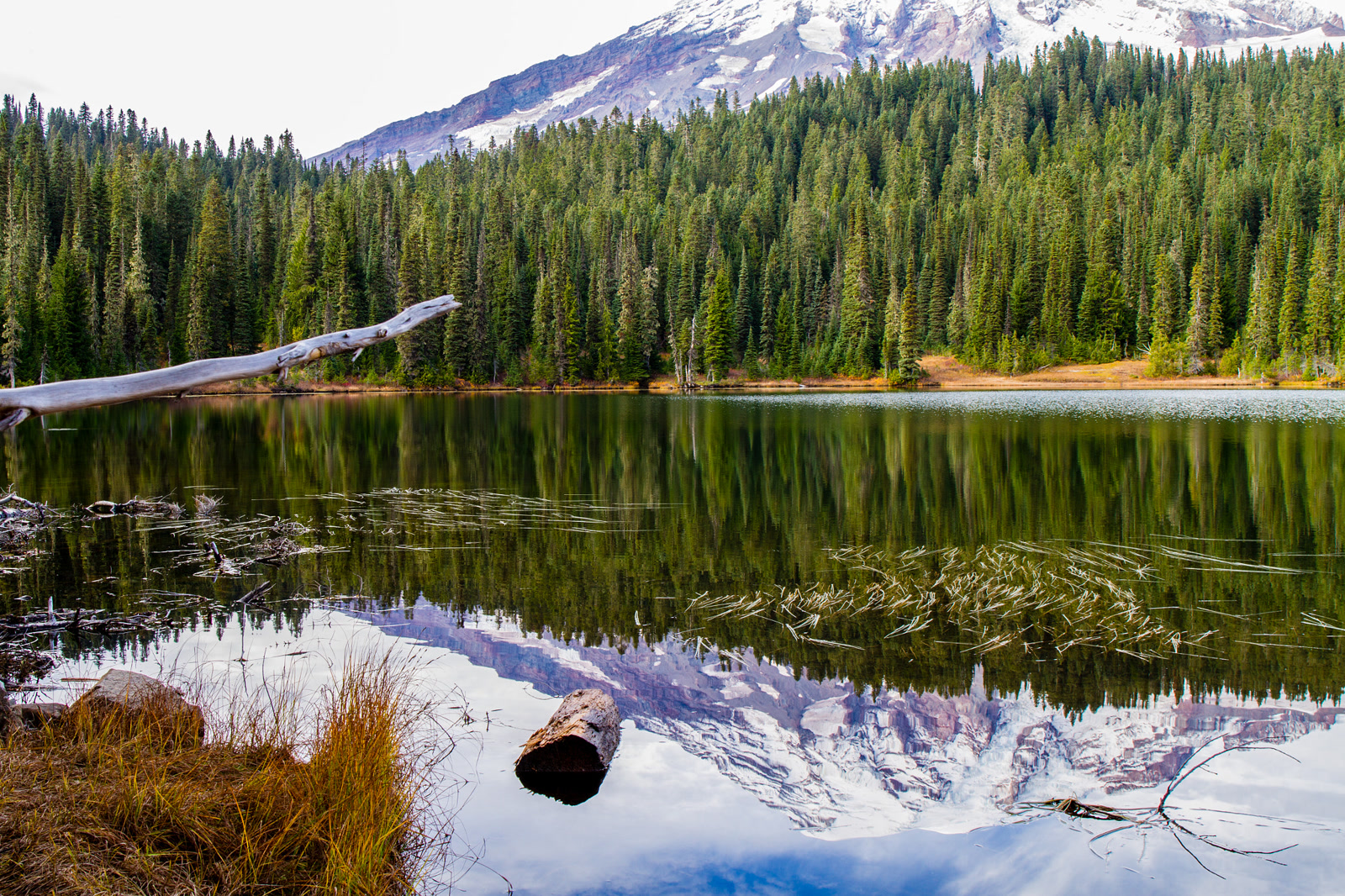
- 1:30 to 3:00 p.m. The drive down, with stops: Narada Falls, a short walk from a roadside pullout, and Reflection Lakes, about three miles east of Paradise on Stevens Canyon Road when it is open, for the classic mirror photo.
- 3:00 p.m. Leave the park. The drive back takes about two and a half hours.
- 5:30 to 6:00 p.m. Back in Seattle.
The Sunrise version swaps the route: leave at 6:00 a.m., drive state route 410 through Enumclaw to the White River Entrance, climb Sunrise Road, and spend the late morning at 6,400 feet. Same hours, same fee, different mountain face. Do not try to combine the two — the cross-park drive eats the afternoon.
When to go: wildflowers, snow and the fire note
July through September is the window, and late July into August is the sweet spot: the wildflowers are at their peak, the high trails are mostly snow-free, and both Paradise and Sunrise are open. June can be lovely at Paradise, but the high trails may still hold snow. October brings fall color and empty parking lots, but the seasonal roads close one by one — Stevens Canyon Road was scheduled to close on October 26 in 2026.
Winter is a different trip. From November 1 through May 1, every vehicle in the park must carry tire chains or an approved traction device, including all-wheel drive. The Longmire gate closes overnight and reopens around 9 a.m., weather permitting. Paradise is still reachable, but the day is short, the visitor center is on weekend hours, and the hiking is snowshoeing.
Two honest warnings. First, wildfire smoke can hide the mountain for days in late summer — in 2026 the Grand Park 2 and Wonderland Complex fires closed Sunrise Road to vehicles from September onward, so check the Park Service alerts page, not just the weather, the night before. Second, the timed-entry reservation system that ran in 2024 and 2025 was dropped for 2026, so no advance reservation is needed this year — but the policy has changed every year recently and the 2027 plan is unannounced, so check the NPS fees page each spring.
What to pack and what it costs
The entrance fee is $30 per private vehicle, good for seven days and covering everyone in the car. Motorcycles pay $25, and people on foot or by bicycle pay $15 each. The America the Beautiful annual pass at $80 covers it, and the park’s own annual pass is $55. The park is cashless — bring a card.
Pack for a mountain day, not a city day. Layers and a rain jacket — the weather at 5,400 feet changes fast, and afternoon showers are normal even in August. Sun protection, because the sun is strong above the tree line, and sturdy shoes with grip, because the trails are rocky and the snow patches are slick. Water and snacks, plus a packed lunch — food inside the park is limited to the Paradise Inn dining room and the visitor center deli in season. A phone charger and downloaded offline maps: cell service is patchy inside the park. Between November and May, bring tire chains — they are required, not suggested, and rangers do check.
FAQ
How long is the drive from Seattle to Mount Rainier?
About two and a half hours to Paradise, 107 miles each way — the Nisqually Entrance is about two hours away, and the climb to Paradise adds about 25 minutes.
Can you do Mount Rainier in one day from Seattle?
Yes — leave by 6 a.m., pick one area, and expect to be back around 5:30 or 6 p.m. after a 12-hour day, five of them driving.
Do you need a reservation to visit Mount Rainier in 2026?
No. The timed-entry system that ran in 2024 and 2025 was dropped for 2026, and entry is first come, first served. The 2027 plan is unannounced, so check the NPS fees page before a summer 2027 trip.
What is the entrance fee?
$30 per private vehicle, valid seven days. Motorcycles pay $25, people on foot or by bicycle pay $15 each. The park is cashless — bring a card.
Paradise or Sunrise — which is better for a day trip?
Paradise for a first trip: meadows, visitor center, inn and short trails in one place. Sunrise for the closest summit views — but only in summer, when Sunrise Road is open.
Is the Grove of the Patriarchs open?
No. It has been closed since the November 2021 flood destroyed its suspension bridge, and the trail is not expected to reopen before 2029. Do not plan a stop there.
The Short Version
The seattle to mount rainier day trip works — 107 miles, two and a half hours each way, one area per day. Leave Seattle by 6 a.m. for Paradise via the Nisqually Entrance, walk to Myrtle Falls and as far up the Skyline Trail as your legs allow, eat at the inn or from a packed lunch, and stop at Narada Falls on the way down. Be back by 6 p.m. The fee is $30 per vehicle for seven days, and no reservation is needed in 2026. Go between July and September, check the road status the night before, and remember Sunrise is summer-only and the Grove is closed.