
New Orleans is the easiest American city to get wrong. Arrive with a checklist and you will spend three days on Bourbon Street, eat in the same three tourist restaurants, and leave thinking the city is a party strip with a river. The real city is a music city first, a food city second, and a history city third — and it rewards the people who slow down. This guide groups what to do in New Orleans by mood: music, the Quarter walked slowly, the history the party strip skips, the food, the garden district, one big museum, the park, and the swamp. One rule runs through all of it: one paid anchor per day.
Frenchmen Street over Bourbon Street: the music rule
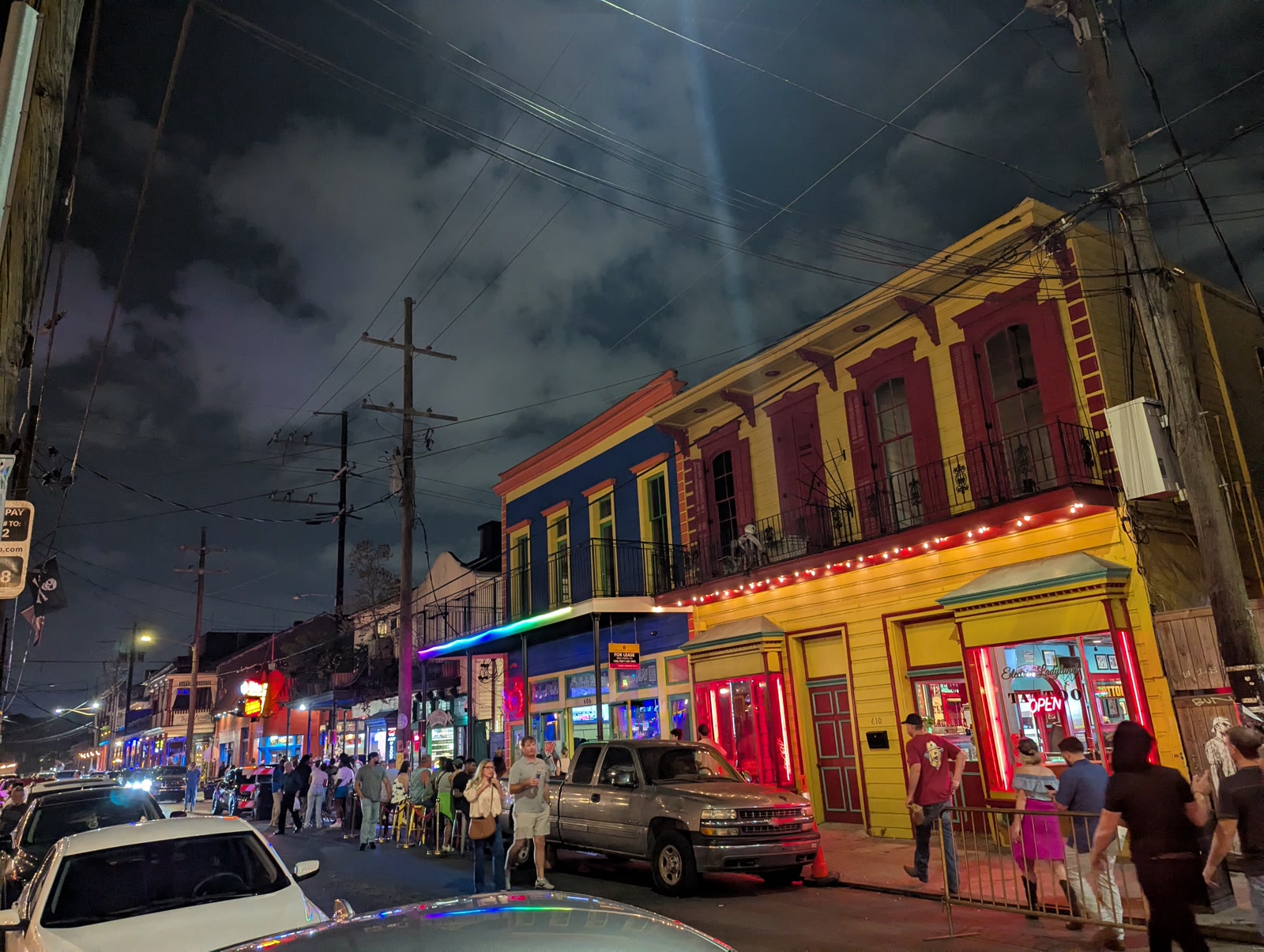
The first decision of any New Orleans trip is where to hear music, and the answer is Frenchmen Street, not Bourbon Street. Frenchmen is three blocks east of the French Quarter, in the Faubourg Marigny, and it is where the city’s musicians play for people who came to listen. The clubs sit shoulder to shoulder: the Spotted Cat Music Club, d.b.a., the Blue Nile, and a dozen smaller rooms. Most nights there is no cover charge at the door — the deal is that you buy a drink and tip the band.
Bourbon Street is the opposite deal. It is loud, crowded, and built for drinking in the open — open containers are legal on the street, which is the whole point of the place for most of its visitors. Go once, in daylight, to see the balconies and the old buildings. Then walk the three blocks to Frenchmen and stay there.
A practical note: Frenchmen is an evening plan. Arrive around 7 or 8 p.m., when the first sets start and you can still get a seat. The street is walkable from the Quarter in about ten minutes, but take a rideshare back to your hotel late at night rather than walking the quiet streets alone.
The French Quarter, walked slowly
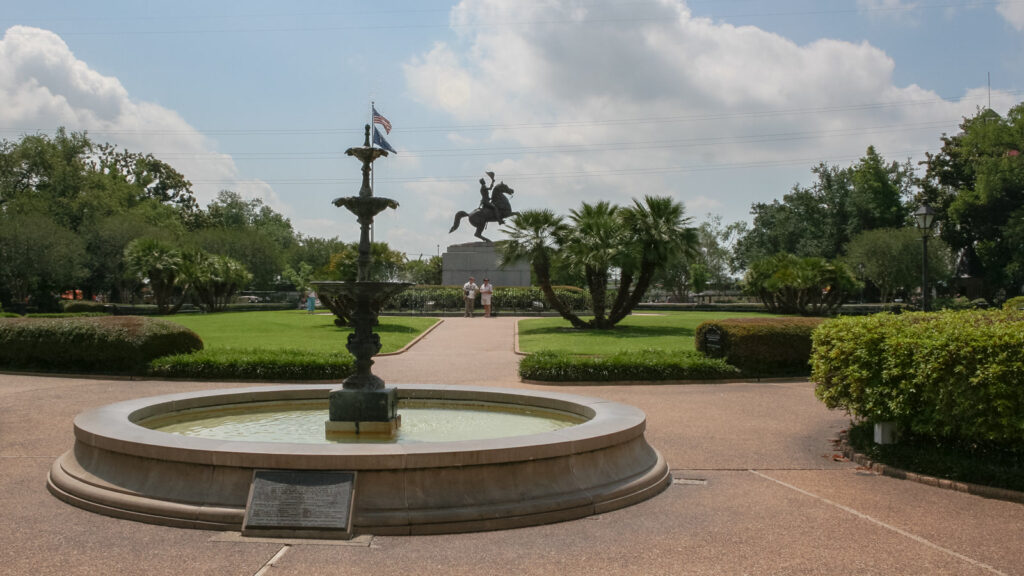
The French Quarter is the oldest part of the city, founded in 1718, and it is best taken on foot, slowly, in the morning before the crowds arrive. Start at Jackson Square, where street artists set up under the trees and the three white spires of St. Louis Cathedral rise over the square. The cathedral is the oldest cathedral in continuous use in the United States — a church has stood on this spot since 1718, and the building you see today was largely completed in the 1850s. It is still a working parish, so step inside quietly.
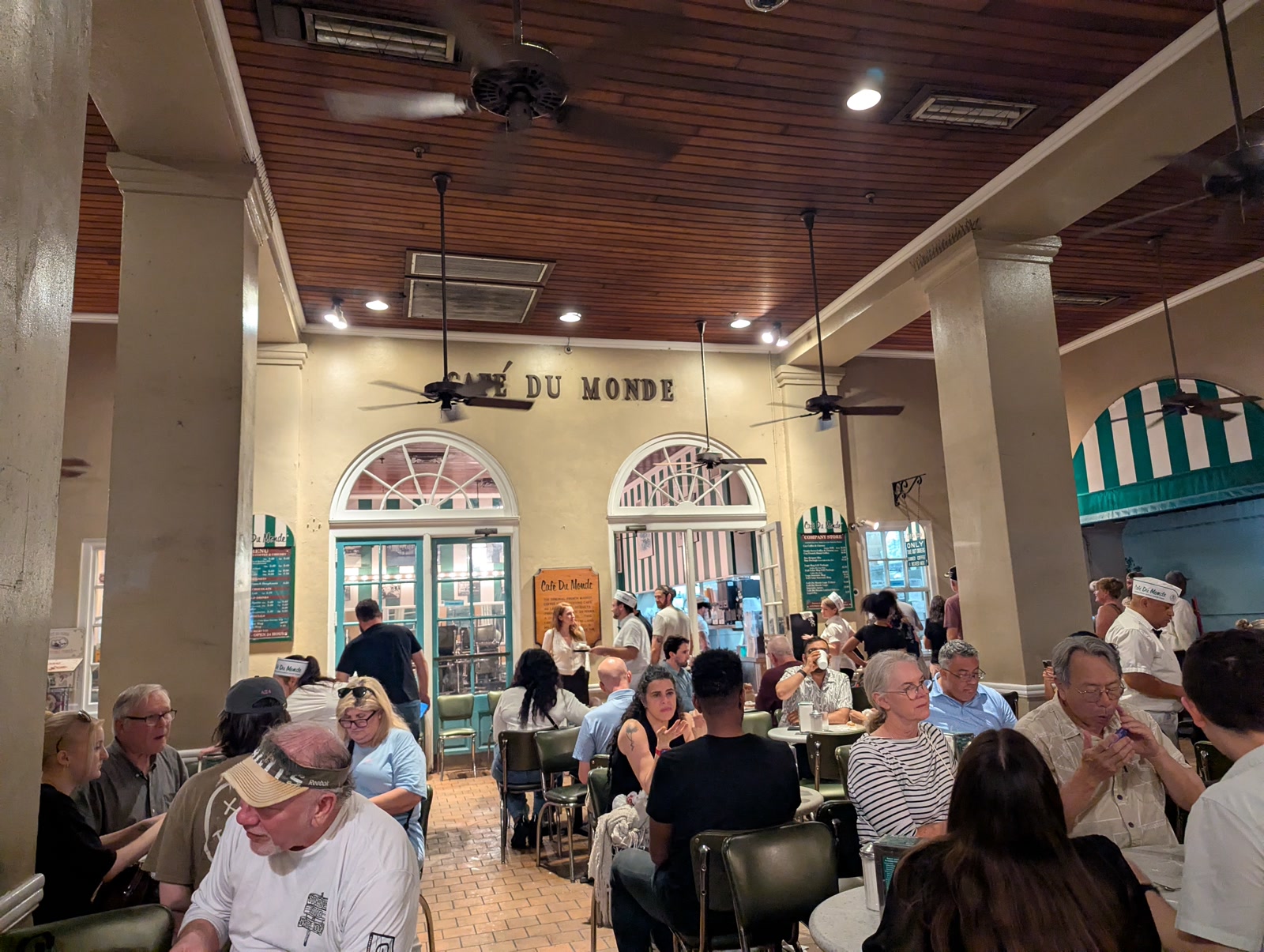
From the square, walk to Café du Monde at 800 Decatur Street. The coffee stand has been serving beignets and café au lait at the French Market since 1862, and the menu has barely changed since: fried dough under a mountain of powdered sugar, and dark coffee cut with chicory and hot milk. It is open 7:15 AM to 11 PM Sunday through Thursday, and until midnight Friday and Saturday, and closes only on Christmas Day, so go early in the morning or late at night, when the line is short.
The Quarter repays wandering. Royal Street has the antique shops and the old courtyards; the riverfront Moon Walk gives you the Mississippi without a ticket.
Tremé: the history the party strip skips
A fifteen-minute walk from the Quarter, across Rampart Street, is Tremé — one of the oldest Black neighborhoods in America, and the place where New Orleans’ music was actually born.
The heart of it is Congo Square, in what is now Louis Armstrong Park. In the 1700s and 1800s, enslaved people were allowed to gather here on Sundays — their one free day — to drum, dance, and trade. The rhythms played in Congo Square fed directly into jazz, and the square is still a gathering place on Sundays.
Nearby is St. Augustine Catholic Church, founded in 1841 and the oldest Black Catholic parish in the United States, and the Backstreet Cultural Museum, a small room of Mardi Gras Indian suits and second-line regalia that explains the city’s Black carnival traditions better than any guidebook. Tremé is not a checklist stop. It is a half-day of walking, looking, and listening.
The food: beignets, gumbo and where to book ahead
Food is not a side activity in New Orleans — it is one of the main reasons to come. The rule is simple: eat where the locals eat, and book ahead for the famous rooms. The city’s great restaurants fill up days in advance.
Start with the cheap classics. Beignets at Café du Monde. A po’boy — the city’s overstuffed sandwich on French bread — from any neighborhood shop. Gumbo, the dark, rich stew that is the city’s signature dish, in a Creole restaurant rather than a tourist one.
Then spend on one good dinner. Commander’s Palace, in the Garden District, has been serving Creole food since 1893 and is the city’s most famous dining room — book days ahead, and go for lunch if dinner is full, when the prices are lower. For something more casual, the neighborhood joints on Magazine Street and in the Bywater serve the same cooking without the reservation fight.
One warning: the restaurants on Bourbon Street and the busiest stretch of Decatur are built for volume, not for cooking. Walk two blocks in any direction and the food gets better and cheaper.
The Garden District and the St. Charles streetcar
Uptown from the Quarter, the Garden District is the city’s other great walking neighborhood: broad streets under live oaks and columned mansions behind iron fences. The way to get there is half the pleasure. The St. Charles streetcar has run along St. Charles Avenue since 1835, making it the oldest continuously operating streetcar line in the world, and its green wooden cars are a National Historic Landmark. A single ride costs $1.25, paid in exact cash or through the Le Pass app, and the line runs 24 hours a day from Canal Street to Carrollton.
Ride it to the end and walk back down through the Garden District. The houses are private homes, so look from the sidewalk, and stop at the Lafayette Cemetery No. 1 gates — the above-ground tombs are the city’s famous “cities of the dead,” and the cemetery is open only on guided tours, so check the current arrangements before you go.
The National WWII Museum: the half-day that earns it
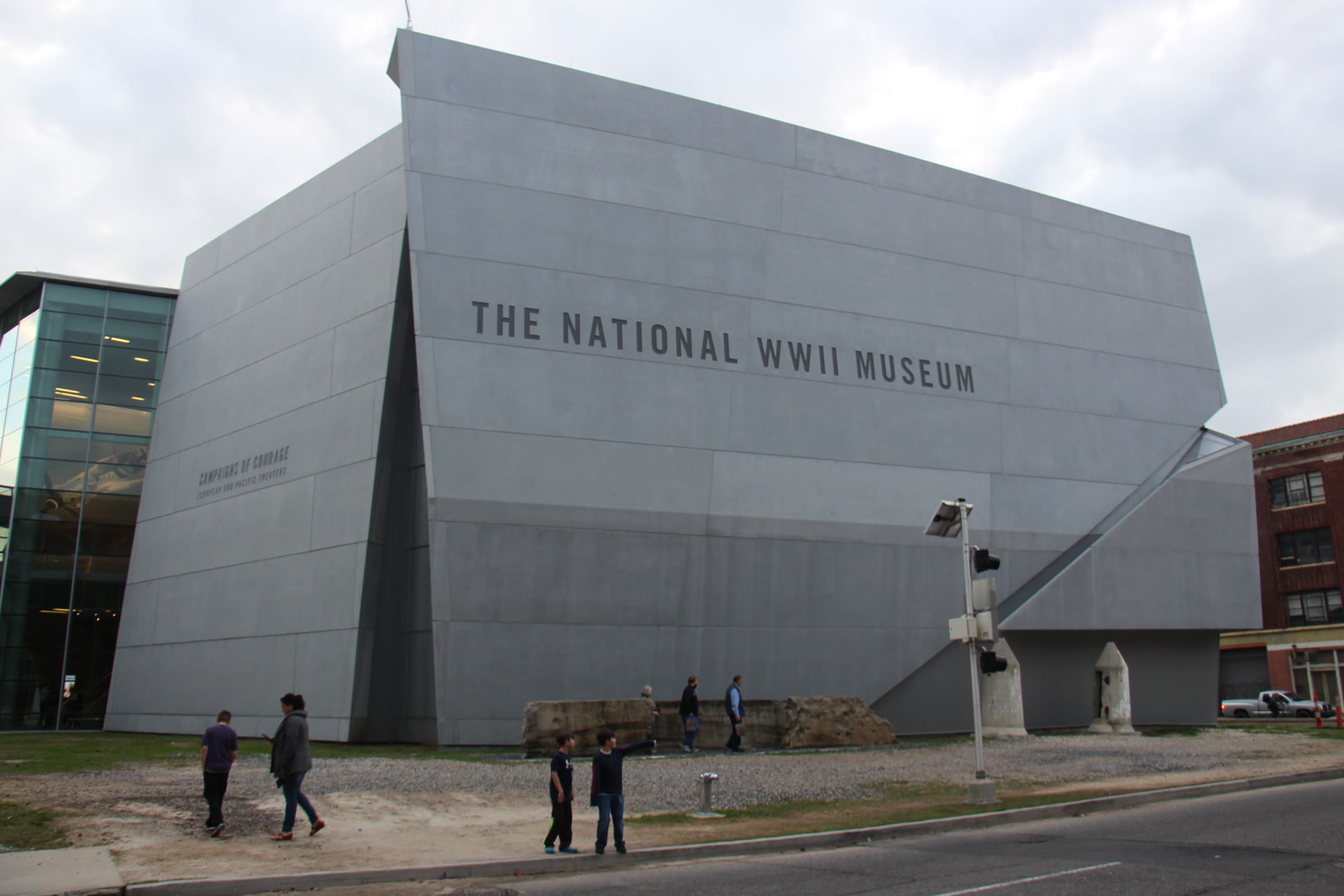
The one paid anchor that earns its money is the National WWII Museum, at 945 Magazine Street in the Warehouse District. It is the biggest museum in the city, spread across six acres, and the one attraction that visitors consistently call the best thing they did in New Orleans. Give it half a day.
Admission is $37 for adults, $27 for students and military with ID, and free for children under 5 and for WWII veterans. A second-day ticket costs $15 if you want to come back. The 4D film Beyond All Boundaries, narrated by Tom Hanks, costs $9 extra and is worth it. The museum is open 9 a.m. to 5 p.m. every day, and it closes on Mardi Gras Day, Thanksgiving, Christmas Eve, and Christmas Day.
The museum covers the European and Pacific campaigns, the home front, and the Higgins boats built in New Orleans that carried troops ashore on D-Day. Arrive early and wear comfortable shoes.
City Park, the sculpture garden and the lakefront
Most visitors never leave the Quarter, and that is a mistake. City Park, at the top of Esplanade Avenue, is 1,300 acres of live oaks, lagoons, and gardens — bigger than Central Park — and it holds the city’s best free attraction. The Sydney and Walda Besthoff Sculpture Garden, behind the New Orleans Museum of Art, is free to enter, seven days a week, with more than 90 modern sculptures set among 200-year-old live oaks and two lagoons. Summer hours are 10 a.m. to 6 p.m. from April to September, and winter hours are 10 a.m. to 5 p.m. from October to March.
The museum itself charges admission — about $23 for out-of-state adult visitors — and the park also holds the children’s museum and the botanical garden. In summer, bring water: the park is beautiful and almost entirely unshaded.
The swamp tour: which one and when
The swamp is the one trip out of the city that is worth the half-day. The bayous south of New Orleans are a different Louisiana — cypress trees hung with Spanish moss, alligators on the banks, and a quiet that the city never offers. Two kinds of boat run the tours, and the choice matters. A slow pontoon boat is the better trip: it glides, the guide talks, and you see the wildlife. An airboat is faster and louder.
Most tours leave from the French Quarter by coach and take three to four hours door to door, with about two hours on the water. Book ahead, especially in spring, and go in the morning, when the animals are active and the heat is lower. Alligators are most visible in the warm months. Bring bug spray, a hat, and sunscreen — the water reflects the sun hard.
One honest note: the swamp tour and the Whitney Plantation, about an hour west on River Road, pair well in a single day if you book a combination tour. Whitney is the only plantation museum in the United States devoted entirely to the lives of the enslaved people who worked it, told through their own words, the memorials, and the original cabins. It takes about two hours on site, and organized coach tours from the French Quarter cost about $89 per adult, admission included. Book ahead either way.

When to go: the honest seasons
New Orleans has two good seasons and one long hot one. The best months are February through May, and October and November. Spring brings mild air and the festivals; autumn brings the same weather with thinner crowds.
Summer is the trade-off. From June through August, the heat and humidity are punishing, and an afternoon thunderstorm is on the schedule most days. Hurricane season runs June 1 to November 30, so check the forecast before a summer or autumn trip. Summer does bring lower hotel prices and thinner crowds.
The festivals set the calendar. Mardi Gras Day in 2027 is February 9, and the city fills up for the two weeks before it — book months ahead, and expect the highest prices of the year. The New Orleans Jazz & Heritage Festival runs April 22–25 and April 29–May 2, 2027, at the Fair Grounds Race Course, with gates open 11 a.m. to 7 p.m. December is the quiet bargain: mild weather, Christmas lights in the Quarter, and hotel prices well below spring.
FAQ
How many days do you need in New Orleans?
Three days is the right number. One day for the Quarter and Frenchmen Street, one day for Tremé, the Garden District, and the food, and one day for the WWII Museum, City Park, and the swamp or a plantation.
Is Bourbon Street worth it?
Once, in daylight, for the architecture. At night it is a loud drinking street, and it is not where the music is. Frenchmen Street, three blocks away, is where the musicians play.
Is New Orleans safe for tourists?
The tourist areas — the Quarter, the Warehouse District, the Garden District, and Frenchmen Street — are busy and well patrolled, and most visitors have no trouble. Stay on the busy streets at night, take a rideshare rather than walking quiet streets late, and do not wander into unfamiliar neighborhoods after dark.
What is the best month to visit New Orleans?
April. The weather is mild, Jazz Fest runs at the end of the month, and the city is at its best. October is the runner-up, with the same weather and fewer people.
Do you need a car in New Orleans?
No. The Quarter, the Warehouse District, and Frenchmen Street are all walkable, the St. Charles streetcar covers Uptown for $1.25 a ride, and rideshares fill the gaps. Parking in the Quarter is expensive and scarce, so a car is a burden, not a help.
Is New Orleans expensive?
It can be, and it does not have to be. One paid anchor per day — the WWII Museum, a swamp tour, or one good dinner — and the rest of the day is free. The music on Frenchmen Street costs a drink, the sculpture garden costs nothing, and a po’boy is a full meal for the price of a sandwich.
The Short Version
What to do in New Orleans comes down to this: hear the music on Frenchmen Street instead of Bourbon, walk the Quarter slowly in the morning, spend a half-day in Tremé, eat beignets at Café du Monde and one good dinner somewhere worth booking, ride the St. Charles streetcar to the Garden District, give the WWII Museum half a day, walk the free sculpture garden in City Park, and take a slow boat through the swamp. One paid anchor a day keeps it affordable. Come in February through May or October and November, and book months ahead if your trip touches Mardi Gras or Jazz Fest.