
The cheapest flights to Denver, Colorado are found in two windows, not one: January and February, and September and October. That is the short answer, and it is also the honest one — the fare sites disagree about which single month is cheapest, and the disagreement itself tells you something useful. Denver’s fares are driven by two peaks, ski season and summer, with a quiet stretch on either side of each. Fly into the quiet stretches, book one to three months out, fly midweek, and add the ride into town to the fare before you decide which flight is actually cheap. The rest of this guide explains each of those moves, including the places where the usual advice is wrong.
Short Version: The Cheapest Way to Fly to Denver
| Month | Fare season | What drives it |
|---|---|---|
| January (from week two) | Cheapest | Post-holiday slump, cold weather, low demand |
| February | Cheapest | Still quiet, except Valentine’s Day weekend |
| Early March | Cheap | Winter’s tail, before spring break |
| April to May | Good value | Shoulder season, before the summer peak |
| June to August | Expensive | Summer peak, hiking and family travel |
| September | Cheaper | Shoulder season, summer crowds gone |
| Early October | Cheaper | Autumn shoulder, before ski season |
| Mid-December to March | Most expensive | Ski season and the Christmas holidays |
| Thanksgiving week | Most expensive | The busiest travel week of the year |
If you only remember three things, make them these. First, the two cheap windows are January–February and September–October — not a single magic month. Second, the booking window is roughly one to three months out, with the sweet spot around thirty to sixty days. Third, the fare on the screen is not the cost of the trip: the ride from the airport into downtown Denver and the bag rules on the fare you buy can add more than the difference between two flights. Denver has one airport, so there is no cheaper-airport trick to play here — the savings come from the calendar, the booking window and the fare rules.
Denver Has One Airport — and That Changes the Maths
Denver International Airport — DEN — is the only commercial airport serving the city, and it is an enormous one. At 53 square miles it is the largest airport in the United States by land area, and it sits about 25 miles northeast of downtown, out on the prairie. That distance matters twice: it makes the ride into town a real part of the trip cost, and it means there is no second airport to undercut the first. In New York you can play three airports against each other; in Denver the game is different. You are not choosing between airports. You are choosing between months, days and fares.
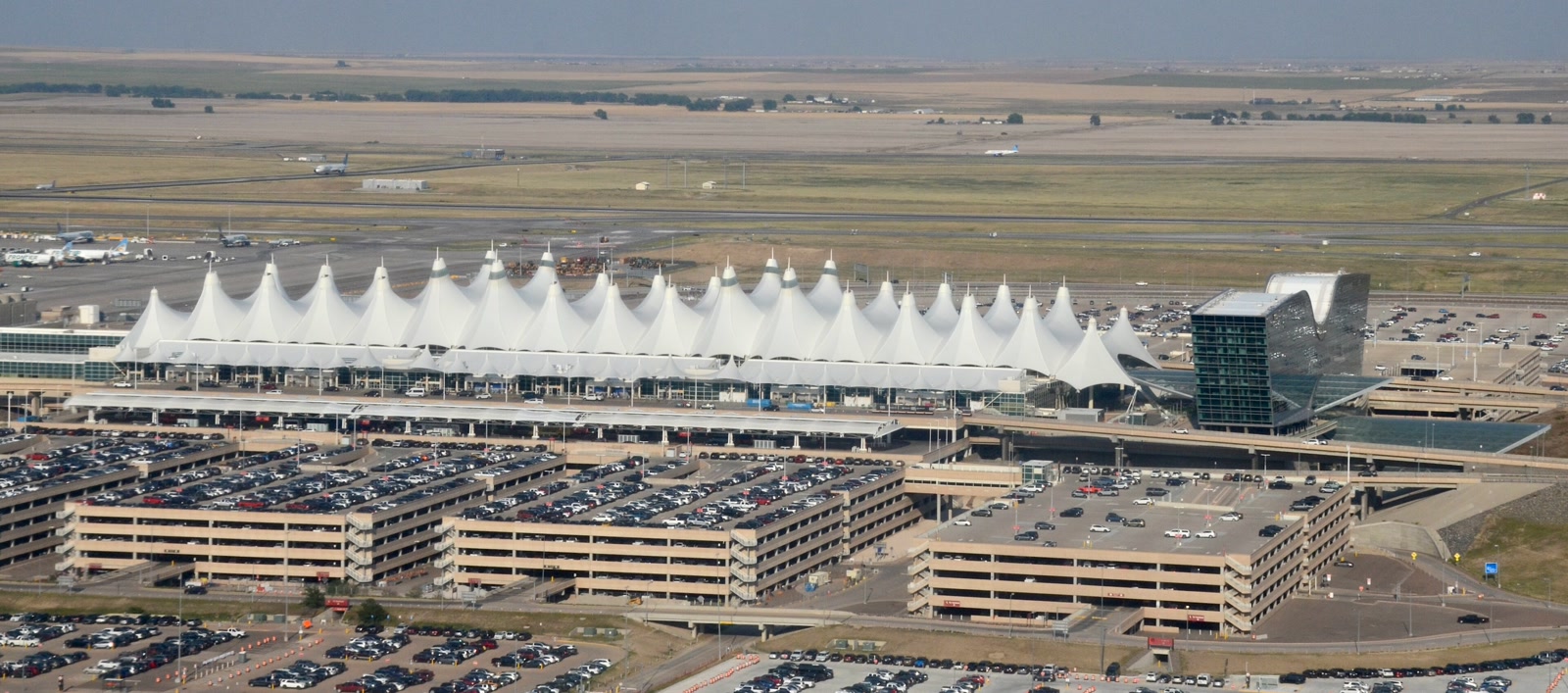
The terminal itself is the white tent-roofed Jeppesen Terminal, one of the most recognisable airport buildings in the country. Everything — every airline, every domestic arrival — funnels through it, and the train into town leaves from the Transit Center attached to it. That single-airport reality is actually good news for the traveller who plans ahead: there is only one set of routes to learn, one hub system to understand, and one ground-transport decision to make. The complexity in Denver is not in the airport. It is in the calendar, because the city has two separate peak seasons pulling fares in opposite directions, and the cheap months sit in the gaps between them.
The Fare Calendar: Ski Season, Summer and the Two Cheap Windows
Denver’s fare calendar is driven by two peaks, and understanding them is the whole trick. The first peak is ski season, roughly mid-December through March, when flights fill with skiers heading for the resorts up I-70. The second peak is summer, June through August, when the mountains fill with hikers, the city fills with families, and transatlantic demand adds pressure on top. Between those peaks sit the two cheap windows: January and February on one side, September and early October on the other.
The sources disagree about which single month is cheapest, and this guide is not going to pretend otherwise. Momondo’s data points to January as the cheapest month. FlightsFinder’s points to February. Cheapflights and Expedia point to September — Expedia’s figures put September roughly 9% below the yearly average. Rather than picking one of these and calling the others wrong, the honest reading is that both windows are real: January and February are cheapest because the holiday crowds have gone and the cold has set in, and September and early October are cheapest because the summer crowds have gone and the ski season has not started. If your dates are flexible, either window works. If you can only pick one, February is typically the single cheapest month inside the winter window, and September is the cheapest inside the autumn one — but the difference between the two windows is small, and the difference between either window and the peaks is large.
The expensive months need no such hedging. The second half of December is the most expensive time to fly to Denver, with Christmas and New Year arriving together, and fares stay high through the ski season until March. Summer is the other peak: June through August, when family travel and mountain tourism push demand up across the board. Thanksgiving week is the most expensive single week of the year, as it is almost everywhere in the United States. The shoulder months — April and May on one side, late October and early November on the other — sit in between: not cheap, not punishing, and often the best compromise if you want decent weather without peak fares. The first week of January is still expensive, by the way — New Year’s travel demand has not cleared yet — so the winter cheap window really starts in the second week.
The Booking Window: How Far Ahead to Book (and Why the Answers Disagree)
The booking window is the second place where the fare sites disagree with each other, and again the disagreement is the useful part. Momondo says the cheapest fares to Denver appear about 85 days out. Cheapflights says 68 days. Expedia says 28 days ahead for domestic flights. One blog cites a rule of about 47 days — six to seven weeks. Four sources, four different numbers, and none of them is lying: each one measured a different set of routes over a different period, and the “best” day to book moves with demand. Anyone who gives you a single magic number for Denver is selling certainty that does not exist.
The consensus across those sources is a range, and the range is what this guide to flights to Denver, Colorado recommends: roughly one to three months out, with the sweet spot around thirty to sixty days before departure. Book inside that window and you are in the zone where the airline has finished adjusting the price to demand but the cheap seats have not yet sold out. Book much earlier and you pay the opening price, which is rarely the lowest. Book in the last two weeks and you pay the last-minute price, which is almost never the lowest. The exception, as always, is the peak windows: ski holidays, Christmas and Thanksgiving should be booked several months out, because the cheap seats on those dates go first and do not come back. If your dates are fixed around Christmas, the booking window matters more than the flying month — there is no cheap month to fly in the second half of December, only an early booking.
Set a fare alert on Google Flights for your route and watch it for a week before you buy. When the alert shows a fare you would be happy to pay, book it and stop watching. The alert does two jobs at once: it tells you what the route actually costs right now, and it stops you from checking fares every day, which is how people talk themselves into waiting too long. One more thing the alert cannot do: it cannot fix a fare that was already expensive because you picked the wrong month. The calendar comes first, the booking window second, and no amount of clever timing rescues a Christmas-week flight bought in November.
Fly Midweek: Tuesday, Wednesday and the Weekend Premium
The cheapest days to fly to Denver are Tuesday and Wednesday. This is the one part of the fare puzzle where the sources actually agree: momondo, FlightsFinder and the fare blogs all point to the same two days. Midweek demand is the lowest of the week — business travellers fly Monday and Friday, leisure travellers fly Friday and Sunday, and Tuesday and Wednesday sit in the gap between them. Sunday is the most expensive day to fly in most datasets, and Thursday and Friday are close behind it. One source notes that Thursday can sometimes save money against Sunday, which is true in the narrow sense that almost anything is cheaper than Sunday — but Thursday is still a premium day against the midweek pair.
Saturday is the interesting exception, and it is worth knowing about. Weekend leisure travel peaks on Friday and Sunday, so a Saturday flight can be nearly as cheap as a midweek one, especially on routes where the Saturday crowd is thin. If Tuesday and Wednesday do not work for your schedule, Saturday is the next best thing to try before you settle for a Friday or a Sunday. The pattern is simple enough to remember: Tuesday and Wednesday cheapest, Saturday often nearly as good, Thursday and Friday dearest, Sunday the most expensive of all. The midweek rule is also the easiest lever to use, because it stacks with the others — a Tuesday flight in February, booked six weeks out, is the cheapest version of this trip, and a Friday flight in December, booked the week before, is the most expensive version of the same trip.
The Hub Carriers: United, Southwest and Frontier at DEN
The cheapest airline to Denver depends on where you are flying from, because Denver’s hub system is concentrated. United runs its hub at DEN and flies the most routes out of it — if you are flying from a United hub city, flights to Denver are usually your cheapest and most direct option. Southwest is the other big presence, with Denver as one of its largest bases, and Frontier is based at DEN too, with its low headline fares on the routes it serves. The hub carrier on your route almost always has the most frequencies and the most competitive fares, so the first search to run is the one on the carrier that dominates your home airport.
Southwest deserves a note here, because the advice about it that still circulates is out of date. Southwest fares now appear on Google Flights and Expedia — the old line that Southwest never shows on aggregators is dead, and any guide that still says it is describing the world before 2026. What has not changed is the Low Fare Calendar, which shows a whole month of fares at once and is still only on southwest.com. If you are flexible on dates, run the Low Fare Calendar first and the aggregators second: the calendar shows you the cheap days, and the aggregators show you what everyone else is charging on those days. Frontier’s headline fares are often the lowest on the board, but they are also the fares where the bag rules bite hardest, which is the next section — a Frontier fare with a bag added is frequently not the cheapest fare on the route at all.
The Bag Traps: Basic Economy and the Southwest Change
This is the section that decides whether your cheap fare stays cheap. The 2026 bag rules changed the maths on the two fares that used to be the safe cheap picks, and the trap is that the fare you buy does not include what you assume it includes. Check the bag rules on the exact fare you are buying before you pay — it is the single line that separates a cheap ticket from an expensive one.
Southwest ended free checked bags for tickets booked on or after 28 May 2025, and raised the fees again on 9 April 2026. Checked bags now cost extra on Basic, Choice and Choice Preferred fares, and the fee you pay depends on when the ticket was booked, not when you fly — so check southwest.com for the fee that applies to your booking date. The only fare that still includes two free checked bags is Choice Extra, along with A-List Preferred status and a few other exceptions. A carry-on bag and a personal item are still free on every Southwest fare, and Southwest now assigns seats instead of open seating. The old rule — Southwest means two free bags — is dead, and any guide that still says it is describing 2024.
United Basic Economy is the sharper trap. On most domestic and short-haul routes it is personal-item-only: no free carry-on in the overhead bin. Bring a full-size carry-on to the gate and United checks it for a fee, and the gate charge is the most expensive way to pay for it — cheaper if you prepay, more at the airport counter, most at the gate. The exceptions are flights to South America, across the Atlantic and across the Pacific, where a carry-on is included, and Premier status or a qualifying United card, which restores it. Delta and American basic economy do include a carry-on, which is the comparison that matters: on the same route, the cheapest United fare and the cheapest Delta fare are not the same product, and the United one can cost more once the bag is counted. Frontier’s basic fares work the same way — the headline fare buys you a seat and a personal item, and everything else is an add-on. Add the bag before you compare the fares, not after.
The Ride Into Town: The A Line Train vs a Taxi
Denver’s airport sits about 25 miles from downtown, and the ride in is part of the fare whether you count it or not. The cheapest way in is the train. The RTD A Line — the University of Colorado A Line, known locally as the Train to the Plane — runs from the airport’s Transit Center to Union Station in about 37 minutes, every 15 minutes at peak times and every 30 minutes off-peak. The fare is a $10 Airport Day Pass, confirmed on RTD’s own fare page, and the pass covers unlimited RTD bus and light-rail travel for the rest of the day as well. That last detail is what makes the train the clear winner for most travellers: the $10 does not just buy the airport ride, it buys your whole first day of getting around Denver. Youth 19 and under and active-duty military ride free on all RTD services.

The taxi is the predictable alternative, and its price is published, not negotiated. Denver International Airport posts a flat fare of $72.04 to downtown Denver (Zone A), one way, with the airport access fee already included. Taxis load around the clock from the terminal and need no booking, and the flat fare does not change with traffic or the time of day — which is exactly why it is worth knowing. Rideshare sits between the two on price and varies with demand, so check the app quote before you commit; on a surge evening a rideshare can cost more than the taxi flat fare. The total-cost trap from the New York guide applies here in miniature: a flight that lands a little cheaper but forces a $72 taxi instead of a $10 train is not the cheaper trip. Add the ride to the fare before you choose the flight, and the train wins for almost everyone travelling light. If you are landing with ski bags and three other people, the taxi maths changes — split four ways, the flat fare starts to look reasonable, and the train’s advantage shrinks to nothing.
Ski Weekends and Holidays: When Every Rule Breaks
December and Thanksgiving week break every rule in this guide, and ski weekends bend most of the rest. Thanksgiving week is the busiest travel week of the year in the United States, and the fares reflect it: the Wednesday before and the Sunday after are the peak, and the cheap days to fly — Tuesday and Wednesday — are the days everyone is already travelling. Book Thanksgiving several months out, fly on the Monday or the Saturday if you can, and accept that the fare will not be cheap. There is no trick that makes Thanksgiving week cheap; there is only an early booking that makes it less expensive.
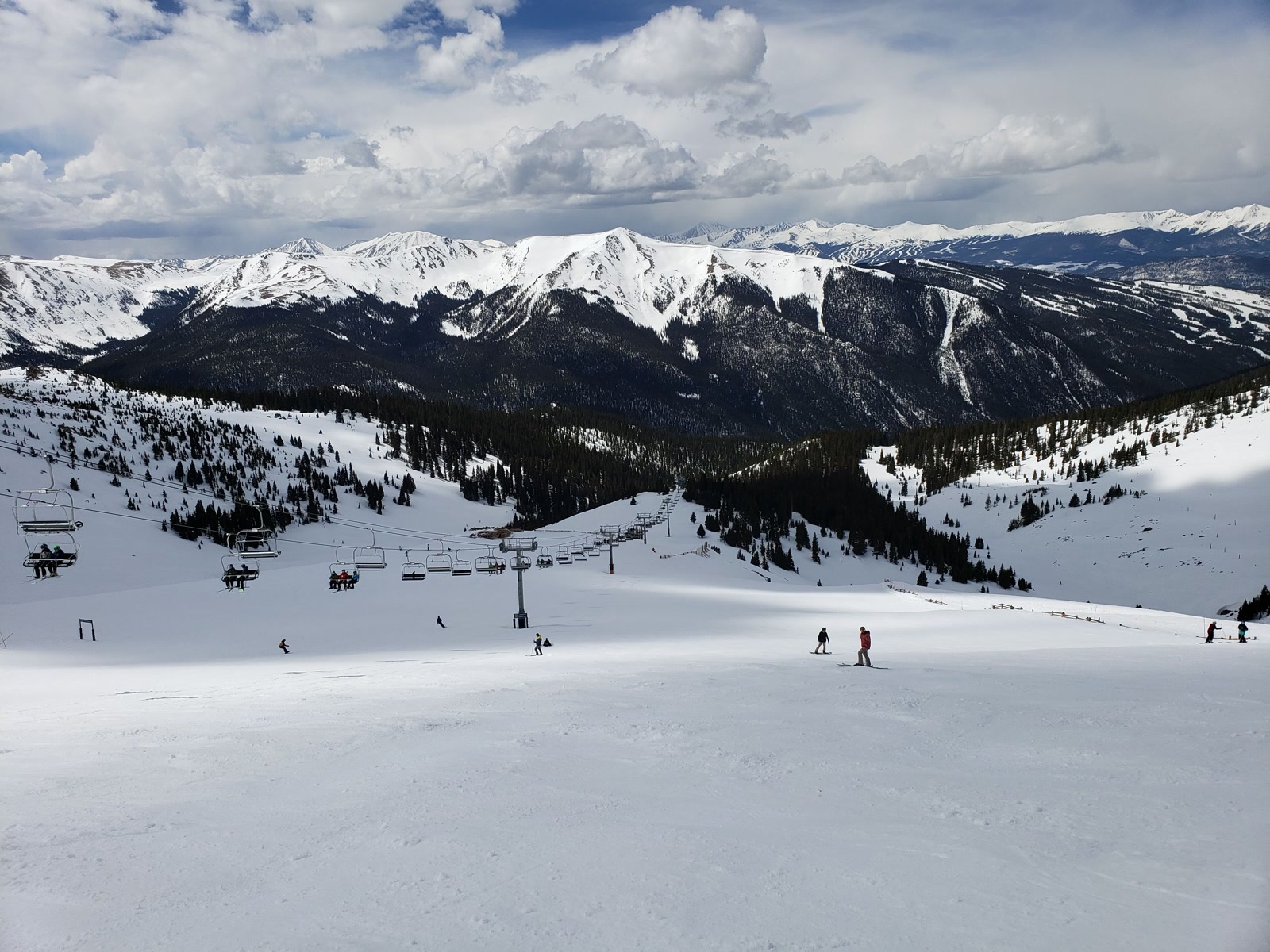
Ski season is the longer problem. From mid-December through March, Denver is the gateway to the resorts up I-70 — Loveland, Arapahoe Basin and the rest — and the Friday-to-Sunday ski-weekend pattern pushes fares up on exactly the days the midweek rule says to avoid. A Friday flight into Denver in February is a ski flight whether you are skiing or not, and it is priced like one. If your trip is built around a ski weekend, book months ahead and search all three of the hub carriers, because the fare gap between them is widest when demand is highest. If your dates are flexible, the week after New Year is the cheapest window of the ski season, and the last weekends of the season in April can be surprisingly reasonable as the snow softens and the crowds thin. One more December warning, about the airport rather than the fares: the Christmas period is when the long drive from the airport bites hardest, because holiday traffic on Peña Boulevard slows every option — train included, since the roads to the station clog too. Allow extra time at both ends in the holiday weeks.
Before You Pay: The Denver Flight Checklist
Run through this list before you pay for any flight to Denver, and the traps in this guide stop being traps. First, check the month: January or February, or September or early October, booked one to three months out, unless your dates are fixed around December, Thanksgiving or a ski weekend, in which case book months ahead. Second, fly Tuesday or Wednesday — Saturday if midweek does not work, never Sunday if you can avoid it. Third, check the bag rules on the exact fare you are buying — Southwest’s checked-bag fee for your booking date, United Basic Economy’s personal-item-only rule, and whether Delta or American include the carry-on for the same money. Fourth, add the ride into town to the fare: the $10 Airport Day Pass on the A Line against the $72.04 taxi flat fare to downtown. Fifth, check your ID: a REAL ID or another accepted form of identification is required for domestic flights — check the TSA’s current list before travel rather than assuming your licence qualifies.

Once you have booked, the flight is the easy part — and the arrival is a pleasure in itself, because the A Line drops you at Union Station, and the first room you walk into is the Great Hall, with its arched windows and the Terminal Bar under the chandeliers. It is a reminder that Denver rewards the traveller who arrives by train: the city centre starts the moment you step off the platform.
What is the cheapest month to fly to Denver? There is no single cheapest month — the sources disagree, and the honest answer is two windows. January and February are cheapest in winter, September and early October are cheapest in autumn. February is typically the single cheapest month inside the winter window; September is the cheapest inside the autumn one. Mid-December through March and June through August are the expensive peaks.
How far in advance should I book a flight to Denver? Roughly one to three months ahead for a normal trip, with thirty to sixty days the usual sweet spot. The fare sites disagree — one says 85 days, another 68, another 28 — so treat the window as a range, not a magic number. Book several months ahead for December, Thanksgiving week and ski holidays.
Is there more than one airport in Denver? No. Denver International Airport is the only commercial airport serving the city — at 53 square miles, the largest airport in the United States by land area, about 25 miles northeast of downtown. There is no cheaper-airport trick here; the savings come from the calendar, the booking window and the fare rules.
How do I get from Denver airport to downtown? The A Line train runs to Union Station in about 37 minutes on a $10 Airport Day Pass, which also covers unlimited RTD bus and light-rail travel for the rest of the day. A taxi costs a flat $72.04 to downtown. For most travellers the train is the obvious choice; for a group of four with ski bags, the taxi split four ways starts to make sense.