
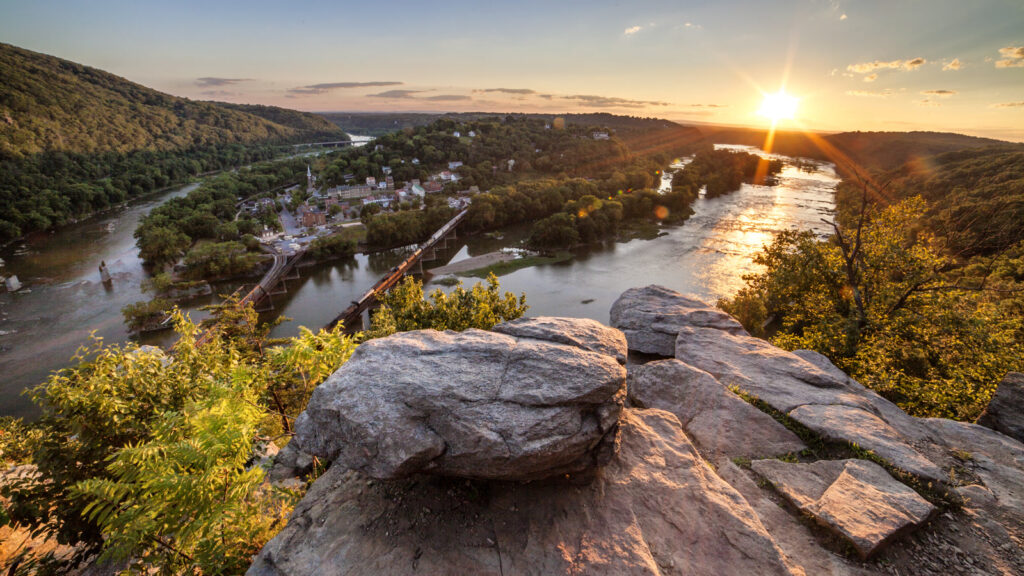
Harpers Ferry, West Virginia is the rare day trip that gives you three things at once: a 19th-century town you can walk in an hour, two rivers meeting at your feet, and a hike with one of the best views on the East Coast. It sits about 66 miles from Washington, DC, where the Shenandoah River joins the Potomac, and the town itself is the park — the streets, the museums and the trails are all part of Harpers Ferry National Historical Park.
Read this before you plan the hike, though. The footbridge to Maryland Heights — the trail to that famous overlook — is closed this fall for safety repairs, and the Park Service advises considering other trails. The town, the museums and the rivers are all open, and the trip is still worth a full day. But if the overlook was your main reason for coming, read the Maryland Heights section below first, because the route has changed.
Before You Go: The Maryland Heights Closure
The Goodloe Byron Memorial Footbridge, which carries walkers from Lower Town to the C&O Canal towpath and the Maryland Heights trail, is closed this fall while the bridge deck is repaired. That closure also affects the Appalachian Trail and the Potomac Heritage Trail through the park. A very limited shuttle runs between the Visitor Center and C&O Canal Lock 34, but the Park Service’s own advice is to consider other trails when possible.
Two more things are closed or altered right now. The southern loop of the Schoolhouse Ridge South trail is closed because of sinkholes, and the Lower Town Information Center is not staffed by rangers (maps are available at the “Place in Time” exhibit). Four exhibit spaces are also closed: the Master Armorer’s Quarters, Black Voices/African American History, the Civil War Museum, and Harper House. The Visitor Center, the hiking trails and the parking lots are open, and there is no shutdown closure in force.
None of this ruins the trip. It changes the shape of it: Lower Town and the rivers carry the day, and the hike becomes a question to settle on arrival, not a plan to lock in at home. Check the Park Service conditions page before you go, because the bridge work is a fall repair and the position may change.
How Much Time Harpers Ferry Really Needs
Half a day is enough to walk Lower Town, stand at the rivers’ meeting point, and go inside two or three museums. A full day is the right amount for most visitors: Lower Town in the morning, a hike or a riverside walk in the afternoon, and the town’s shops and cafes in between. An overnight stay earns its keep only if you want a second, slower day — the museums at walking pace, the Bolivar Heights battlefield walk, and the morning light on the rivers before the day-trippers arrive.
The practical limit on a day trip is the shuttle. It starts at 9:00 AM and the last bus leaves Lower Town at 5:30 PM in standard time, so a day tripper gets about eight hours on the ground. That is plenty for Lower Town and one trail, and not enough for everything. Arrive with the first shuttle and you get the town almost to yourself for an hour.
Start in Lower Town: The Streets, the Rivers’ Meeting Point, and the Museums Worth Entering
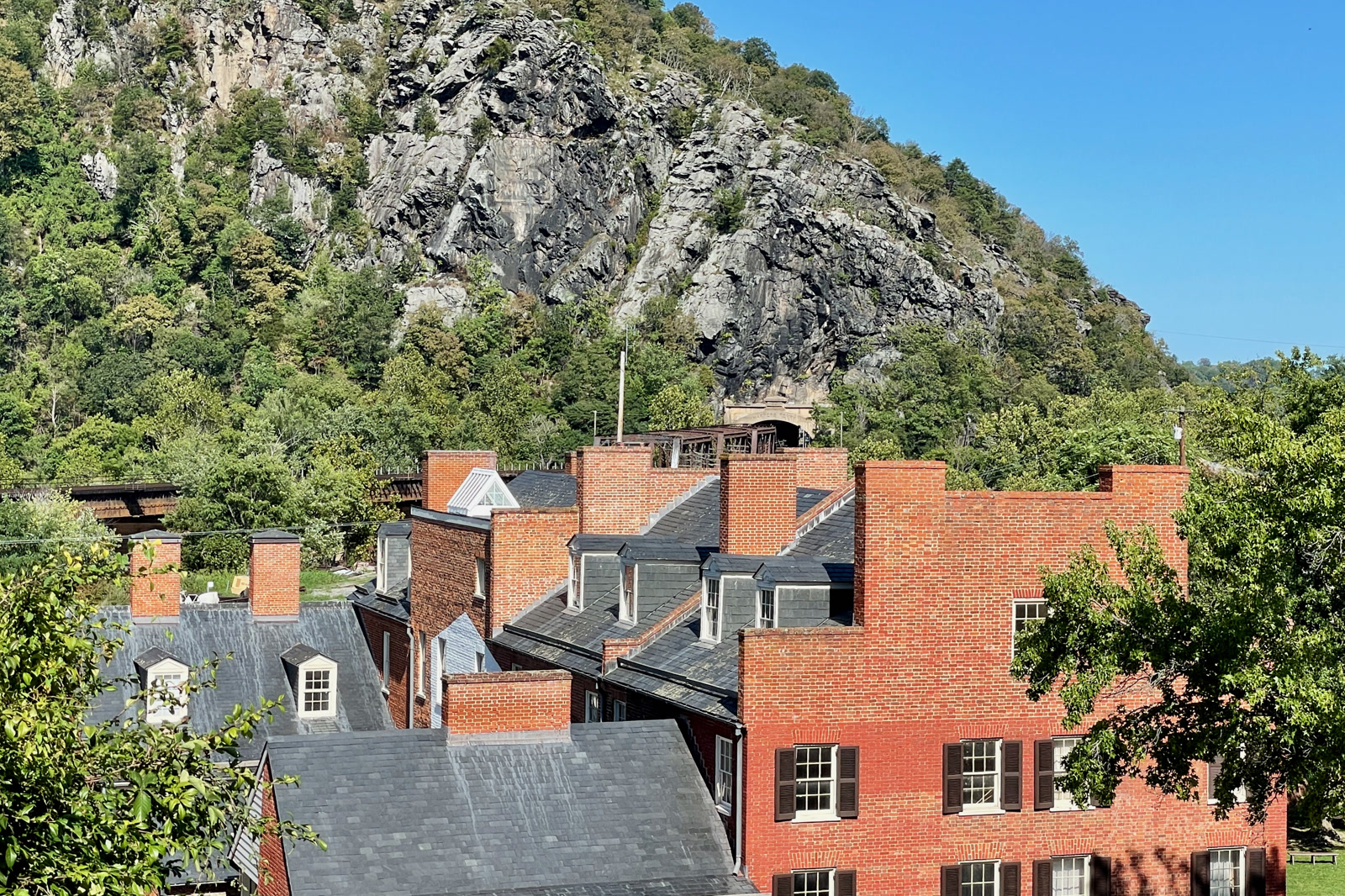
Lower Town is where the park begins. The streets are the 1800s town itself — brick storefronts, stone steps, and the railroad running through the middle of it — and the museums sit inside the original buildings rather than in a separate visitor complex. The Visitor Center is up the hill at 171 Shoreline Drive, and the shuttle brings you down into Lower Town every 10 to 15 minutes.
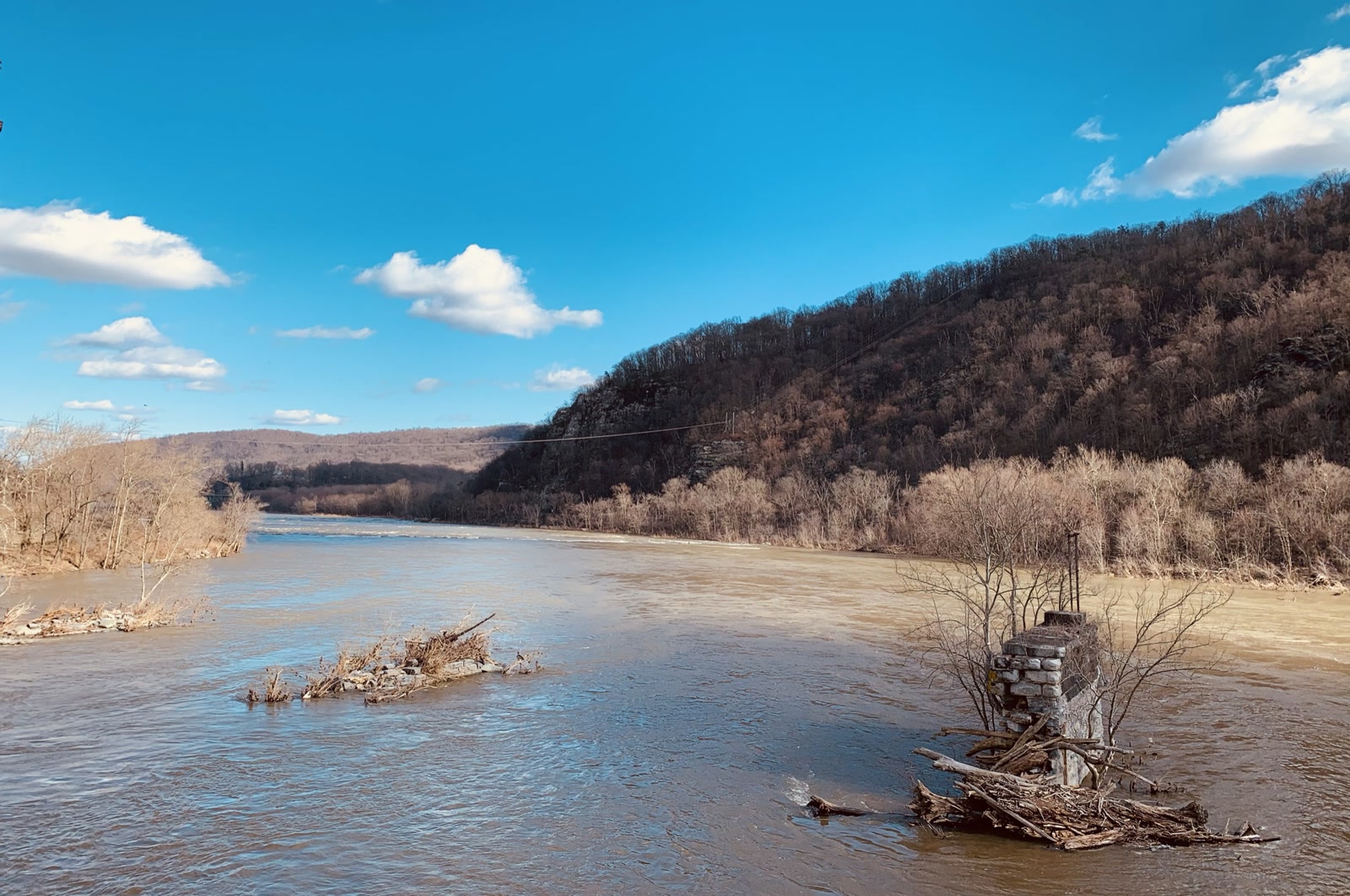
Walk to The Point first. It is the place where the Potomac and the Shenandoah meet, with the Blue Ridge Mountains and three states in the view, reached by a loose gravel path about 270 feet from the end of Shenandoah Street, past John Brown’s Fort and under the railroad tracks. It is the single best orientation point in the park: from there you can see why the town exists at all, at the junction of two rivers and the gap in the mountains.
Then go inside. The exhibits currently open include John Brown’s Fort, the John Brown Museum, the Industry Museum, the Meriwether Lewis exhibit, the 1862 Battle of Harpers Ferry, Storer College and the Niagara Movement, and “A Place in Time,” which is where you will find maps while the Information Center is unstaffed. If you have time for only three, make them the Fort, the Industry Museum, and the Storer College exhibit — the raid, the armory that made the town, and the Black history that most visitors miss.
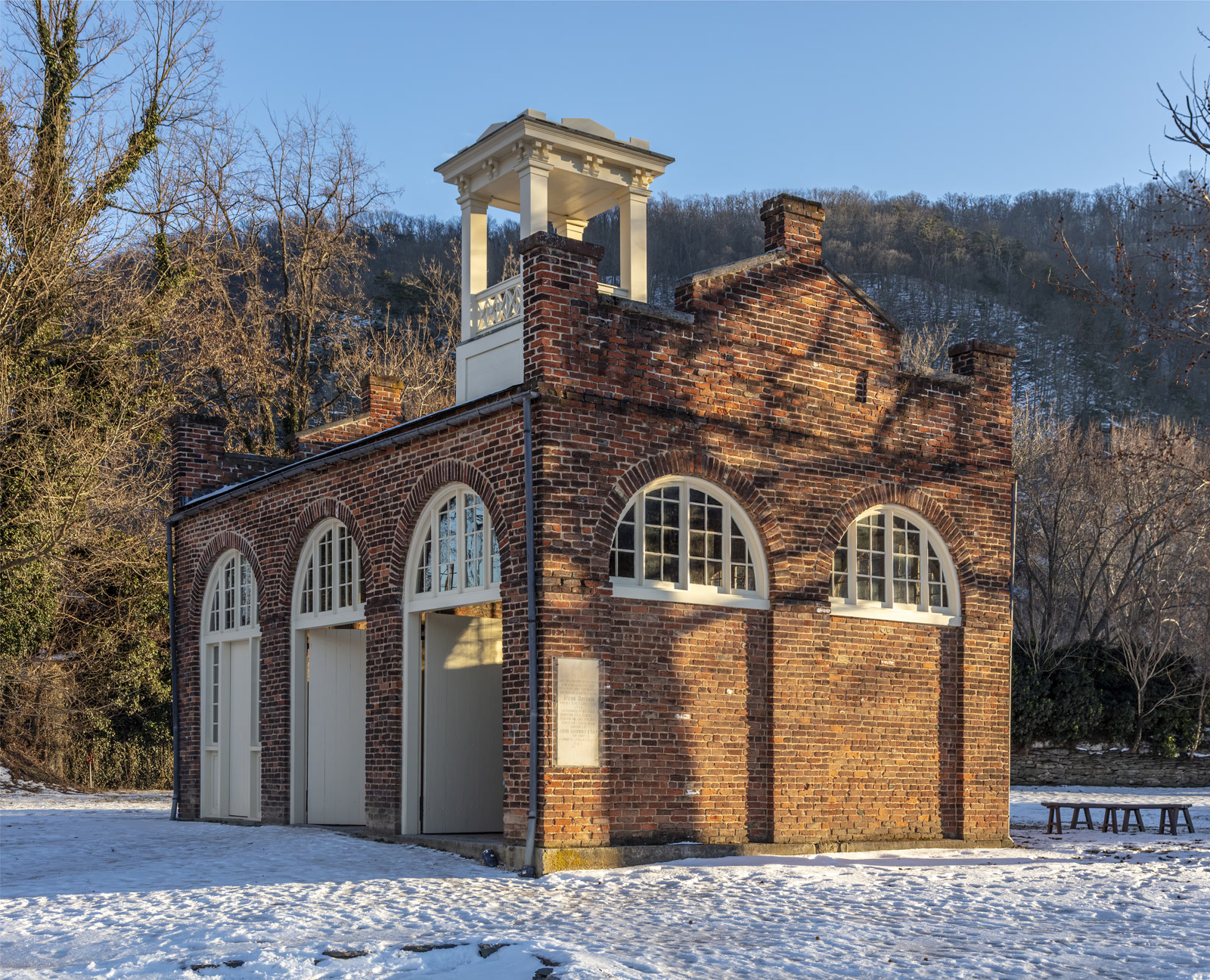
John Brown’s Fort is the 1848 Armory fire engine and guard house, the building where John Brown made his last stand in the 1859 raid. It was moved back to Lower Town in 1968 to within 150 feet of its original location, and you reach it on a loose gravel path from the end of Shenandoah Street. It is small — one room — and that is the point. The raid that helped push the country toward civil war ended in a building the size of a garage.
Maryland Heights: The Hike, the Overlook, and Who Should Skip It
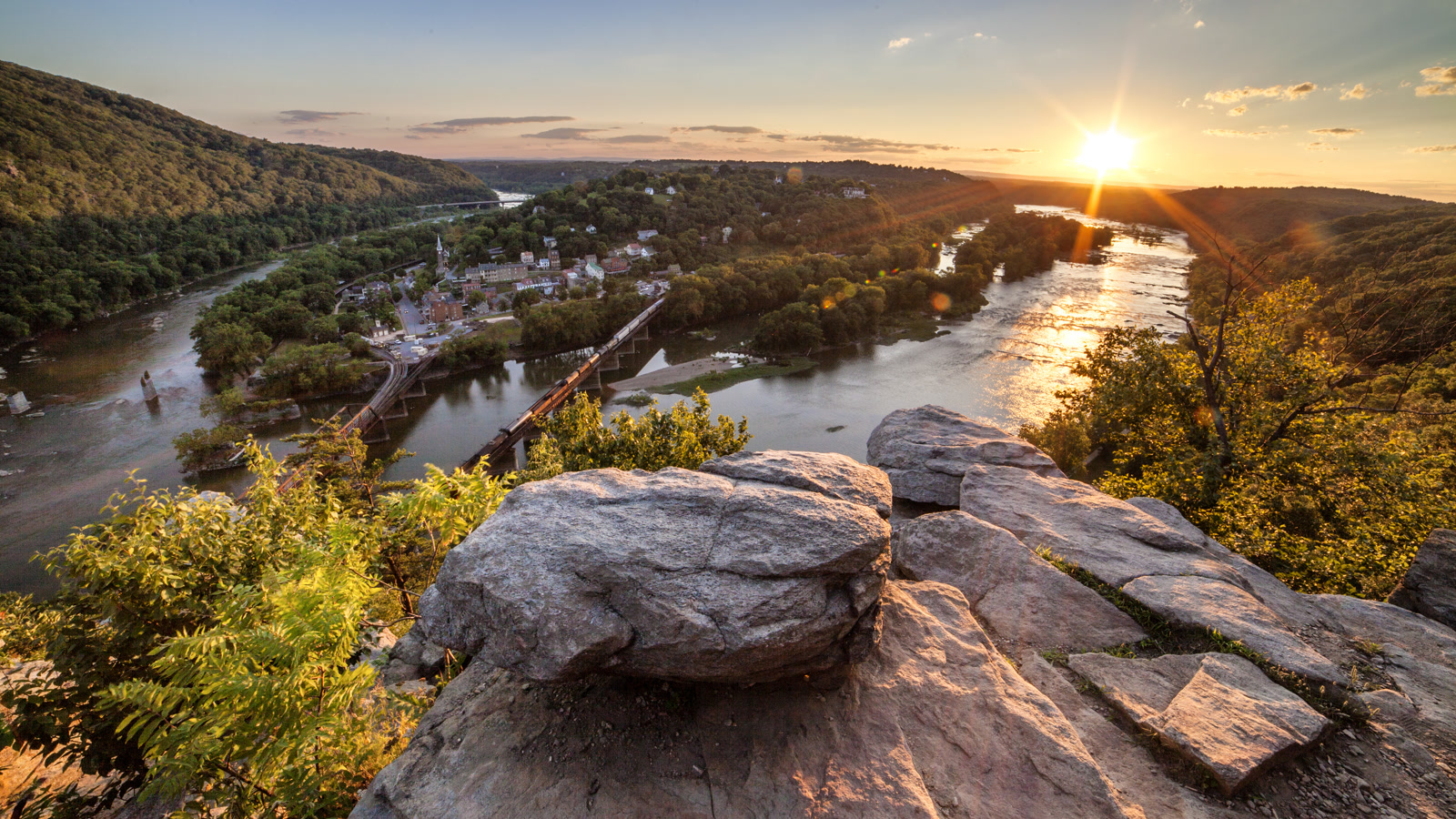
The Maryland Heights overlook is the view everyone comes for: Harpers Ferry laid out below you, the two rivers joining, the railroad bridge crossing the gap. From Lower Town the overlook route is 4.5 miles round trip with 1,154 feet of climbing, rated Moderate, in about 3.4 hours. Adding the Stone Fort makes it 6.2 miles and 4.6 hours. The full route from the Visitor Center, taking in the overlook and the Stone Fort, is 9.5 miles, 1,771 feet, rated Strenuous, in about 6.5 hours. The park has 22 miles of hiking trails in total.
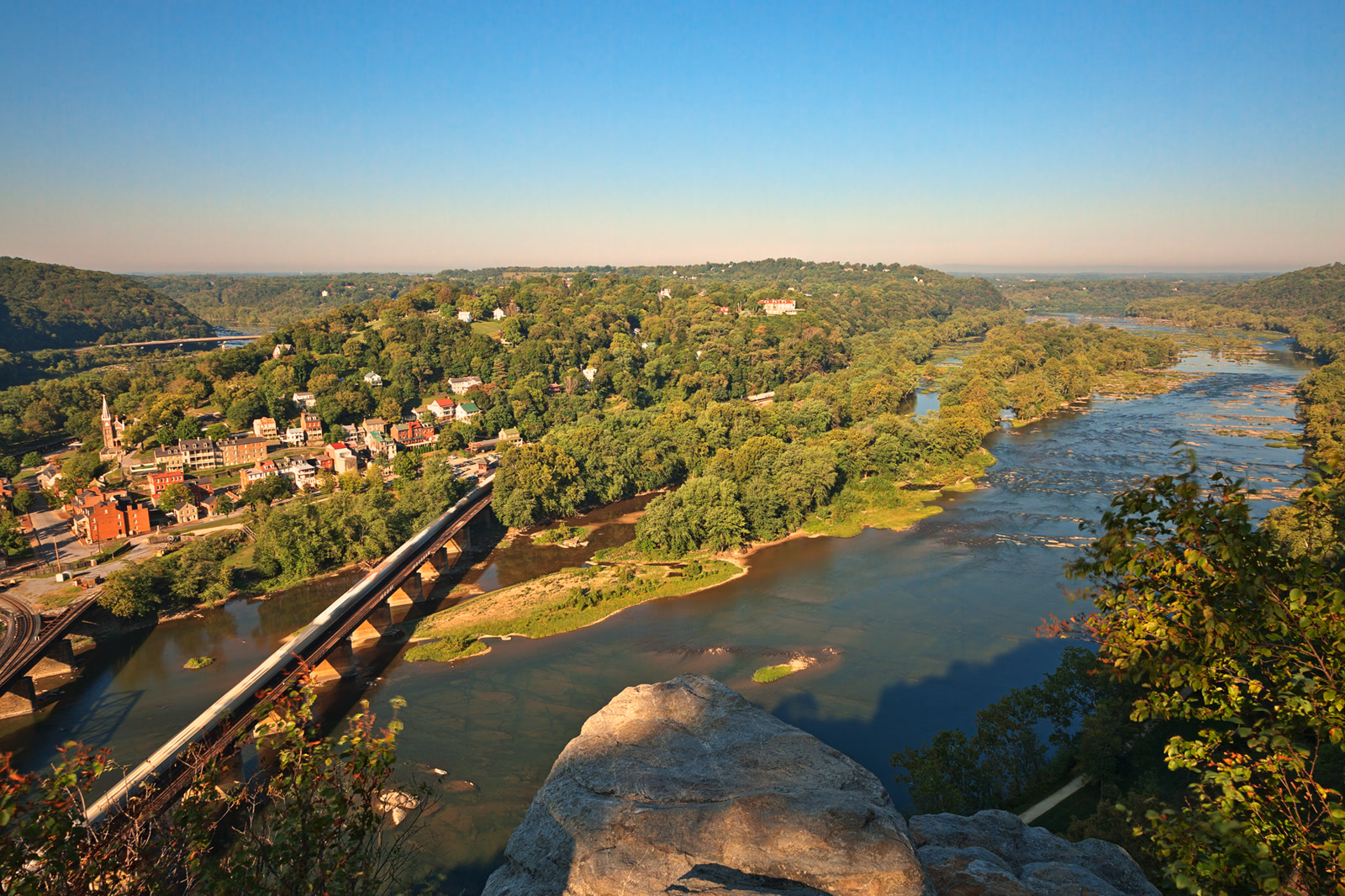
But the route as described is not currently open in the normal way, because the footbridge is closed. Until the bridge reopens, treat the overlook as a maybe, not a plan: check the conditions page on the morning you travel, ask at the Visitor Center, and have a backup. The backup is not a lesser day — the riverside walk from the River Access parking lot, the Bolivar Heights ground, and the Lower Town museums fill a full afternoon, and the town is quieter without the hikers.
Who should skip it even when it reopens: anyone with bad knees, anyone with less than four hours to spare, and anyone visiting with small children. The climb is steep, rocky in places, and exposed at the top. Who should do it: anyone who has done a moderate hike before and has a full day. Go early — the trail is the park’s most popular, and the overlook is crowded by midday on weekends.
The History in One Walk
Harpers Ferry’s history fits in a single walk, and it is worth doing in order. The town began as an armory town: the federal government built guns here, and the water power of two rivers ran the works. Meriwether Lewis came through for supplies before the expedition west. In 1859 John Brown seized the armory in a raid meant to start a slave uprising, and was captured in the fire engine house that now bears his name. Two years later the town changed hands eight times in the Civil War, and the battle of 1862 is still the largest surrender of Union troops in the war.
After the war the town became something else again: Storer College, one of the first schools for formerly enslaved people, opened here, and the Niagara Movement — the forerunner of the NAACP — met on its campus in 1906. That is the history the Storer College exhibit tells, and it is the part of Harpers Ferry most visitors never hear about. Allow an hour for the museums if you want the story straight, and half that if you only want the Fort and the streets.
What It Costs
Harpers Ferry is a cheap day out, and the park fee covers almost everything. The entrance fee is $20 per private vehicle, $15 per motorcycle, or $10 per person on foot or by bicycle, valid for 3 consecutive days. Parking is included in the fee — there is no separate parking charge — and so is the shuttle, the ranger programs, and entry to the museums, exhibits and trails. You pay at the Entrance Station near the Visitor Center, at Bolivar Heights, at the train station, or at the River Access parking lot; credit cards are accepted only at the Entrance Station, and you can also pay online in advance.
| Cost (per person, 2 adults sharing a car) | Amount |
|---|---|
| Park entrance fee ($20 per vehicle ÷ 2) | $10.00 |
| Parking at the Visitor Center lot | Included |
| Shuttle to Lower Town | Included |
| Museums and exhibits | Included |
| Food (estimate — cafes and restaurants in Lower Town and Bolivar) | $40–$60 |
| Total for the day | $50–$70 |
Transport to Harpers Ferry is not in that total. The drive from Washington, DC is about 66 miles via I-495, I-270 through Frederick, and US-340; the Park Service does not publish a drive time, so do not plan on one. Train fares are not fixed — MARC and Amtrak prices vary — so check the current fare before you travel rather than budgeting from an old figure.
Getting There from Washington DC
Driving is the simplest option: about 66 miles from Washington, DC, via I-495 north to I-270 north to Frederick, then US-340 south into town. Do not drive into Lower Town and expect to park — Lower Town parking is extremely limited and often fills up early, especially on weekends. Park at the Visitor Center lot instead. It holds about 1,000 cars, including 35 oversized spaces, and the shuttle runs from there into Lower Town every 10 to 15 minutes. Street parking in town is metered and does not count toward your entrance fee. Smaller lots at the River Access (36 spaces) and Bolivar Heights (16 spaces) fill even earlier.
The train is the better option if you do not want to drive. MARC’s Brunswick Line runs Monday to Friday only, from Washington Union Station to Martinsburg, West Virginia, stopping at Harpers Ferry. Tickets are sold through the CharmPass app, ticket vending machines, or on board for cash. Seniors, passengers with disabilities and students get 50% off, and children under 6 ride free with a full-fare passenger. Check the current fare in the app before you travel — the published fare charts are old and the West Virginia surcharge is not clearly labelled, so no fare figure in this article should be treated as current.
Amtrak also serves Harpers Ferry, on the Floridian — the daily Chicago to Miami train via Pittsburgh and Washington, DC. Note the name: the Park Service’s directions page still calls it the Capitol Limited, but Amtrak’s own site shows the service is now the Floridian. The station is unstaffed, a platform with a shelter at Potomac and Shenandoah Streets, with no elevator, restrooms, WiFi or ticketing kiosks. Arrive at least 30 minutes before departure, and note that step-free access requires booking to or from Rockville or Martinsburg. Amtrak fares are dynamic by date, so no fixed fare is published. Greyhound does not currently stop in Harpers Ferry; the Park Service lists the Eastern Panhandle Transit Authority as the alternative.
Where to Stay If You Stay Overnight
There is no camping inside the park, and all eating, lodging and shopping are outside it, in Harpers Ferry and the neighbouring town of Bolivar. The Harpers Ferry–Bolivar merchants list includes the Light Horse Inn, Harpers Ferry Guest House, the 1799 Inn, Rockhaven B&B, Two Rivers Guest House, Cantuta Inn, The Town’s Inn, and the Clarion Inn and Quality Inn in Harpers Ferry, plus vacation rentals. No rates are published here — check the current price when you book, and book early for autumn weekends.
Two nearby towns are worth knowing about. Charles Town, a short drive away, has The Inn at Charles Town on Hollywood Drive, part of the Hollywood Casino at Charles Town Races. Shepherdstown, across the river in the other direction, has the Bavarian Inn and Brewing Company on Shepherd Grade Road, an 11-acre European-inspired resort overlooking the Potomac, and the Thomas Shepherd Inn on West German Street in the historic district. Both make a quieter overnight base than the town itself, and both are an easy drive back for a second morning in Lower Town.
When to Go
The park is open year-round, and the museums and Visitor Center keep the same hours in every season: 9:00 AM to 5:00 PM daily, closed only on Thanksgiving Day, Christmas Day and New Year’s Day. Trails and parking areas open 30 minutes before sunrise and close 30 minutes after sunset.
Fall is the popular season — the West Virginia tourism office names Harpers Ferry a peak-foliage spot — but no official source gives a peak date for the town itself, so do not plan a trip around a specific week. Weekends are the crowded time in any season: Lower Town parking fills early, and the shuttle queues grow by midday. Go on a weekday if you can, and go early in any case. Summer brings heat on the exposed trails and winter brings quiet; neither has official crowd or condition figures published, so the honest advice is to check the conditions page on the day and dress for the weather, not the season.
FAQ
How much does Harpers Ferry cost?
$20 per private vehicle, $15 per motorcycle, or $10 per person on foot or bicycle, valid for 3 consecutive days. Parking, the shuttle, ranger programs and the museums are all included. A day trip for one person sharing a car works out at about $50 to $70 including food.
How long is the Maryland Heights hike?
The overlook route from Lower Town is 4.5 miles round trip with 1,154 feet of climbing, about 3.4 hours, rated Moderate. With the Stone Fort it is 6.2 miles and 4.6 hours. But the footbridge to the trail is closed this fall, so check the Park Service conditions page before counting on it.
Is one day enough?
Yes, for most visitors. A full day covers Lower Town, the rivers’ meeting point, the museums and one trail, with the shuttle’s 9:00 AM to 5:30 PM window as the practical limit. Stay overnight only if you want a second, slower day.
Can you swim in the rivers?
The Park Service strongly discourages swimming in the Shenandoah and the Potomac — no designated swimming areas, no lifeguards, strong currents, deep holes and sharp rocks, and many people have drowned. Canoeing and kayaking are permitted from the River Access parking lot, with a Coast Guard-approved life jacket highly recommended. People with wet clothing are not permitted on the park shuttle.
How far is Harpers Ferry from Washington, DC?
About 66 miles by road. The Park Service does not publish a drive time. By train, MARC’s Brunswick Line runs Monday to Friday from Washington Union Station, and Amtrak’s Floridian stops daily.
The Short Version
Harpers Ferry, West Virginia is a full-day trip from Washington, DC: a 19th-century town at the meeting of two rivers, museums inside the original buildings, and a famous overlook hike. Go early, park at the Visitor Center, take the shuttle into Lower Town, stand at The Point, and go inside the Fort and the Industry Museum. Check the Maryland Heights bridge closure before you count on the hike, and remember the fee is $20 a car for three days with parking and the shuttle included.