
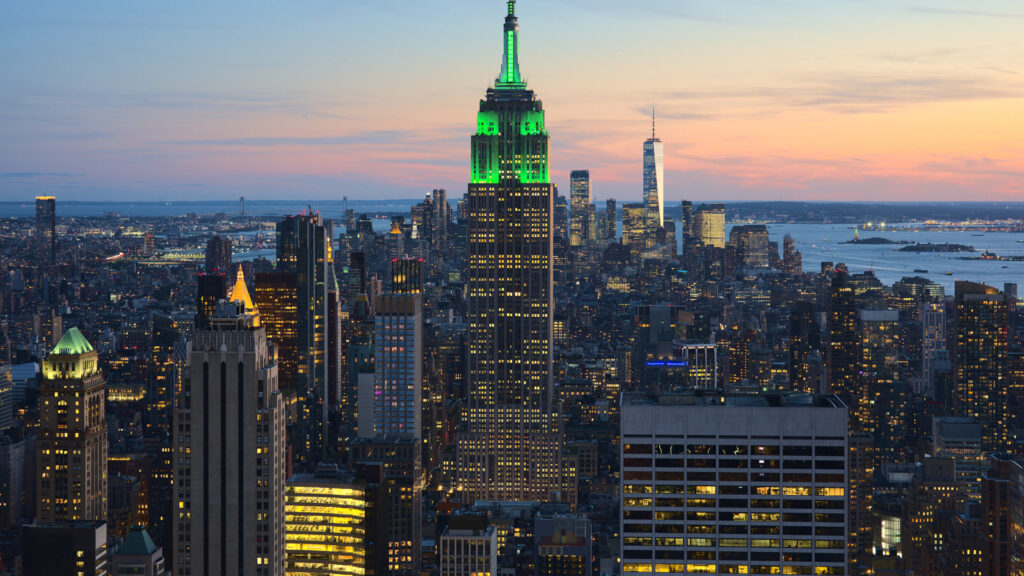
Forty-eight hours is enough for a first weekend in New York if you group the city by neighbourhood instead of chasing a checklist. This nyc weekend itinerary does exactly that: day one stays in Midtown and on the west side, day two belongs to the harbour and Brooklyn. You will see the skyline, the Statue of Liberty, Central Park, the 9/11 Memorial and the Brooklyn Bridge, and still have time for a proper dinner. Book the timed tickets first — the Statue ferry and one observation deck — and the rest falls into place.
The weekend rule: two days, three neighbourhoods
New York punishes the checklist. The city is too big, the distances are too long, and the queues at the famous spots eat whole mornings. The rule is simple: two days, three neighbourhoods. Day one covers Midtown and the west side, day two covers Lower Manhattan and Brooklyn, and almost nothing on this plan needs a subway ride longer than fifteen minutes.
Arrive Friday night and leave Sunday night. The first evening is for dropping your bags and an early night; the weekend starts properly at 8 a.m. on Saturday, when the decks open and the streets are still quiet.
Skip two things on purpose: a morning in Times Square — walk through it once, at night, when the lights do the work — and a second observation deck. Pick one, book the earliest slot, and spend the money you saved on dinner.
Day 1 morning: Midtown icons before the crowds
Start at 8 a.m. at Top of the Rock, the deck on top of Rockefeller Center. Timed admission starts at $42, and the first hour is the quietest of the day. There are three levels, the top one at 850 feet is open-air, and the view frames the Empire State Building with Central Park behind it — the one photograph every first-timer wants. It stays open until midnight, last entry 11:10 p.m., but the morning light is better and the queues are shorter.
The alternative is the Empire State Building itself: the 86th-floor open-air deck starts at $46, and adding the enclosed 102nd floor takes it to $81. It is the icon, and standing on it is the experience — but you cannot see the building you are standing on, so if the photograph matters, Top of the Rock wins. Choose one deck and move on: the second deck is the most common way a New York weekend loses half a day.
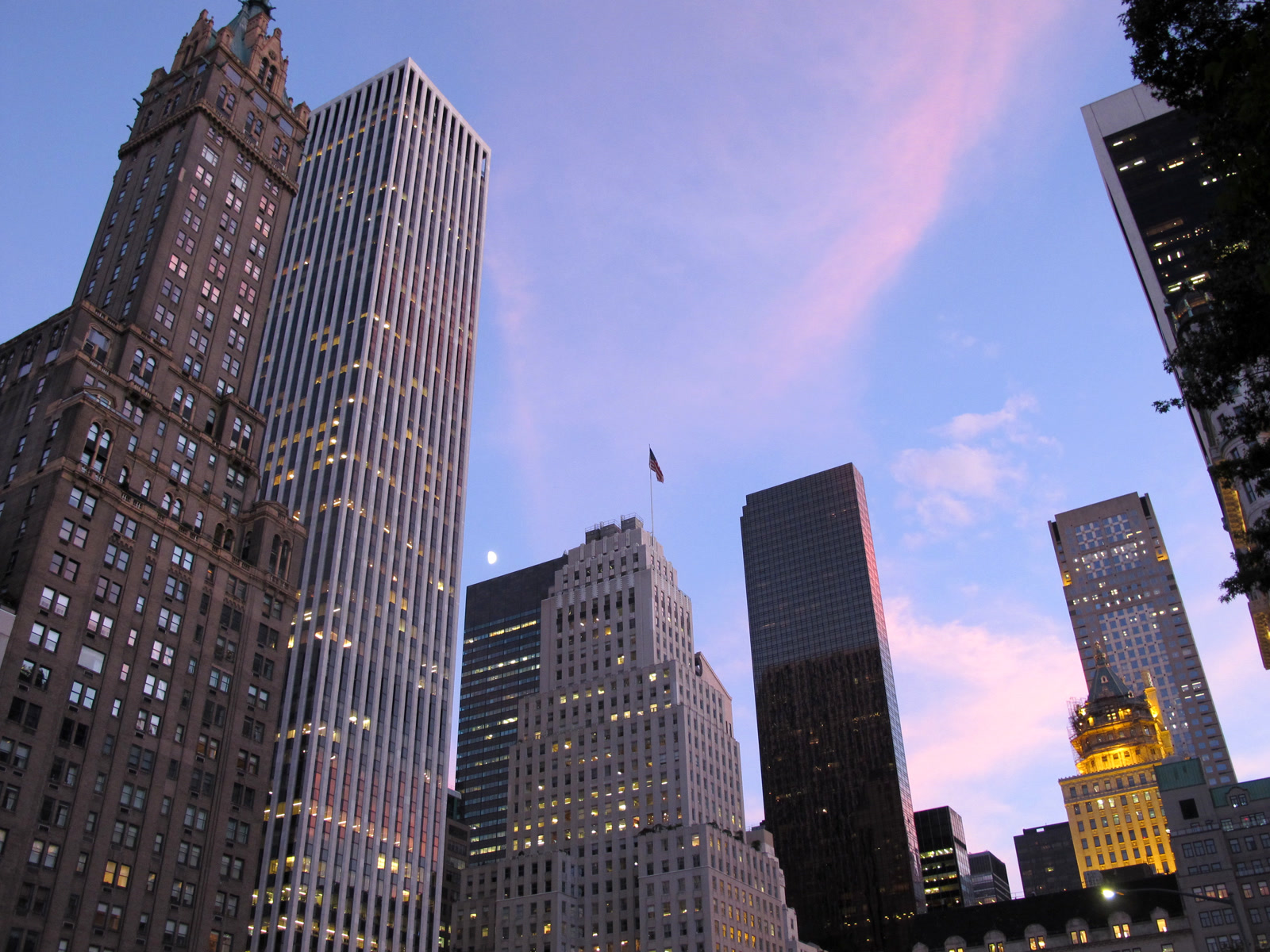
From Rockefeller Center, walk down Fifth Avenue: St Patrick’s Cathedral is free to enter, and the stretch to 42nd Street is the classic New York walk — shop windows, office towers, and the library lions at Bryant Park. The park is worth twenty minutes. By late morning, walk north to the southern edge of Central Park. You have covered the icons before the crowds thickened, and you have not yet paid for a subway ride.
Day 1 afternoon: Central Park, the High Line and Hudson Yards
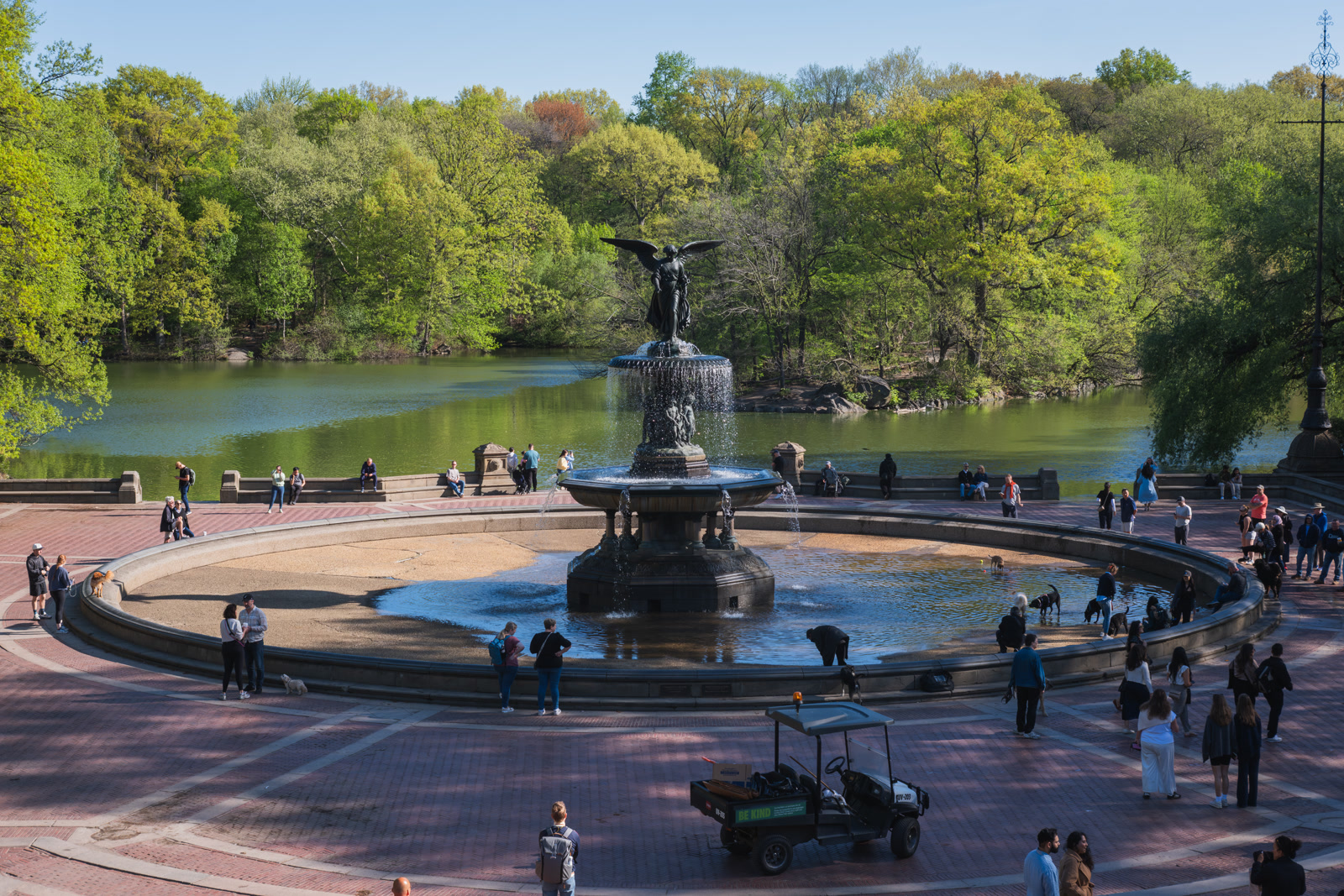
Central Park is 843 acres, and the mistake is trying to see all of it. Stay in the southern third. Enter at 59th Street and walk the Mall, the tree-lined path to Bethesda Terrace, the grand staircase down to the lake. The Bethesda Fountain, with the Angel of the Waters at its centre, is the most photographed spot in the park, and the terrace below it is the best place in the city to sit for ten minutes and do nothing. Bow Bridge, just north, is worth the short walk.
Leave the park on the west side and head for the High Line, the old elevated freight line turned into a garden walkway. It runs 1.45 miles from Gansevoort Street in the Meatpacking District north to Hudson Yards. Entry is free, it is open daily from 7 a.m. to 10 p.m. between April and November (7 a.m. to 8 p.m. in winter), and you need no ticket. Walk it north, slowly — the gardens, the art and the Hudson views are the point.
The High Line ends at Hudson Yards, where the weekend’s second big decision sits. The Vessel, the giant staircase sculpture in the plaza, reopened in October 2024 after three years closed. Climbing it needs a timed ticket: general admission starts at $14, flexible arrival at $20, plus a $2 fee, and under-fives go free. Only part of the upper levels is open, behind floor-to-ceiling mesh, and the climb takes about half an hour. Next door, Edge is the deck on the 100th floor of 30 Hudson Yards, 1,131 feet up, with a platform jutting 80 feet over the street and a glass floor. General admission starts at around $42, or from $34 booked two weeks ahead, usually 9 a.m. to 10 p.m. Pick one. Edge at sunset is the better memory; the Vessel is the cheaper ticket and the stranger structure.
Day 1 evening: Broadway or the West Village
By evening, make one choice. A Broadway show is the classic Saturday night: book ahead for the show you actually want, because the popular ones sell out weeks in advance, and prices vary widely by show and seat. Or try the TKTS booth in Times Square for same-day discounted tickets — join the line in the afternoon and take what is left.
The other option is the West Village, and for a lot of first-timers it is the better one. Take the subway to West 4th Street and wander: narrow streets, low buildings, small restaurants, jazz clubs and cafes rather than chains. Eat somewhere with no sign out front, walk to Washington Square Park, and let the evening end early. You have a 9 a.m. ferry tomorrow.
Day 2 morning: the harbour — Statue of Liberty and Lower Manhattan
Sunday starts at the water. The Statue of Liberty is reached only by the Statue City Cruises ferry from Battery Park, and the first boat leaves at 9 a.m. on the current timetable — book the earliest slot, because the queues grow all morning. General admission is $26 for adults, $23 for seniors, $17 for children 4 to 12, free for under-4s, and covers the round-trip ferry, both islands and both museums. Pedestal Reserve costs thirty cents more, $26.30, and buys the balcony at the statue’s feet, reached by lift or 215 steps. Crown Reserve is the same price, but it sells out months ahead — book three to four months out — and the climb is 162 narrow spiral steps with no lift. Every ticket includes Ellis Island, where the immigration museum is worth an hour. Plan three to four hours, including the airport-style security line.
If the Statue ferry is sold out, do not panic. The Staten Island Ferry is free, runs 24 hours a day, and crosses the harbour in about 25 minutes each way, passing the statue with the skyline behind it. Boats leave every 15 to 30 minutes from Whitehall Terminal, five minutes from Battery Park. It is the best free view in the city, and it costs an hour instead of a morning.
Back on dry land, walk to the 9/11 Memorial. The outdoor plaza, with its two reflecting pools set in the footprints of the Twin Towers, is free and open daily from 8 a.m. to 8 p.m. The museum underneath is a separate, ticketed visit: adults $36, seniors, students and ages 13 to 17 pay $30, children 7 to 12 pay $24, under-6s enter free with a ticket. It is open Wednesday to Monday, 9 a.m. to 7 p.m., closed on most Tuesdays, and timed tickets are required — book ahead. Allow ninety minutes inside; the plaza alone takes thirty. Finish the morning with lunch on Stone Street, the cobbled lane of outdoor tables a few blocks away.
Day 2 afternoon: the Brooklyn Bridge walk to DUMBO
The bridge walk starts at Park Row, across from City Hall Park. The Brooklyn Bridge is about 1.1 miles end to end, and the crossing takes 25 to 40 minutes at a steady pace — closer to an hour with photographs, which you will take. The elevated promenade is pedestrian-only now, open 24 hours a day and free. Walk from Manhattan to Brooklyn so the skyline stays in front of you, and go in the afternoon, when the light is on the towers.
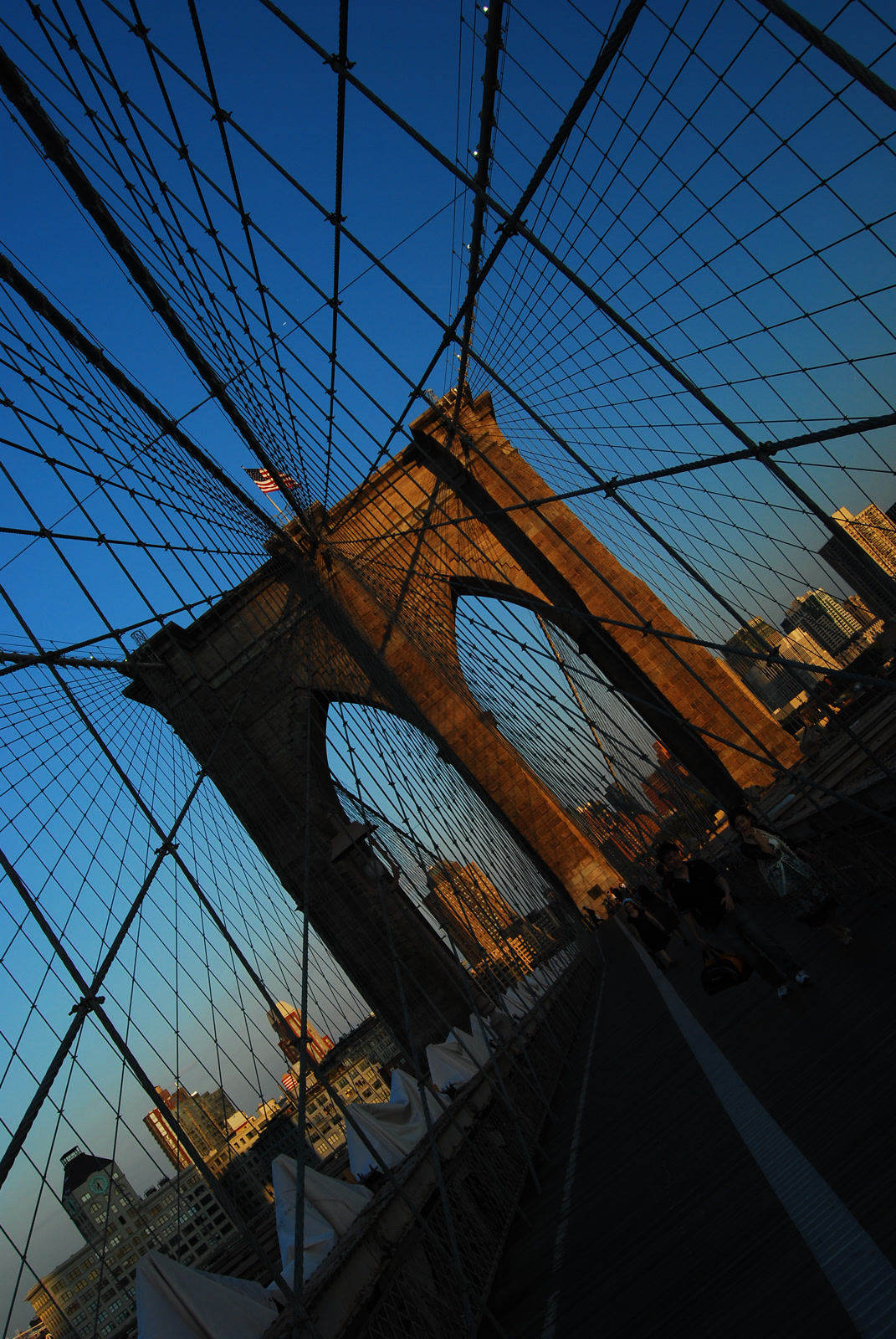
Crossing the bridge drops you into DUMBO, the old warehouse district under the Manhattan Bridge overpass, and the walk’s payoff is Washington Street: the Manhattan Bridge framed by red-brick warehouses, with the Empire State Building visible through the arch. It is the most photographed street corner in Brooklyn. From there, Brooklyn Bridge Park runs along the water, and Jane’s Carousel, the restored 1922 carousel in its glass pavilion, is the neighbourhood’s quiet centrepiece.
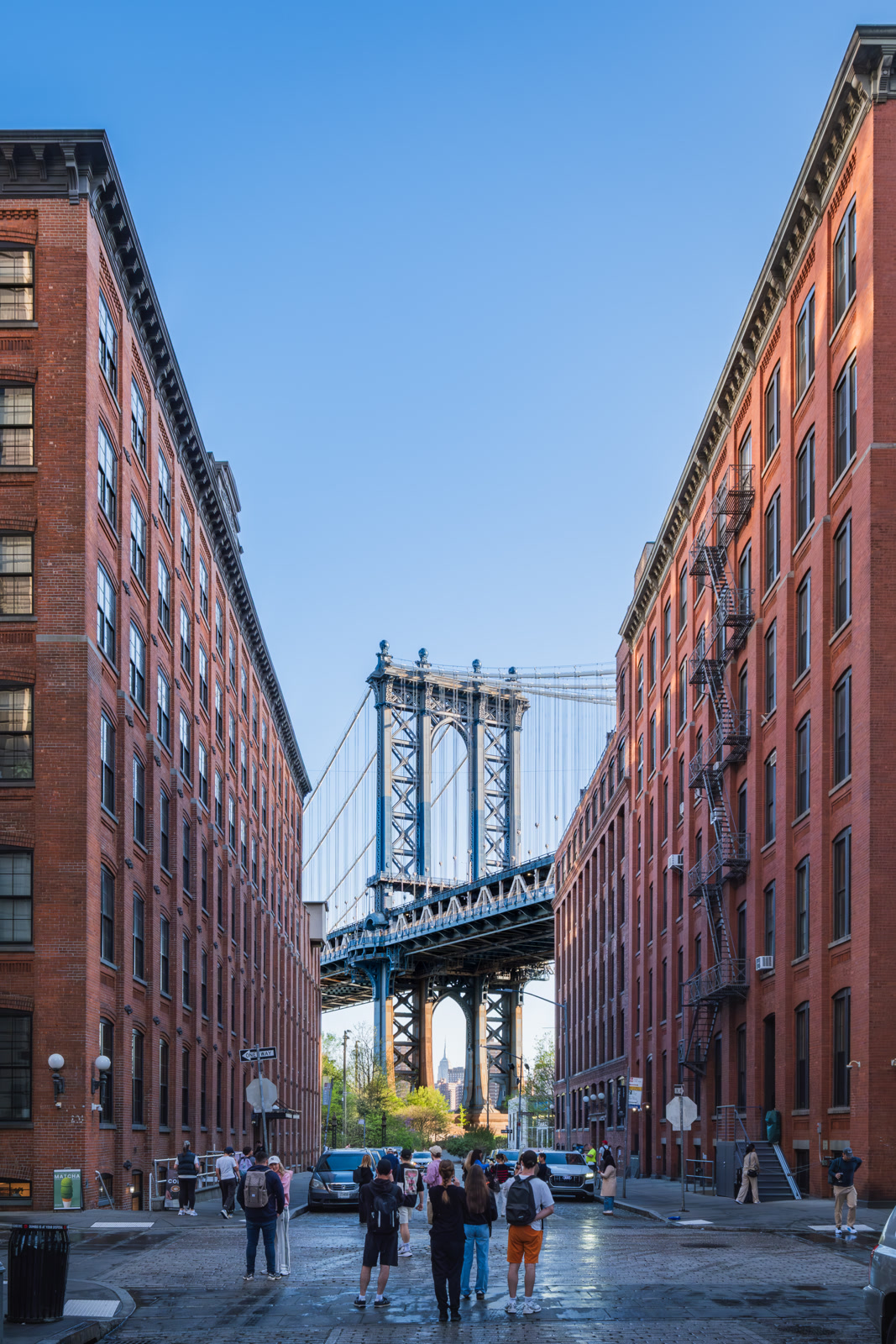
To get back, take the ferry from DUMBO to Wall Street or Midtown — the prettiest ride in the city at sunset — or the subway from York Street, two stops to Manhattan. Either way, you are back for a last dinner, and the weekend has done what it promised: the skyline, the harbour, the park and the bridge, in two days, without a wasted morning.
Where to stay for a weekend: Midtown vs Lower East Side vs Williamsburg
Stay in one place for both nights; switching hotels wastes a morning you do not have. Midtown is the obvious base: closest to day one’s sights, the most hotels at every price, and you can walk to half the plan. It is also the most expensive, and the streets are the least interesting after dark.
The Lower East Side is the cheaper alternative with the better evenings: fewer hotels and smaller rooms, but the city’s best restaurants and bars, and the subway from Delancey Street reaches Midtown in fifteen minutes. Williamsburg, across the East River, is the third option: calmer streets, good cafes, and the L train to Manhattan in fifteen minutes. It suits a second visit more than a first, but if you want quiet nights it is the best of the three.
Whichever you pick, book early. Weekend rooms in New York sell out first, and the price difference between booking a month ahead and booking the week of is often the price of a Broadway ticket.
Getting around: OMNY, walking and what not to do
Walking does most of the work in this plan. The distances are short, the streets are the attraction, and the subway is for the jumps between neighbourhoods. A single subway or local bus ride costs $3.00, paid by tapping a contactless card, phone or OMNY card at the turnstile. There is no pass to buy: once your taps add up to $35 inside a rolling seven-day window on the same card or device, every further subway and local bus ride that week is free. A normal weekend lands around $20 to $25 in fares, so most visitors never hit the cap.
Two things to get right. First, tap the same card or device every time, or the system cannot count your rides toward the cap. Second, do not look for a MetroCard: the MTA stopped selling and refilling them on 1 January 2026, and the 7-day unlimited pass no longer exists. Any guide that tells you to buy one is out of date.
Do not drive. A car in Manhattan costs parking money and time, and this plan has exactly one place a car would help — nowhere. Rideshares are for late nights, not for daytime. And build in buffer: New York runs on its own clock, and the weekend that leaves twenty minutes between stops is the one that sees everything on the list.
FAQ
Is 2 days enough for New York City?
Yes, for a first weekend. This nyc weekend itinerary covers the skyline, the Statue of Liberty, Central Park, the 9/11 Memorial and the Brooklyn Bridge, one neighbourhood per half day. A third day adds a museum — the Met or the Museum of Modern Art — and a neighbourhood you have not seen yet.
Do I need to book tickets in advance?
For three things: the Statue of Liberty ferry, especially the pedestal or crown, and one observation deck at sunset. Everything else — the parks, the bridges, the memorial plaza, the High Line — is free and needs no ticket.
Which observation deck should I pick?
Top of the Rock for the photograph, with the Empire State Building in the frame. Edge for the thrill, 1,131 feet up with a glass floor under your feet. The Empire State Building if standing on the icon is the point. Pick one and skip the other two.
How much does a weekend in New York cost?
The paid sights add up to roughly $105 to $120 per person: the Statue ferry at $26, one deck at about $42, and the 9/11 Museum at $36, plus the Vessel at $14 if you climb it. The hotel is the real cost, and it varies more than everything else combined — book early.
Is the subway safe at night?
Stick to busy stations, ride in the middle cars where the conductor is, and keep your phone in your pocket on the platform. The subway runs all night and the central Manhattan lines are busy late. If a station feels empty, take a rideshare instead.
The Short Version
This nyc weekend itinerary works when you book in the right order and let each day belong to one place. Day one is Midtown in the morning, Central Park and the High Line in the afternoon, and Broadway or the West Village at night. Day two is the Statue of Liberty in the morning, the 9/11 Memorial at midday, and the Brooklyn Bridge walk to DUMBO in the afternoon. Walk where you can, tap the same card on the subway, stay in one place, and pick one deck. If you have a third day, our 3-day New York City itinerary picks up where this one stops.