
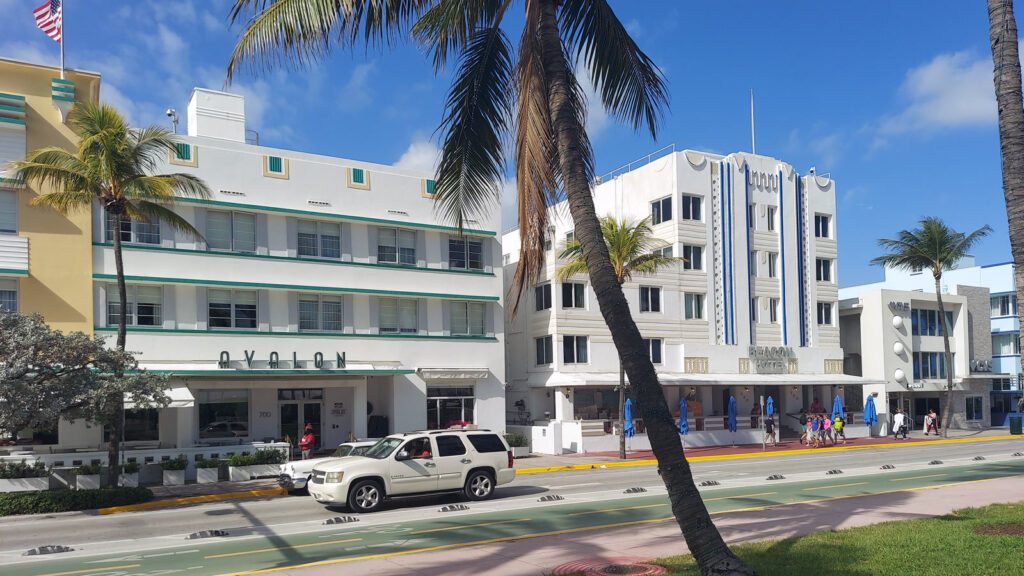
South Beach is the part of Miami everyone pictures first: a wide public beach, a row of pastel hotels with neon signs, and a palm-lined street of 1920s hotels. It is a neighbourhood of Miami Beach, the barrier island across Biscayne Bay from downtown Miami. The best things to do in South Beach all fit inside about one square mile, and they work best in a simple order: beach in the morning, architecture at midday, the pedestrian streets in the afternoon, and the water’s edge at sunset. Every price and hour below was checked in November 2026.
South Beach in One Day
One day is enough to do South Beach properly, and the order matters more than the list. Start on the sand before 10 AM, before the crowds arrive. By late morning, walk Ocean Drive slowly, looking up at the hotel facades instead of at the menus. Lunch belongs on Española Way, two blocks west. Spend the afternoon on Lincoln Road, then duck into one museum — the Wolfsonian for design, The Bass for contemporary art. End the day at South Pointe Park, at the island’s southern tip, where the cruise ships slide out through Government Cut.
The Beach Itself: Where to Set Up
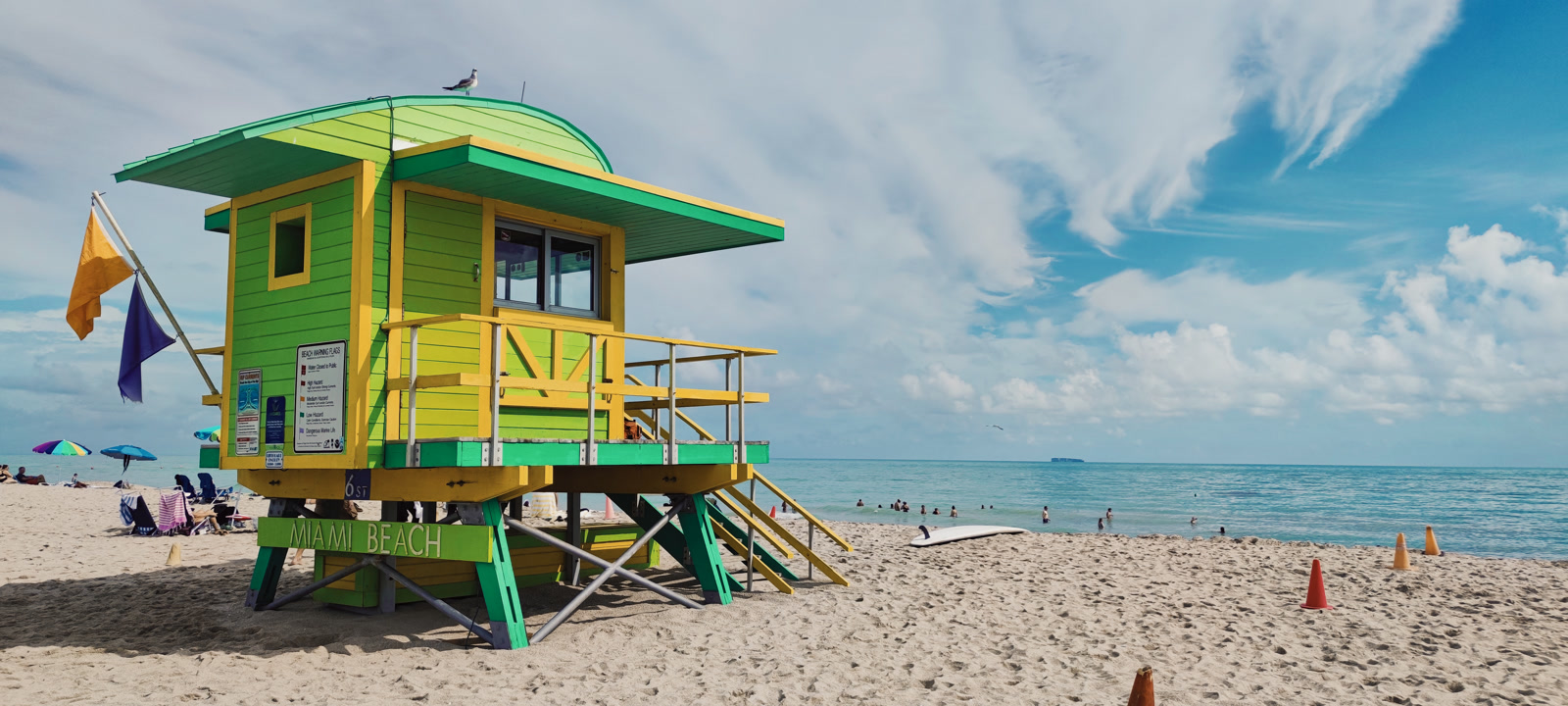
The beach is free and public, all of it. No admission fee, no gate, and no hotel owns the sand in front of it. Lummus Park, the 26-acre strip along Ocean Drive from 5th Street to 14th Place, is open from sunrise to midnight, and the beach in front of it is the busiest stretch — the lifeguard towers, the volleyball courts. Lifeguards are on duty from 9 AM to 7 PM; swim near a staffed tower and check the warning flags — a red flag with a crossed-out swimmer means the water is closed.
Where you set up changes the day. The sand in front of Lummus Park is the scene — loud, social, and the first place to fill. South of 5th Street, around South Pointe Park, is where locals go: the same wide sand, a fraction of the crowd. The water is warm enough to swim in all year. Chairs and umbrellas are rented on the sand. One warning: the beach is not a night spot — the park closes at midnight and the lifeguards leave at 7 PM.
Ocean Drive and the Art Deco Historic District
Ocean Drive is the front row of the Art Deco Historic District, and the district is the reason South Beach is a destination rather than just a strip of sand. More than 800 buildings from 1923 to 1943 stand inside about one square mile, the largest collection of Art Deco architecture in the world. The area joined the National Register in 1979 as the Miami Beach Architectural District — the first 20th-century neighbourhood in the United States to be listed — after Barbara Capitman and the Miami Design Preservation League campaigned to save it.
Walk it looking up. The hotels between 5th and 15th Streets are the densest stretch: the Leslie from 1937, the Cardozo from 1939, the Carlyle from 1941 — seen in Scarface and The Birdcage. Look for the porthole windows, the racing stripes, and the neon that turns the street pink and blue after dark. The Miami Design Preservation League runs daily 90-minute walking tours from the Art Deco Welcome Center at 1001 Ocean Drive — check current prices with the League before you go.
The one building that is not Art Deco at all is the most famous house on the street. The Villa Casa Casuarina, at 1116 Ocean Drive, was built in 1930 as a Mediterranean Revival mansion, modelled on the Alcázar de Colón in Santo Domingo. Gianni Versace bought it in 1992 and turned it into his private residence. Today it is a boutique hotel with a restaurant, Gianni’s — a room, a table or an event is the way inside.
One warning: check the menu and the prices before you sit down — the street has a reputation for pushy hosts, menus with no visible prices, and surprise service charges, documented by a 2017 Miami Herald investigation. It is the view, not the table, that you came for.
Lincoln Road and Española Way
Two blocks west of Ocean Drive, Lincoln Road is the other South Beach: an eight-block pedestrian promenade that runs east to west across the island, and the place where the neighbourhood actually lives. It started as a dirt street in 1912, when developer Carl Fisher cleared the mangroves along a strip from Biscayne Bay to the Atlantic and named it for Abraham Lincoln. In the 1950s, architect Morris Lapidus — the man behind the Fontainebleau and Eden Roc hotels — turned it into one of America’s first pedestrian malls, with fountains, gardens and black-and-white paving, under the slogan “A Car Never Bought Anything.”
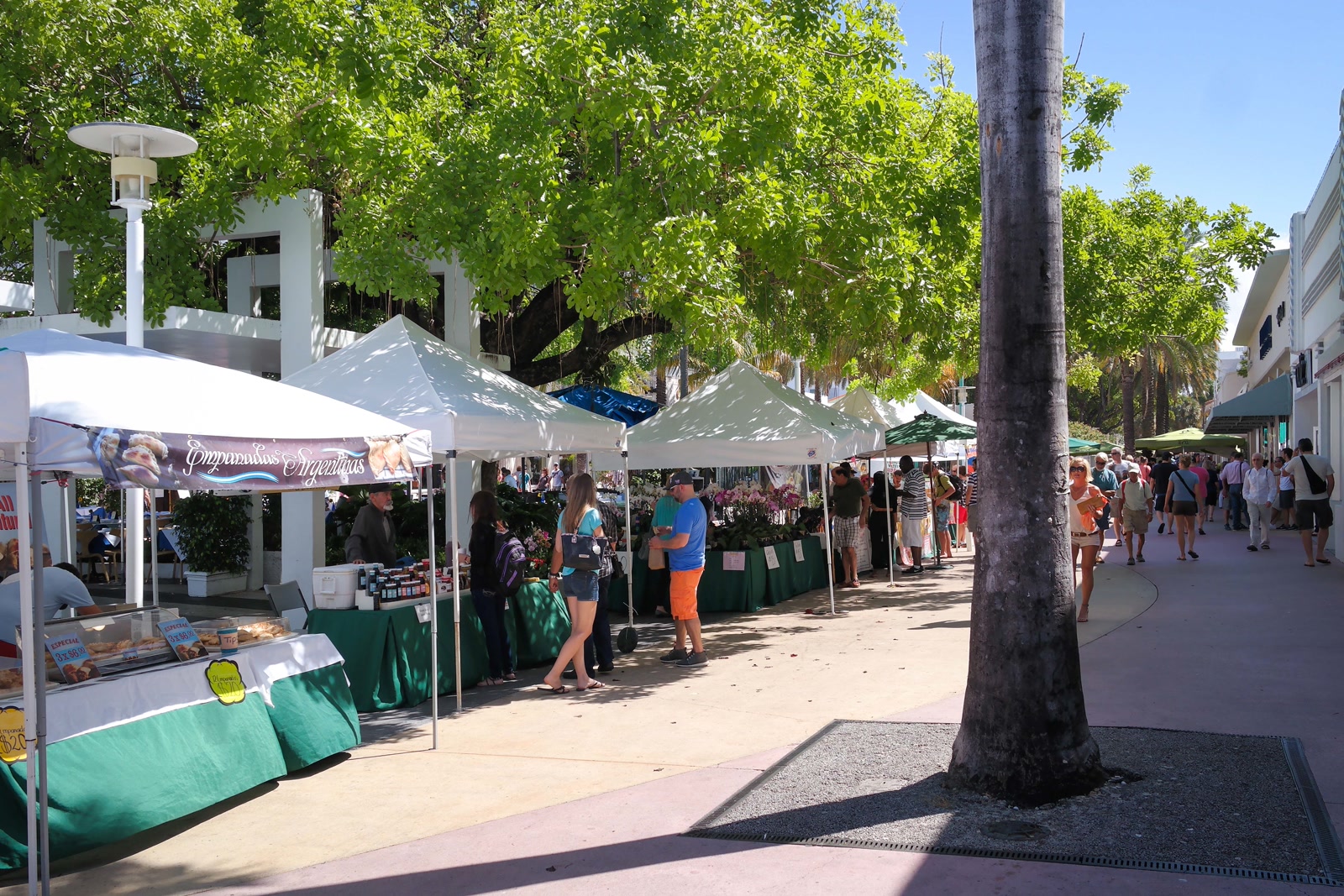
Today it is shops, galleries, cafés and restaurants under the trees — the best place in South Beach to slow down. The market stalls along the street are worth a wander, and the side streets hold the smaller galleries and quieter tables.
Española Way, two blocks south of Lincoln Road between 14th and 15th Streets, is smaller and older. It was built in 1925 by developer N.B.T. Roney as a “Latin Greenwich Village,” modelled on the historic towns of Spain and France. In 1986 the city made it its first Historic Preservation District. Miami Vice and The Birdcage both shot here — come for dinner.
The Boardwalk: The Long Walk That Works
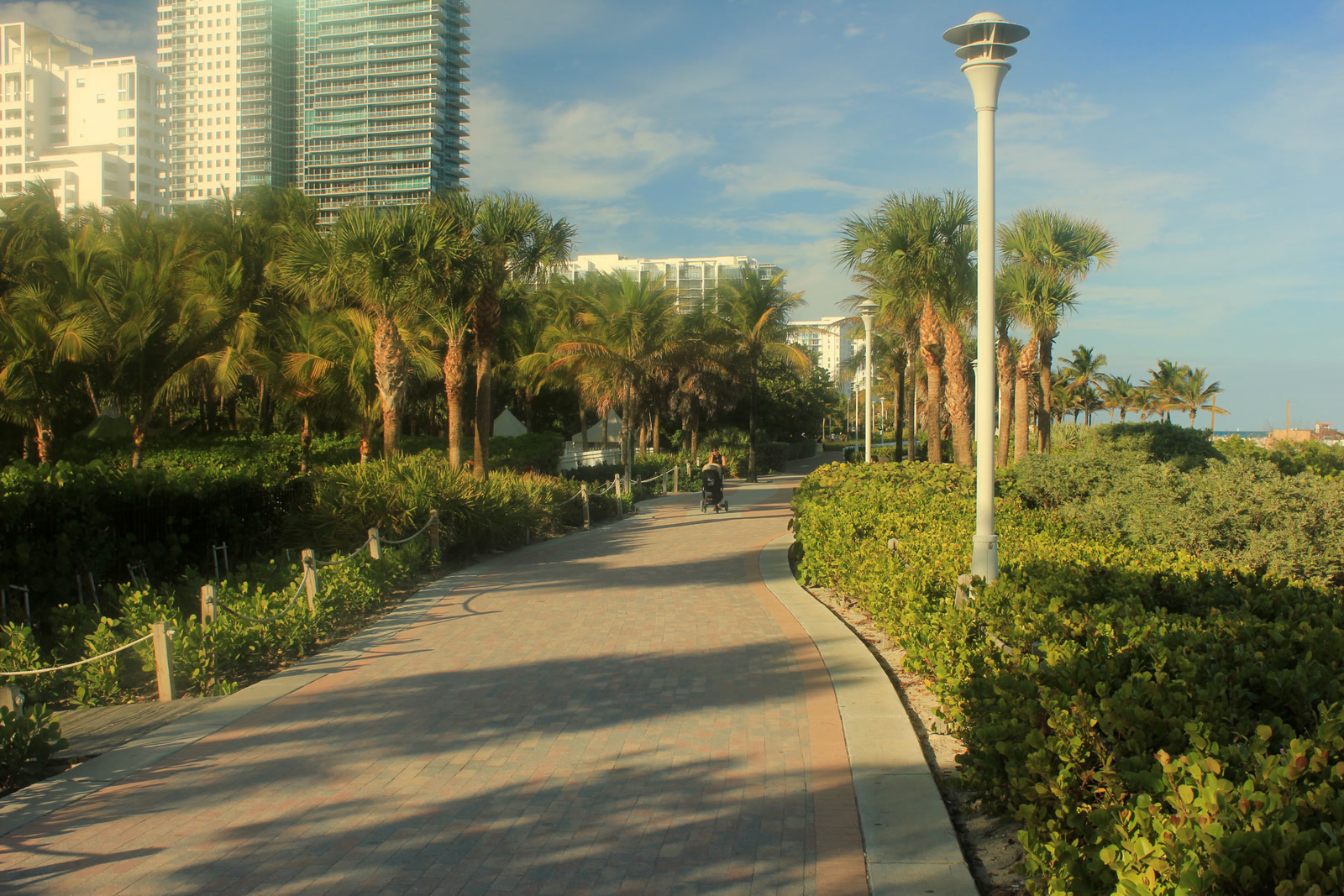
The path along the ocean is called the Beachwalk by the city, and most people still call it the boardwalk. It is not made of boards any more — the old wooden walkway between 23rd and 45th Streets was rebuilt as a wider paved path, finished in June 2022. The full city route runs about nine miles, from South Pointe Park to 87th Street. The South Beach stretch, from South Pointe Park to around 46th Street, is about four miles and takes roughly 90 minutes to walk without stopping.
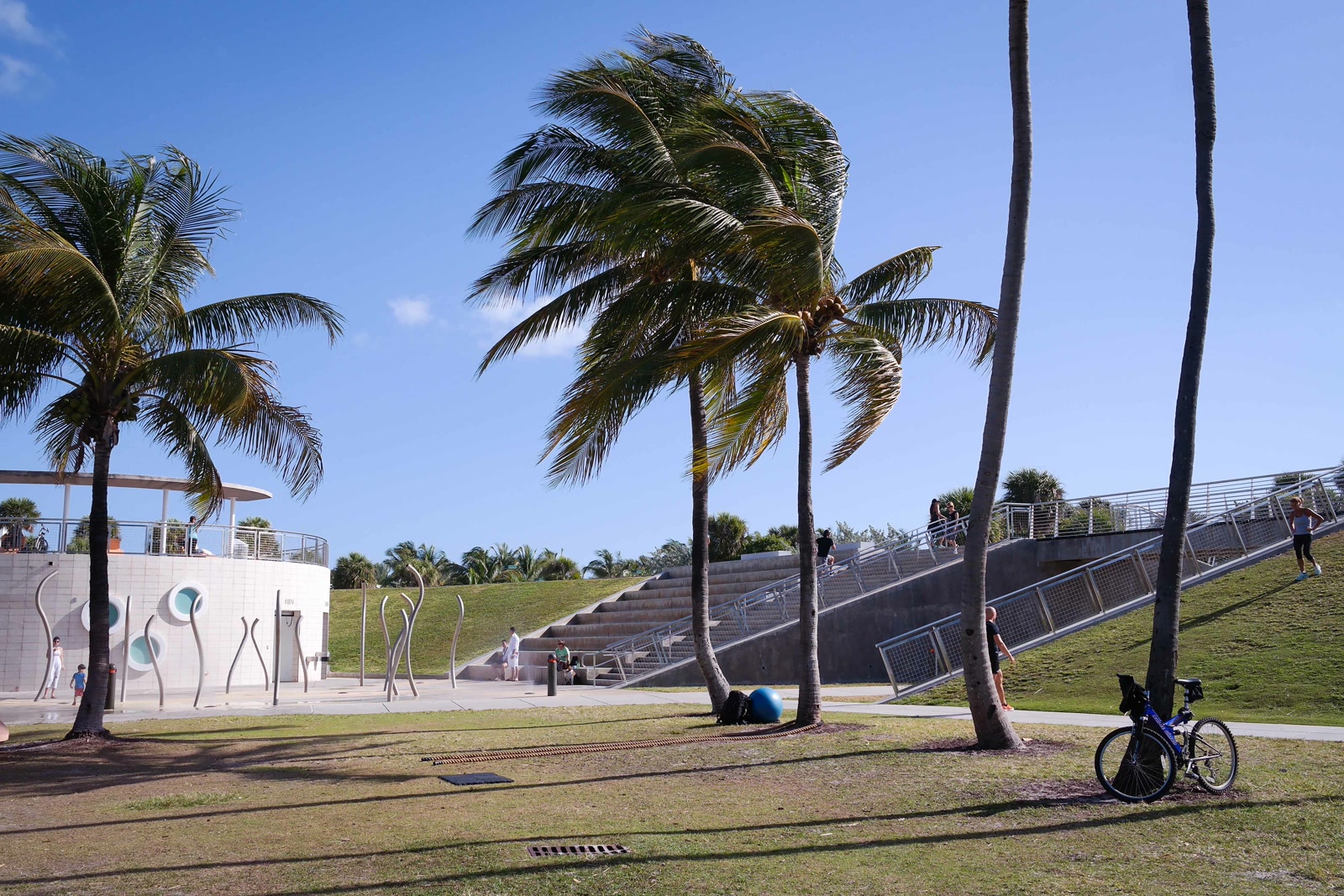
Start at South Pointe Park and walk north. The first mile is the good one: Lummus Park and the Art Deco hotels on your left, the Atlantic on your right. The route is paved and flat, shared by walkers, joggers and cyclists. Go in the morning and bring water — there is almost no shade on the path itself. Walk the first mile to 14th Street and turn back if four miles sounds like too much.
Food and Cafés: What Is Actually Good
South Beach eats well, and the rule is the same as on Ocean Drive: the further you get from the postcard, the better the value. The landmark table in the neighbourhood is Joe’s Stone Crab, on Washington Avenue — the seafood institution that has anchored South Beach since 1913. Book ahead.
For everything else, work by street. Española Way is the best single block for dinner, with Spanish and Italian tables under the lights. Lincoln Road has the widest choice, and the side streets off it are where the prices drop. Ocean Drive is for a drink and the view, not for a meal — sit at the bar, order one thing, and watch the neon come on. Do not leave without a Cuban coffee: the small, sweet cafecito from a walk-up window is the city’s cheapest pleasure.
Where to Stay in South Beach
South Beach is small enough that where you stay is really a question of how much street noise you want. Ocean Drive puts you in the middle of the postcard — the hotels are the prettiest, and the street below them is loud until late. Collins Avenue, from 15th to 21st Street, is the quiet compromise: a two-minute walk to the beach, still Art Deco, but quiet at night. South of 5th Street is the residential end — calmer, greener, and the best choice with children. Check whether parking is included before you book: hotel garages and valet are expensive.
Parking and Getting There Without a Car
You do not need a car in South Beach. The neighbourhood is walkable end to end, and the free Miami Beach Trolley covers the rest: four routes — the South Beach Loop (A clockwise, B counterclockwise), the Middle Beach Loop, the Collins Express and the North Beach Loop — running daily from 8 AM to 11 PM, about every 20 minutes, with the Collins Express about every 15.
If you do drive, the city’s own garages are the deal. Street meters in South Beach cost $4 an hour, and in the Entertainment District — Ocean Drive to Pennsylvania Avenue, 5th to 15th Street — they are enforced 24 hours a day. City lots cost $2 an hour. The municipal garages charge $2 for the first hour and cap at $20 for 24 hours, with a $15 flat rate on weekend nights.
Two warnings, both from the city. First, March is spring break: in March 2026 the Art Deco District garages charged $40 to $100 flat on peak weekends and street parking ran $20 an hour. The 2027 plan was not yet published in October 2026, so check miamibeachfl.gov before a March trip. Second, the trolley does not cross the bay: take a Metrobus across the causeway ($2.25) and pick up the free trolley on the island side.
When to Go: The Honest Seasons
December through April is the season South Beach was built for. Highs run 76 to 84°F, humidity drops, and rain shows up on fewer than five days a month. April is the sweet spot for a first trip: highs around 84°F, about four wet days in the month, the sea warm, and spring break already packed up. November and late April are the shoulders: the same weather, fewer people.
Summer is the trade-off. From June through August, highs run near 90°F with humidity to match, and an afternoon thunderstorm is on the schedule most days. The Atlantic hurricane season runs June 1 to November 30, and September is the month to be careful about: it is the statistical peak of the season and the wettest month of the year, so do not book September non-refundable. Summer brings lower prices and thinner crowds — plan around the storms and check the National Hurricane Center before you travel.
FAQ
What is the best area to stay in South Beach?
Collins Avenue between 15th and 21st Streets: close to the beach, quiet at night, and still Art Deco. South of 5th Street is the calmest, and the best choice with children.
Is the beach in South Beach free?
Yes — public and free, with no admission fee and no gate. You pay only for extras: parking, chair and umbrella rentals, and food and drink.
How much does parking cost in South Beach?
Street meters cost $4 an hour; city lots $2 an hour. Municipal garages charge $2 for the first hour and cap at $20 for 24 hours, with a $15 flat rate on Friday to Sunday nights. In March, spring-break rules can push garage rates far higher — check miamibeachfl.gov first.
What is the best time to visit South Beach?
December through April, with April the best single month: highs around 84°F, about four wet days, and the sea warm. Avoid September — the peak of hurricane season and the wettest month.
Is South Beach family-friendly?
Yes, with a little planning. The lifeguarded beach, South Pointe Park with its playground and splash pad, and Lincoln Road are all good with children. Skip Ocean Drive late at night, when the street is at its loudest, and stay south of 5th Street or on Collins Avenue.
The Short Version
South Beach is small, and that is its gift: the beach, the Art Deco District, Lincoln Road and the Boardwalk all fit inside one square mile, and one good day covers them. Start on the sand, walk Ocean Drive looking up, eat on Española Way, spend the afternoon on Lincoln Road, and end at South Pointe Park. The beach is free, the trolley is free, and the best things here cost nothing at all. Come between December and April, skip September, and check the menu on Ocean Drive.