
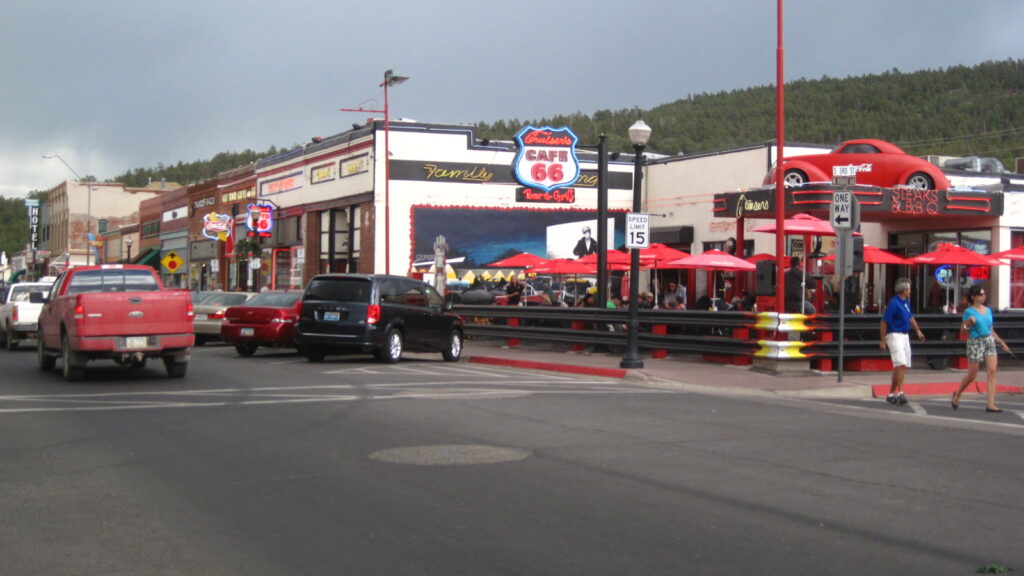
Williams, Arizona is the last town on Route 66 that the interstate forgot to erase — and the easiest base for the Grand Canyon that is not inside the park. It sits 60 miles south of the South Rim on Highway 64, in the ponderosa pines of the Kaibab National Forest at 6,770 feet, with a neon-lit main street, a railway that has carried passengers to the canyon since 1901, and a drive-through wildlife park ten minutes out of town.
This guide covers the things to do in Williams, Arizona, from the railway to Bearizona, with real 2026 prices and the Williams versus Tusayan stay comparison.
The question every Grand Canyon visitor asks about Williams is whether it is worth a stop — or a night — instead of driving straight to the canyon. The honest answer depends on your trip. If you are driving in for a single canyon day, Williams is a detour you do not need. If you are coming from Phoenix or Flagstaff, arriving late, or travelling with children, it is the best decision on the whole route. This guide answers that question first, with the costs, and then covers the town itself in half a day.
Should You Stop in Williams at All?
Stop in Williams if any of these are true: you arrive in northern Arizona after mid-afternoon, you are travelling with children, you want a Route 66 town rather than a highway motel strip, or you want to ride the railway to the canyon instead of driving. Skip it — drive straight to Tusayan — if you arrive before noon with a full canyon day ahead of you and no interest in Route 66. The drive from Williams to the South Rim is 1 hour 20 minutes, so a morning departure from Williams still puts you at the rim before 10:00 AM, but it is not a ten-minute hop, and the town deserves a half day of its own.
Williams works best as an arrival night and a departure morning: reach town in the late afternoon, walk Route 66 at dusk when the neon comes on, sleep, and drive or ride to the canyon the next morning. As a base for two or three days it also works — Flagstaff is about 30 miles east on I-40 — but the town itself is a half-day place, and the canyon is the reason you are here.
Williams or Tusayan: Where to Sleep Before the Grand Canyon
This is the decision the whole trip turns on, and it has changed since 2026. In-park overnight lodging at the Grand Canyon has been suspended since 31 August 2026, after a flash flood damaged the park’s waterline, and no reopening date has been given. Do not book an in-park lodge until the Park Service confirms reopening. That leaves two real choices: Tusayan, seven miles from the rim, or Williams, 60 miles away.
| Williams | Tusayan | |
|---|---|---|
| Drive to the South Rim | 60 miles, 1 hour 20 minutes via AZ-64 | About 7 miles, roughly 15 minutes |
| Representative hotel (1 night, 2 adults, Fri 9 Jul 2027) | El Rancho Motel, 617 East Route 66: $93/night + $10 municipality fee + 17.9% tax = $119.65 after tax (calculated from the stated components) | Red Feather Lodge, 300 State Route 64: $176/night, $397.41 after tax for 2 nights ($198.71 per night) |
| What you get | A real town: Route 66 main street, restaurants, the railway station, Bearizona nearby | A gateway strip: hotels and restaurants, nothing else to do |
| The catch | A 1-hour-20-minute drive each way, and an early start | Higher prices, and it books out first in summer |
The trade is simple. Tusayan buys you time at the rim and costs roughly $80 more a night. Williams buys you a town, a railway, and a lower bill, and costs you about two hours of driving a day. For a family with children, Williams is the better value — the railway and Bearizona are the trip, not the drive. For a couple doing one hard canyon day, Tusayan is worth the premium. For the day-by-day plan once you are at the canyon, see our Grand Canyon itinerary — and our Grand Canyon travel guide covers the viewpoints in detail.
Historic Route 66 Downtown in an Hour
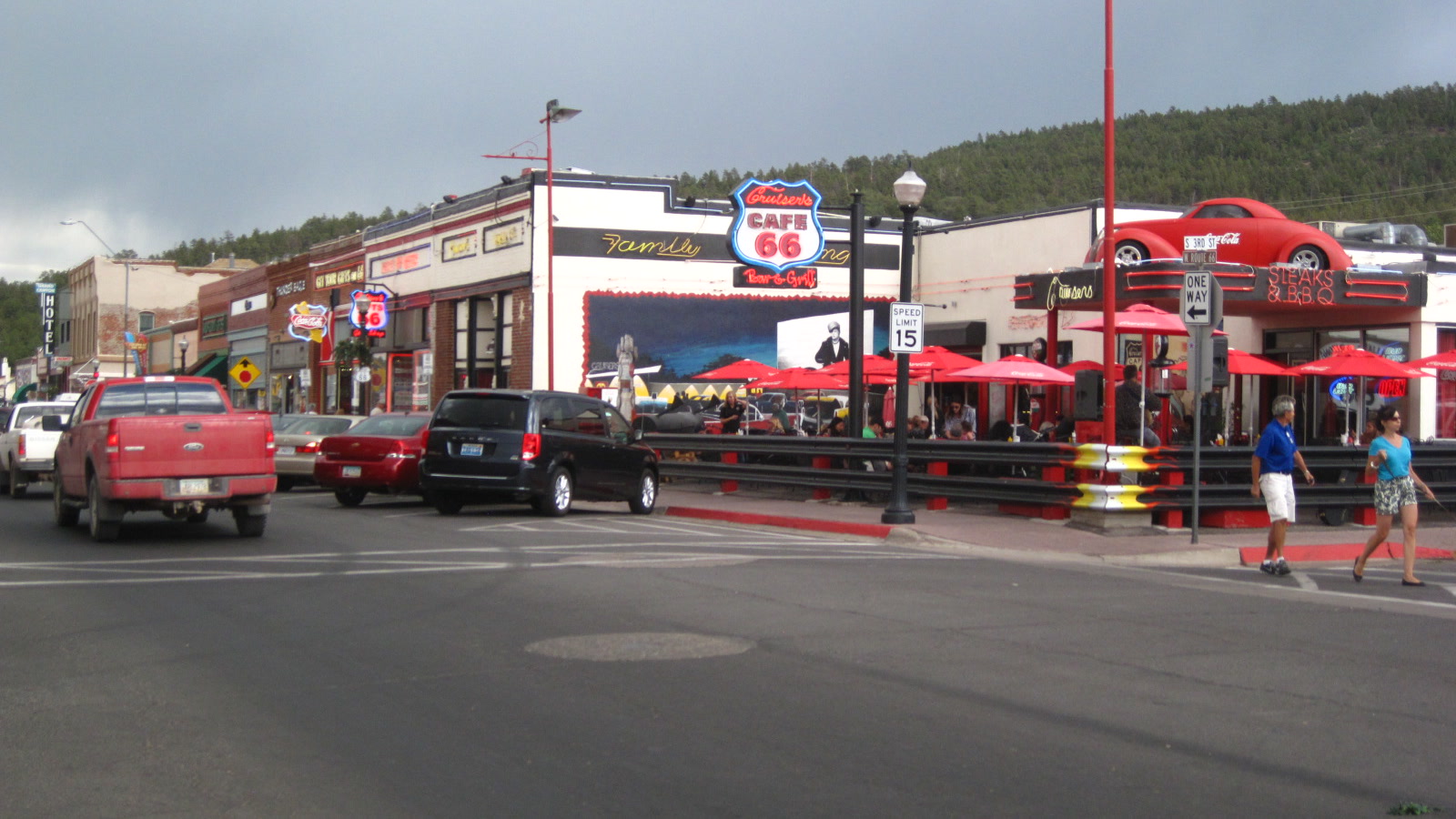
Williams’ main street is Route 66 itself, and an hour is enough to walk it properly. The town was the last on Historic Route 66 to be bypassed by Interstate 40, on 13 October 1984, and it has kept the street that the interstate took away from other towns: neon signs, a 1949 service station, and storefronts that still look like the 1950s. Founded in 1881 and named for the mountain man “Old Bill Williams,” the town was incorporated on 9 July 1901.
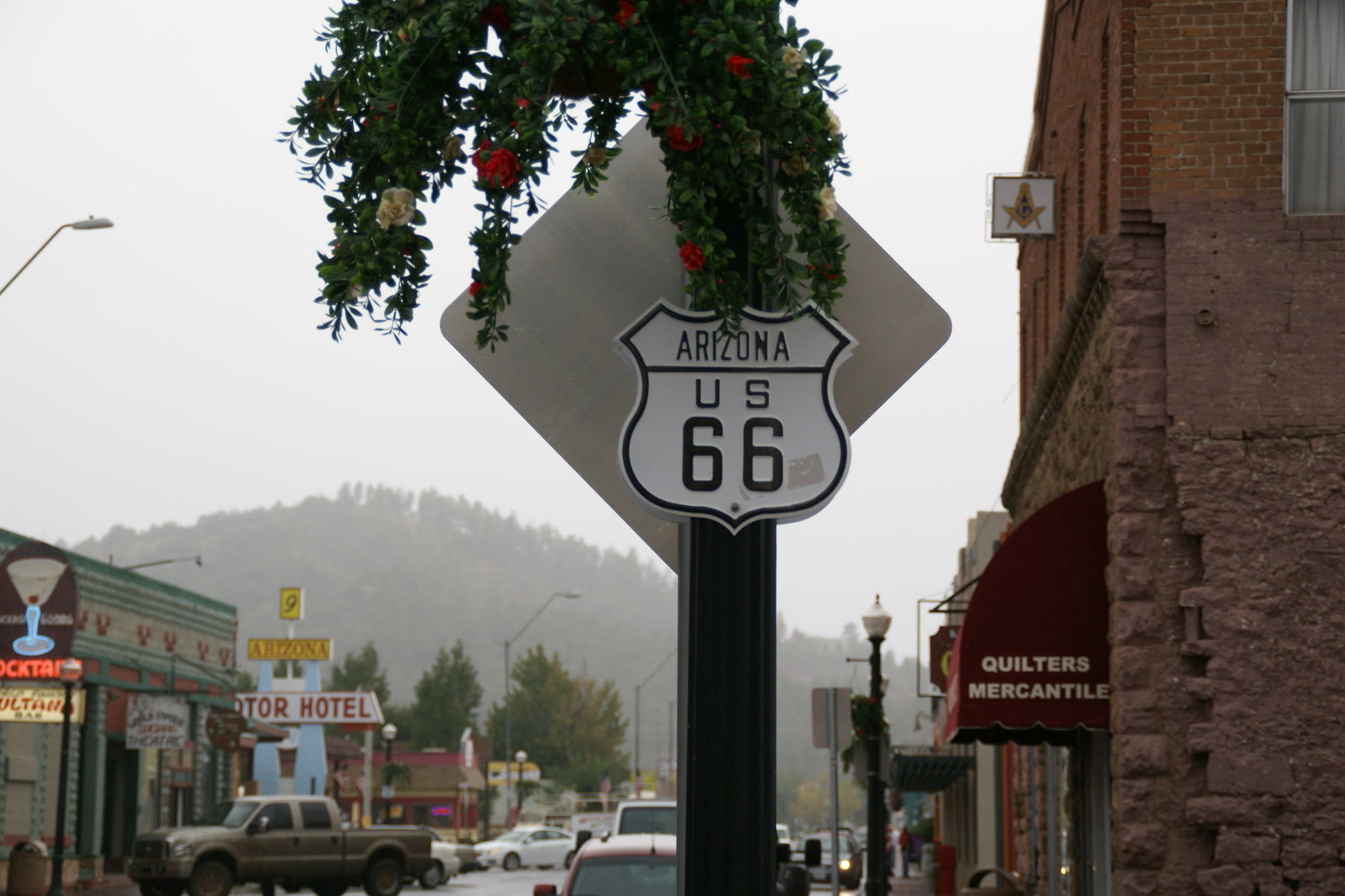
Start at the railway station end of town and walk east. The Grand Canyon Railway depot is the anchor — trains leave from here in the morning — and the street runs past diners, souvenir shops, and the neon that makes the town worth seeing at dusk rather than midday. The walk is flat, the whole downtown is about half a mile, and the best hour to do it is the last one before dark, when the signs come on and the day-trippers have gone. In summer the street is busy until late; in winter it is quiet by 6:00 PM.
The Grand Canyon Railway: Who It Suits, What It Costs, and the Drive Alternative
The railway is Williams’ signature experience and its most expensive one. The train runs 65 miles from Williams to Grand Canyon Depot in 2 hours 15 minutes each way, through the high desert and the pine forest. The schedule is seasonal: from 1 January to 31 October the train departs Williams at 9:30 AM and arrives at the canyon at 11:45 AM, returning at 3:30 PM to arrive back at 5:45 PM. From 1 November to 31 December (except Christmas Day) it departs at 8:30 AM and returns at 2:30 PM. A second train runs on selected March and April dates. The Polar Express runs from 13 November to 29 December 2026, and there is no train on 25 December.
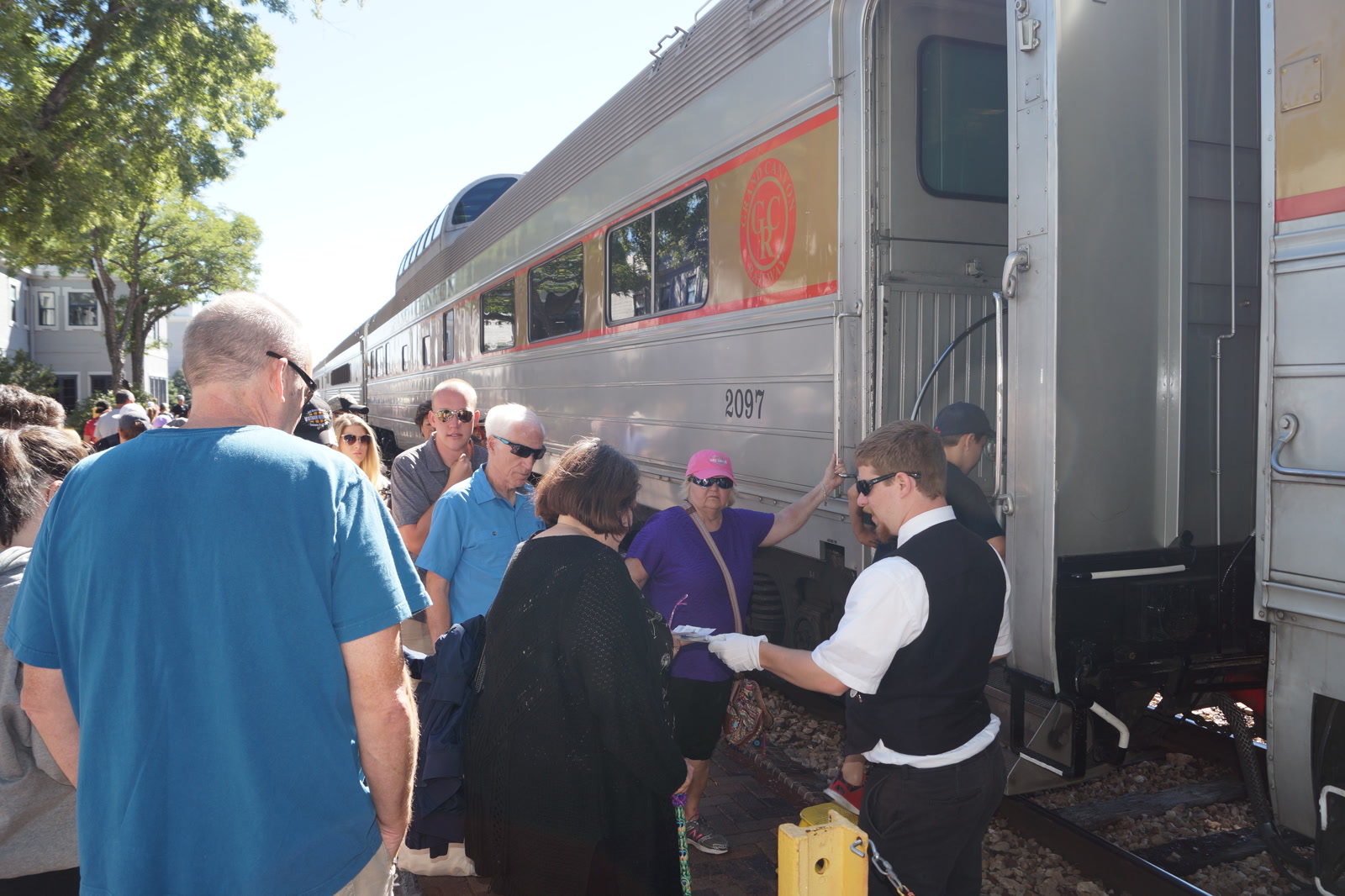
The history is worth knowing before you book. The first passengers rode on 17 September 1901, the service stopped in 1968, and the first passenger train in 21 years ran on 17 September 1989. So the railway has run since 1901 in the sense that the line is that old, but the current operation dates from 1989 — and the railway marked its 125th anniversary with a steam train on 19 September 2026. Do not let anyone sell you “operating continuously since 1901.”
Coach class, round trip, costs $89.98 per adult (16 and over) and $57.98 per child (2 to 15), with under-2s free. The cheapest class is actually the seasonal Pullman class, $69.98 per adult and $37.98 per child, running March to October only. An older secondary quote of “from $70 an adult” is not the official price — the official Coach fare is $89.98.
Who it suits: families with children, anyone who does not want to drive, and anyone who wants the journey to be part of the trip. Who should drive instead: anyone on a tight budget — the railway costs a family of four $295.92 round trip in Coach, against about $20 of fuel for the same journey — and anyone who wants more than three hours at the rim. The train gives you roughly three and a half hours at the canyon between arrival and departure. The drive gives you the whole day, and the freedom to stop at the viewpoints on the way back.
Bearizona and the Deer Farm: The Family Half-Day
Bearizona is the reason many families stop in Williams at all. It is a drive-through wildlife park of about 160 acres at 1500 East Route 66, with a walk-through section, a seasonal barnyard and shows. Prices are weekday and weekend: on weekdays an adult (13 to 61) pays $30, a child (4 to 12) $20, and a senior (62 and over) $27; on weekends it is $35, $25 and $32. Under-3s are free. Parking is included. Hours are daily from 9:00 AM, with the last car admitted at 4:00 PM and closing at 5:30 PM, open year-round. Allow two to three hours for the drive-through and the walk-through together.
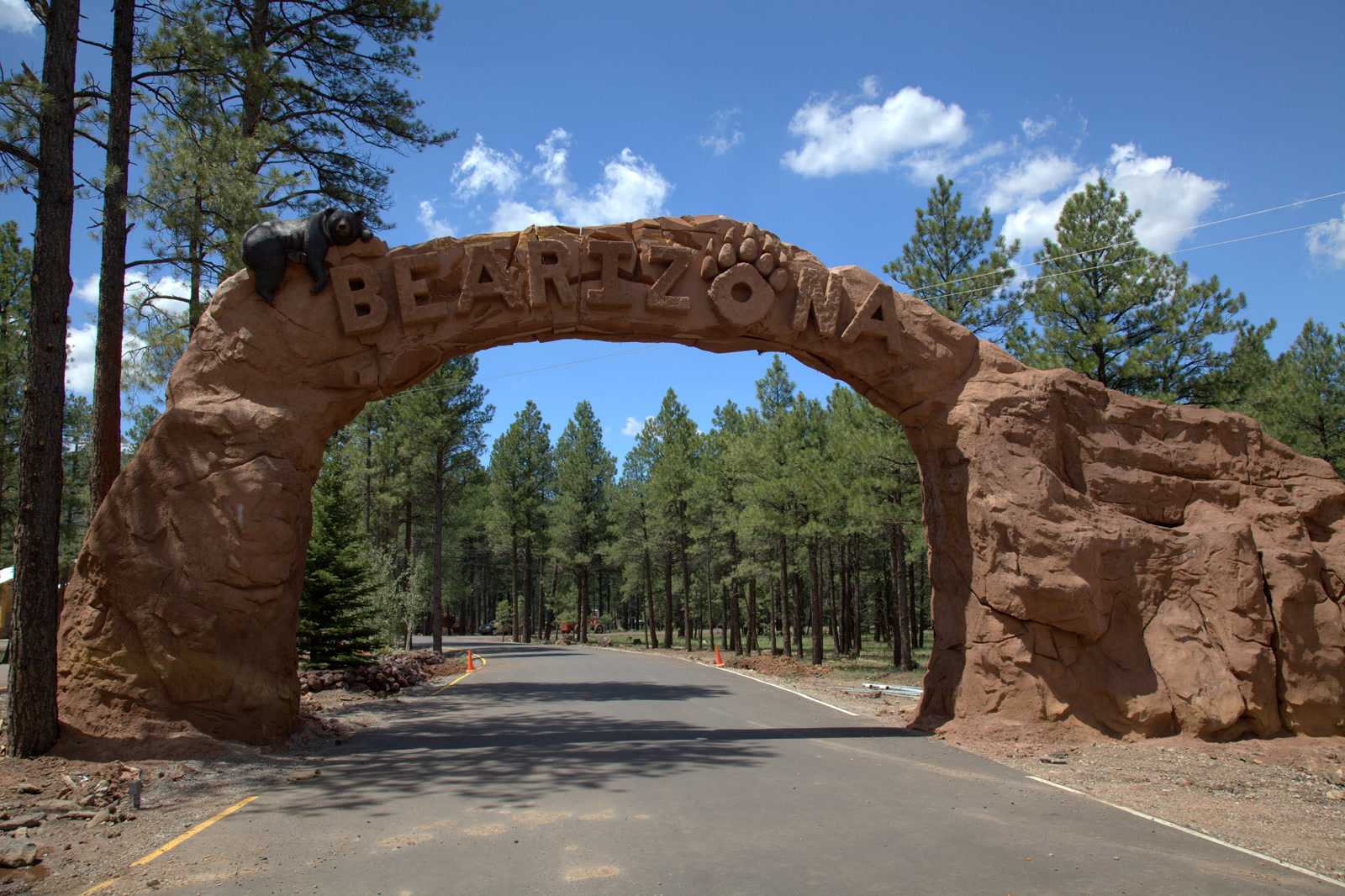
The Grand Canyon Deer Farm, at 6769 East Deer Farm Road, is the smaller, cheaper second stop: adults $20, seniors $15, children 3 to 13 $15, and 2 and under free, with admission and deer food sold in person. Hours are daily 9:00 AM to 6:00 PM from 16 March to 15 October, and 10:00 AM to 5:00 PM from 16 October to 15 March. Between the two parks, a family with young children has a full morning without ever reaching the canyon — which is exactly why Williams works as an arrival day.
The Quirky Stops: Worth It or Skip It
Williams collects oddities, and three of them are worth the stop. The Poozeum, at 109 West Railroad Avenue, is the world’s only museum dedicated to fossilized poop — coprolites — including “Barnum,” the largest carnivore coprolite on record, a Guinness World Record. It was founded in 2014 by George Frandsen, and the Williams location opened on 18 May 2024. Admission is always free. Hours are Wednesday to Sunday, 9:00 AM to 5:00 PM, closed Monday and Tuesday, with a winter break from 4 January to 23 February. It is a twenty-minute stop and children love it.
The Canyon Coaster Adventure Park runs a mountain coaster and, in season, tubing. Hours are Monday to Friday 10:00 AM to 4:00 PM and Saturday to Sunday 10:00 AM to 5:00 PM, open daily. A single coaster ride costs $20 (over 54 inches tall); a small child (38 to 54 inches, minimum age 3, riding with a driver 18 or over) pays $10, and three rides cost $52. Summer tubing ran mid-April to mid-October, with the last day of 2026 on 18 October. Winter snow tubing runs November to Easter, daily 10:00 AM to 4:00 PM, at a $50 day pass ($35 for a small child) — but the winter 2026–27 opening date is listed as “to be decided,” so do not plan a trip around it.
Pete’s Gas Station Museum, at 101 East Route 66, is a 1949 service station with vintage gas pumps and signs, automotive antiques and Route 66 memorabilia. It has no published hours and no published price, and no website of its own — so treat it as a photo stop on the main street walk, not a planned visit.
What It Costs
Williams is a cheaper base than Tusayan, but the railway is the expensive part of the trip. The table below is per person, for two adults sharing a room, for one day in town, using the verified prices above. Food is an estimate — there is no official figure for it.
| Cost (per person, 2 adults sharing) | Town day (no railway) | Railway day |
|---|---|---|
| Grand Canyon Railway, Coach round trip | — | $89.98 |
| Bearizona, weekday adult | $30.00 | — |
| Grand Canyon Deer Farm, adult | $20.00 | — |
| Hotel, El Rancho Motel ($119.65 ÷ 2) | $59.83 | $59.83 |
| Food (estimate) | $40–$60 | $40–$60 |
| Total | $149.83–$169.83 | $189.81–$209.81 |
Two things to note. First, the railway and Bearizona do not fit in the same day — the train is out from 9:30 AM to 5:45 PM — so the two columns are two different days, not one. Second, the hotel total of $119.65 is calculated from the stated components ($93 a night, plus 17.9% tax of $16.65, plus the $10 municipality fee) because the booking site does not display a single after-tax total before the reservation step; if tax is also charged on the $10 fee, the total would be $121.44. Either way, it is a single representative example, not an average — 78 properties were listed for Williams on the date checked.
Williams as a Route 66 Base
Williams earns its keep as a base beyond the canyon. Flagstaff is about 30 miles east on I-40, an easy drive for a second day, and the town’s position on the interstate makes it a natural stop on a longer Route 66 drive. The Route 66 centenary fell in 2026 — the hundredth anniversary of the road — and Williams marked it with a Historic Route 66 Car Show on 5 and 6 June 2026, under the theme “A Century of Kicks on Route 66,” plus a JDM Classic Car Show on 2 and 3 October and the railway’s 125th-anniversary steam train on 19 September. Those dates are now past; there is no separate Williams “Route 66 Centennial” festival to plan around, so do not go looking for one.
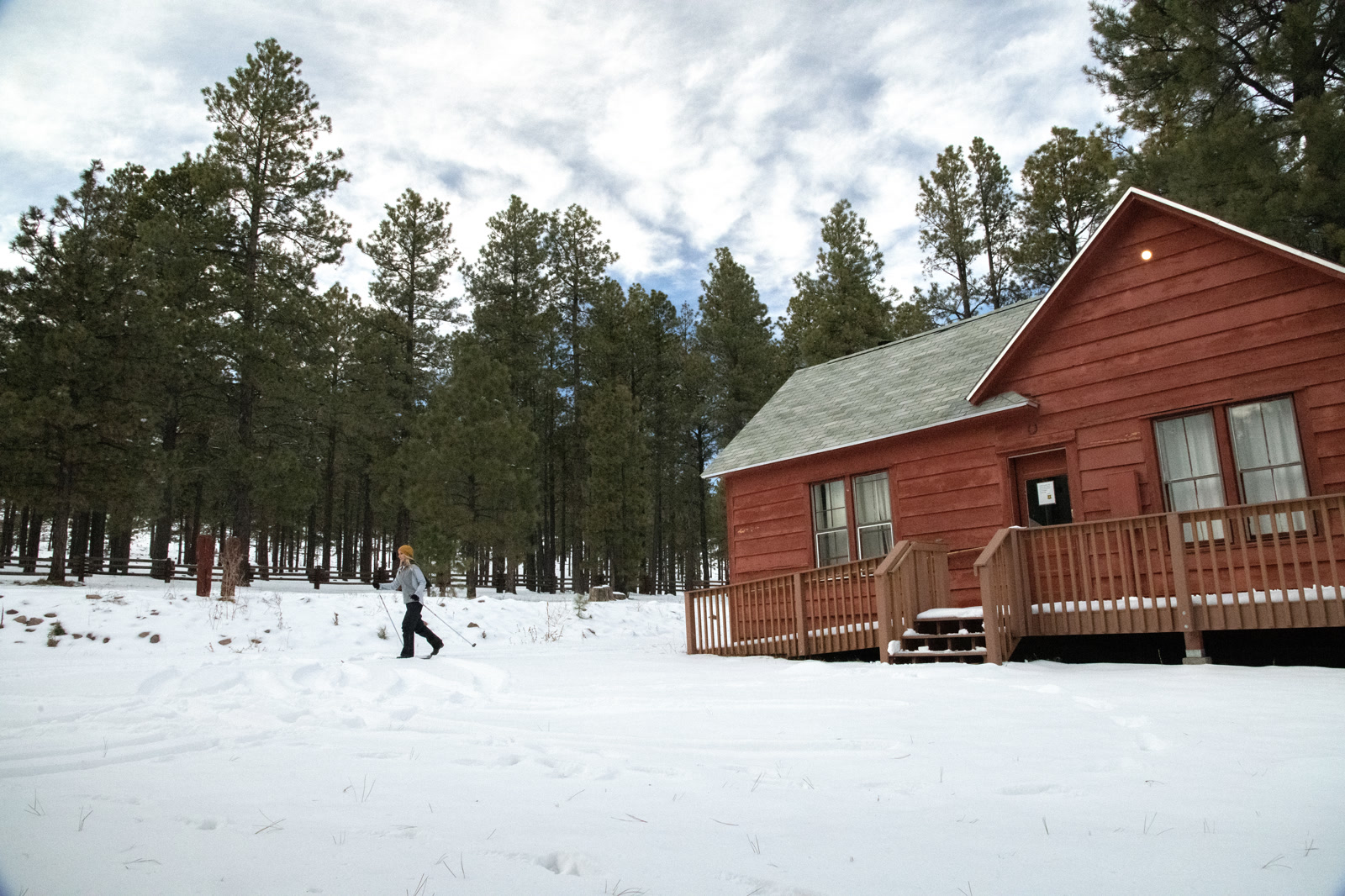
What remains is the street itself, which is the point. Most Route 66 towns lost their main street to the interstate. Williams kept its — bypassed last, on 13 October 1984, and still trading on it. Come for the canyon, stay for the neon, and leave by the railway if you can.
FAQ
How far is Williams from the Grand Canyon?
60 miles south on Highway 64, a 1 hour 20 minute drive. From the Williams Visitor Center it is 62 miles. Do not plan on “about an hour” — the official visitor site gives 1 hour 20 minutes.
Is one day enough in Williams?
Half a day is enough for the town itself — the main street walk, the railway station, and one quirky stop. A full day covers Bearizona and the Deer Farm as well. The railway needs its own day, so a railway trip plus the town takes two days.
Is the railway worth it?
For families and non-drivers, yes — the journey is the experience, and children remember the train more than the viewpoints. For a tight budget or a full canyon day, no — Coach costs $89.98 per adult round trip, and driving gives you the whole day at the rim for the price of fuel.
Where should I stay — Williams or Tusayan?
Tusayan if you want the shortest drive and the most time at the rim, and you accept the higher price. Williams if you want a real town, the railway and Bearizona, and a lower bill. In-park lodges are not an option — overnight stays inside the park have been suspended since 31 August 2026, with no reopening date given.
The Short Version
Williams, Arizona is the Grand Canyon’s best base that is not the canyon itself: a Route 66 town 60 miles and 1 hour 20 minutes from the South Rim, with a railway, a wildlife park, and a neon main street. Stay the night you arrive, walk Route 66 at dusk, and choose between the railway ($89.98 round trip in Coach) and the drive the next morning. Tusayan is closer and dearer; Williams is further, cheaper, and more fun. In-park lodges are closed until the Park Service says otherwise, so book in town.