
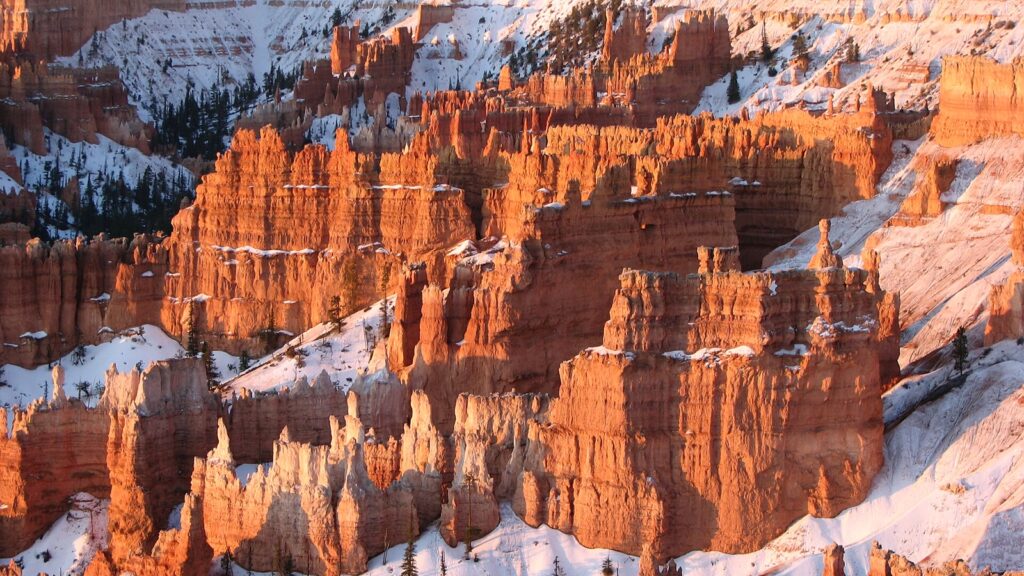
Winter splits the national parks into two opposite trips. Half the famous parks turn into snow country, where roads close, geysers steam harder in the cold air and the crowds of summer simply vanish. The other half — the desert and swamp parks that are punishing in July — come into their best season: mild days, long hikes and wildlife that finally shows itself. Pick the right half and winter is not the off-season at all. It is the smart season.
This guide covers ten of the best national parks to visit in winter — parks that genuinely earn a December, January or February trip: four snow parks worth braving, one canyon that works both ways, four warm escapes, and the one subtropical park that saves its best wildlife for winter. It also gives you the honest catches — the closed roads, the chain rules and the weekend-only access — because in winter the difference between a great trip and a ruined one is usually a single road.
The Short Answer: Two Kinds of Winter Parks
Every park below falls into one of two families. The snow parks ask more of you — cold, chains, closed roads — and repay you with empty trails and scenery at its most dramatic. The warm parks ask almost nothing and give you their best weather of the year. Here is the whole list at a glance.
| Park | Why winter | Winter catch |
|---|---|---|
| Yellowstone | Geysers in deep snow, wolves in the Lamar Valley | Only one road open to cars; the interior is snowcoach-only |
| Bryce Canyon | Snow on the hoodoos, empty viewpoints | 8,000–9,000 feet: bitter cold and icy trails |
| Yosemite | A quiet valley, waterfalls running again | Tioga and Glacier Point roads closed for the season |
| Olympic | Hurricane Ridge snow with an ocean-view range | Ridge road opens weekends only, weather permitting |
| Zion | You can drive the Scenic Drive yourself | Holiday week brings the shuttle — and the crowds — back |
| Grand Canyon | The South Rim, open and uncrowded | The North Rim is closed; rim trails can be icy |
| Death Valley | The year’s best hiking weather | Cold nights; high viewpoints far colder than the valley |
| Saguaro | Prime desert hiking season around Tucson | Its busiest months — book rooms ahead |
| Big Bend | Mild days on big desert trails | Very remote; holiday weeks fill the campgrounds |
| Everglades | Dry season: wildlife gathers, mosquitoes fade | Peak season prices and busy boardwalks |
Yellowstone: One Drivable Road and a Snowcoach Interior
Yellowstone in winter is two parks. The first is the one road that stays open to ordinary cars all year: from the North Entrance at Gardiner, Montana, through Mammoth Hot Springs and the Lamar Valley to Cooke City. The Lamar is the winter park’s wildlife theatre — wolves, bison and elk against the snow, watched through scopes by the roadside. The second park is everything else. From early November to late April the interior roads close to cars, and from mid-December to mid-March they belong to commercially guided snowcoaches and snowmobiles. That is how you reach Old Faithful in January: on a snowcoach, watching bison push through drifts and geyser steam billow in air far below freezing.
The catch is planning, not cold. Snowcoach seats and the park’s winter lodges are limited and book out, and there is no driving yourself to the geyser basins, full stop. Entry is $35 per private vehicle for seven days, paid at the North Entrance. For what to see along the open road and in the basins, our guide to the best things to do in Yellowstone covers the highlights in order.
Bryce Canyon: The Highest, Coldest Rim in Utah
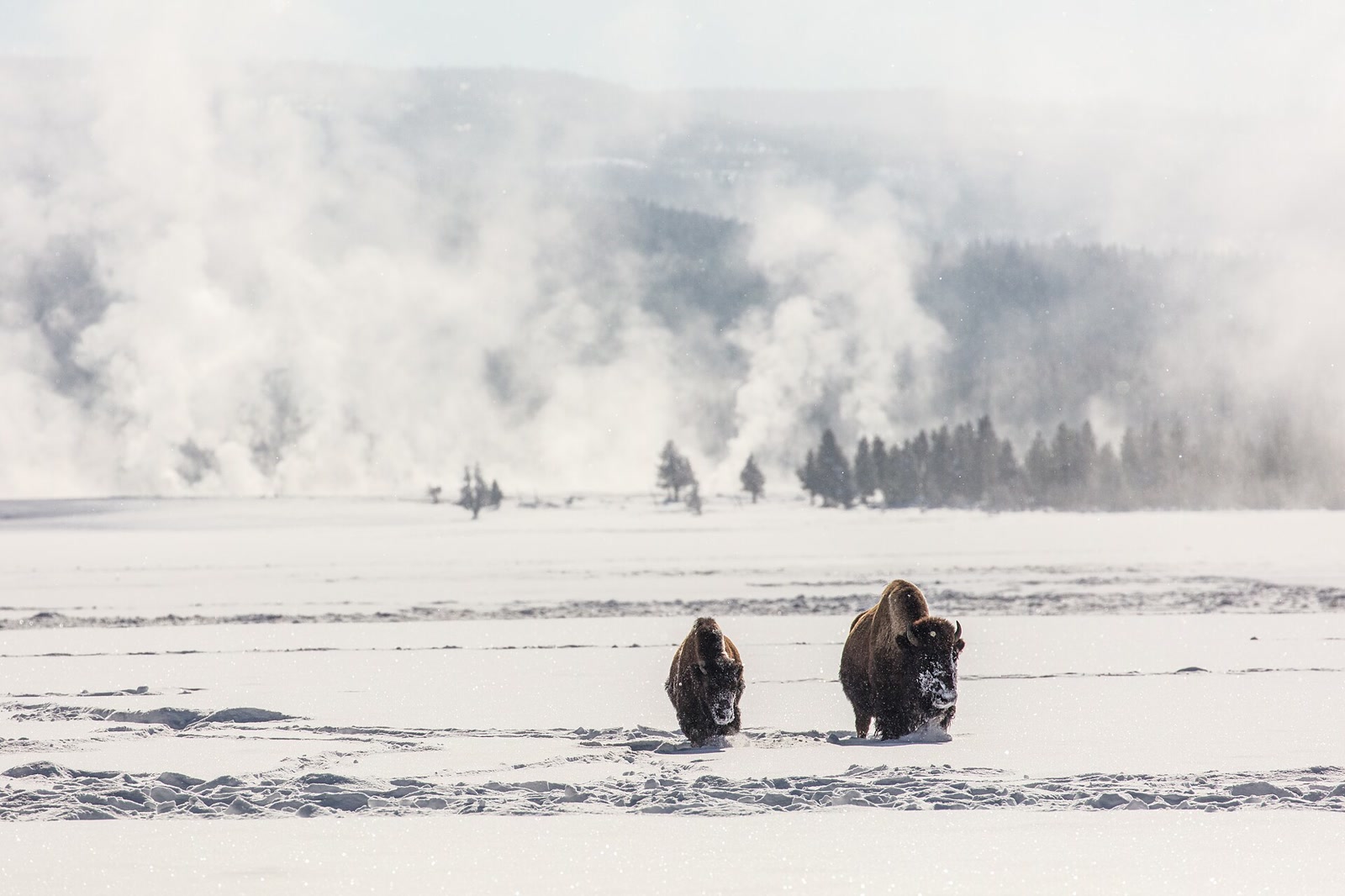
If you want the single most beautiful snow scene in the park system, Bryce Canyon makes a strong claim. The amphitheatre of orange hoodoos sits between about 8,000 and 9,000 feet, so snow is not a possibility here, it is the normal state of winter — and white snow on red rock, under a hard blue sky, is the park’s best look. The park stays open around the clock all year, and the first three miles of road, serving Sunrise, Sunset, Inspiration and Bryce Points, are ploughed first after every storm.
Go in dressed for the numbers: December and January highs average only about 36–37°F, with lows near 15°F. Trails dropping into the amphitheatre ice up, so carry traction devices — the Wall Street side of the Navajo Loop closes for the winter, while the rest of the loop and the Queen’s Garden stay walkable in good conditions. Rangers lead snowshoe walks in season. Entry is $35 per vehicle for seven days.
Yosemite: A Quiet Valley, a Closed High Country
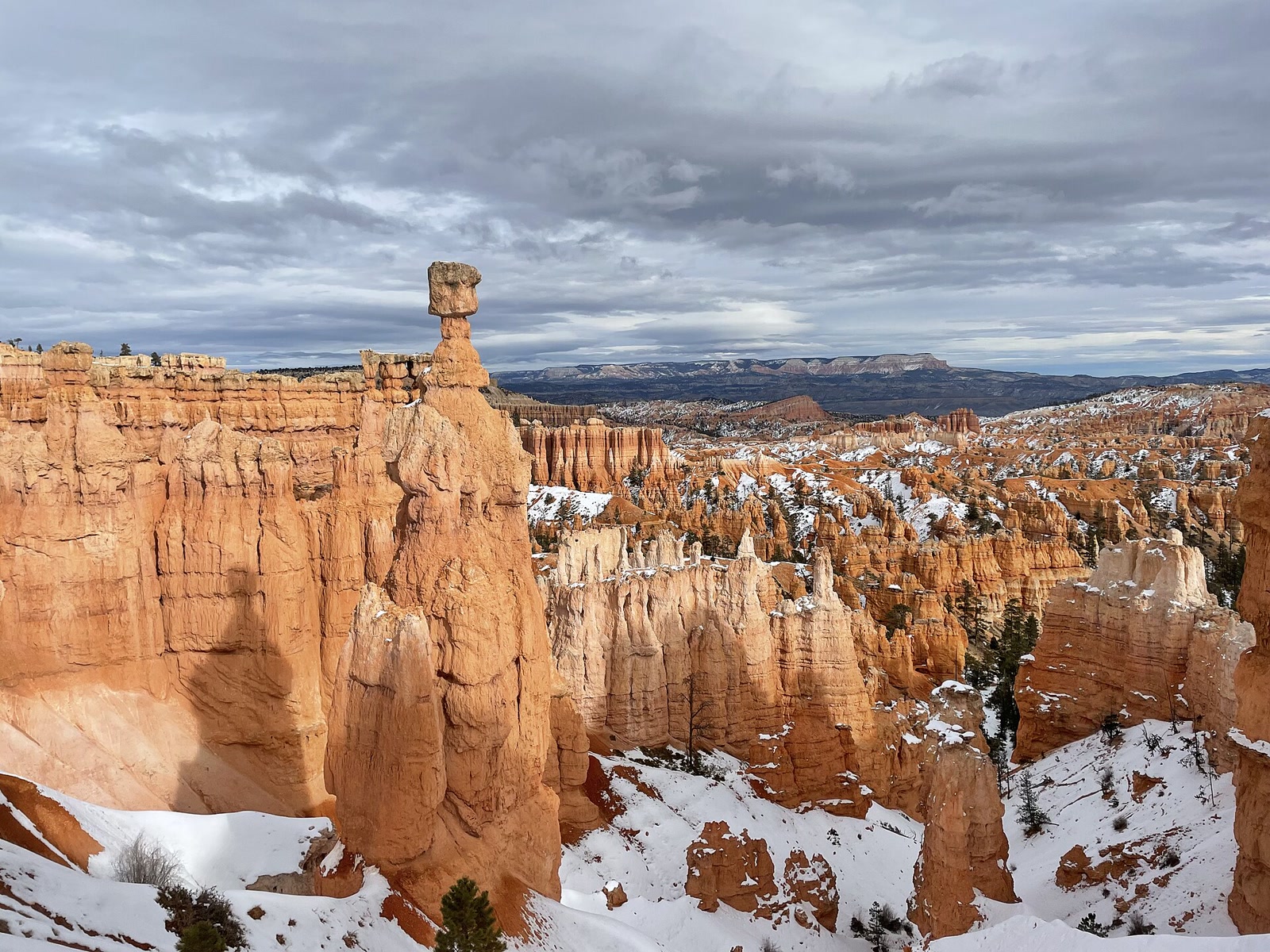
Winter Yosemite is a valley trip, and a lovely one. Yosemite Valley stays open to cars all year, the summer crowds are gone, the waterfalls run again with the winter rains, and on a snowy morning El Capitan and Half Dome over a white meadow floor look like a different park from the one in the postcards. What you give up is everything above the valley: Tioga Road and Glacier Point Road close for the season, usually from November until late May or June, so there is no east entrance and no drive to Glacier Point. The Glacier Point Road is ploughed only as far as the Badger Pass ski area, the small downhill and cross-country ski hill that is winter Yosemite’s bonus.
The practical winter skill here is the chain rule: storms can bring chain controls on any park road, and you may be required to carry chains whatever you drive. The lowest, least snowy way in is Highway 140 from Merced. Entry is $35 per vehicle for seven days.
Olympic: Hurricane Ridge on a Weekend-Only Road
Olympic National Park keeps its winter in one place: Hurricane Ridge, a subalpine summit at 5,242 feet, 17 miles up a mountain road from Port Angeles. When the winter season is running — it is scheduled to begin on November 28, 2026, weather permitting, and generally lasts through March — the ridge offers skiing, snowboarding, tubing and ranger snowshoe walks above a sea of snowy peaks, in a park better known for rainforest.
The catch is the calendar. In winter the road is typically open only Friday through Sunday and some holidays, roughly 9 a.m. to 4 p.m. for uphill traffic, and it can close on any of those days for snow and ice — as it already has this November. Every vehicle, four-wheel drive included, must carry tire chains above the Heart O’ the Hills entrance station from after Thanksgiving to April 1, and everyone must be back below that station by 5 p.m. Entry is $30 per vehicle for seven days. Check the road hotline the morning you go; a Hurricane Ridge plan is always a plan with a backup.
Zion: The One Season You Can Drive the Canyon Yourself
For most of the year, Zion Canyon’s Scenic Drive belongs to the shuttle buses and private cars are banned. Winter hands the road back. In the current schedule there is no shuttle from November 29 to December 25, 2026, and you can drive the Scenic Drive yourself, parking at the trailheads like a visitor from another era. The canyon in winter is cold in the shade and golden in the sun, the Virgin River runs clear, and trails like the Emerald Pools and the Riverside Walk are as quiet as they ever get. Angels Landing still needs its year-round permit.
One honest warning: the exception is the holiday week. From December 26 to January 2 the shuttle returns for the holidays, private cars come off the Scenic Drive again, and the park fills up. Either side of that week, winter is Zion at its calmest. Entry is $35 per vehicle for seven days.
Grand Canyon: The South Rim Stays Open, the North Rim Sleeps
The Grand Canyon has a winter answer and it is simple: the South Rim. The Village, Desert View and the park entrances stay open 24 hours a day, all year, and the rim in winter is a calmer place — cold, bright days, the odd snowfall dusting the rim, and viewpoints you sometimes have to yourself. Winter afternoon temperatures on the rim run roughly from the high 30s to the high 40s Fahrenheit, and the park ploughs South Rim roads, though storms can close them briefly.
The North Rim is the opposite story: it closes to all vehicles for the winter, from December 1 to May 14 this season, so there is no driving between rims and no North Rim day trip to plan. Below the South Rim, the upper sections of the corridor trails can be icy — traction devices are standard kit for winter hiking here. Entry is $35 per vehicle for seven days, and it covers both rims when both are open.
Death Valley: The Furnace Becomes a Hiking Park
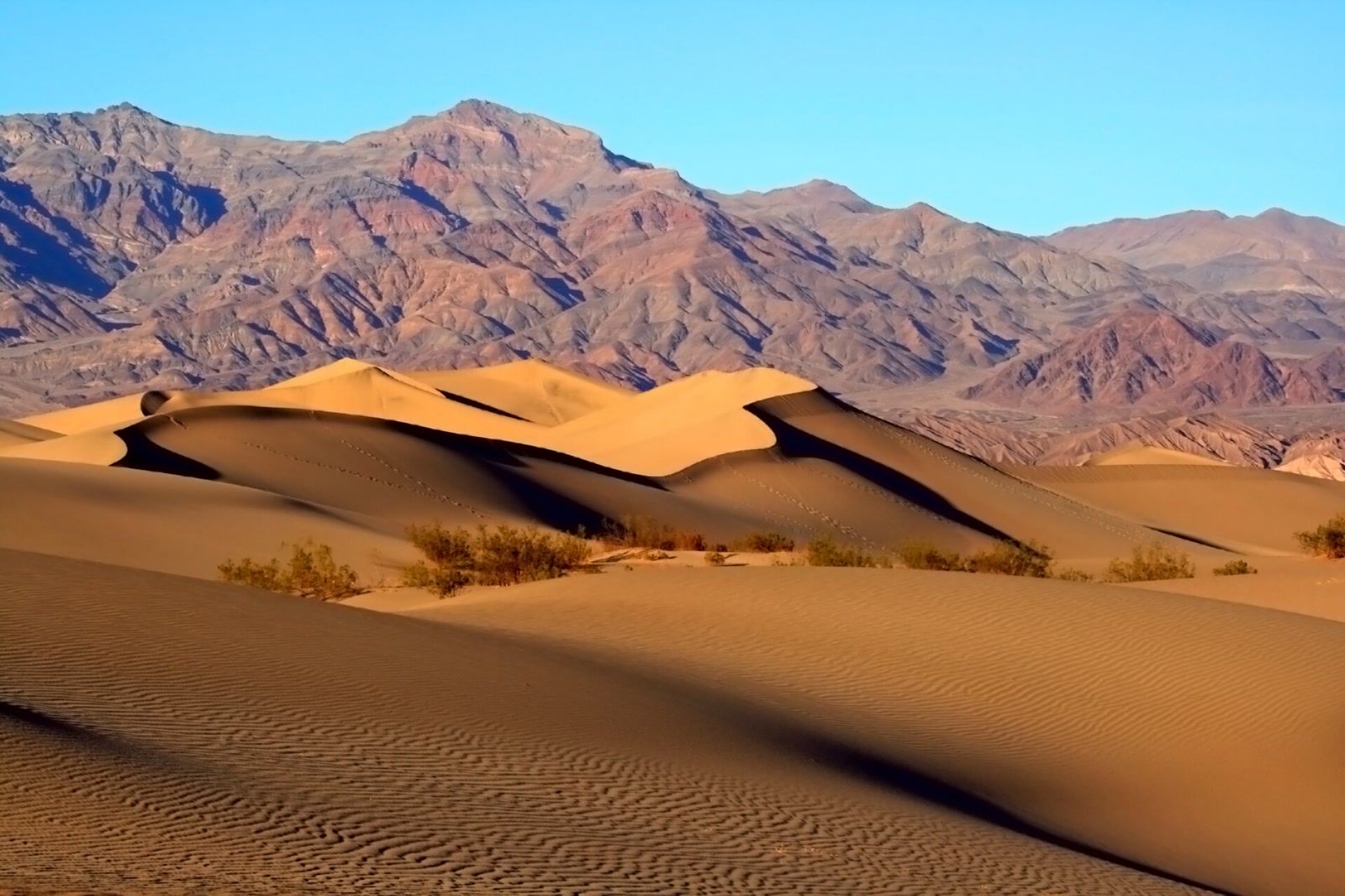
Death Valley is the clearest case of winter being the real season. The park the National Park Service itself says is best hiked from November to March becomes, in those months, one of the most comfortable deserts in North America. At Furnace Creek, average highs run about 65°F in December, 67°F in January and 73°F in February — t-shirt weather for the Mesquite Flat dunes at sunrise, the Badwater salt flats 282 feet below sea level, and the coloured folds of Artists Palette. This is when the long walks that are dangerous in summer become the whole point of the trip.
Two catches, both about cold rather than heat. Nights drop into the upper 30s and low 40s, so campers need real winter gear, and the high viewpoints are a different climate: temperatures fall 3 to 5 degrees for every 1,000 feet, and Dante’s View can be bitter while the valley floor is mild. Entry is $30 per vehicle for seven days — and note the park is cashless, so bring a card.
Saguaro and Big Bend: Desert Hiking Season in Full Swing
Arizona’s saguaro country and Texas’s big empty bend share the same winter logic: this is their prime time. At Saguaro National Park, which wraps around both sides of Tucson, winter days run from the high 50s to the mid-70s Fahrenheit, and November to March is the park’s busiest season for good reason — the giant cactus forest is at its most walkable, with mid-length hikes like the Valley View Overlook and the King Canyon Trail doable in the middle of the day. One entrance pass, $25 per vehicle for seven days, covers both the east and west districts.
Big Bend is the wilder version of the same trip. On the Rio Grande in remote West Texas, winter brings mild desert days and cold, star-crowded nights: the Window Trail and Lost Mine Trail in the Chisos Basin, and the walk into Santa Elena Canyon, are all at their best from November to March. Entry is $30 per vehicle for seven days. The catch is distance — this is one of the most remote parks in the Lower 48, fuel and food are limited, and the Thanksgiving and Christmas weeks fill its campgrounds, so book ahead and arrive with a full tank.
Everglades: Dry Season, When the Wildlife Comes to You
The Everglades inverts the usual winter logic: nothing here is about weather you can wear, it is about water you cannot see. From December to April the dry season drops the water levels across the marsh, and the fish, alligators and wading birds concentrate in the remaining sloughs and pools — exactly where the boardwalks are. On the Anhinga Trail near the Homestead entrance, alligators, herons, turtles and anhingas drying their wings gather at close range; at Shark Valley, the 15-mile loop road fills its canal banks with alligators, and manatees drift around the Flamingo marina in the cooler months.
Just as valuable is what is missing: the mosquitoes that own this park in summer drop to a nuisance you can mostly ignore, and the daily thunderstorms go away. Winter is the park’s peak season, so the famous boardwalks are busy — go early in the morning, when the wildlife is active and the tour groups are not. Entry is $35 per vehicle for seven days, valid at all entrances.
Before You Book: Fees, Chains and Closure Checks
A few system-wide points make winter planning easier. First, the passes: most parks on this list charge $35 per vehicle for a seven-day pass, with Death Valley, Big Bend and Olympic at $30 and Saguaro at $25. If your trip strings three or more parks together, the $80 America the Beautiful annual pass for US residents usually wins. One 2026 change overseas visitors must budget for: at the busiest parks — including Yellowstone, Bryce, Zion, Grand Canyon, Yosemite and the Everglades — non-US residents aged 16 and over pay an extra $100 per person on top of the vehicle fee, unless they enter on an annual pass; the non-resident annual pass costs $250.
Second, treat every winter road statement in this guide as a pattern, not a promise. Snow closes ploughed roads for hours or days, Hurricane Ridge can shut on a blue morning, and shuttle calendars change. Check the park’s alerts page on nps.gov the week you travel and again the day before, carry chains anywhere mountains are involved, and keep one flexible day in the itinerary. Do that, and winter stops being the season the parks close. For half of them, it is the season they finally open up.