
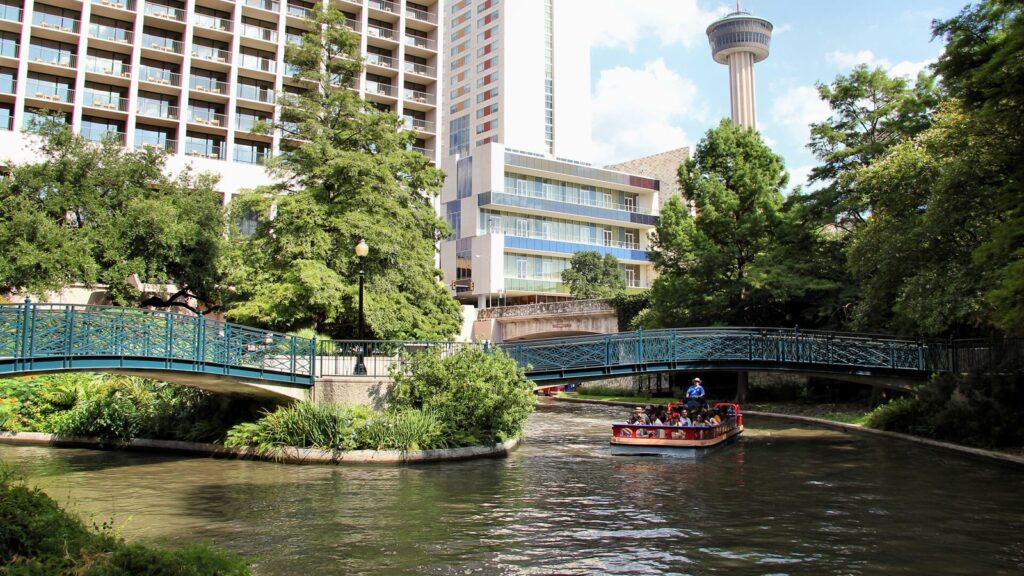
San Antonio is the rare American city where the main attraction is a river, the second attraction is a church the size of a village hall, and both of them are free. The list of things to do in San Antonio starts with the Alamo and the River Walk, and most visitors never get much further than those two. That is a shame, because the city also holds the only UNESCO World Heritage Site in Texas, a brewery that turned into the best food neighbourhood in the state, and a Mexican market that feels like a festival even on a quiet Tuesday.
The good news is that San Antonio is easy to organise. Downtown is compact and walkable, the river ties the centre together like a thread, and the historic missions run in a line down that same river to the south. Give the city two days and you can do it justice: one for downtown, the river and the Pearl, and one for the missions, with a market, a tower or a cave fitted in wherever your energy lasts.
The Alamo: A Small Church With an Outsized Story
Every San Antonio trip starts here, and it should. The Alamo began life in 1718 as Mission San Antonio de Valero, the first of the city’s five Spanish missions, and became famous in 1836, when a small Texan garrison held its church and compound against the Mexican army for thirteen days. The church that stands on Alamo Plaza today is the building in every photograph: a pale stone facade, no steeple, and a line of visitors outside it from early morning.
The practical part surprises people. Entering the Alamo Church is always free, but you cannot simply walk in: the Alamo requires a free timed-entry ticket, reserved ahead on its official website, and in busy seasons the slots go quickly. The grounds, the Long Barrack and the plaza outside need no ticket at all, so even a last-minute visit gets you the gardens, the walls and the story panels. The Alamo is open daily from 9 a.m. to 5:30 p.m., closing only on Christmas Day. Guided tours and the Alamo Exhibit in the Ralston Family Collections Center are paid extras; the church itself, which is the part everyone comes for, costs nothing.
One Level Down: The Downtown River Walk
From Alamo Plaza, walk a block in almost any direction, find a stairway, and go down. The River Walk sits roughly one storey below street level, a green, shaded corridor of stone paths, footbridges and restaurant terraces built along a bend of the San Antonio River. It is a free public park, and the downtown section never really closes. The full River Walk runs about 15 miles, with around five of those miles downtown, but the part visitors mean is the loop: a horseshoe of water lined with cafes, hotels and cypress trees.
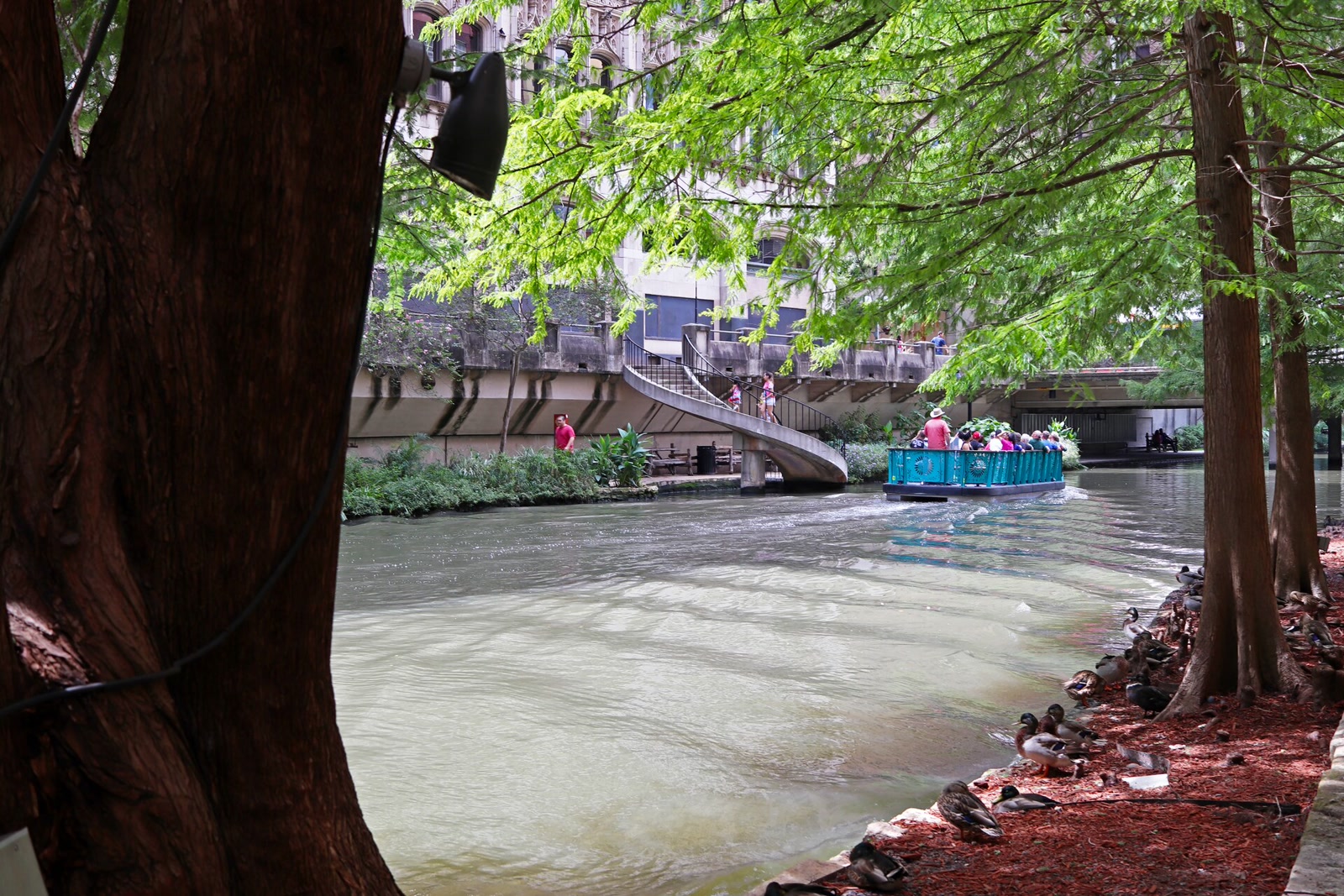
Do the loop twice, once in daylight and once after dark, because they are different places. In the morning it belongs to joggers, herons and people drinking coffee under the trees. In the evening the terraces fill, the bridges light up, and the narrated tour barges run their slow circuit while guides tell the city’s story from the water. The barge ride is the one downtown splurge worth making early in a trip, because it works as an orientation: you will spend the rest of your visit recognising corners you first saw from the boat.
North on the Museum Reach: Art, Locks and a Quieter River
Most visitors stop at the loop, which means the best walk in the city stays half empty. North of downtown, the Museum Reach, opened in 2009, carries the river path about a mile and a half further, past public art installations, a working lock that lifts the barges, and long landscaped banks where the crowds thin to almost nothing. It is the stretch locals actually use.
Halfway along it stands the San Antonio Museum of Art, housed in the castle-like former Lone Star Brewery and holding collections that span 5,000 years, from Egyptian and Roman antiquities to one of the strongest Latin American art wings in the country. Back downtown, the Briscoe Western Art Museum fills the city’s old 1930s public library on the riverbank with paintings, sculpture and artefacts of the American West, and its sculpture garden is one of the calmest spots on the whole downtown walk. Between the two museums and the river path itself, the Museum Reach makes an easy, unhurried half day.
The Pearl: A Brewery That Became a Neighbourhood
The Museum Reach ends at the Pearl, and the Pearl is where San Antonio eats. The Pearl Brewery brewed beer on this 22-acre site from 1883 to 2001; instead of demolishing the old plant, the city turned it into a district of restaurants, shops and lawns built in and around the brewery buildings. The centrepiece is Hotel Emma, a hotel inside the old brewhouse, named for Emma Koehler, who ran the brewery for decades after her husband’s death and steered it through Prohibition.
Come hungry. The Bottling Department, San Antonio’s first food hall, fills the old bottling plant with small kitchens, and the district around it stacks up bakeries, barbecue and some of the most talked-about dining rooms in Texas. The Culinary Institute of America has a campus here, which tells you how seriously the neighbourhood takes food; San Antonio is, after all, a UNESCO Creative City of Gastronomy. On weekend mornings a farmers market takes over the plaza. If the downtown River Walk is San Antonio showing off for guests, the Pearl is San Antonio feeding itself.
Four Missions, One National Park, and a World Heritage Listing
South of downtown, the river runs through the second half of the city’s story. San Antonio Missions National Historical Park protects four Spanish colonial missions: Concepción, San José, San Juan and Espada, founded in the early 1700s as self-contained farming communities built around their stone churches. In July 2015, the four missions were inscribed, together with the Alamo, as a UNESCO World Heritage Site, still the only one in Texas.
Two things set the park apart. First, it is free: no entrance fee, no parking charge, and the park is open daily from 9 a.m. to 5 p.m. Second, these are not ruins or museums in the usual sense. All four mission churches are still active Catholic parishes, so the church you are photographing in the morning may hold a wedding in the afternoon. Note what the park does not include: the Alamo, the fifth mission, stands apart downtown under its own management. The four park missions lie in a line along the river, each a few miles from the next, and together they show the fuller, quieter version of the mission story the Alamo only starts.
Mission San José: The Queen of the Missions
If you only have time for one of the four, make it San José. Founded in 1720, it is the largest of the missions and the most complete: a walled compound with the restored Indian quarters along its walls, a granary, a working gristmill, and the park’s visitor centre, where a short film and museum fill in the background before you walk the grounds. Rangers lead tours from here, and this is the best place to catch one.
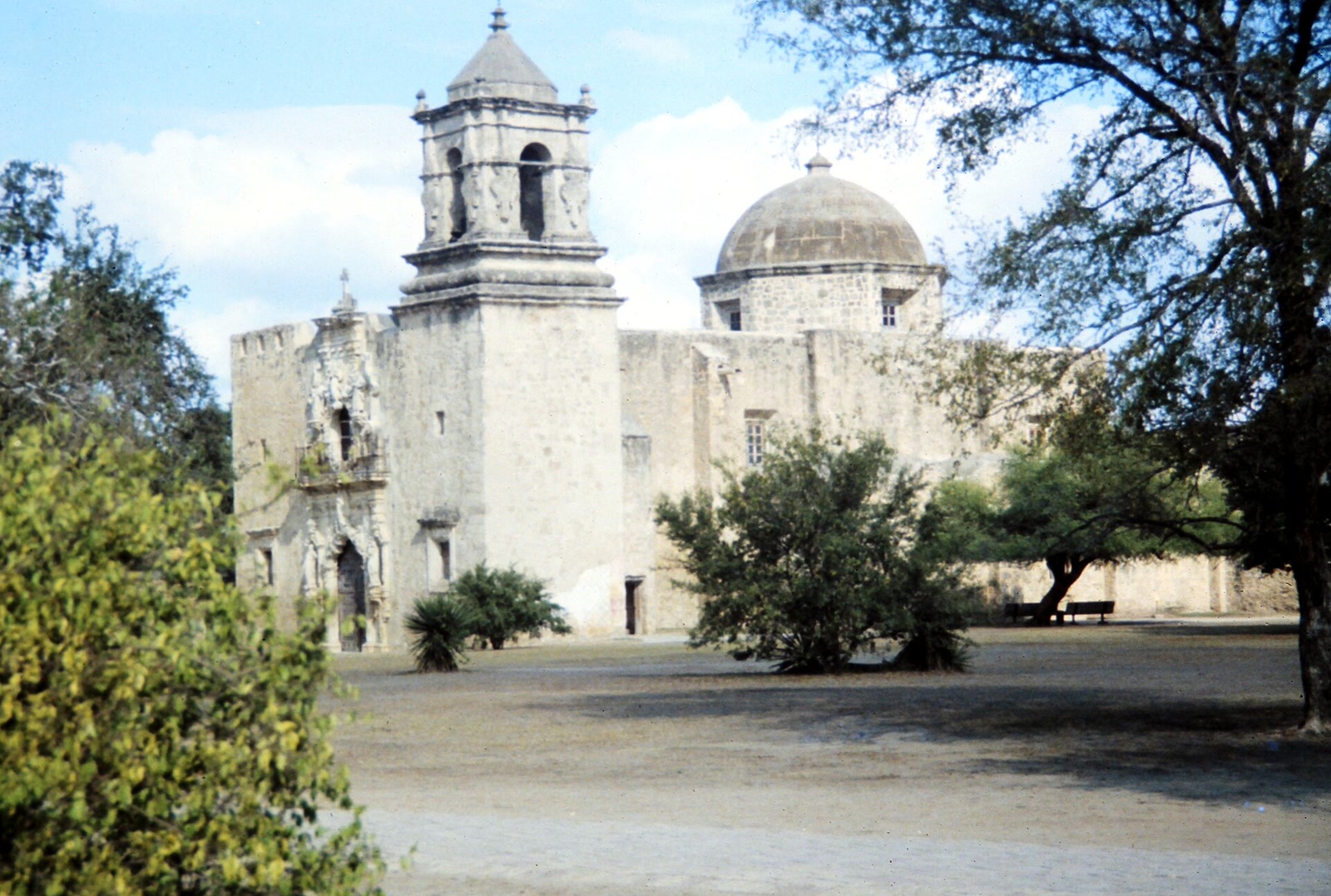
The church itself justifies the trip. Its carved stone facade is the finest piece of Spanish colonial carving in the park, and on the south side of the sacristy sits the famous Rose Window, sculpted in 1775 and often called one of the finest examples of Spanish Baroque stonework in North America. San José earned its nickname, Queen of the Missions, honestly: it reads less like a frontier outpost and more like a small stone town that happened to survive three centuries intact.
Concepción, San Juan and Espada: The Three People Skip
The other three missions reward anyone who keeps driving south. Mission Concepción, the closest to downtown, holds the oldest unrestored stone church in the United States, dedicated in 1755 and looking much as it did then, with traces of the original painted frescoes still visible inside. Because it was never rebuilt, it feels the most genuinely old of the four.
San Juan Capistrano, further south, was the farming mission, known for its orchards and fields, and its whitewashed chapel and peaceful grounds suit its working past. At the end of the line, Mission Espada is the smallest and most rustic, and just up the road stands its engineering marvel: the Espada Aqueduct, an 18th-century stone aqueduct that still carries water across Piedra Creek to the mission fields, part of an irrigation system older than the United States. The southern missions draw a fraction of San José’s visitors, and on a weekday morning you may have Espada’s churchyard almost to yourself.
Riding the Mission Reach Between Them
You do not have to drive between the missions. The Mission Reach, the southern eight miles of the River Walk, runs a paved hike-and-bike trail along the restored river from the edge of downtown all the way to Espada, passing through portals that lead up to each mission. The missions sit roughly two to three miles apart, which by bike is a gentle rhythm: ride, lock up, wander a church and its grounds, ride on.
Rent a bike downtown, start early, and the whole chain makes a fine half day, with the river doing the navigation for you. The restored banks here are the opposite of the downtown loop: wide grass, wildflowers, birds on the water, and almost no buildings. Drivers are not missing out entirely, since each mission has its own free parking, but the trail version turns four separate stops into one continuous journey, and it explains the missions better than any panel: they were built on this river, fed by this river, and strung along it like beads.
Market Square: Mariachi, Pan Dulce and a Hundred Small Shops
Back downtown, leave the river and walk west to Historic Market Square, a three-block plaza that Visit San Antonio bills as the largest Mexican market in the United States. Its two halves are El Mercado, an enclosed market building of speciality shops, and the Farmer’s Market Plaza around it; together they hold more than 100 locally owned shops and stalls selling pottery, textiles, leather goods, folk art and sweets. The square is a city facility, open daily from 10 a.m. to 6 p.m., and it costs nothing to wander in.
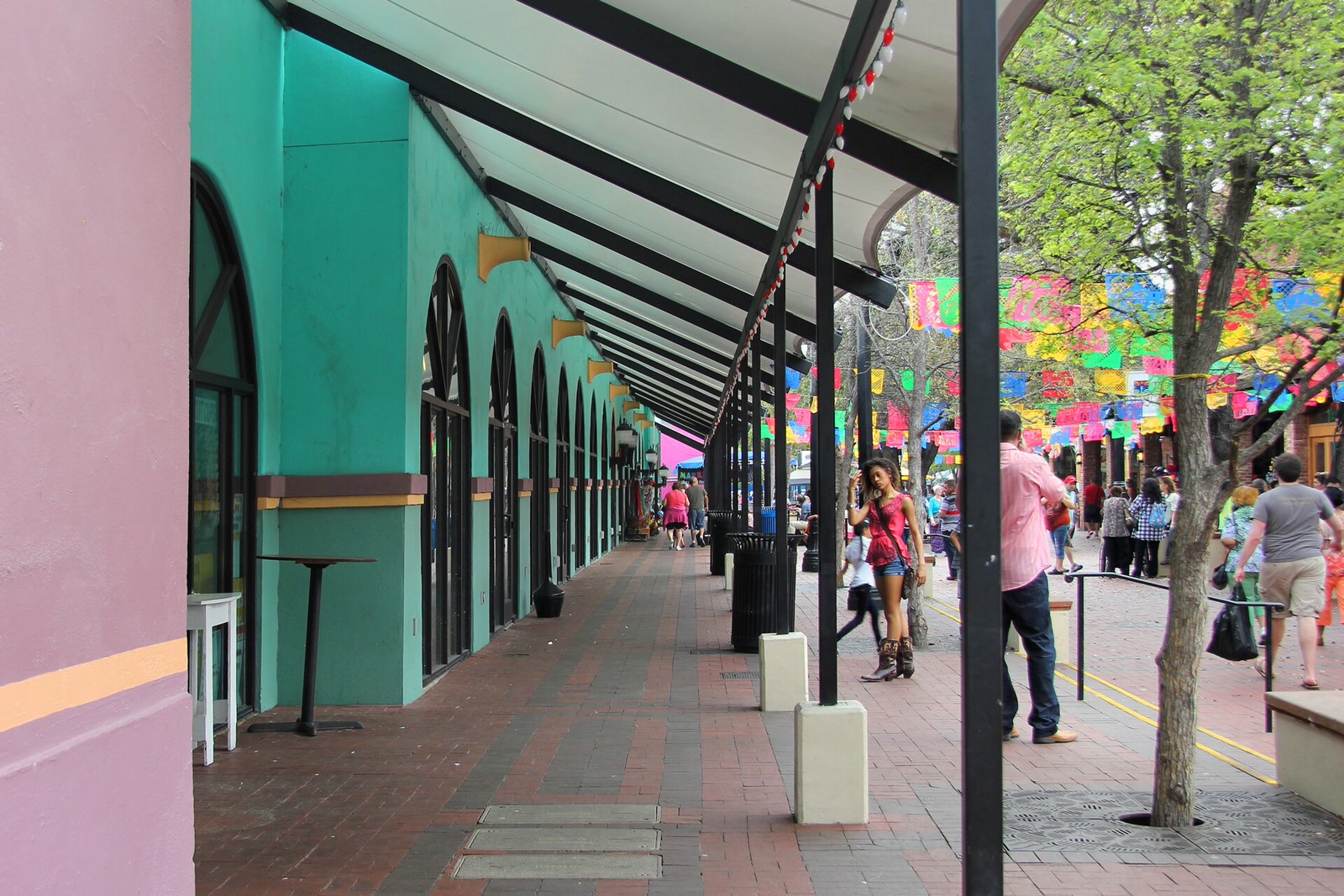
Market Square works as well for eating as for shopping. Mariachi bands play on the plaza, the air smells of grilled corn and fresh pan dulce, and Mi Tierra Café y Panadería, a San Antonio institution open since 1941, serves Mexican food and baked goods to a room decorated like a permanent fiesta. Come here for the souvenirs you actually want to keep, and time a visit for a festival weekend if you can: this square is where the city holds its Cinco de Mayo celebrations, and it knows how to throw them.
Above the City and Below It: The Tower and the Caverns
For the view, ride the elevator up the Tower of the Americas in HemisFair Park. Built as the centrepiece of the 1968 World’s Fair, held for the city’s 250th anniversary, the tower rises 750 feet and was the tallest observation tower in the United States until 1996. Its top holds an observation deck and a revolving restaurant, and on a clear day the whole geography of your trip, river, missions and all, lays itself out below you.
For the opposite direction, drive about half an hour north to Natural Bridge Caverns, the largest cavern in Texas. Four St. Mary’s University students discovered it in 1960, squeezing through a crawlspace beneath a 60-foot natural limestone bridge that gives the place its name, and the guided tours now walk you through chambers of formations that are still growing. It makes a natural pairing with a second Hill Country day: if you have one, the wine country and German Main Street of Fredericksburg, one of the classic things to do in Fredericksburg TX, is the other run out of the city worth making. San Antonio first, though. Start with the church, walk the river down to the missions, and let the city set its own order.