
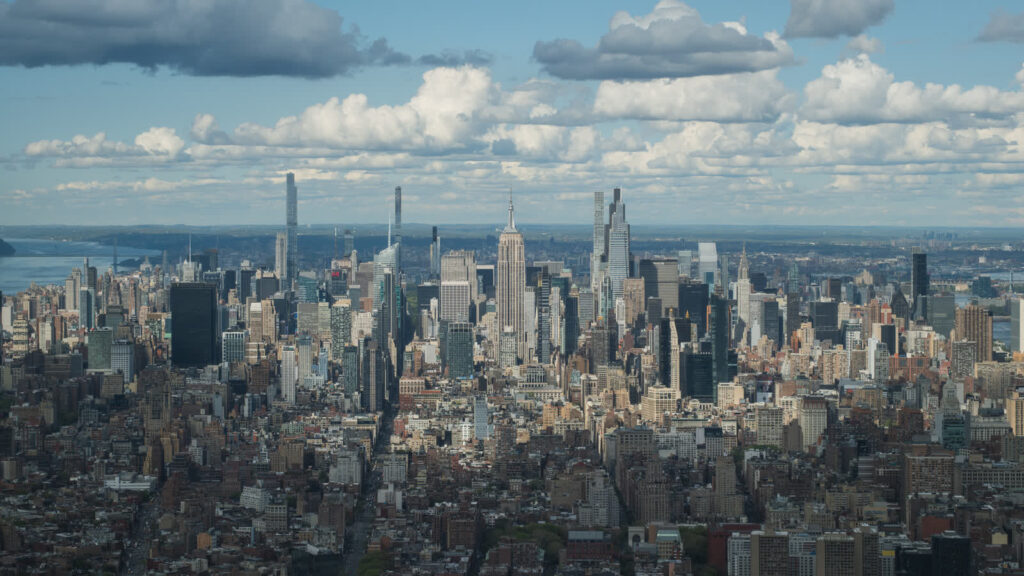
New York is the most expensive city in America — and also the easiest American city to see cheaply, because its best sights are its streets, its parks, and its skyline. This New York itinerary shows you how to do three days on a budget: one paid observatory, one ferry, two museums, and everything else free, with every price checked on the official sites on 11 November 2026.
The short answer: about $761 to $836 per person for three days, including a Manhattan hotel, the subway, four paid attractions, and food. The hotel is the biggest line by far — and the one line where the budget is won or lost. Everything below is built around that, for two adults sharing a room.
Day 1: Midtown and Central Park
Start at Top of the Rock. It is the cheaper of New York’s two famous observatories — from $42 for an adult, against from $46 at the Empire State Building — and it has the better view, because the Empire State Building is in it. Go in the morning, when the light is clearest and the crowds are thinnest. A ticket starts from $42 for an adult (13–61), from $36 for a child (6–12), and from $40 for a senior (62+), date- and time-based.

Spend the afternoon in Central Park. It is free to enter — 840 acres from 59th to 110th Street, the first public park built in America — and it is the best free afternoon in the city: the Bethesda Terrace, the Bow Bridge, the Reservoir, and the lawns. Walk south to north, or rent a bike and do the loop. Then walk down to Times Square in the evening. It is a public plaza with no admission charge, and it is worth seeing once, at night, when the screens are on. One evening is enough.
Day 1 costs $42 in attractions. Everything else is walking.
Day 2: Downtown, the Statue, and Two Free Rides
Take the ferry to the Statue of Liberty and Ellis Island in the morning. The ferry is the one paid ticket of the day: general admission starts from $26 for an adult and from $17 for a child (4–12), including all fees and taxes, with free cancellation (refunds minus a $2.50 processing fee) if you cancel at least 24 hours before departure. Book the first ferry of the day — the island is quietest before the crowds arrive, and you will be back in Manhattan by lunch.
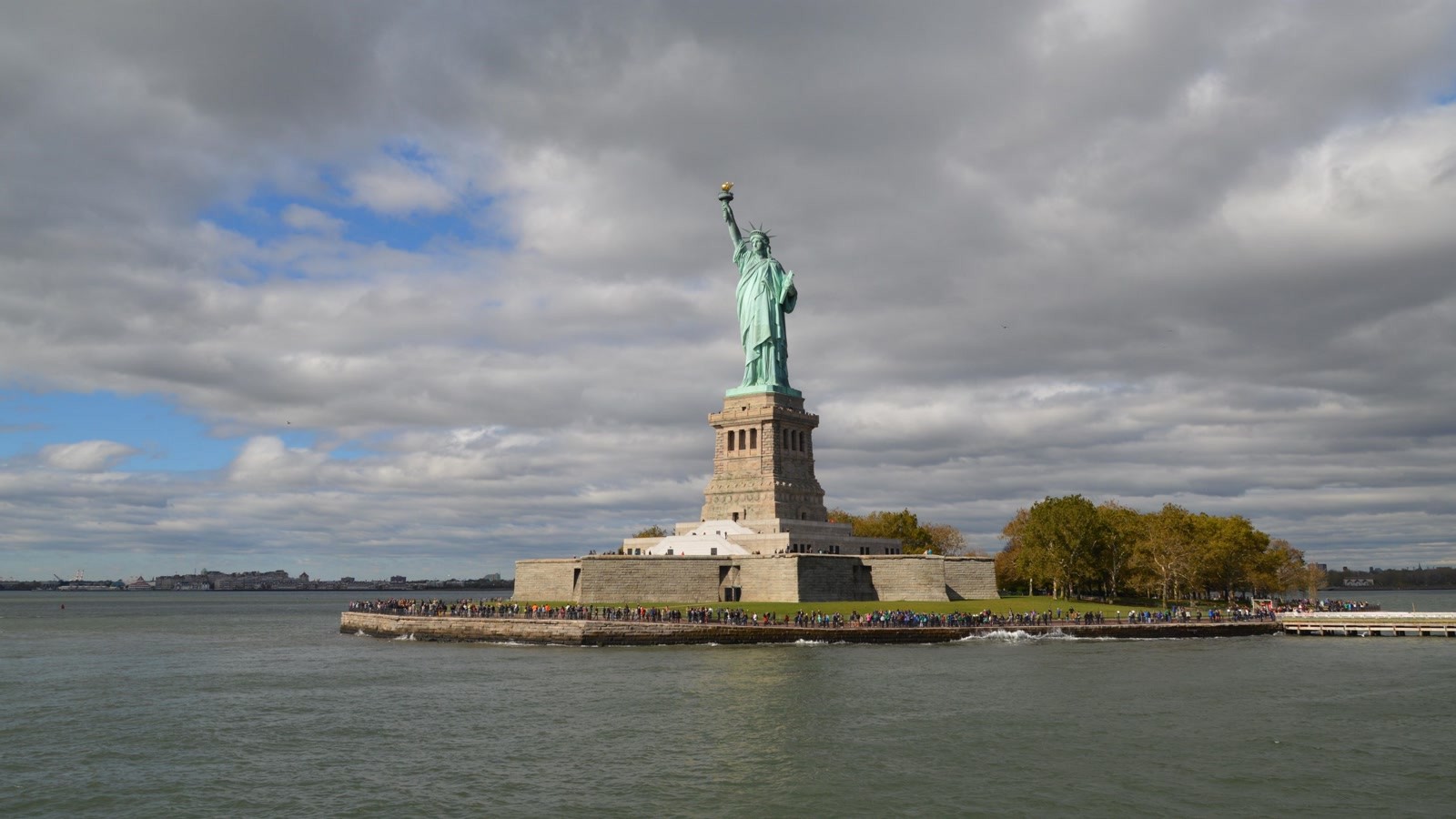
Walk back through Lower Manhattan to the Brooklyn Bridge and walk across it. The pedestrian promenade is on the upper level, open at all times, with no toll — and the walk back toward Manhattan, with the skyline in front of you, is the best free view in the city. Then take the Staten Island Ferry from Whitehall Terminal: it is free, runs 24 hours a day every 15 to 30 minutes, and the 20-to-25-minute ride past the Statue is the best free boat ride in America. Ride it there and straight back — the round trip costs nothing and takes about an hour.
Day 2 costs $26 in attractions. The two best rides of the day are free.
Day 3: The Museums and the High Line
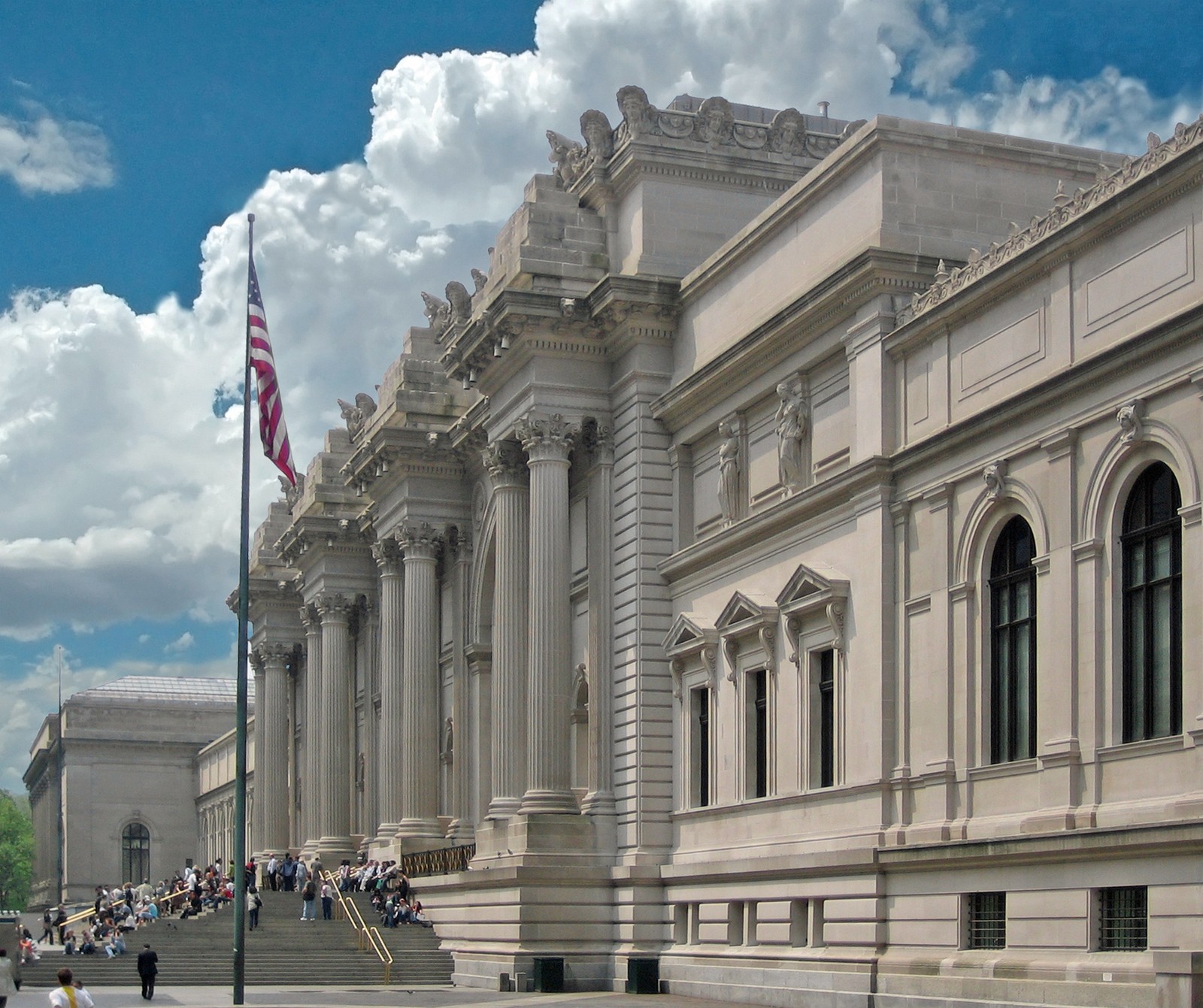
Day 3 is the museums. The Met is $30 for an adult, $22 for a senior (65+), $17 for a student, and free for children 12 and under — and for New York State residents and NY, NJ, and CT students, admission is pay-what-you-wish. The American Museum of Natural History is $37 for an adult, $30 for a senior or student, and $22 for a child (ages 3–12) for general admission; New York State residents pay what they wish with ID. Do one in the morning and one in the afternoon, or pick one and spend the other half of the day outside — the Met alone can take a full day, and nobody sees all of it in one visit.
Spend the late afternoon on the High Line, the elevated park built on an old railway line above Chelsea. It is a public park, free to enter, open daily from 7 a.m. to 10 p.m. through 30 November (7 a.m. to 8 p.m. in winter), with free docent-led tours. Walk it south to north at sunset, then eat in Chelsea — the neighbourhood below the park has the best casual food in Manhattan for the money.

Day 3 costs $67 in attractions. It is the most expensive day of the three — and the day you can cut hardest (see the cost table below).
What It Costs
Here is the full cost of the three-day budget trip for one person, based on two adults sharing a room and the prices verified on 11 November 2026. The hotel is a single representative example — the Aloft by Marriott New York Chelsea — not an average.
| Item | Cost per person |
|---|---|
| Attractions (Top of the Rock $42 + Statue ferry $26 + The Met $30 + AMNH $37) | $135 |
| Hotel, per person sharing (3 nights, after tax) | $428.86 |
| Subway (OMNY weekly cap) | $35 |
| Airport transfer (JFK AirTrain + subway) | $11.75 |
| Food, per person (estimate) | $150–$225 |
| Total per person | About $761–$836 |
The hotel line is the Aloft Chelsea at $246 a night — $737 for 3 nights before tax, $857.71 after the 14.75% tax and the $4-a-night city tax, split between two adults. The after-tax total is calculated from Booking.com’s stated rates, not shown by Booking.com itself, and Booking.com warns its prices are estimates. Free cancellation before 6 July 2027, no prepayment, pay at the property. Breakfast is not included — it is $20 per person per night extra, so eat elsewhere.
The food line is an estimate, not a verified price: roughly $50 to $75 per person per day for casual meals, snacks, and coffee. No official source publishes a per-day food figure for New York, so this is a planning number — bagels and pizza slices pull it down, sit-down dinners push it up.
Three ways to cut the total further. First, skip the American Museum of Natural History ($37) and spend Day 3 entirely on free sights — the total drops to about $724 to $799. Second, fly into LaGuardia instead of JFK: the Q70 bus to the subway is free, so the airport transfer is $3.00 instead of $11.75. Third, pick the Empire State Building ($46 from) or Top of the Rock ($42 from) — not both. The observatories are the one place in this itinerary where paying twice buys you almost the same view.
Flights are not included in these totals. Neither is a Broadway ticket — see the TKTS section below.
Getting Around: The Subway and the OMNY Cap
The subway is the budget traveller’s best friend in New York, and it got simpler in 2026. A single ride costs $3.00, and with OMNY — the contactless payment system, a phone, a bank card, or a physical OMNY card — you never pay more than $35 in a 7-day period: after 12 trips, the rest of the week’s rides are free, as long as you use the same card or device for every ride. Children under 44 inches ride free, up to three per fare-paying adult.
One thing most guides still get wrong: the 7-day unlimited MetroCard no longer exists. MetroCards stopped being sold in 2025, and as of 1 January 2026 you can no longer buy or refill one. The $35 OMNY weekly cap is its replacement — so do not go looking for a MetroCard, and do not believe any guide that tells you to buy one. A physical OMNY card costs $5 at station vending machines or $1 at retail locations if you would rather not tap your phone.
Transfers are free from subway to local bus and from local bus to subway or bus within two hours; a second subway ride is not free, but at $3.00 a ride with a $35 weekly cap, the subway is the cheapest line in the whole trip.
Broadway on a Budget
Broadway is the one New York experience that looks unaffordable until you know about TKTS. The Times Square booth — Broadway at West 47th Street — sells same-day Broadway and Off-Broadway tickets at up to 50% off, plus next-day matinee tickets, with an $8 service charge per ticket and a limit of six tickets per person. It is open Monday, Tuesday and Friday from 3 p.m. to 8 p.m., and Wednesday, Thursday, Saturday and Sunday from 11 a.m. to 8 p.m. A second booth at Lincoln Center (61 West 62nd Street) is open Tuesday to Saturday, 11 a.m. to 6 p.m.
The board is live — it was updated on 10 November 2026 when this guide was checked — and the discount applies to the productions’ designated seats, not to rush tickets. Go in the afternoon, check the board, and pick a show from what is actually available that day rather than deciding in advance. A $200 seat at half price, plus the $8 charge, is still the cheapest Broadway ticket you will find.
Getting In Cheap: Which Airport
New York has three airports, and the cheapest way in is not the closest one. LaGuardia is the cheapest: the Q70 bus to the subway is free, so the trip to Manhattan costs $3.00 — the subway fare alone. JFK costs $11.75: the AirTrain is $8.75 plus the $3.00 subway fare (children under 5 ride the AirTrain free). Newark costs $17.25 by NJ Transit to Penn Station, AirTrain included, in about 30 minutes — or $15.30 via Newark Penn Station and the PATH train to the Financial District.
Fly into LaGuardia if the fare is close. The $8.75 you save at JFK buys a bagel and a coffee; the $14.25 you save against Newark buys lunch.
Where to Stay
The hotel in the cost table above — the Aloft by Marriott New York Chelsea, 132 West 28th Street — is one example, not a recommendation of the neighbourhood: no official source this guide checked states that one area is cheaper than another, so this guide makes no claim about Midtown against Long Island City or Brooklyn. The Aloft scores 8.3 (“Very Good”) from 1,267 reviews, with a location score of 9.4, and the King Room sleeps two adults.
Whatever hotel you choose, the rules are the same. Book a room for two adults sharing, watch the tax line — New York adds 14.75% tax plus a $4-a-night city tax, which turned a $737 stay into $857.71 in this guide’s example — and check the cancellation terms before you pay: the Aloft rate in this guide cancels free until 3 days before arrival, with the first night charged after that. Book early for July, when the best rooms sell out months ahead.
Frequently Asked Questions
How much does a 3-day trip to New York cost?
About $761 to $836 per person on the budget plan in this guide, based on prices verified on 11 November 2026: $135 in attractions, $428.86 for the hotel per person sharing, $35 for the subway, $11.75 for the airport transfer, and an estimated $150 to $225 for food. Flights are not included.
Is 3 days enough for New York?
Yes, for the essentials — one observatory, the Statue ferry, two museums, Central Park, the High Line, the Brooklyn Bridge, and Times Square. You will not see everything, and you will not want to: three full days is the right length for a first budget trip.
Do you need a MetroCard in New York?
No — MetroCards stopped being sold in 2025, and you can no longer buy or refill one. Use OMNY (a phone, a bank card, or a $5 physical OMNY card) and you will never pay more than $35 in a week.
What is free in New York?
Central Park, the High Line, the Staten Island Ferry, the Brooklyn Bridge walk, and Times Square — all free to enter or walk, with no admission charge. The ferry is the only one the city states explicitly as free; the others are free because they are public parks, a public bridge, and a public plaza.
Is New York expensive?
The hotel is the expensive part — $428.86 per person for three nights in this guide’s example, more than half the total. The city itself is cheap once you are there: the subway caps at $35 a week, the best sights are free, and a $3.00 slice is still a real meal.
The Short Version
New York rewards the traveller who walks. Three days, four paid tickets, and everything else free: Top of the Rock on Day 1, the Statue ferry and two free rides on Day 2, the museums and the High Line on Day 3. Pay with OMNY, never more than $35 a week on the subway, and do not go looking for a MetroCard — it no longer exists. Book the hotel early, watch the tax line, and fly into LaGuardia if the fare is close. For the non-budget version of the same city, see our 3-day first-timer’s itinerary.