
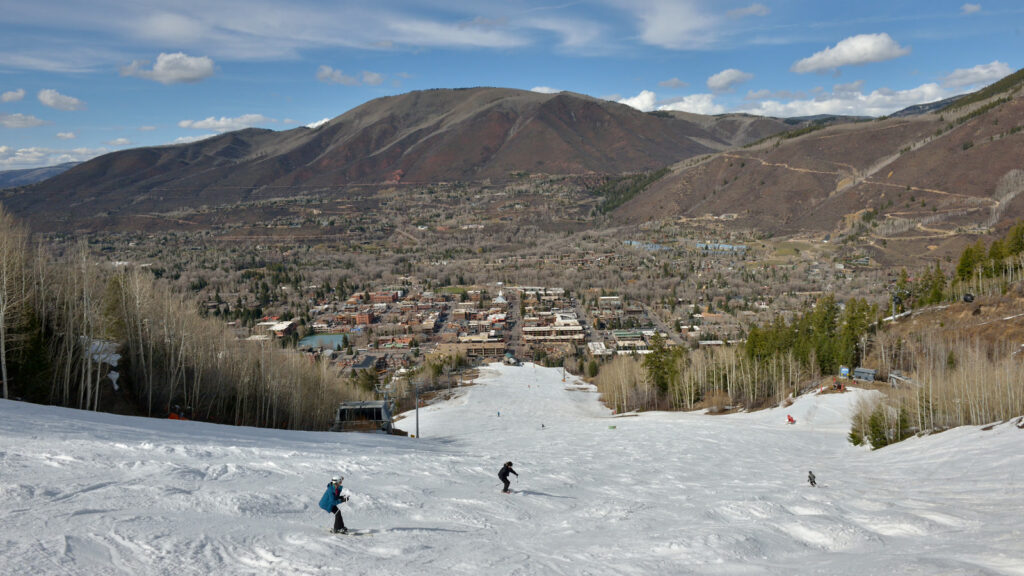
Aspen is the rare ski town where the mountain is not the whole story. Four ski areas spread across the valley, a Victorian main street runs straight at the slopes, and in December the whole place dresses up for a twelve-day Christmas festival. This guide to the best things to do in Aspen Colorado is built for a winter visit: the skiing first, because that is what brings most people, then the gondola ride anyone can take, the famous view that winter makes you work for, and the warm indoor stops that fill the short days. Getting here takes effort — the last stretch is a mountain drive, and in winter most travellers come the long way, up the Roaring Fork Valley from Glenwood Springs.
Four Mountains, One Lift Ticket
Aspen’s ski pass covers four separate mountains — 5,758 acres in all — and locals argue about them the way other towns argue about football teams. Aspen Mountain, which everyone calls Ajax, rises directly from downtown and has no beginner runs at all: it is a steep, fast mountain that deposits you back on the town’s streets at the end of every run. Aspen Highlands is the locals’ favourite, a rough-edged mountain famous for the Highland Bowl, where skiers hike along a ridge to earn turns in a vast, high bowl under a 12,392-foot summit.
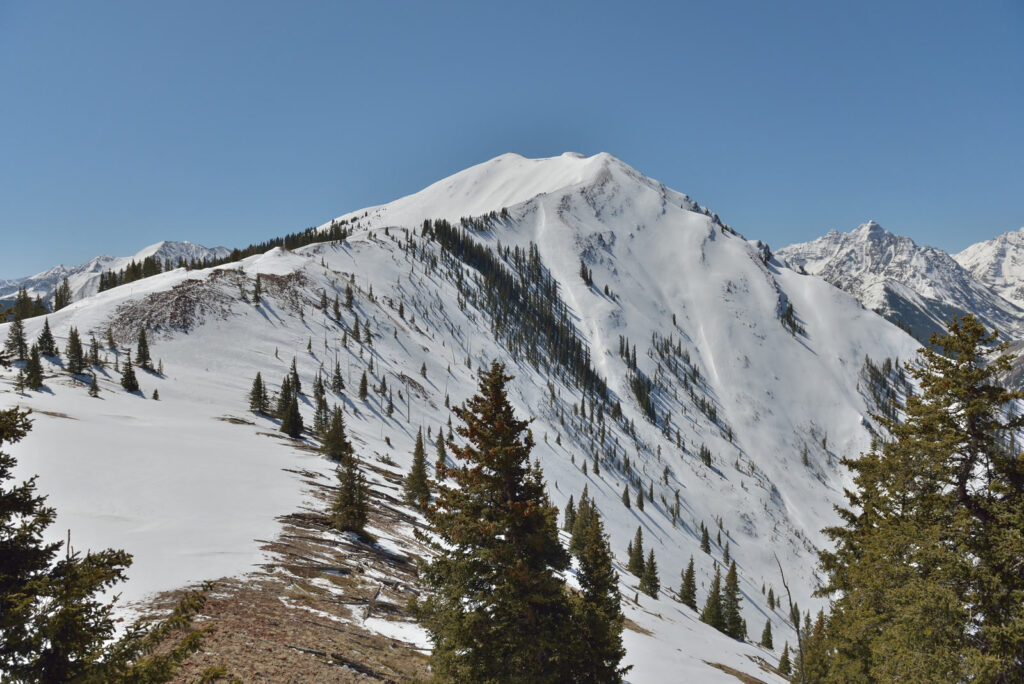
Buttermilk is the gentle one: wide, forgiving groomers where most Aspen ski lessons begin, and — the town’s favourite contradiction — the home of the X Games, whose enormous jumps take over the base each winter. Snowmass, about nine miles away, is the giant: bigger than the other three mountains combined, with its own village at the base and enough terrain to fill a week. Free shuttle buses stitch all four together, so the local strategy is simple: pick a mountain each morning and let the bus do the driving.
Ride the Silver Queen Gondola, Skis or Not
The Silver Queen Gondola climbs from the centre of town to the top of Aspen Mountain, 11,212 feet up, in about fifteen minutes. Skiers ride it as a lift; everyone else should ride it as an attraction. The cabins rise over the rooftops, the town shrinks into a grid of brick and snow below, and the Elk Mountains unfold in every direction — Castle Peak and Hayden Peak standing over the ridge lines.
At the top sits the Sundeck, a big, sunny restaurant where non-skiers on a winter foot pass can meet skiing friends for lunch at altitude. Guides from the Aspen Center for Environmental Studies also lead snowshoe tours along Richmond Ridge from the summit, through quiet forest above the valley. Ride up late if you can: the last hour’s light on the Elk Range is the best free show in town.
Maroon Bells in Winter: The Beautiful Hard Way
Ten miles from downtown stand the Maroon Bells, two striped fourteeners — Maroon Peak at 14,163 feet and North Maroon at 14,019 — reflected in Maroon Lake in what may be the most famous view in Colorado. In summer, reaching it takes a shuttle reservation. In winter, it takes commitment. Maroon Creek Road closes to cars around mid-November and stays closed until late spring, and from the winter gate at T-Lazy-7 Ranch the lake is roughly six miles away, on snow the whole way.
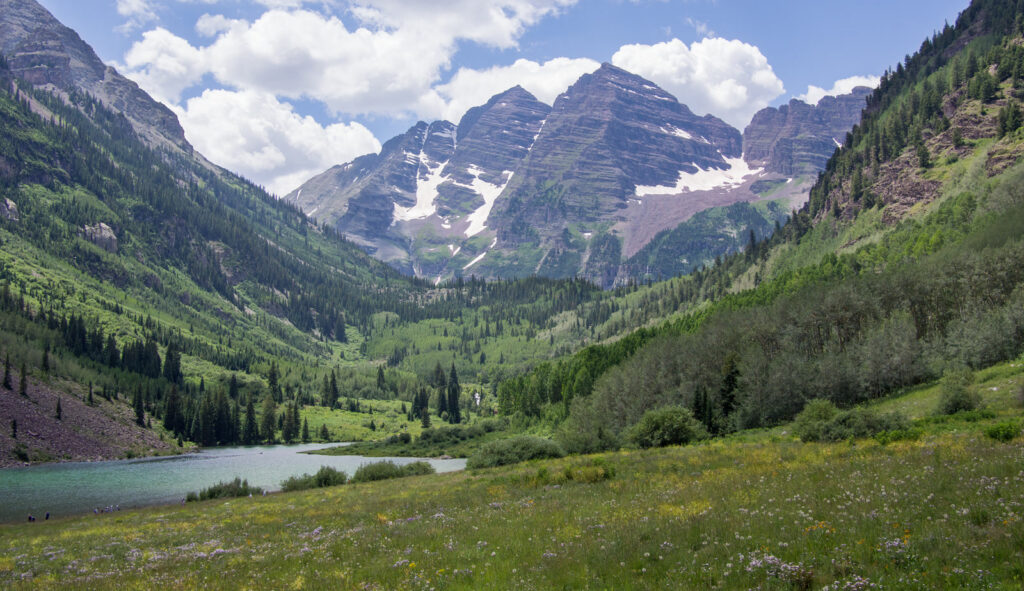
There are three ways in. Strong cross-country skiers and snowshoers follow the groomed, snow-covered road up the valley at their own pace. Everyone else books a snowmobile tour: T-Lazy-7 Ranch, the working ranch at the road closure, runs guided rides to the lake, weather permitting. The reward is the famous view with almost nobody in it — the peaks white, the lake frozen, the valley silent. Respect the route, though: avalanche paths cross the upper valley, so go with the tour or check conditions carefully before setting out under your own power.
Downtown Aspen: Brick Streets at the Foot of the Mountain
Aspen was rich before it was famous. Silver money in the 1880s built a downtown of solid brick blocks, bay windows and carved stone that still stands today along Hyman Avenue and the pedestrian malls — and the mountain fills the end of nearly every street, so the shops always share the frame with the slopes. The mix inside those Victorian fronts is pure modern Aspen: flagship luxury boutiques a door or two from local bookshops, galleries and coffee counters.
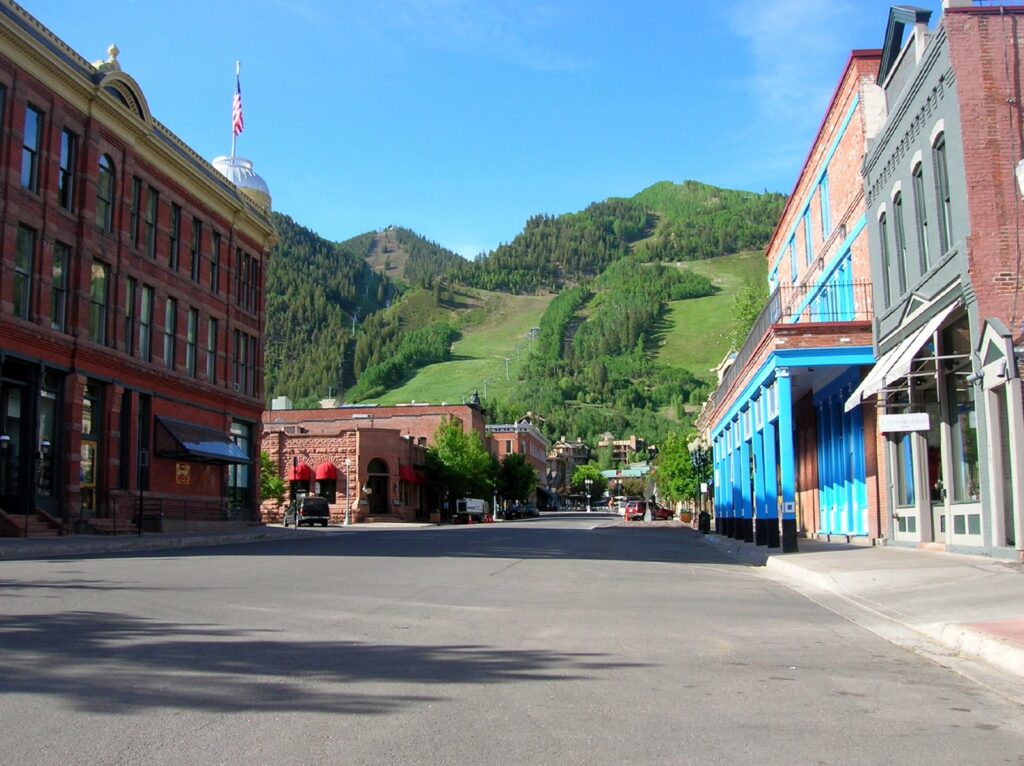
Two 1889 landmarks anchor the walk. The Hotel Jerome, the town’s grand old hotel, has been the social centre of Aspen since the silver barons built it; its public rooms are the classic place for a fireside drink after the lifts close. In December the whole grid is strung with lights, wreaths hang from the lampposts, and downtown in the snow, with skiers clomping through in their boots, looks like a Christmas card that happens to have excellent shopping.
The 12 Days of Aspen: Christmas as a Season
From December 20 to 31, the Aspen Chamber Resort Association runs the 12 Days of Aspen, a rolling downtown festival that fills the last stretch of the year with mostly free events. The programme changes daily: Victorian carolers on the mall, visits with Santa, cookie and ornament decorating for children, s’mores and hot cocoa stands, holiday crafts and live performances tucked into hotels and public spaces around the centre.
The grown-ups get their own edition — the 12 Days of Après, a circuit of seasonal drinks and gatherings in the town’s bars and lounges. It all builds to New Year’s Eve, when the festival closes with fireworks bursting over Aspen Mountain above the rooftops. If you are choosing dates for a Christmas trip, this is the window: the deepest snow base of the early season, the town at its most decorated, and something scheduled every single day.
A Night at the Wheeler Opera House
Every ski town has a bar for the evening; Aspen has an opera house. The Wheeler opened on April 23, 1889, at the corner of Hyman Avenue and Mill Street, built by mining magnate Jerome B. Wheeler in the same burst of confidence that produced the Hotel Jerome. The auditorium upstairs seats about 500, small enough that no seat feels far from the stage, and it has been the town’s living room ever since — through the silver crash, decades of near-silence, and a loving restoration.
Winter is its busiest season: national touring musicians, stand-up comedy, film and lectures mixed with local productions. On a snowy night, the walk from dinner to a lamplit brick theatre feels like an event before the curtain rises. Check the schedule when you book; the good nights sell out.
The Aspen Art Museum: Free, Warm and Full of Light
When the wind picks up on the mountain, Aspen’s best indoor hour costs nothing. The Aspen Art Museum, at 637 East Hyman Avenue, is a non-collecting contemporary art museum: no permanent galleries, just a rotation of exhibitions by artists from around the world. Admission is free for everyone, every day it is open — a genuine surprise in this zip code.
Half the attraction is the building. Designed by Pritzker Prize-winning architect Shigeru Ban and opened in 2014, it wraps the galleries in a woven wooden screen that stripes the daylight as it falls through the stairs. Ride the glass elevator to the rooftop terrace for coffee and one of the best views of Aspen Mountain in town, then work your way down through the shows — the natural rest-day stop.
The Quiet Side: Nordic Trails and Snowshoes
Aspen’s loudest pleasures are downhill, but its quietest are free. A groomed cross-country trail system links Aspen with Snowmass and the valley floor — dozens of kilometres of tracks through golf-course meadows, riverside cottonwoods and open ranchland, maintained through the winter and open to everyone. Classic and skate skiers share the trails with snowshoers, and on a weekday morning you may have a whole meadow to yourself.
The valley rewards slow travel in other ways, too. Snowshoe rentals in town open up the Maroon Creek road and the trails around Ashcroft, the ghost town up Castle Creek. And when Wintersköl, Aspen’s annual toast to winter, takes over the calendar, the programme leans into the old traditions: a torchlight parade snaking down Aspen Mountain after dark, a bonfire and fireworks. Skiing built this town, but the quiet sports are how it keeps its balance.
Après-Ski: Firesides, Hot Chocolate and Long Dinners
Aspen takes the end of the ski day as seriously as the start. The ritual begins at the base of the gondola, where the patios fill within minutes of the last lift, and spreads through town: hotel lounges with deep chairs and open fires, cocktail bars pouring something warm, and restaurants that range from white-tablecloth institutions to the kind of wood-panelled room where the fondue arrives at a rolling boil.
You do not need a strategy so much as a reservation — in the Christmas and New Year weeks, the popular dining rooms book out days ahead. One local habit worth copying: after a day in the high, dry cold, some skiers drive an hour down the valley to Glenwood Springs and end the evening in the hot springs there, steaming under the stars while the ski hills go dark behind them. It is the valley’s oldest après-ski tradition, older than the lifts themselves.
Putting It Together: Three Winter Days in Aspen
Give Aspen three days and it falls into a rhythm. Day one belongs to Aspen Mountain: ride the Silver Queen up early, ski Ajax until your legs file a complaint, then spend the afternoon downtown — the art museum, the brick streets, dinner within walking distance of everything. Day two, change mountains: Buttermilk if you are learning, Highlands if you are chasing the Bowl, Snowmass if you want miles. Keep the evening for the Wheeler, whatever is on its stage.
Day three is the wild card: the snowmobile tour to the Maroon Bells in the morning, when the valley is at its stillest, then a loose afternoon of Nordic trails, a long lunch and the shops. In Christmas week, swap any evening for the 12 Days of Aspen programme. However you arrange the things to do in Aspen Colorado, build in altitude sense: the town sleeps at 8,000 feet and the gondola tops 11,000, so take day one gently and drink more water than feels necessary.
Aspen Questions, Answered
Can you visit the Maroon Bells in winter?
Yes, but not by car. Maroon Creek Road closes at T-Lazy-7 Ranch from about mid-November to late spring. From there it is roughly six miles each way to Maroon Lake by cross-country ski or snowshoe, or you can ride in on a guided snowmobile tour from the ranch, weather permitting.
How many days do you need in Aspen?
Three days covers the essentials: one mountain properly, a second mountain, the Maroon Bells and downtown. Four or five lets you ski all four mountains and add a rest day for the museum, the Wheeler and the Nordic trails.
When is the best time to visit Aspen in winter?
For the full festive programme, come between December 20 and 31 for the 12 Days of Aspen. For the deepest snow and longest days on the slopes, January and February usually deliver the best conditions once the holiday crowds go home.
Do you need a car in Aspen?
Not in town. Downtown is walkable, free shuttles link all four ski mountains and Snowmass Village, and the airport is a few minutes away. You only need wheels for the Glenwood Springs hot springs run or for exploring further down the valley.