
Fredericksburg is the small Texas town that does three things at once, and that is exactly why people keep coming back to it. It is a German settlement from 1846 with a Main Street that still looks the part, it is the centre of Texas wine country with more than 40 wineries and tasting rooms in the area, and it sits in the middle of the Hill Country’s wildest scenery, with a pink granite dome eighteen miles up the road. This guide to things to do in Fredericksburg TX picks the stops that earn their place, in the order that makes sense, and tells you plainly what to book ahead, what to skip, and which weekends to avoid unless you love crowds.
Most visitors arrive from Austin or San Antonio with one or two days, and that is enough if you plan by theme instead of by list. Spend the first half-day on Main Street and the museums, the second half on Wine Road 290, and the next morning climbing Enchanted Rock before the heat. Luckenbach and the LBJ Ranch fill the gaps around those three anchors. The one thing to sort out before anything else is the Enchanted Rock reservation, because the park turns people away when it fills up, and it fills up often.
Fredericksburg in One Paragraph: Three Towns in a Single Weekend
Think of Fredericksburg as three towns sharing one Main Street. The first is the German town: limestone storefronts, an octagonal church in the middle of the street, beer gardens, and a calendar full of Oktoberfest and Christmas markets. The second is the wine town: tasting rooms on Main Street and a whole road of vineyards running east toward Stonewall, where the same families who grow peaches also grow grapes. The third is the Hill Country town: granite domes, wildflower fields, a dance hall in a place with three residents, and a president’s ranch down the road. A good weekend touches all three, and a bad one tries to do all three in a single day. Two days is the right amount of time, three is comfortable, and one day means choosing between the wine and the rock.
Start on Main Street: The German Town That Never Quite Left 1846
Main Street is where every Fredericksburg trip should start, and it is worth a slow morning rather than a quick walk. The street was laid out extra-wide in 1846 so an ox-drawn wagon could turn a full circle, and that width is still there, lined with limestone buildings that have survived more or less intact. The whole Historic District went on the National Register of Historic Places in October 1970, and it holds 367 contributing buildings, which is why the street feels like a place rather than a theme park. Shops, galleries, restaurants and tasting rooms fill the old storefronts, and the best way to see it is on foot, early, before the day-trippers arrive.
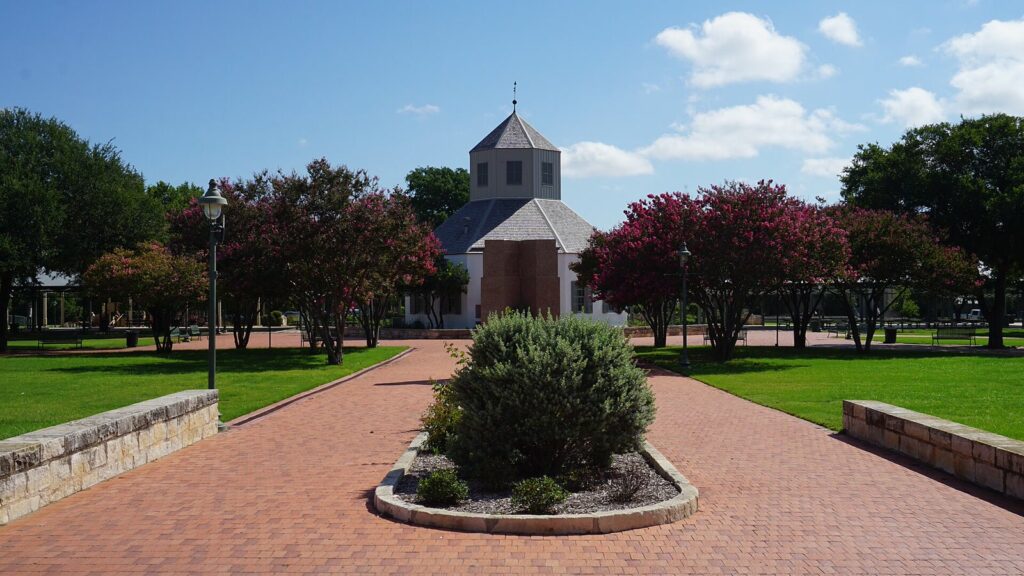
The town was founded on 8 May 1846, when about 120 German immigrants arrived from New Braunfels after a sixteen-day wagon journey, led by John O. Meusebach for the Adelsverein, the Society for the Protection of German Immigrants in Texas. Meusebach named the settlement for Prince Frederick of Prussia. A year later, on 9 May 1847, he signed a treaty with Penateka Comanche leaders that is remembered as one of the very few settler agreements of that era that was never broken, and it is the reason the young colony survived its first hard years. That history is not hidden away in a book somewhere. It is the first thing you meet on Main Street, in the octagonal white church at Marktplatz, the park in the middle of town.
The Vereins Kirche was the settlers’ first public building, raised in 1847 and nicknamed the Kaffeemühle, the coffee mill, for its eight-sided shape. One building had to be the church, the school, the meeting hall and the fort, all at once, and it was. The original came down in 1897, and the replica standing there now was built by the Gillespie County Historical Society with help from the Civil Works Administration and finished in 1936. Step inside and you get the founding story in a single room, which is the right scale for it. Around the district, keep an eye out for the Sunday Houses, the small cottages that outlying farm families kept in town so they had somewhere to stay when they came in for market on Saturday and church on Sunday. Many survive, and the Pioneer Museum has a preserved Weber Sunday House you can walk into.
The Pioneer Museum itself is worth an hour, and it sits just off Main Street on a 3.5-acre complex of original nineteenth-century buildings. The Kammlah house and store dates to 1849, and the grounds hold a one-room schoolhouse, a smokehouse, a log cabin, a barn full of pioneer tools and wagons, and a blacksmith shop. It is run by the Gillespie County Historical Society, and it does the quiet work of showing how the settlers actually lived, which the pretty storefronts on Main Street cannot. If you only have time for one museum in town, though, the other one wins, and it is not close.
The Museum Nobody Expects: A World War II Campus in the Hill Country
Nobody arrives in a small German-Texan town expecting one of the best Second World War museums in America, and that surprise is half the point. The National Museum of the Pacific War fills a six-acre campus a block off Main Street, and it is the most complete account of the war in the Pacific anywhere in the country. The connection is personal: Admiral Chester Nimitz, who commanded the Pacific Fleet, was born in Fredericksburg in 1885, in the Nimitz Hotel, which is now part of the museum. More than 120,000 people visit in a year, including about 15,000 school students from across Texas, and the scale of the place still catches first-timers off guard.
The campus is several museums in one, and you should allow at least two hours, three if you read everything. The George H.W. Bush Gallery carries the main story from Pearl Harbor to the surrender, with aircraft, ships’ guns and personal artefacts. Outside, the Japanese Garden of Peace is a quiet gift from the people of Japan, built to honour friendship and reconciliation, and it is the calmest corner of the whole campus. The Pacific Combat Zone, across the street, is an outdoor battlefield reconstruction where the museum stages live reenactments, and it is the part children remember. The Admiral Nimitz Gallery, in the old hotel, covers Nimitz himself and the town he came from.
A practical note: the museum is open from 9 a.m. to 5 p.m. and closed on Tuesdays, which is the kind of detail that ruins a plan if you learn it at the door. Go early in the day, before the wine tasting starts, because the galleries deserve a clear head. It is also the best bad-weather stop in town by a long way, so keep it in reserve if a summer thunderstorm rolls in, which in the Hill Country it does, usually in the afternoon.
Wine Road 290: How to Taste Without Wasting the Day
Fredericksburg is the centre of Texas wine country, and the number to know is more than forty: that is how many wineries and tasting rooms sit in the area. The main road is Wine Road 290, the stretch of US Highway 290 that links Johnson City, Stonewall and Fredericksburg, and it is where most of the vineyard estates sit. But the easiest tasting in town needs no driving at all, because a dozen tasting rooms line Main Street itself, including Fredericksburg Winery, Fiesta, Becker Vineyards, Grape Creek and William Chris. If you are staying in town and walking, start there.
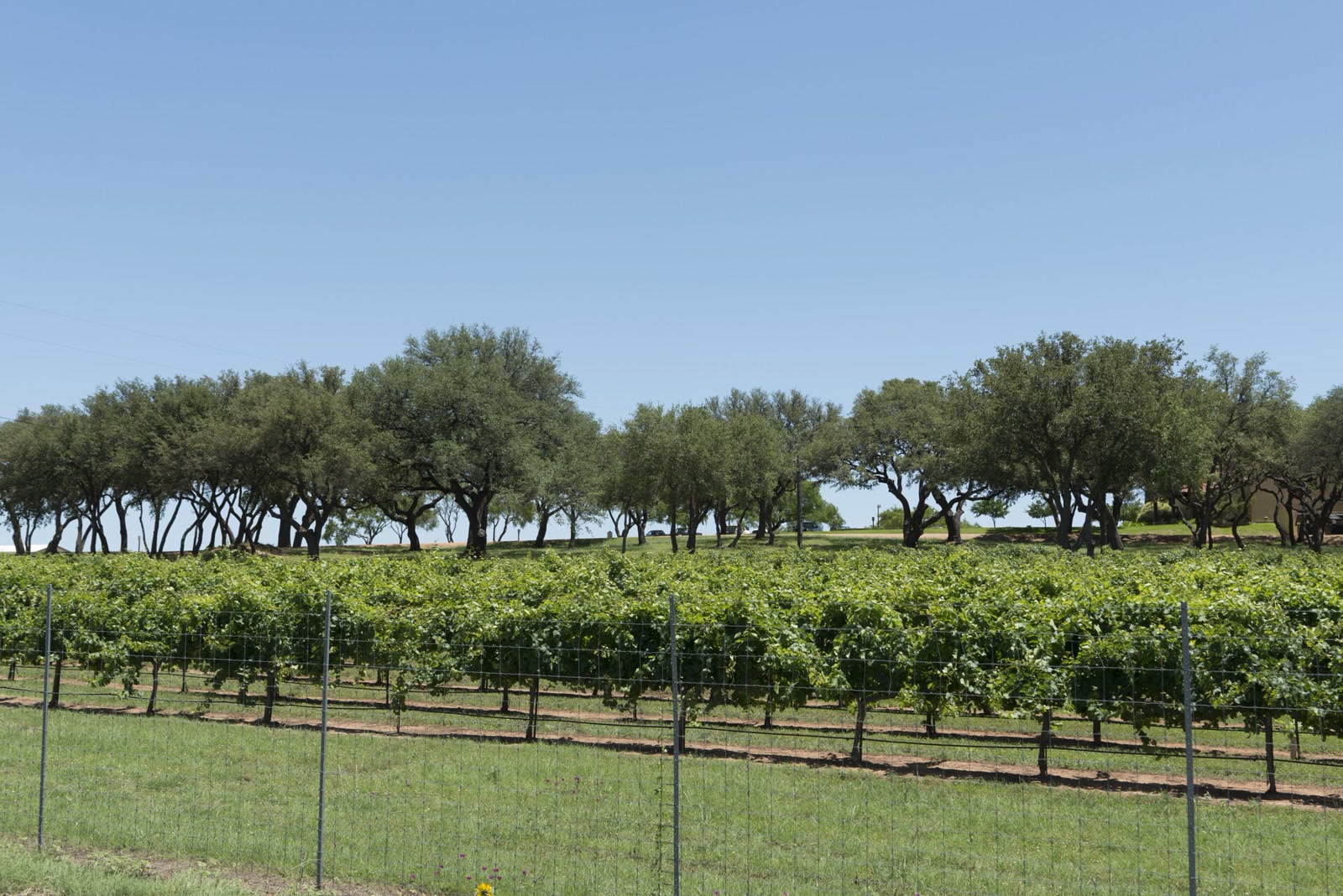
The honest problem with wine country is the driving, and every guide that skips it is doing you a disservice. Tasting rooms are spread along a highway, the distances look short on a map and feel longer when you are stopping every twenty minutes, and somebody has to stay sober. Pick three wineries at most for a half-day, not six, and decide the order before you leave town. Start at the far end and work back toward Fredericksburg, so the drive home gets shorter as the day goes on. Better still, book a wine tour with a driver for the afternoon and let somebody else worry about the road. The tasting rooms on Main Street are the fallback for the evening, when the car is parked and the walking is easy.
What to taste is a simpler question than the wine world usually makes it. Texas Hill Country is known for Tempranillo, Viognier and Mourvèdre alongside the usual Cabernet and Chardonnay, and the local tasting rooms are used to beginners, so ask questions and say what you like rather than what you think you should like. Most rooms pour flights of four or five wines, and the staff will talk about the vineyards you can see from the window. Go on a weekday if you can. Saturdays on Wine Road 290 are crowded, the patios fill up by mid-afternoon, and the experience turns from relaxed to rushed. A Tuesday in spring, with the wildflowers out and the rooms half empty, is the best version of this.
Enchanted Rock: The Climb, the Reservation, and the View That Earns Both
Eighteen miles north of Fredericksburg on Ranch Road 965 sits the reason the town has a wild side at all: Enchanted Rock, a massive pink granite dome rising out of the Hill Country, protected as a state natural area with nearly 22 miles of hiking trails. The dome has drawn people for thousands of years, and the climb to the top is still the single best hour you can spend near Fredericksburg. It is also the one stop in this guide that can go wrong if you do not plan it, so read this section twice.
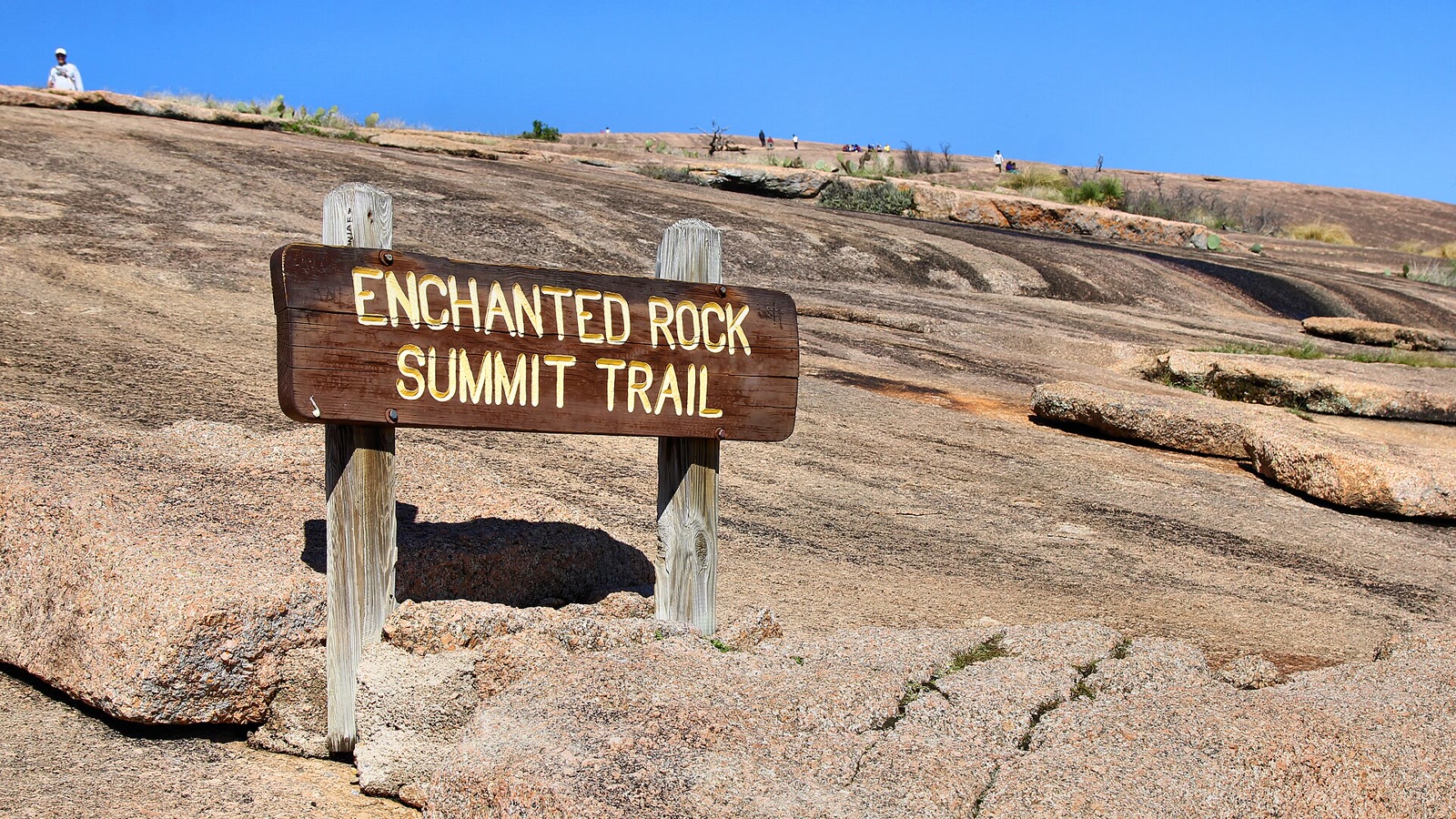
First, the reservation. Day-use reservations are required on weekends, school breaks and holidays, and recommended on every other day, because the park limits how many people can enter and closes to visitors without reservations when it reaches capacity. You can book a day pass up to 30 days ahead, and on a spring or fall weekend you should, because the park fills by mid-morning. The day-use fee is 8 dollars per person aged 13 and older, and children 12 and under get in free. Go on a weekday if your schedule allows it, arrive early, and bring your own drinking water, because the park warns that water is in short supply during the drought.
The climb itself is the Summit Trail, a steep walk straight up the bare granite face with no shade and no handrails, and it is harder than it looks from the car park. Wear proper shoes, not sandals, and do it in the morning before the rock heats up, because pink granite in a Texas afternoon holds the sun like a griddle. The trail can close in wet weather, since wet granite is dangerously slick, so check the park’s trail status before you drive out. At the top, the whole Hill Country opens out in every direction, and on a clear day you can see why people have treated this rock as a special place for so long. Allow two to three hours for the climb and the time at the top, and longer if you want the Loop Trail around the base, which is the gentler walk and the one that allows leashed pets.
There is also a newer reason to come back. The park’s Backcountry Area, with 11 miles of new trails, ponds and views, opened for self-guided day use in July 2026. You pick up a permit and a map at headquarters, and the routes are rugged with limited shade, so this is for experienced hikers rather than families with small children. It is a sign of where the park is heading, and a good excuse for a second visit.
Luckenbach: Thirteen Miles to the Most Famous Nowhere in Texas
Thirteen miles southeast of Fredericksburg, down a two-lane road, sits a town with three residents and a fame out of all proportion to its size. Luckenbach is a general store, a post office, a saloon and a dance hall on about ten acres under old live oak trees, and that is all it is, which is the whole point. German farmers founded it in 1850, and for more than a century it was an obscure outpost. Then the music found it.
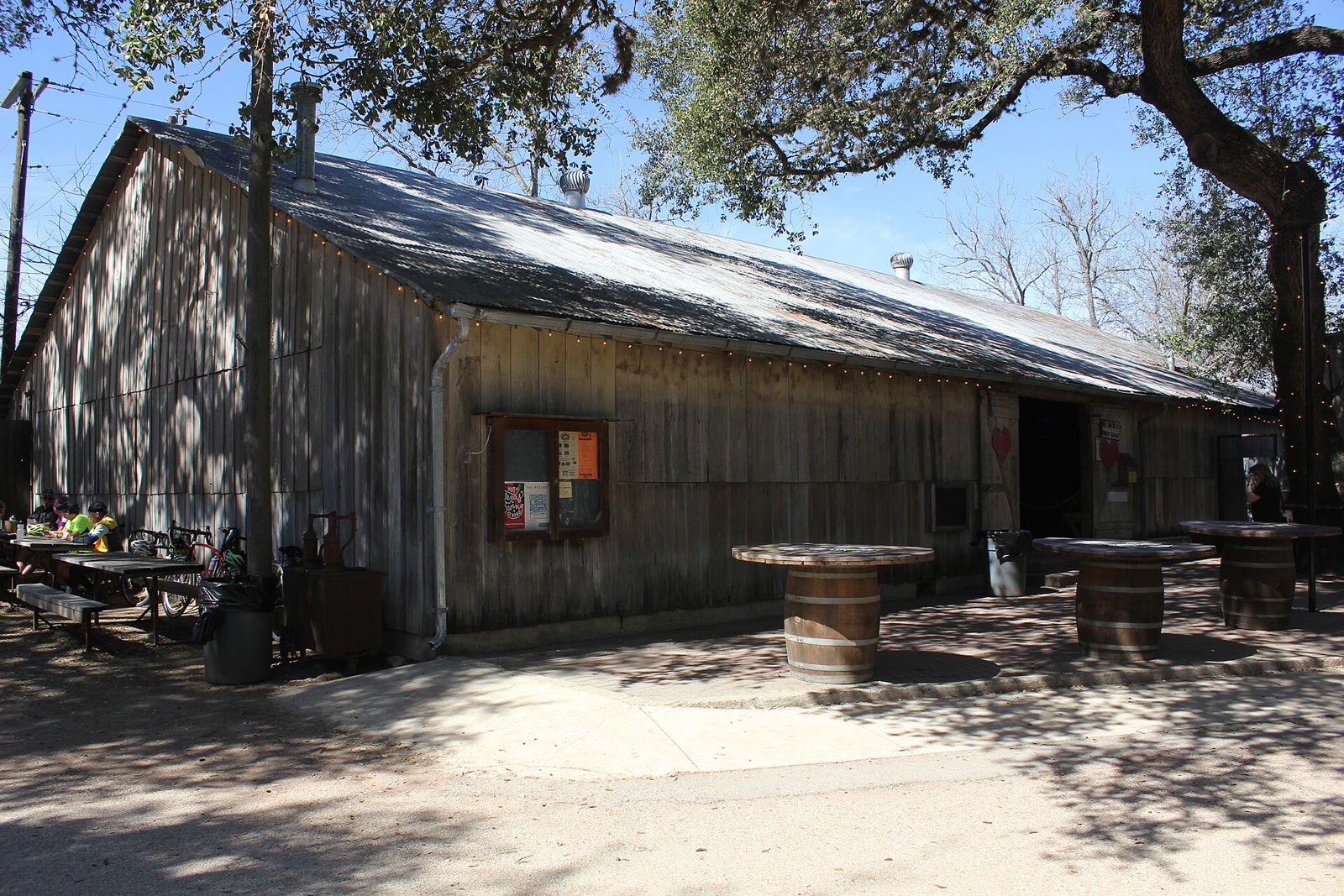
Jerry Jeff Walker recorded his live album ¡Viva Terlingua! at the dance hall in 1973, and that put Luckenbach on the musical map. Four years later, Waylon Jennings released “Luckenbach, Texas (Back to the Basics of Love)” with Willie Nelson, and it went to number one on the country chart. The joke the town tells on itself is that Jennings had never set foot there when he recorded it, and neither had the songwriters. He finally played his first and only Luckenbach show on 4 July 1997, twenty years after the song made the place famous. Today the dance hall hosts bigger shows on weekend nights, and on most days there is live music somewhere on the grounds, with picker circles under the oaks where amateurs and professionals sit down with guitars and beers and play for whoever is listening.
Go in the late afternoon, when the light slants through the oaks and the day’s heat breaks. There is nothing to buy a ticket for most days, nothing to queue for, and nothing to do but sit, listen and drink a beer. That is the experience, and it is better than it sounds. If you are the kind of traveller who needs an itinerary for every hour, Luckenbach will frustrate you. If you can spare an unplanned hour, it is the most Texan hour in this guide.
The President’s Backyard: LBJ Ranch and the Stonewall Peach Stands
Fourteen miles east of Fredericksburg on US 290, in the small town of Stonewall, sits the other end of Texas history: the LBJ Ranch, the working ranch and presidential retreat of Lyndon B. Johnson, the 36th president, known in his lifetime as the Texas White House. Johnson was born near here, lived here, retired here, and is buried here, and the ranch and the state park across the Pedernales River tell that story together. The state park visitor centre is the place to start: pick up a free driving permit there, along with a map, and then cross the river to drive the ranch yourself. The self-guided driving tour runs from 9 a.m. to 5 p.m. seven days a week, permits are given out from 9 a.m. and none after 4 p.m., and the drive takes you past the ranch house, the airstrip, the family cemetery and the cattle pastures.
One honest warning before you go: the Texas White House itself is closed. The house, the hangar visitor centre and the surrounding grounds shut on 2 January 2024 for an extensive rehabilitation, and the National Park Service anticipates reopening in 2027. You can still see the house from the driving tour, and the ranch grounds, the birthplace and the rest of the property are open, but do not plan your visit around going inside. The Johnson City district, fourteen miles further east, is the other half of the park: the visitor centre there and Johnson’s boyhood home, with guided tours daily at 10:30, 11:30 and 1:30.
Stonewall itself is worth the stop for a different reason. It is the heart of Gillespie County peach country, and the roadside stands along US 290 sell peaches, peach ice cream and peach preserves all summer, roughly May through August. The town hosts the Stonewall Peach JAMboree and Rodeo, and the combination of a presidential ranch and a peach stand on the same road is the kind of thing only the Hill Country pulls off. If you are driving Wine Road 290 anyway, Stonewall is already on your route, so the ranch and the peaches cost you nothing extra.
Wildflowers, Peaches and the Seasons That Decide Your Trip
Fredericksburg changes completely with the seasons, and the month you pick matters more here than in most Texas towns. Spring is the famous one. Bluebonnets and wildflowers cover the Hill Country from March into April, and the best place to see them up close is Wildseed Farms, seven miles east of Fredericksburg on US 290. It is the nation’s largest working wildflower farm, with more than 200 acres of blooms in various stages of growth, and it has been growing wildflowers as a crop since 1983. You can walk into the fields, buy seed to take home, and check the farm’s bloom updates before you go, because nature sets the schedule, not the calendar. The Willow City Loop, a thirteen-mile ranch road north of town, is the scenic drive for the same season, and it is at its best in the same few weeks.
Summer belongs to the peaches, and to the heat. The peach stands open, the wineries pour rosé, and the afternoons get properly hot, which is why Enchanted Rock is a morning activity and the museums are an afternoon one. Fall is the connoisseur’s season: the harvest comes in at the wineries, the afternoons settle into the seventies, and the town leans into its German calendar. Oktoberfest takes over Marktplatz on the first weekend of October, and in 2026 that means 2 to 4 October, the festival’s 46th year. USA TODAY’s 10Best readers ranked it the fifth-best Oktoberfest in the country in 2025, and it is the busiest weekend of the year in town, so book months ahead or skip it deliberately. Winter is the quiet surprise. December brings the German Christmas season to Marktplatz, with a Christmas pyramid, holiday lights and the Weihnachten markets, and the historical society runs a Christmas Candlelight Homes Tour of the old houses. If you want Fredericksburg at its prettiest with the fewest people, a weekday in early December is hard to beat.
After Dark on Main Street: Biergartens, Live Music and the Christmas Lights
Fredericksburg does not shut down at sunset, and the evenings are part of the trip rather than an afterthought. Main Street’s beer gardens fill up as the day-trippers leave, and the German food that the town is known for — schnitzel, sausages, sauerbraten, strudel — tastes better after a day on your feet than it does at lunch. Live music is everywhere on a weekend: in the beer gardens, in the tasting rooms, and in the dance halls, and the town’s German heritage means the bands lean toward oompah and polka as often as country. It is not a polished scene, and that is the charm. A brass band in a beer garden, under string lights, with the limestone buildings around you, is the Fredericksburg evening at its best.
In December the evenings change character entirely. The Christmas lights come on along Main Street, the pyramid turns at Marktplatz, and the whole town glows in a way that makes a slow evening walk the main event rather than the wind-down. The visitor bureau counts more than 300 festivals and events in town across the year, and the calendar never really empties, but December is when the town feels most like itself: German, small, lit up, and unhurried. If you are choosing between a Friday and a Saturday night, take the Friday. Saturdays are crowded, the restaurants fill up, and the town is at its loudest. A Friday evening gives you the same music with room to breathe.
Planning It Right: When to Go, Where to Stay and What to Skip
So when should you go? Spring for the wildflowers, fall for the festivals and the mild weather, December for the Christmas lights, and summer if you love peaches and can handle the heat. Whenever you come, book your stay early, because the spring wildflower season, Oktoberfest and the Christmas season all sell out months in advance. Fredericksburg is famous for its bed-and-breakfasts and its restored Sunday House guest cottages, many of them nineteenth-century limestone homes just off Main Street, and they are a better base than a chain hotel on the edge of town. Stay in town if you can, so the car stays parked in the evening and Main Street is a walk, not a drive.
Getting here is simple but car-dependent. Fredericksburg sits about 70 miles west of Austin and roughly an hour’s drive north of San Antonio, and there is no public transport worth planning around. You need a car for everything outside Main Street, including Wine Road 290, Enchanted Rock and Luckenbach, so factor that into the trip from the start. If you are building a longer Texas weekend, pair Fredericksburg with Austin, which is close enough to combine without rushing either place. Our Austin itinerary covers three days in the city for first-timers, and it fits neatly before or after a Fredericksburg weekend.
What to skip is the last honest question, and the answer is simple. Skip the urge to see everything. Fredericksburg rewards doing a few things slowly: one morning on Main Street, one afternoon on Wine Road 290, one morning on Enchanted Rock, and one unplanned hour in Luckenbach. Skip the sixth winery, skip the souvenir shop you have already seen three times, and skip the Saturday-afternoon drive to Enchanted Rock without a reservation, because the park will turn you away and the afternoon will be gone. The town has been here since 1846, and it is not going anywhere. Come back in a different season, and it will be a different town, which is the best reason of all to keep the trip short and the list shorter.