
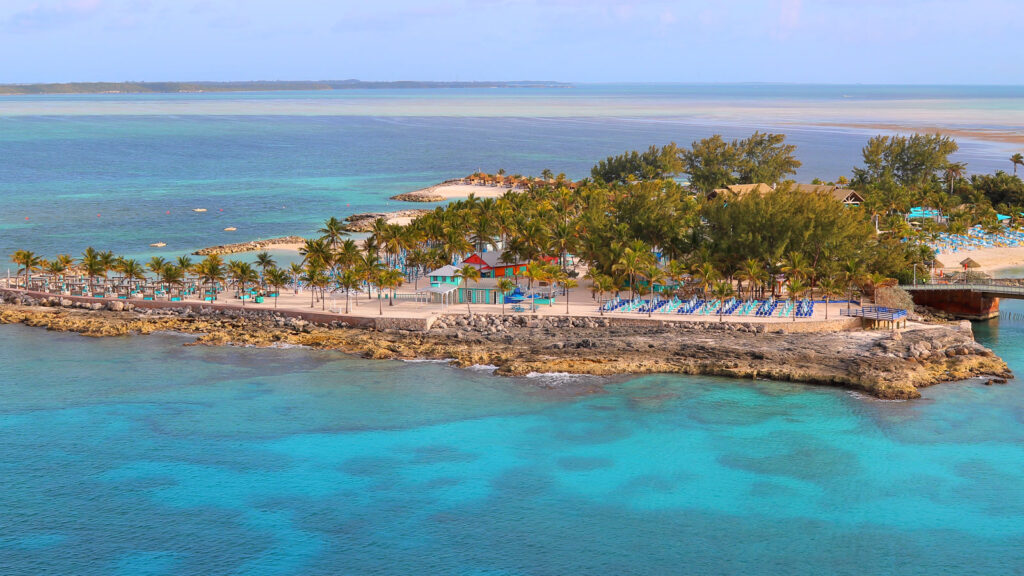
Most Bahamas cruises are short. The typical sailing is a 3–4 night loop out of Florida — Miami, Port Canaveral or Fort Lauderdale — with one day in Nassau and one day on the cruise line’s private island, and then you are home. That shape is the whole secret to packing for it: this is not a two-week expedition, and you do not need a full suitcase. A carry-on is enough, and for most people it is the better choice — no checked-bag wait at the pier, no wrestling a big case through a small cabin, and nothing to lose if the airline misplaces a bag on the way to Florida.
If you have not picked your sailing yet, our 4-day Bahamas cruise itinerary from Florida shows how the days fall. This guide covers what to pack for a cruise to the Bahamas once the sailing is booked: what goes in the bag, what the ship already provides, what to wear in Nassau, and what to leave at home.
The Short Version: A Carry-On Is Enough
For a 3–4 night Bahamas sailing, pack this and stop worrying:
- Swimwear: 2–3 swimsuits — one to wear while the other dries
- Daytime: 3–4 outfits — shorts and tops, or sundresses, all lightweight
- Cover-ups: 2 — one for the pool deck, one for the beach
- Evenings: 1 dressy-casual outfit per evening, plus one slightly smarter outfit for the dressy night
- Shoes: flip-flops for the beach and pool, and 1 pair of comfortable walking sandals for Nassau
- Sun: reef-safe sunscreen, a wide-brim hat, sunglasses, and a lip balm with SPF
- Day-one bag: swimsuit, sunscreen, a change of clothes, medications, documents, a phone charger, and water shoes
- Documents: passport book if you have one; otherwise the closed-loop documents your cruise line asks for, plus a photo ID
- Money: a few small US dollar bills for porters, taxis and the Straw Market; the ship itself is cashless
That is the whole list. The rest of this guide explains why each piece earns its place, what changes between the dry and the wet season, and the mistakes that fill bags with things nobody uses.
Nassau Weather and the Two Seasons That Change Your Bag
Nassau has two packing seasons, and the difference is rain, not temperature. Daytime highs run from about 79°F in January to 91°F in August, and nights stay between the mid-60s and the high 70s, so you will never need a heavy layer. What changes is how wet the trip gets.
The dry season runs roughly December through April. Those months are the driest of the year — Nassau averages under 2.2 inches of rain a month from December to March — with sunny days and cooler evenings. Pack light, breathable clothes, one light layer for the evenings and the air-conditioned ship, and a packable rain jacket more as insurance than as a daily need.
The wet season runs from May to October, and it is when the rain arrives in earnest: June averages about 8.7 inches of rain, and the Atlantic hurricane season runs from June 1 to November 30, peaking around September 10. Pack quick-dry fabrics instead of cotton, a proper packable rain shell rather than a flimsy poncho, and a waterproof pouch for your phone. Afternoon showers are common, so plan the beach for the morning and keep the rain shell in your day bag. If you are sailing between June and November, check the forecast the day before you leave. And remember the sun does not take the wet season off: the UV index regularly climbs into the very-high to extreme range in the warmer months, so sunscreen is a year-round item.
Swimwear and Beach Days: How Many Suits You Really Need
The beach is most of a Bahamas cruise. Between the Nassau day, the private-island day and the pool deck, you will be in swimwear for a large part of every day — which is exactly why the number matters. Two swimsuits are the minimum for a 3–4 night sailing, and three is the comfortable number: one to wear, one drying on the cabin line, and a spare for the day the first two are both damp. A wet swimsuit packed into a bag smells by the next morning, so the rotation is the point, not the count.
Cover-ups do more work than most people expect. One lightweight cover-up takes you from the pool deck to lunch without a trip back to the cabin, and a second one — a simple sarong or an oversized shirt — covers the walk through Nassau, where swimwear alone is not the right look in town. Water shoes earn their place too: the sand is soft, but the water’s edge can be shelly and rocky. Add a rash guard, which cuts sun exposure on the shoulders and back, and a small dry bag for the phone and the cabin key card, and the beach kit is complete.
The Private Island Day: Shade, Sand and What the Ship Provides
The private-island day is the part of a Bahamas cruise that changes the bag most, because it is a full beach day with no shops and no shade guarantee. Which island you get depends on your cruise line: Perfect Day at CocoCay (Royal Caribbean and Celebrity), Great Stirrup Cay (Norwegian), Half Moon Cay (Carnival Corporation — visited by Carnival Cruise Line and Holland America Line), Ocean Cay MSC Marine Reserve (MSC), and Princess Cays, a private resort area on Eleuthera used by Princess Cruises. Carnival’s newest destination, Celebration Key on Grand Bahama, opened in July 2025, and Disney’s ships call at Castaway Cay and Lookout Cay at Lighthouse Point. Check which island your sailing visits before you pack — the shape of the day is the same everywhere, but the facilities differ.
What the ship provides is generous: beach towels, loungers, and lunch are included on the island, and your drink package usually works ashore on the lines that own the island. What the ship does not provide is shade for everyone. The free loungers under the trees go early, and the open sand gets fierce by midday. Bring your own hat and sunscreen, and if shade matters to you, plan to be off the ship early — do not count on finding a shady lounger at noon.
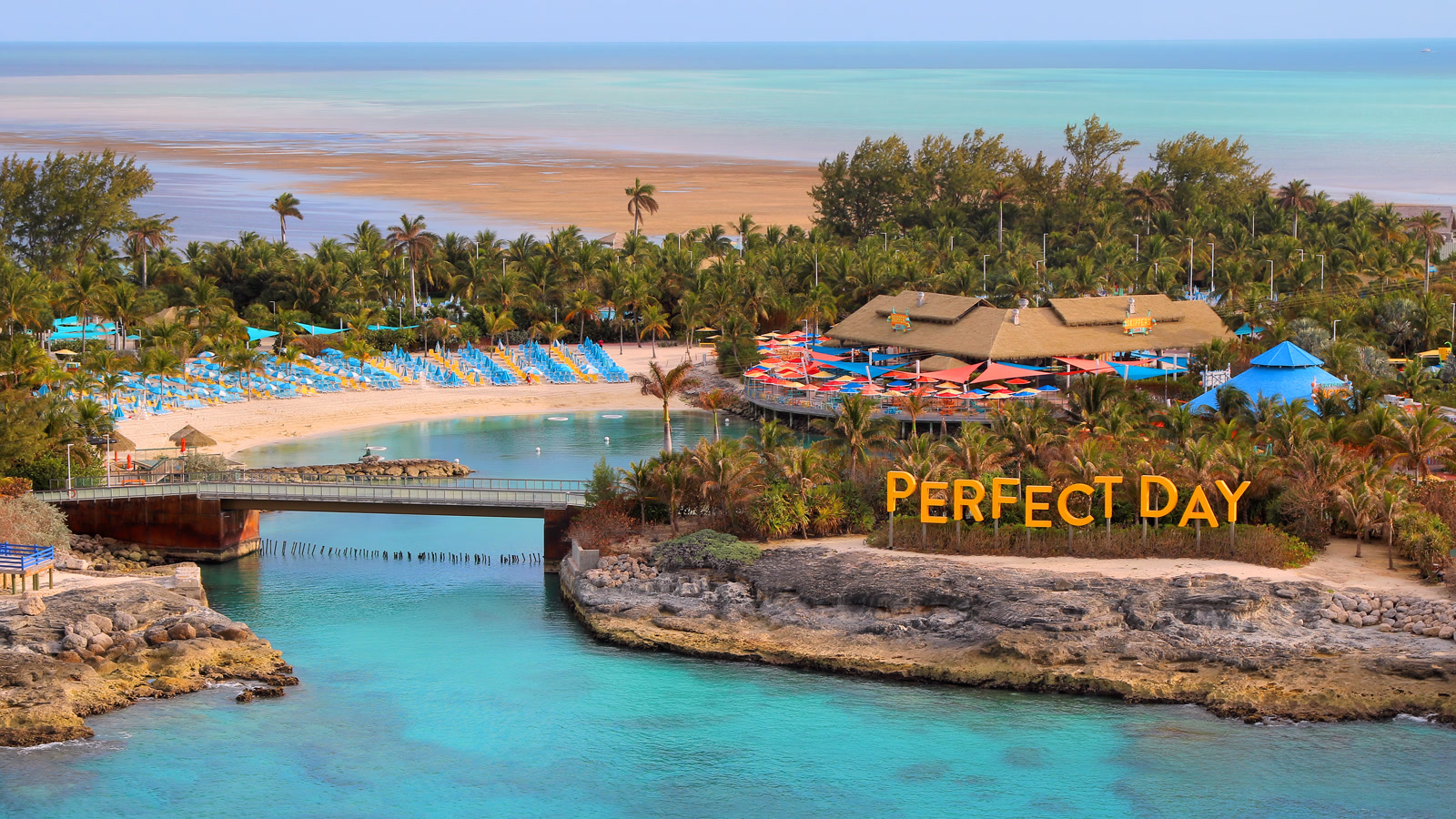
Pack for the island day as a separate kit inside your bag: swimsuit, cover-up, water shoes, sunscreen, hat, sunglasses, a dry bag with your phone and key card, and a refillable water bottle. Towel clips are the small item people forget and then wish they had — the sea breeze lifts an unclipped towel off a lounger in seconds. Everything else is already there, which is why the island day needs less packing than most first-timers expect, not more.
Daytime in Nassau: Shorts, Sundresses and Walking Shoes
Nassau is a walking day: dress for a hot, humid town, not for the pool. Shorts and a light top, or a sundress, with comfortable walking sandals, will carry you through the whole day. The streets around the port are flat and easy, but the sun is strong and the humidity is high, so breathable fabrics matter more than style. A hat is not optional here.
The Straw Market is the classic Nassau stop, and it is also the place where small bills earn their keep. Vendors expect cash, and small US dollar notes make bargaining quick and easy — a handful of ones and fives is worth more than a single large bill. The market is a short walk from the port, and the same walking sandals that carried you there will carry you back.
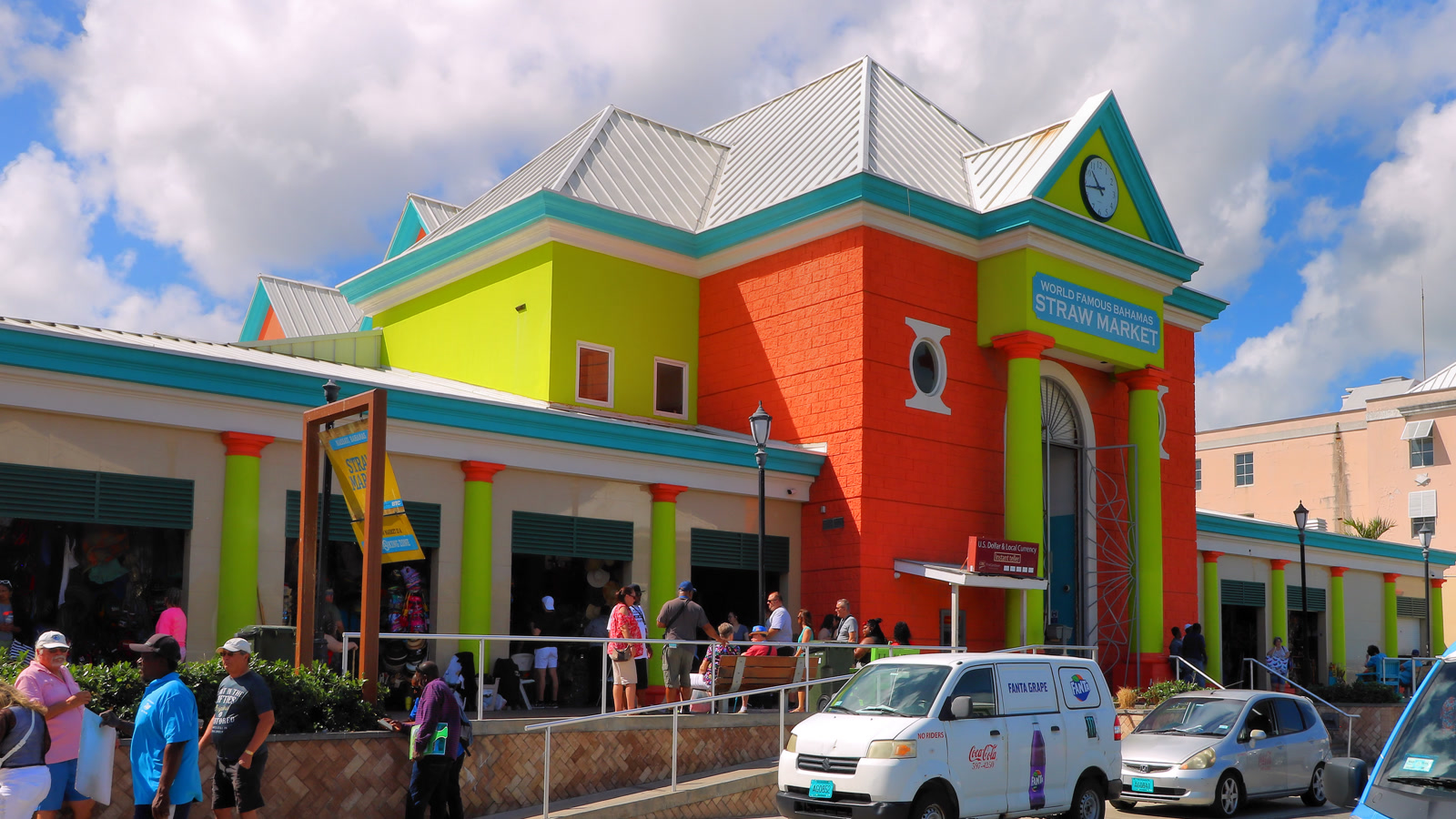
One thing to remember before you step ashore: cover up over your swimwear in town. Nassau is a working city, not a beach, and walking through the streets in a swimsuit is out of place. The cover-up you packed for the pool deck does the job — throw it on over the suit, add the sandals, and you are dressed for both the beach and the town. Keep the phone, the key card and a little cash in a small crossbody bag rather than in a beach tote, and leave the valuables in the cabin safe.
Evenings on a Short Sailing: One Dressy Outfit Covers It
Short Bahamas sailings do have a dressy evening, but only one of them. Royal Caribbean holds one formal night — now called “Dress Your Best” — on 3–5 night sailings, usually on day 2, and two on 6–10 night sailings. Carnival holds one Cruise Elegant evening on some sailings of five days or less and two on sailings of six days or more. Holland America holds no dressy night on cruises under four days and one on 4–6 day sailings. Norwegian has no formal nights at all. And on every line, the dressy evening is optional.
So the packing rule is simple: bring one dressy-casual outfit that can do the dressy night, and wear smart casual the rest of the time. For most people that means a blazer or a smart shirt with trousers, or a cocktail dress, a jumpsuit or a smart skirt-and-top combination. One outfit, worn once, is all a 3–4 night sailing needs — no tuxedo, no evening gown, and no different outfit for every dinner. For the remaining evenings, smart casual is the standard: a collared shirt or a neat top, trousers or a skirt, and shoes that are not flip-flops. The main dining room does not allow swimwear, tank tops or flip-flops at dinner on any evening, so pack one pair of smart-casual shoes — loafers, block heels or dressy flats — and the evening kit is done.
Sun Protection in the Bahamas: UV, Reef-Safe Sunscreen and Hats
The Bahamian sun is stronger than it looks. The UV index in Nassau regularly climbs into the very-high to extreme range in the warmer months and can top 12 in midsummer, and the reflection off white sand and turquoise water adds exposure you do not feel until it is too late. Peak sun runs roughly from 11 a.m. to 3 p.m. Plan around it: swim early, take the shade at midday, and treat sunscreen as something you reapply, not something you apply once.
Use a broad-spectrum SPF 30 or higher, and reapply every two hours or after swimming — the “water-resistant” label on the bottle means it lasts about 40 to 80 minutes in the water, not all day. A lip balm with SPF is the item people forget and then regret, because sunburned lips hurt for days. A wide-brim hat and sunglasses do more than any cream: the hat shades the face and neck, and the sunglasses protect eyes that are squinting into glare all day.
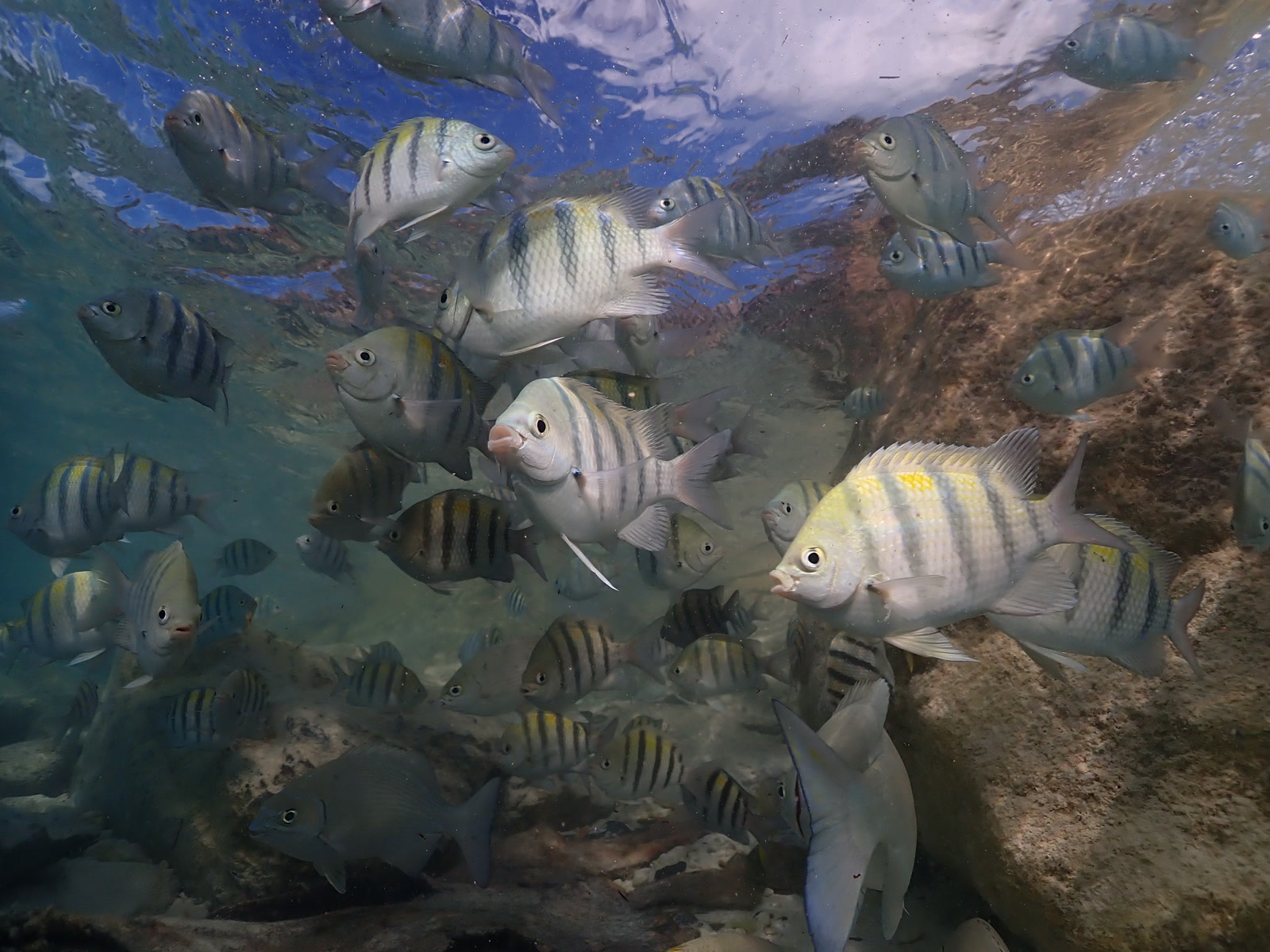
Choose a reef-safe sunscreen — a mineral formula based on non-nano zinc oxide or titanium dioxide. The reefs around the Bahamas are the reason the snorkelling is good, and chemical sunscreens wash off into the water where you swim. One thing to be clear about: the Bahamas does not have a nationwide legal ban on chemical sunscreens. The rules are guidelines that ask visitors to choose reef-safe formulas, which is different from Hawaii, where the sale of sunscreens containing oxybenzone and octinoxate is banned, and the US Virgin Islands, where their use is banned. Choose reef-safe because it protects the reef, not because the law forces you to — and check the ingredient list, because “reef-friendly” on the label is a marketing claim.
Money, Documents and the Cashless Ship
Money on a Bahamas cruise is simpler than most first-timers expect. The Bahamian dollar is pegged one-to-one to the US dollar, a parity that has held since 1973, and US dollars are accepted everywhere at par — in Nassau, at the Straw Market, in taxis and in the resorts. You do not need to exchange money before you go. The one catch is the change: pay in US dollars and you will often get Bahamian dollars back, and they are nearly impossible to exchange once you leave the country, so spend them before you sail home. Bring small bills — ones and fives — for porters, taxis and market vendors. The ship itself is cashless: everything onboard goes on your cruise card, linked to a credit card on file.
Documents are the part to get right before you leave home. On a closed-loop cruise — one that departs from and returns to the same US port — US citizens may re-enter the United States with an original or certified birth certificate plus a government-issued photo ID, under the Western Hemisphere Travel Initiative. A passport card or an enhanced driver’s licence (issued by Michigan, Minnesota, New York, Vermont and Washington) also works, and children under 16 need only proof of citizenship. But bring the passport book if you have one: it is the only document that lets you fly home from a foreign port if you miss the ship or face a medical emergency. A short-term federal advisory in late 2026 urged cruise passengers to carry passports for most international sailings; it did not repeal the closed-loop exception. Either way, check your cruise line’s own documentation page before sailing — the line’s rules at check-in are stricter than the government’s, and the line decides whether you board. Non-US citizens need a passport regardless.
One last practical point: the Bahamas uses the same power as the United States — Type A and B plugs at 120 volts and 60 hertz — so US travellers need no adapter and no converter. Bring a small charging cube for the cabin, since outlets are scarce, but leave the travel adapter at home.
The Day-One Bag: What Goes in Your Carry-On
Your checked bag can take two to four hours to reach your cabin after you board, and the ship sails while you wait. The day-one bag is the small bag you carry on yourself, and it is what lets you enjoy the first afternoon instead of sitting in the cabin in travel clothes. Pack it the night before you leave home, and keep it with you through check-in.
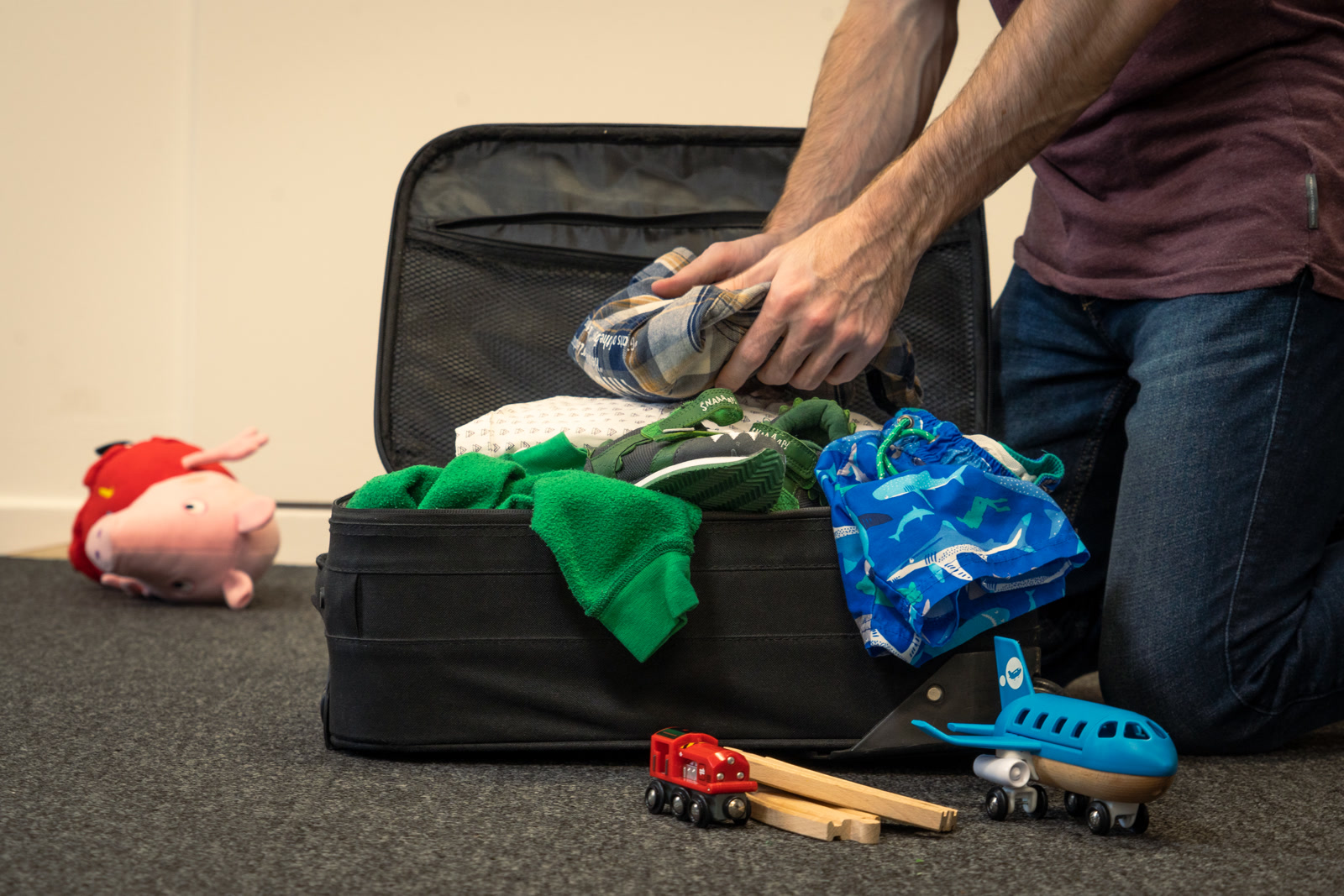
It should hold your swimsuit, sunscreen, a change of clothes, your documents and photo ID, any medications you need, your phone and its charger, a hat, and your water shoes. Keep the valuables in it too — the passport, the wallet, the camera — because the carry-on stays with you while the checked bag is out of your hands. The rest of the luggage can wait; the day-one bag is the bag that matters.
What to Leave Behind
A Bahamas cruise is a short trip, and the bag should show it. Leave the iron and the steamer at home — they are confiscated on most cruise lines, along with surge-protected power strips, extension cords, candles, drones and blades. Bring a non-surge power strip or a charging cube instead if you need extra outlets. Leave the beach towels behind too: the ship provides them on deck and on the private island. Leave the heavy books — an e-reader weighs nothing and holds a library. Leave the valuables you will not wear, the extra shoes (three pairs is the ceiling: flip-flops, walking sandals, one smart pair), and the bulky winter layers. And leave the formal wear: one dressy-casual outfit covers the single dressy evening.
Do I need a passport for a Bahamas cruise? Not legally, if you are a US citizen on a closed-loop sailing — an original or certified birth certificate plus a government photo ID is enough to re-enter the United States. But bring the passport book if you have one: it is the only document that lets you fly home from a foreign port in an emergency, and your cruise line may require it at check-in regardless.
Is there a formal night on a 3–4 night Bahamas cruise? Usually one dressy evening, and it is optional. Royal Caribbean holds one Dress Your Best night on 3–5 night sailings, Carnival holds one Cruise Elegant evening on some short sailings, Holland America holds none on cruises under four days, and Norwegian holds none at all. One dressy-casual outfit is enough.
Is chemical sunscreen banned in the Bahamas? No. The Bahamas has no nationwide legal ban on chemical sunscreens — the guidance asks visitors to choose reef-safe, mineral formulas to protect the reefs. That is different from Hawaii, where selling sunscreens with oxybenzone and octinoxate is banned, and the US Virgin Islands, where using them is banned.