
Packing for an Alaska cruise comes down to one idea: three thin layers beat one thick coat. A moisture-wicking base, a fleece or packable mid layer, and a proper waterproof shell will carry you through every port, every glacier day, and every cold morning on deck — and they all fit in a carry-on.
Alaska is not a warm-weather cruise with a jacket thrown in. In peak season the ports sit between roughly 45 and 65 degrees, it rains in every month, the wind off the water cuts through anything thin, and the air at a glacier face can feel near freezing even when the port is in the 60s. The ship is warm and dry — you are dressing for the deck and the shore.
If you have not picked a sailing yet, our 7-day Alaska cruise itinerary from Seattle shows the route this list is built for — Juneau, Skagway and Ketchikan, plus a glacier-viewing day. It works for any seven-night Inside Passage sailing, and the month table near the end covers May and September.
The Short Version: The Three-Layer Rule
Start with the three layers. The base sits against your skin and moves sweat away from it, so it must be merino wool or a synthetic — never cotton. The mid layer traps warmth: a fleece or a lightweight packable down jacket. The outer layer keeps rain and wind out, and must be genuinely waterproof, with a hood and sealed seams, sized to fit over the mid layer.
For seven nights that means two or three base-layer tops, one mid layer, one rain shell, two pairs of trousers, two pairs of shoes, a warm hat and light gloves, binoculars, a daypack, sunscreen, SPF lip balm, and a power bank. One dressy outfit covers the formal nights. Everything else is optional.
Alaska’s weather changes by the hour: the shell comes off in the afternoon sun, the mid layer goes back on for glacier viewing, and the hat earns its place when the ship turns into the wind. Three thin layers give you four or five combinations; one heavy coat gives you one.
Why Alaska Packing Is Nothing Like a Caribbean Cruise
A Caribbean packing list is swimwear, sandals, and a light cover-up. An Alaska cruise packing list is the opposite problem: cool air, steady rain, cold wind, and long hours outside looking at things. The most common first-timer mistake is packing for the ship instead of the shore.
The season runs from May through September, with a handful of late-April and early-October sailings on either side. July and August are the warmest, busiest, and best for whale watching; May is the driest and quietest, with snow still on the peaks; September is the coolest and wettest, with autumn colour and the first chance of northern lights. Whichever month you pick, the pattern is the same: cool mornings, mild afternoons, rain at some point, and a sharp drop in temperature at every glacier.
So this list is organised by function, not by day: a small set of pieces that work in every combination, plus the specialist items — binoculars, a rain shell, a warm hat — that make the difference between watching a glacier and hiding from it.
Base Layers: Merino, Synthetics and the No-Cotton Rule
The base layer is the most important piece you will pack, and the easiest to get wrong. It sits against your skin all day, so it has to move moisture away from your body. Merino wool does this best: it stays warm when damp, resists odour for days, and feels comfortable across a wide temperature range. A synthetic — polyester or a poly-blend — does the same job for less and dries faster, which matters if you wash things in the cabin sink.
Cotton is the one fabric to leave behind: it holds moisture, dries slowly, and chills you the moment you stop moving. The no-cotton rule covers tops, leggings, and socks alike.
Two or three base-layer tops are enough for a week — merino can be worn several days without smelling, and a sink wash dries overnight in a warm cabin. Add leggings for glacier days, and if you run cold, make one base layer heavier rather than packing an extra one.
The Mid Layer: Fleece and Packable Warmth
The mid layer is the insulation, and one good one is enough. A fleece jacket is the simplest choice: warm, light, and forgiving if it gets damp. A lightweight packable down or synthetic-insulated jacket is the alternative, and it has one advantage — it compresses to almost nothing, so it lives in your daypack until you need it.
Pick one with a full zip and a high collar — both do more for warmth on a windy deck than most people expect — and make sure it fits under your rain shell without bunching. It also does evening duty: dining rooms run cool, and a fleece or smart knit over a dress or shirt beats a jacket you have to check at the door.
The Rain Shell: The One Item You Cannot Skip
If you pack one thing from this list and nothing else, pack the rain shell. Alaska’s Inside Passage is a temperate rainforest, and it rains in every month of the season. Juneau averages around three and a half inches of rain in May and about nine inches in September; Ketchikan, the wettest port on most itineraries, averages roughly six inches a month in June and about fourteen in September. A waterproof jacket is not a just-in-case item here; it is daily wear.
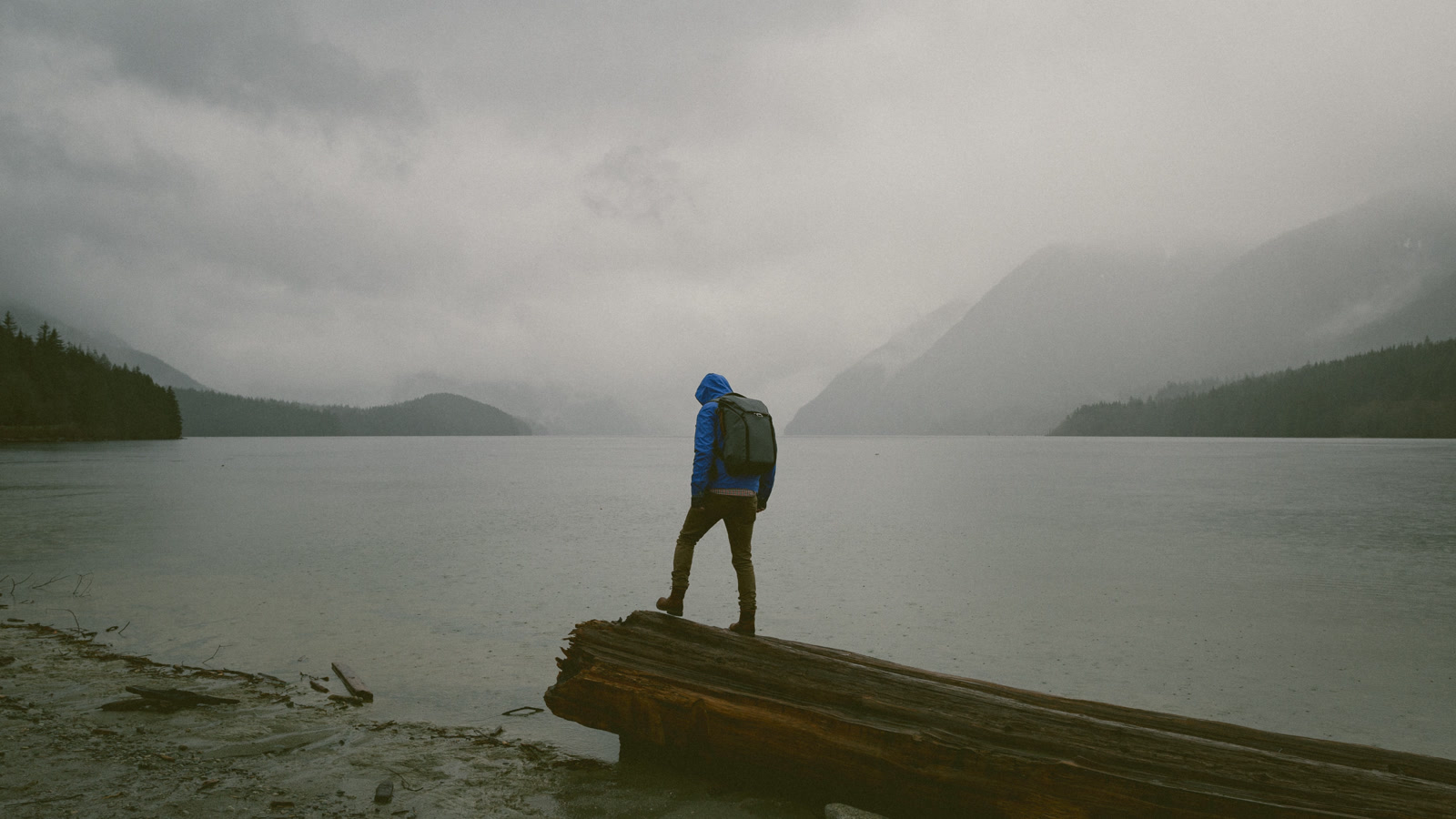
The shell has to be waterproof, not merely water-resistant: water-resistant fabric holds up in a drizzle and gives up in a downpour. Look for a hood that fits over a warm hat, sealed or taped seams, and a cut that fits over your mid layer. Pit zips are worth having.
Test it before you leave — a few minutes under a shower or hose will show any leaks at the shoulders and cuffs. Pack it in your daypack on every port day, even when the morning looks clear.
Footwear for Wet Decks, Trails and Town
Two pairs of shoes will cover an Alaska cruise, and the first pair matters far more than the second. Your main pair should be waterproof walking shoes or light hiking boots with a grippy sole: wet decks, slick boardwalks, muddy trails, and rain-slicked town streets are the norm. Break them in before you sail — new shoes on day one mean blisters by day three.
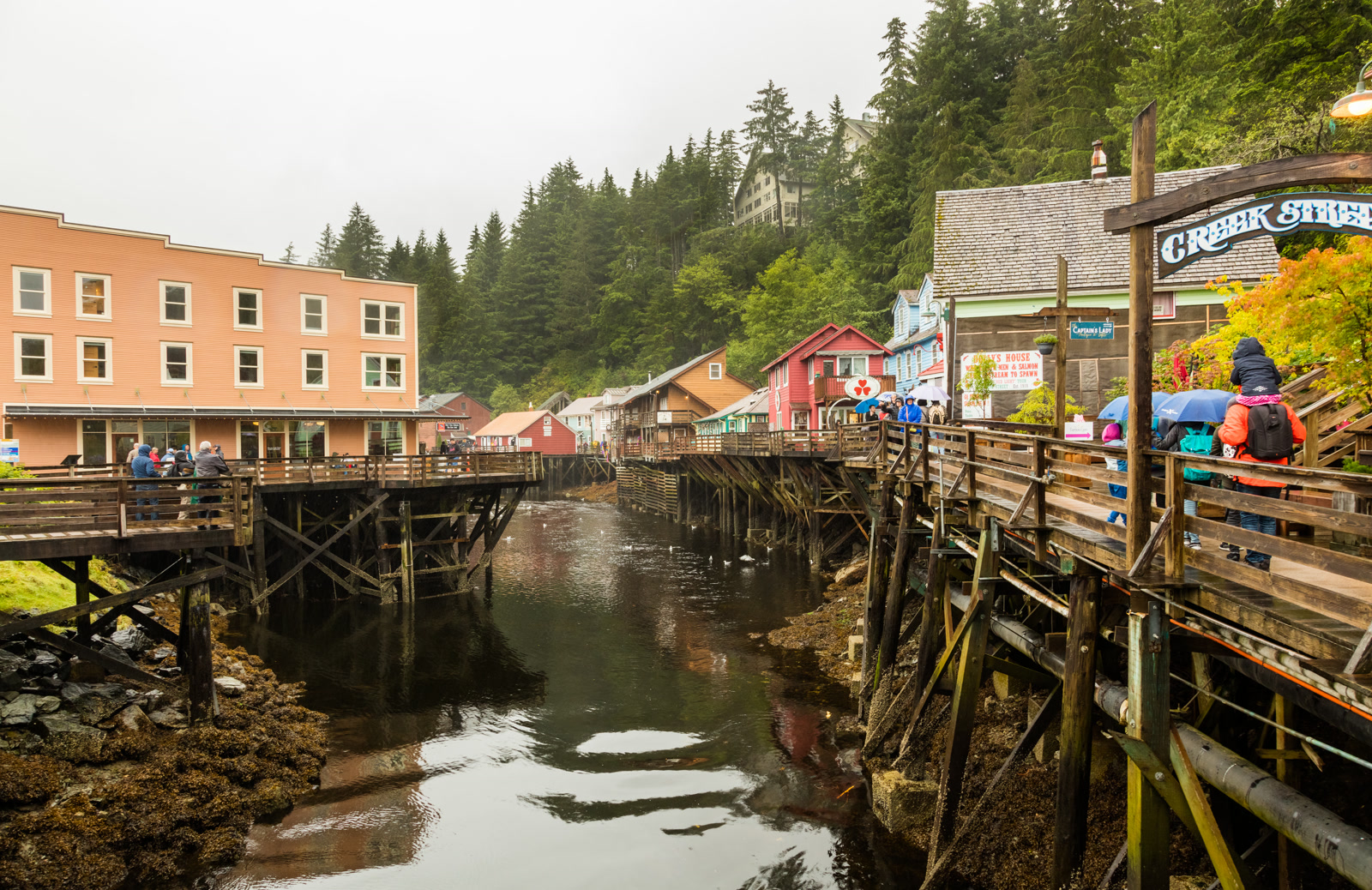
The second pair is for town and for the ship: comfortable trainers you can walk in all day and that look fine in the dining room. One smart pair that works for both town and dinner is enough. Leave the heels at home — wet steel decks, gangways, and cobbled streets are no place for them.
Glacier-Day Gear: Binoculars, Hats, Gloves and Cold-Weather Power
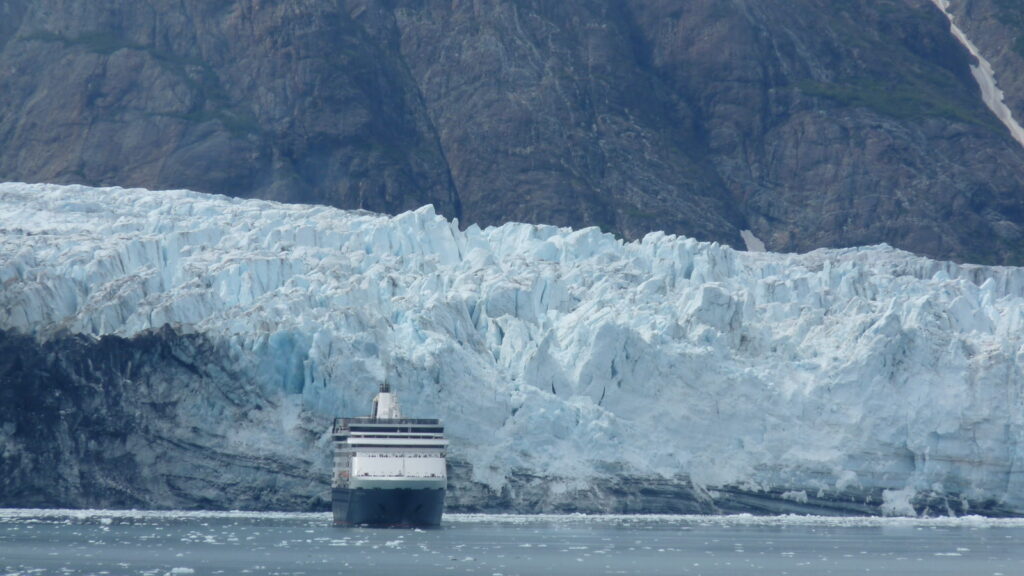
Glacier days are the coldest hours of the trip — and the reason most people sail to Alaska. The ship slows to a crawl in front of a tidewater glacier, the wind comes straight off the ice, and you will stand on deck for an hour or more watching for calving. Dress for the ice face, not for the port you left that morning.
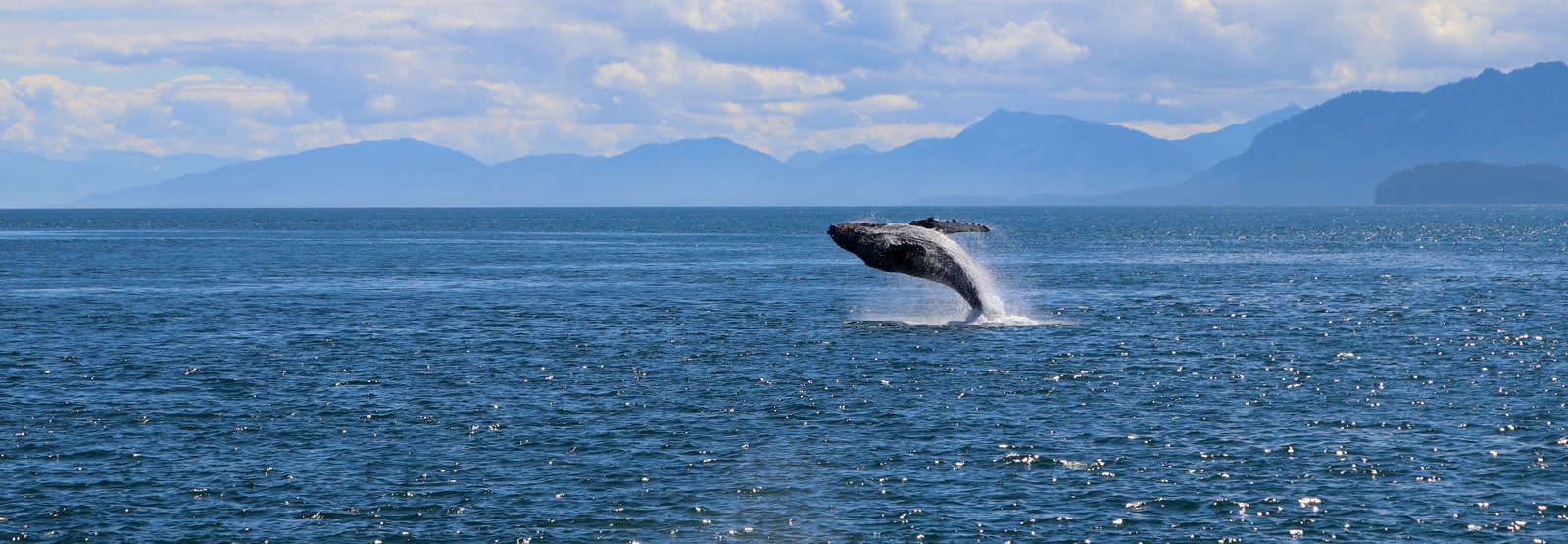
Binoculars are the single most-forgotten item on an Alaska cruise, and the one cruisers most wish they had packed. Whales, bald eagles, seals on ice floes, and a calving glacier face are all distant without them. Keep a compact pair in your daypack, not your cabin, so it is with you whenever the captain announces wildlife.
A warm hat and light gloves belong in the same pocket as the binoculars — a beanie that covers your ears makes more difference than an extra layer on your torso. Add SPF lip balm and sunscreen: ultraviolet light is strong on open water even on a cool, overcast day, and the glare off ice and water burns fast. Cold drains batteries too, so keep a power bank in an inside pocket, where your body heat keeps it working.
What to Pack by Month: May Through September
The three-layer rule does not change across the season, but the weight of each layer does. The table uses NOAA 1991–2020 climate normals for Juneau, the port most Inside Passage itineraries call at. Ketchikan, further south, is wetter in every month.
| Month | Juneau high / low | Juneau rain | What changes in your bag |
|---|---|---|---|
| May | 57°F / 41°F | ~3.5 in | Driest month; snow still on the peaks. Warmest base layer and gloves. |
| June | 62°F / 47°F | ~3.8 in | Long days; the lightest version of the three-layer system works. |
| July | 64°F / 50°F | ~5.1 in | Warmest and busiest. Best whale activity. Sun protection matters as much as rain gear. |
| August | 63°F / 49°F | ~6.4 in | Much like July, with more rain. Shell in the daypack every day. |
| September | 56°F / 44°F | ~9.1 in | Coolest and wettest. Fall colour, fewer crowds, northern lights on late sailings. Warmer hat and an extra base layer. |
Ketchikan runs wetter than Juneau in every month — roughly six inches in June, seven in July, ten in August, and about fourteen in September — so if your sailing calls there, assume rain.
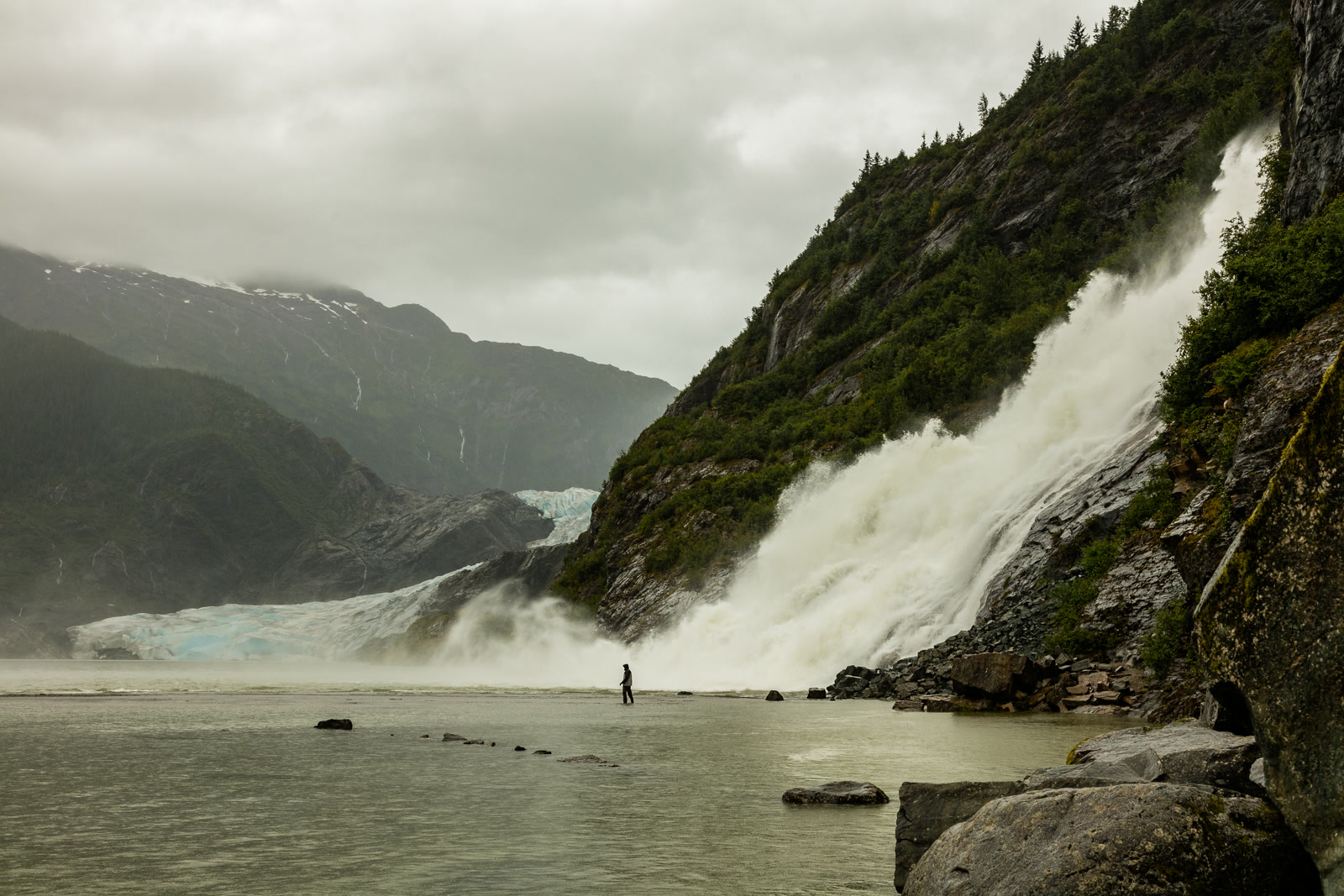
Sailing in May or September? Add a warmer hat, an extra base layer, and gloves you can grip things in. In July or August, the extras are sunscreen, lip balm, and a sun hat for the long bright evenings. Either way, the shell stays in the daypack.
Evenings on Board: Dinner Dress Codes by Cruise Line
Evenings on an Alaska cruise are dressier than the days, but not as formal as first-timers fear. The rules depend on your line and the length of your sailing, so check your cruise line’s own dress-code page before you pack — but the shape of it is consistent across the big Alaska lines.
Princess calls its formal evenings “Dress to Impress” nights — two on a seven-night sailing — and the level is wedding-guest, not black tie: a cocktail dress, a dressy jumpsuit, or a dark suit with a collared shirt. Holland America uses “Dressy Nights”, again two on seven nights, with slacks, dresses, blouses, and collared shirts encouraged and jeans kept out of the table-service restaurants. Norwegian has no formal nights at all: its Freestyle cruising asks only for smart casual, put-together clothes in the dining rooms.
One dressy outfit covers a seven-night sailing on any of these lines, and the buffet has no dress code on any night. Dining rooms run cold, so bring a wrap or cardigan you can wear at the table — the same mid layer from your glacier days, doing a second job.
The Carry-On Question and What Most People Forget
A 40 to 45 litre carry-on can cover a seven-night Alaska cruise if you pack by the three-layer rule and keep your shoes to two pairs. Roll your clothes, use packing cubes, and wear your bulkiest pieces on the plane. The bag doubles as your embarkation-day bag, which matters, because checked bags can take two to four hours to reach your cabin.
What most people forget is a short list: the rain shell, the binoculars, a warm hat and light gloves, SPF lip balm, sunscreen, a compact daypack, and a power bank. None of these is expensive, all of them are hard to buy at a fair price once you are on the ship, and every one of them is the difference between enjoying a glacier day and enduring it.
What not to pack is just as short. Leave the bulky winter parka at home, except on May and September sailings. Leave the cotton-heavy wardrobe behind. And leave the surge-protected power strip at home: cruise lines confiscate surge protectors as a fire risk, along with irons, steamers, extension cords, candles, and drones.
Documents deserve the same care as the clothing. On a closed-loop sailing — one that departs from and returns to the same US port, like a Seattle round trip — US citizens can board with an original or certified birth certificate plus a government photo ID; a passport card or an enhanced driver’s licence also works, and children under sixteen need only proof of citizenship. But a passport book is still strongly recommended: without one you cannot fly home from a foreign port if you miss the ship, and a one-way sailing, such as Vancouver to Seward, requires a full passport book with no exceptions. Check your cruise line’s own document page for your exact sailing.
Do I need a parka for an Alaska cruise? Not in June, July, or August — the three-layer system is warmer, lighter, and far more flexible than a parka. On a May or September sailing, a warmer insulated jacket is worth packing, but it still does not replace the shell.
Can I do an Alaska cruise with a carry-on only? Yes — pack by the three-layer rule, keep your shoes to two pairs, and wear the bulkiest layers on the plane. A 40 to 45 litre bag is enough.
Do I need a passport for an Alaska cruise from Seattle? For a round trip, US citizens can board with a birth certificate and photo ID, but a passport book is strongly recommended — it is the only document that lets you fly home from a foreign port in an emergency. A one-way sailing from Vancouver requires a full passport book.
Pack the layers, pack the shell, pack the binoculars, and leave the parka and the cotton behind. Alaska rewards the traveller who dresses for the weather they will actually meet: cool, wet, windy, and unforgettable.