
Las Vegas sits in the middle of the best day-trip country in the American Southwest. Within an hour of the Strip you can be standing under red sandstone cliffs; within three hours you can be looking down a canyon in Utah or across the Colorado River from a dam that holds back Lake Mead. The best day trips from Las Vegas are not a single list, though — they depend on how much time you have, and the honest answer changes with the season too.
If you have not planned the city itself yet, start with our Las Vegas itinerary, which covers the Strip days. This guide is for the days you leave the city behind — and for one thing to know before any of them: from June to September, desert day trips are morning trips. Start early, carry more water than feels necessary, and be back before the afternoon heat does its worst.
Short Version: Which Trip Fits the Time You Have
| Destination | Drive each way | Time needed | Drive or tour |
|---|---|---|---|
| Red Rock Canyon | ~30 minutes | Half-day | Drive or tour |
| Seven Magic Mountains | ~20–30 minutes | 20-minute stop | Drive, as an add-on |
| Hoover Dam and Boulder City | ~45 minutes | Half-day | Drive or tour |
| Valley of Fire | ~1 hour | Half-day | Drive or tour |
| Mount Charleston | ~45–60 minutes | Half-day | Drive |
| Grand Canyon West | ~2–2.5 hours | Full day | Drive or tour |
| Death Valley | ~2–2.5 hours | Full day | Drive or tour |
| Zion National Park | ~2.5–3 hours | Full day | Drive or tour |
| Grand Canyon South Rim | ~4.5 hours | Overnight | Drive or tour |
| Antelope Canyon | ~4.5–5 hours | Overnight | Drive or tour |
The best day trips from Las Vegas are easy to choose once you sort them by time: Red Rock Canyon for the easiest half-day, Hoover Dam for a landmark — both under an hour away. And yes, you can do the Grand Canyon as a day trip, but only the West Rim, 2 to 2.5 hours each way. The South Rim is 4.5 hours each way — nine hours of driving wrapped around a few hours at the rim. Sleep over and do it properly.
Red Rock Canyon: The Half-Day That Feels Like Another World
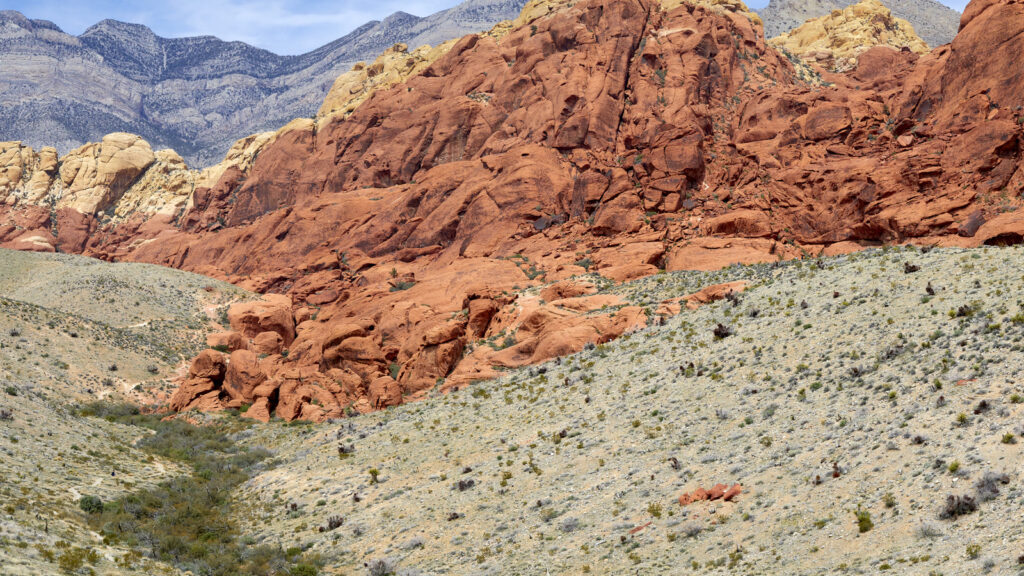
Red Rock Canyon is the trip for a free morning: about 17 miles west of the Strip, roughly 30 minutes by car, built around a single 13-mile one-way loop, the Scenic Drive, with overlooks and trailheads along it. The red rock is Aztec sandstone, the same formation that colours Valley of Fire, set against grey limestone mountains — and the change from the Strip to this landscape in half an hour is the whole point of the trip.
The one thing to plan around is the timed-entry reservation. From October 1 to May 31, vehicles entering the Scenic Drive between 8 a.m. and 5 p.m. need a reservation booked in advance on Recreation.gov; arrive before 8 a.m. or after 5 p.m., or any time from June 1 to September 30, and none is needed. Hours shift with the season — 6 a.m. to 5 p.m. November through February, 6 a.m. to 7 p.m. in March and October, 6 a.m. to 8 p.m. April through September — and weekend slots in spring and autumn go first.
Entry is $20 per vehicle plus a $2 reservation fee when one is required, and the America the Beautiful pass covers the entry fee (not the reservation fee). Go early: the light on the Calico Hills is best in the first two hours, the parking areas fill by mid-morning in spring and autumn, and in summer the early start is the difference between a pleasant walk and a punishment. Two to three hours on the loop is a proper half-day — and you are back on the Strip for lunch.
Hoover Dam and Boulder City: The Easiest Landmark Day
Hoover Dam is the easiest big day trip from the Strip, and the one almost every first-time visitor should make. The dam sits about 30 to 35 miles southeast of Las Vegas, roughly 45 minutes by car on US-93 through Boulder City, straddling the Colorado River on the Nevada–Arizona line. It is a 726-foot concrete arch-gravity dam wedged into Black Canyon, completed in 1936.
Walking across the top of the dam is free, and the walk is the experience: the curved wall on one side, the river far below on the other, Lake Mead behind you. The view most people miss is from the Mike O’Callaghan–Pat Tillman Memorial Bridge, which carries US-93 across Black Canyon about 900 feet above the river, just downstream of the dam. Opened in 2010, its pedestrian walkway gives the single best head-on view of the dam — allow 30 to 45 minutes for the walk out and back, with no shade and a wind that can be fierce.
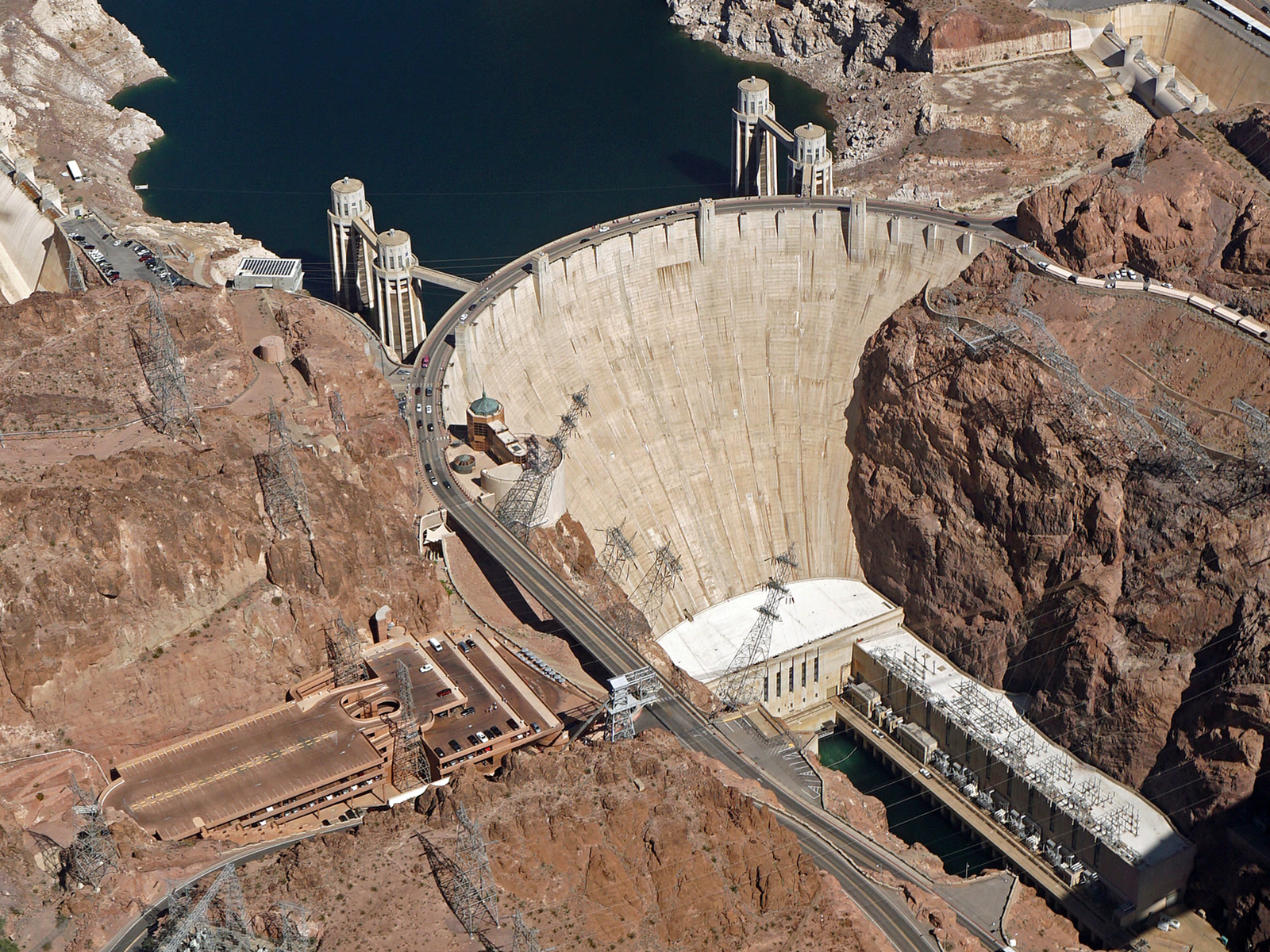
The Bureau of Reclamation runs two guided tours from the visitor centre on the Nevada side. The Powerplant Tour lasts about 30 minutes: an elevator ride 530 feet down into the canyon wall, a tunnel to the penstock viewing platform, and the generator floor beside the turbines. The Guided Dam Tour adds another half hour inside the dam — narrow inspection tunnels and a vent in the dam’s face that looks straight down the spillway — and it is sold first-come, first-served at the visitor centre on the day, with age and mobility restrictions. It sells out, so arrive early. Two to three hours covers the bridge walk, a tour and the top of the dam.
Pair the dam with Boulder City, ten minutes back toward Las Vegas. The town was built to house the dam’s workers and is still the only municipality in Nevada where gambling is illegal — a quiet, tidy place with a main street of cafes and antique shops that makes a good lunch stop.
Valley of Fire: Red Rock Without the Long Drive
Valley of Fire is the trip for anyone who wants red rock without a long drive: about 50 miles northeast of the Strip, roughly an hour by car on I-15 north and then NV-169 into the park. It is Nevada’s oldest state park, set aside in 1935, and it is run by Nevada State Parks, not the National Park Service — which matters for one practical reason: your America the Beautiful pass does not work here. Entry is $15 per vehicle for out-of-state plates and $10 for Nevada plates, paid at the entrance station or a self-pay kiosk.
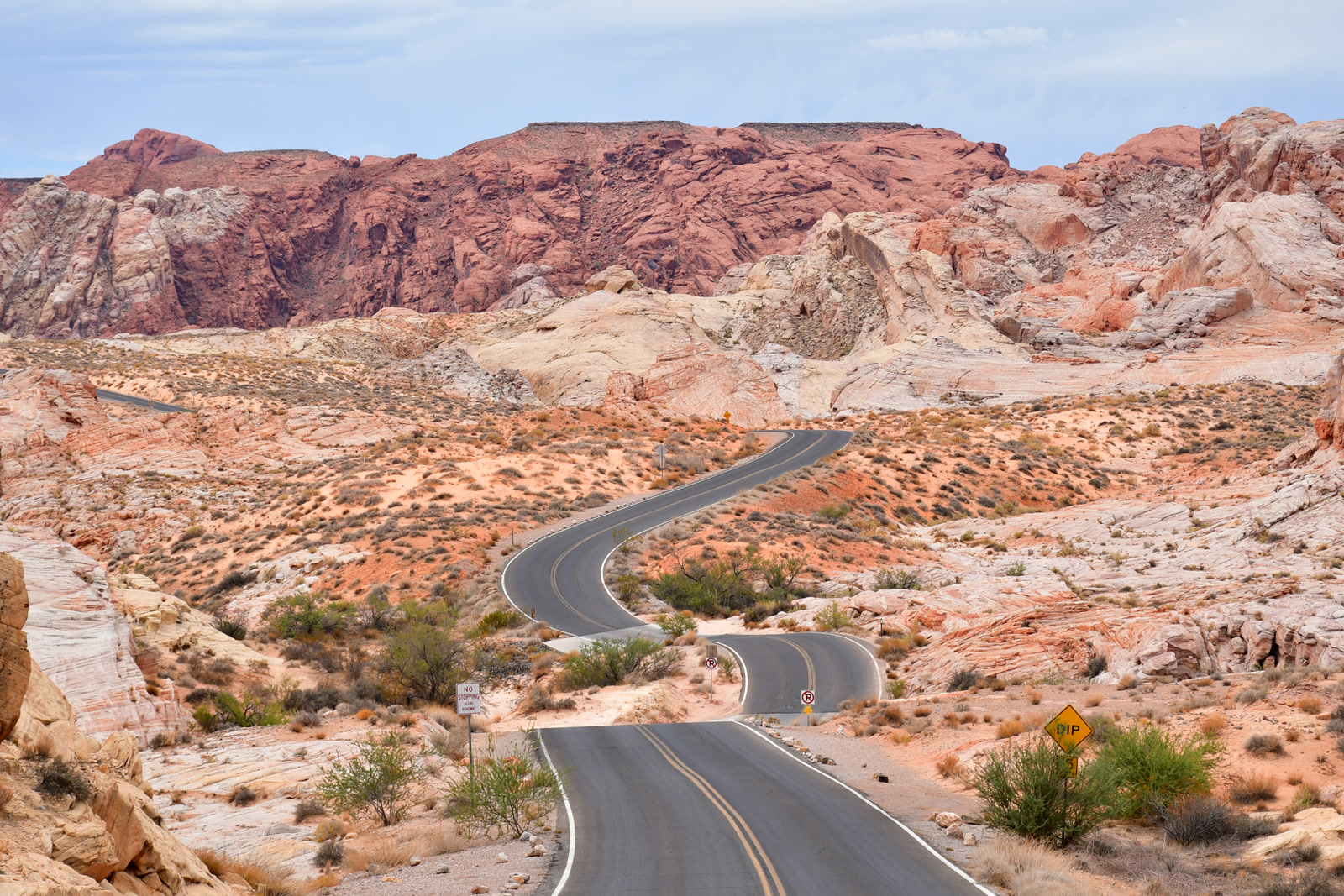
The rock is Aztec sandstone, the same formation as Red Rock Canyon, but here it is the whole landscape rather than one ridge of it — red and white domes, fins and canyons along a single scenic road. The Fire Wave is the walk most people come for, a short trail to a striped slickrock wave, and the park’s petroglyphs, carved into the dark desert varnish, are older than any of the towns around it. Three to four hours inside the park covers the scenic drive, the Fire Wave and one or two short hikes; with the drive, plan on a five- to six-hour outing.
The season matters more here than anywhere except Death Valley. October through April is the visiting window, and many trails close from mid-May through September because of extreme heat — the park regularly tops 100°F in summer, with very little shade. There is no public transport, so you need a rental car or a tour, and you should carry at least a litre of water per person even on short walks. Go in the cool months, go early, and it is one of the best half-days anywhere near Las Vegas.
Mount Charleston: Cooler Air When the Valley Bakes
Mount Charleston is the answer to the one question every summer visitor asks: where do you go when the valley is 110°F? The answer is up. The mountain rises in the Spring Mountains about 35 miles northwest of the Strip, a 45- to 60-minute drive on US-95 and then Kyle Canyon Road or Lee Canyon Road, and the visitor areas sit at 7,000 to 8,500 feet while the valley floor sits at about 2,000 feet. That climb is worth roughly 15 to 20°F on a typical summer day, and 20 to 30°F on the hottest ones — a 110°F afternoon on the Strip can be a 75 to 80°F afternoon under the pines.
This is a US Forest Service recreation area in the Humboldt-Toiyabe National Forest, not a ticketed attraction: pine and fir forest instead of creosote and yucca, short trails like Cathedral Rock from the village area, and Lee Canyon’s small ski and snowboard area in the next canyon over. Charleston Peak, at 11,916 feet, is the highest point in Clark County, though the summit is a serious hike and not a day-trip stop. Snow is realistic from November through April, and the canyon roads can ice over in winter — check conditions before heading up between December and March.
Grand Canyon West and the Skywalk: The Closest Canyon
Grand Canyon West is the closest stretch of the Grand Canyon to Las Vegas — about 125 miles, a 2- to 2.5-hour drive — and the most misunderstood. This is not Grand Canyon National Park. It is on Hualapai tribal land, run by the Hualapai Tribe, and none of the national park rules apply: park passes do not work here, the ticketing is the tribe’s own, and the experience is a managed set of viewpoints rather than a national park. Knowing that before you go saves the most common disappointment of the trip.
The headline is the Skywalk at Eagle Point, a horseshoe-shaped glass bridge that juts about 70 feet out over the rim, some 4,000 feet above the canyon floor. There is no Skywalk-only ticket: the basic pass does not include it, only the higher-tier passes do, so check which tier you are buying before you drive out. The park opens at 8 a.m., with last entry at 4 p.m. in winter and 5:30 p.m. in summer, all in Arizona time — and Arizona does not observe daylight saving time, so from November to March Arizona runs an hour ahead of Las Vegas, and a 4 p.m. last entry is 3 p.m. on a Las Vegas clock. Plan around last entry, not closing time.
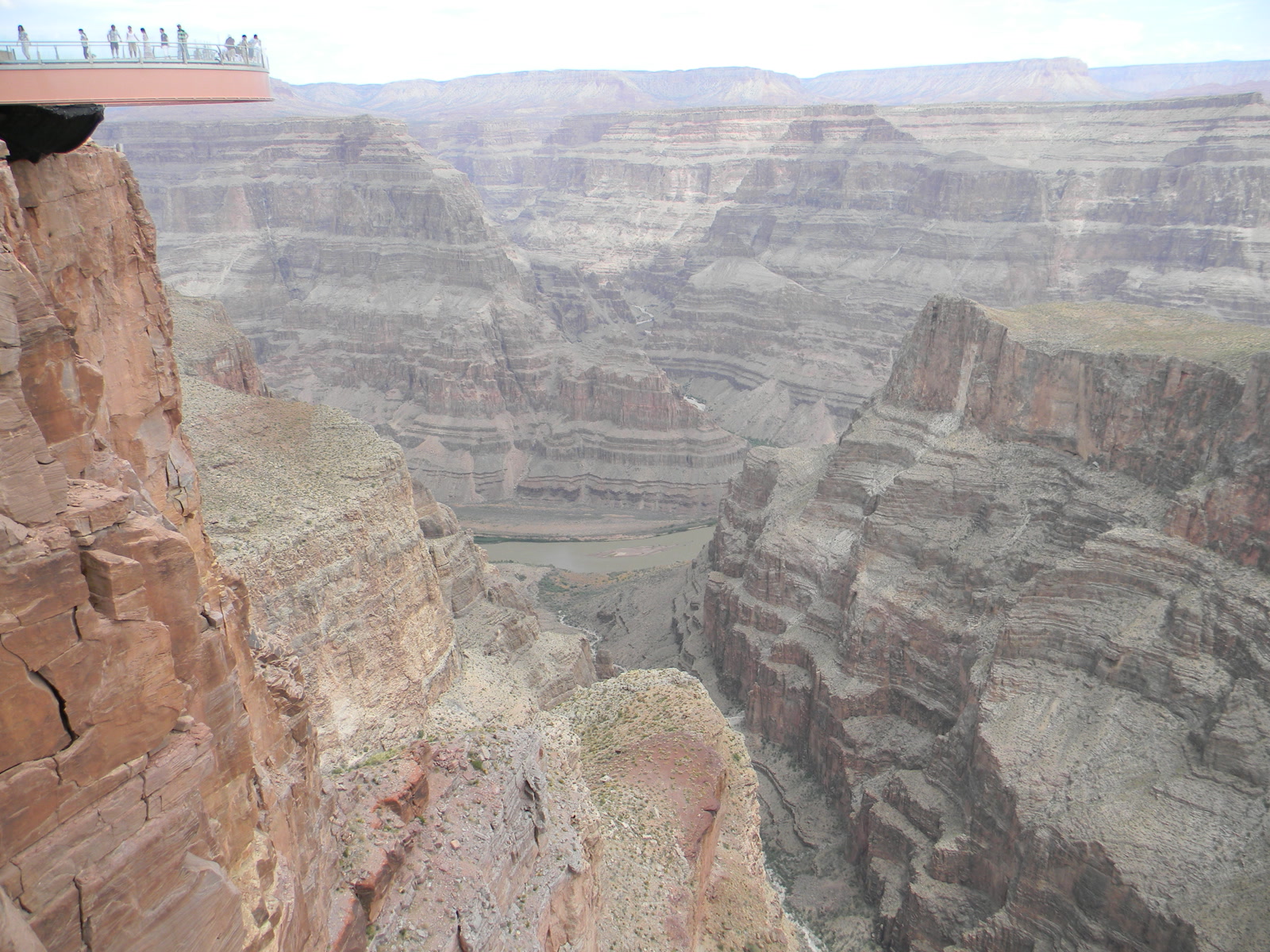
As of late 2026, phones are allowed on the glass, while cameras and bags go in free lockers — but this rule has changed before, so check the official site on the day. Beyond the Skywalk, the pass covers Eagle Point, Guano Point and the Hualapai Ranch, with a hop-on, hop-off shuttle between them. It is a full day door to door, and a coach tour is the honest alternative if you do not want the drive. If the South Rim is the canyon you actually want, our Grand Canyon itinerary covers that version — it is a different trip, and the next section explains why.
Death Valley in a Day: What to Know Before You Go
Death Valley is the most extreme day trip on this list, and the one that needs the most respect. It sits about 120 miles from Las Vegas, roughly 2 to 2.5 hours each way via NV-160 through Pahrump, and the park’s main hub is Furnace Creek, where the visitor centre, fuel and water are. Entry is $30 per vehicle for seven days, paid by card only — no cash is accepted inside the park — and Death Valley is not one of the 11 parks with the 2026 nonresident surcharge.
What you go for is the superlative landscape: Badwater Basin, at 282 feet below sea level the lowest point in North America; Zabriskie Point’s golden badlands at sunrise; Dante’s View, a mile above the valley floor and 20 to 30°F cooler than the basin below; and the Mesquite Flat sand dunes. Furnace Creek holds the world-record air temperature of 134°F, recorded in 1913 and still recognised as the highest reliably measured surface air temperature on the planet. In summer, daytime highs regularly reach 113 to 122°F, and heat-related deaths are recorded in the park most years, including on short daytime walks.
That is why the season is the whole plan. October through April is the visiting window, with November through February the most comfortable; June through September is mornings only, no midday hiking, and far more water than feels necessary. A proper visit runs eight to ten hours door to door, which is why a sunrise departure wins. Our Las Vegas to Death Valley guide covers the full route, the Furnace Creek loop and the overnight option in detail — and it ends with the same warning the long one starts with: do not plan a summer sightseeing day here.
Zion National Park: A Full Day, Done Right
Zion is the furthest of the true day trips, and the one that rewards the earliest start. The park’s main south entrance at Springdale, Utah, is about 160 miles from Las Vegas, roughly 2.5 to 3 hours each way on I-15 north and then Utah Route 9 — and Utah is on Mountain Time, an hour ahead of Las Vegas, so set your watch at the state line. Entry is $35 per vehicle for seven days, and non-US residents pay an extra $100 per person aged 16 and over on top of the standard fee, one of the 11 parks with the 2026 surcharge, unless they hold an annual pass.
The thing first-timers get wrong about Zion is the driving. From March through late November, private vehicles are not allowed on the Zion Canyon Scenic Drive, the road that runs deep into the canyon past the most famous trailheads — the only way in is the free park shuttle, which leaves the visitor centre every few minutes, plus a connecting shuttle through Springdale. That is not a problem, it is the plan: park in Springdale or at the visitor centre, which fills by 7 or 8 a.m. in peak season, and ride the shuttle to the trailheads.
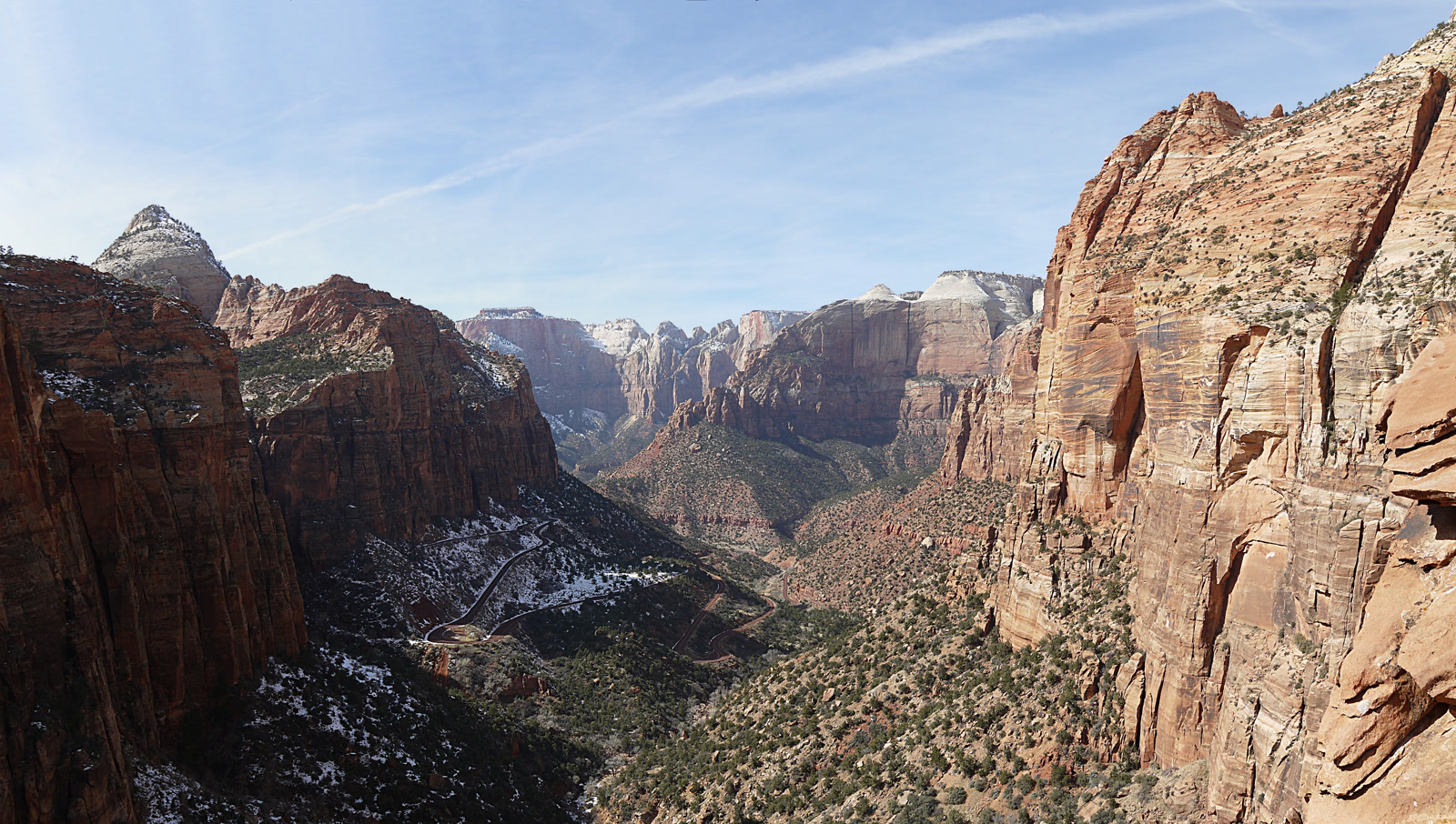
One full day covers the shuttle loop and one big hike. Angels Landing is the famous one, and it needs a permit won through the National Park Service lottery — apply well ahead, and have a backup plan, because most applicants do not get one. The Narrows, the walk up the Virgin River between thousand-foot walls, is the other signature hike, and it needs a flash flood check on the day, every day. Five hours of round-trip driving makes Zion a long day, and an overnight in Springdale is the relaxed version — but done early, with one hike chosen in advance, it is the most complete national park day trip on this list.
The Ones Better Left Overnight: South Rim and Antelope Canyon
Two of the most famous trips from Las Vegas are not day trips at all, and every guide that lists them as one is selling you a very long day in a car. The Grand Canyon’s South Rim is about 277 to 282 miles from the Strip, 4.5 hours each way — nine hours of driving wrapped around a few hours at the rim, missing both sunrise and sunset, the best light of the day. The South Rim is the national park: open 24 hours, all year, $35 per vehicle for seven days, with the rim trail, the viewpoints and the trails below the rim. Stay overnight in Tusayan, just outside the park, or in Flagstaff, and give it a sunrise and a sunset.
One dated note before you book that overnight: the South Rim’s in-park lodges were closed to overnight guests from August 31 to November 19, 2026, after flood damage to the water system, with a planned phased reopening from November 20, 2026. That date is tentative and has already moved more than once, so check the current status before you plan around staying inside the park — Tusayan has rooms either way, and it is minutes from the gate.
Antelope Canyon is the same story at a similar distance: about 275 miles to Page, Arizona, 4.5 to 5 hours each way, and the canyon itself is only part of the day. Both the Upper and Lower sections sit on Navajo Nation land and can only be entered on a booked, Navajo-guided tour with a fixed start time — no self-guided entry, no walk-up ticket, and the popular late-morning slots in Upper Antelope Canyon, when the sunbeams reach the canyon floor, sell out weeks ahead in peak season. Book the tour before you leave Las Vegas, and build in a buffer: a slow stretch on US-89 can cost you the slot. Pair it with Horseshoe Bend, 15 minutes south of Page, and sleep in Page. Page runs on Mountain Standard Time and does not observe daylight saving, while the Navajo Nation does — check which clock your confirmation is using.
Driving or Touring: How to Choose, and When to Go
The last decision is the simplest one: drive yourself, or book a tour. A rental car wins on flexibility and on cost for two or more people — you choose the departure time, you stay as long as you like at each stop, and the desert highways out of Las Vegas are straightforward. A tour wins if you do not want to drive desert highways, if you are travelling alone, or if the destination is Grand Canyon West or Antelope Canyon. There is no public transport to Red Rock Canyon, Valley of Fire, Zion or Death Valley, so the choice is car or tour — except for Hoover Dam, where a partial bus service runs toward Boulder City.
When to go is the same answer for almost every trip on this list: October through April is the window for the desert parks, when daytime highs are comfortable and hiking is pleasant. June through September belongs to early starts and to Mount Charleston, the only destination here that gets better as the valley gets hotter.
Seven Magic Mountains fits here as the free add-on, not as a trip of its own. The seven towers of boulders painted in vivid colours stand about 20 minutes south of the Strip on the way toward Jean, the work of Swiss artist Ugo Rondinone, installed in 2016 as a temporary exhibition and extended several times since. It is free, unstaffed and open around the clock, and 20 to 30 minutes covers a relaxed visit. It was always a temporary installation, so check it is still standing before you build a day around it, and fold it into a drive to Hoover Dam or the outlets at Primm rather than making it the destination.
What is the best day trip from Las Vegas? Red Rock Canyon if you want the easiest half-day, Hoover Dam if you want a landmark. Both are under an hour away, and both are covered in detail above.
Can you do the Grand Canyon as a day trip from Las Vegas? Grand Canyon West, yes — 2 to 2.5 hours each way, and the Skywalk is there. The South Rim, only as a very long day; sleep over and do it properly.
Do I need a car for day trips from Las Vegas? For most of them, yes — or a tour. There is no public transport to Red Rock Canyon, Valley of Fire, Zion or Death Valley.
What is the best month for day trips from Las Vegas? October to April for the desert parks. June to September is for early starts, short hikes and Mount Charleston.